

Brown Discharge: Causes and When to See a Doctor

Key Takeaways
- Brown discharge is commonly old blood mixed with normal vaginal fluid.
- It may appear around a period, after ovulation, with hormonal changes, or after sex.
- Infection, pregnancy-related bleeding, and cervical or uterine conditions can also cause brown discharge.
- Symptoms such as pain, odor, fever, heavy bleeding, or possible pregnancy deserve medical assessment.
- A careful history, pregnancy testing, pelvic examination, and sometimes imaging or laboratory tests help identify the cause.
Medically reviewed by the Acıbadem clinical team — August 19, 2026
Brown discharge usually means blood has taken longer to leave the body and has oxidized, changing color from red to brown. It is often harmless, but the pattern, timing, and accompanying symptoms can help a clinician determine whether evaluation is needed.
Overview
Brown discharge is a description, not a diagnosis. It usually reflects blood that has had time to oxidize before leaving the body, which turns it from bright red to brown. For many people, this happens at the beginning or end of a menstrual period, after spotting, or when a small amount of bleeding mixes with vaginal fluid.
Because brown discharge can arise from several different situations, context matters. A single episode near a period often has a simple explanation, while repeated discharge, bleeding after sex, discharge during pregnancy, or discharge with pain and odor may need medical attention. The goal is not to assume the worst, but to understand what the body is trying to signal.
For Myomectomy Recovery for International Patients: The Usual Travel Timeline" class="ahp-ilk">international patients arranging care from abroad, brown discharge is often one of those symptoms that can be discussed first through a telehealth consultation, then assessed in person if needed. That approach can help a doctor decide whether the issue is likely hormonal, infectious, structural, or related to pregnancy.
Symptoms and Common Patterns
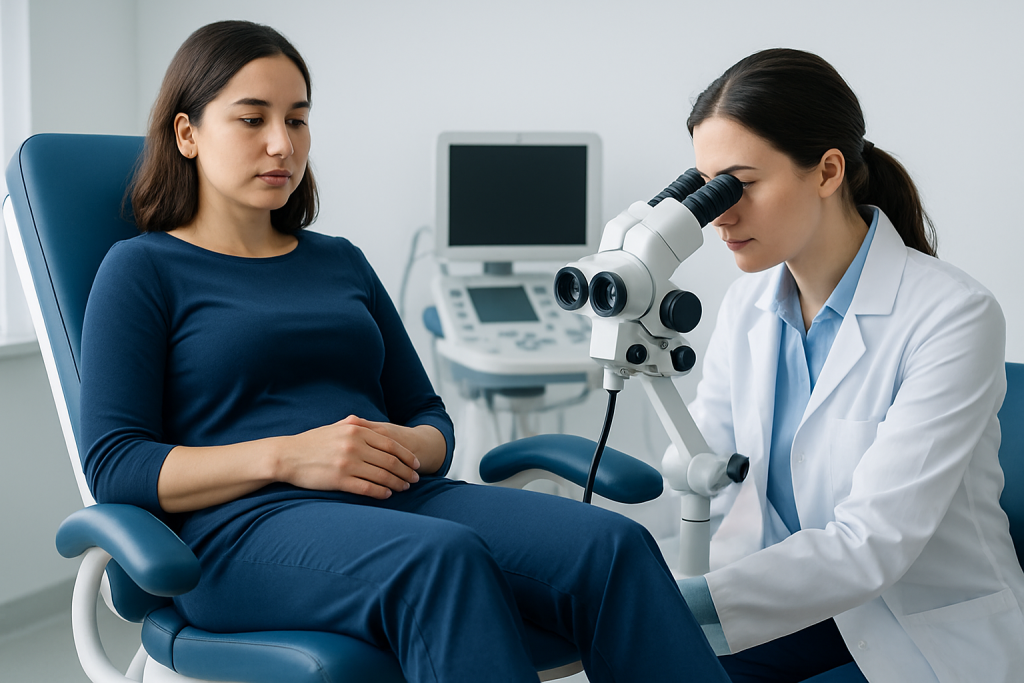
Brown discharge may appear as light spotting on underwear, as a small amount of discharge when wiping, or as a thicker brown flow. It may occur once or recur across several days. The timing often offers the biggest clue: it may show up just before a period begins, after a period ends, around ovulation, or after sexual intercourse.
Other symptoms can help narrow the cause. When brown discharge is related to infection, it may come with odor, itching, burning, pelvic discomfort, or pain during urination or sex. If it is connected to pregnancy, it may occur with cramping, missed periods, or other early pregnancy changes. In some people, there are no other symptoms at all.
It is useful to notice whether the discharge seems linked to a trigger such as a new contraceptive method, recent emergency contraception, a missed pill, or an invasive procedure like a Pap test, biopsy, or pelvic exam. These details often help the clinician decide how urgent the evaluation should be.
- Brown discharge near menstruation is often old blood.
- Brown discharge after sex can be from cervical irritation or another cause that needs review.
- Brown discharge with odor, itching, or pain is more suggestive of infection.
- Brown discharge with a positive pregnancy test should always be discussed with a doctor.
Causes and Risk Factors

The most common explanation is residual menstrual blood leaving the uterus more slowly than usual. When the flow is light, blood has more time to oxidize, which changes its color. This can happen at the start or end of a period, after a cycle that was lighter than usual, or when hormones make the uterine lining shed irregularly.
Hormonal shifts are another frequent cause. Stress, significant weight change, thyroid disorders, polycystic ovary syndrome, perimenopause, and some forms of birth control can all alter the timing or thickness of the uterine lining. Brown discharge may then appear as breakthrough spotting between periods.
Less commonly, brown discharge can be related to infection or inflammation of the vagina, cervix, or uterus. Sexually transmitted infections, bacterial vaginosis, cervicitis, and pelvic inflammatory disease can produce abnormal discharge, sometimes with odor or pain. Structural conditions such as uterine fibroids, endometrial polyps, or cervical changes may also cause irregular bleeding that looks brown.
Pregnancy-related causes deserve careful attention. Brown discharge can happen in early pregnancy for benign reasons, but it can also occur with threatened miscarriage or ectopic pregnancy. Any possible pregnancy should be taken into account, especially if the discharge is accompanied by cramps, dizziness, shoulder pain, or heavier bleeding.
Risk is influenced by the overall health picture rather than a single factor. Recent sexual activity, inconsistent contraception use, a history of menstrual irregularity, or previous gynecologic conditions may make brown discharge more likely to recur or need evaluation.
Diagnosis
Diagnosis begins with a careful conversation. A clinician will usually ask when the discharge started, how long it has lasted, how much is present, whether it has an odor, and whether it occurs around periods, after sex, or with pain. Information about pregnancy possibility, contraception, previous infections, and recent procedures is also important.
A pelvic examination may be recommended if the pattern suggests infection, cervical irritation, or another gynecologic cause. Depending on the situation, the clinician may order a pregnancy test, swabs for infection, urine testing, or cervical screening if it is due. If bleeding seems to be coming from the uterus rather than the vagina, imaging such as ultrasound may help identify fibroids, polyps, or other structural findings.
Not every case needs extensive testing. When brown discharge is brief, clearly linked to a menstrual cycle, and not accompanied by warning signs, a doctor may suggest observation. If the symptom recurs, changes pattern, or becomes persistent, further evaluation is usually more helpful than repeated guesswork.
Treatment Options
Treatment depends entirely on the cause. When brown discharge is simply old blood around a normal menstrual cycle, no treatment may be needed beyond reassurance and observation. If hormones are contributing, a clinician may review the current contraceptive method, menstrual pattern, and any signs of endocrine imbalance before recommending adjustments.
If infection is identified, treatment targets the specific organism or condition. That may involve prescription medication, counseling about sexual health, and follow-up to confirm that symptoms resolve. When brown discharge is caused by a structural issue such as a polyp or fibroid, management may range from monitoring to a procedure, depending on symptoms, size, location, and fertility plans.
Pregnancy-related brown discharge is managed according to the pregnancy stage and associated symptoms. Some situations are monitored closely, while others require urgent evaluation. Because the range of possibilities is broad, self-diagnosis is not a safe substitute for professional assessment when pregnancy is possible.
For patients traveling from another country, a treatment plan should be practical and clear. Ideally it includes what can be done during the visit, which tests are essential, what results mean, and whether follow-up can happen remotely after return home. Acibadem Health Point’s multidisciplinary specialists and JCI-accredited hospitals can diagnose and treat this condition for international patients within that broader, coordinated care pathway.
Prevention and Self-care
Not every cause of brown discharge can be prevented, but some patterns can be reduced with steady care. Using contraception consistently, attending routine gynecologic checkups, and keeping up with cervical screening when advised can help identify problems earlier. Safe sex practices also lower the risk of infections that may lead to abnormal discharge.
Tracking the menstrual cycle is often more useful than people expect. A simple record of period dates, discharge color, associated pain, and any triggers such as stress or a new medication can reveal whether the symptom is cyclical or random. That information can make a clinic visit more efficient and more reassuring.
Gentle self-care matters as well. Avoiding vaginal douching or harsh scented products helps preserve normal vaginal balance. If discharge is present, breathable underwear and changing out of damp clothing promptly may improve comfort. If symptoms are mild and clearly linked to a period, watching for the next cycle may be reasonable, but persistent or worsening changes should not be ignored.
- Keep a brief symptom diary for 2 to 3 cycles if the cause is unclear.
- Use condoms or other barrier protection to reduce infection risk.
- Do not insert medicated or scented products without medical advice.
- Seek care sooner if brown discharge becomes frequent, heavy, or painful.
When to See a Doctor
Medical review is sensible when brown discharge is new and unexplained, keeps returning, or lasts longer than a few days outside the usual pattern of a period. It is also wise to seek care if there is a strong odor, itching, burning, pelvic pain, pain with sex, or bleeding after sex, because these features can point to infection or cervical irritation.
Possible pregnancy changes the threshold for evaluation. Brown discharge with a positive pregnancy test, missed period, cramping, or any heavier bleeding should be discussed with a doctor promptly. Urgent assessment is especially important if there is dizziness, fainting, or severe pain.
Even when the cause turns out to be minor, a proper diagnosis can prevent ongoing uncertainty. For people managing care across borders, a structured assessment can also create a clear plan for what needs to be followed locally after travel. The aim is calm, organized care rather than repeated worrying over an unexplained symptom.
Frequently asked questions
Is brown discharge always a sign of something wrong?
No. Brown discharge is often old blood leaving the body more slowly, especially at the beginning or end of a period. It becomes more important to evaluate if it is persistent, painful, foul-smelling, or unrelated to the menstrual cycle.
Can brown discharge happen after sex?
Yes. Sometimes it is caused by mild cervical irritation or a small amount of spotting. If it happens often, or if there is pain, bleeding, or discharge with odor, a doctor should assess it.
Does brown discharge mean pregnancy?
Not necessarily. It can occur for many reasons, including cycle-related spotting or hormonal changes. If pregnancy is possible, a test and medical review are appropriate, especially if there is cramping or heavier bleeding.
When should infection be suspected?
Infection becomes more likely if the discharge has a strong odor or comes with itching, burning, pelvic pain, fever, or discomfort during urination or sex. A clinician can confirm the cause with an examination and, if needed, laboratory tests.
Can birth control cause brown discharge?
Yes, some hormonal contraceptives can lead to breakthrough spotting, especially when first started or if doses are missed. If the pattern is new or persistent, it is worth discussing with a doctor rather than stopping medication on one’s own.
What tests might a doctor order?
Depending on the situation, a doctor may recommend a pregnancy test, pelvic exam, swabs for infection, urine testing, or ultrasound. The choice of tests depends on the timing, associated symptoms, and whether the source appears to be hormonal, infectious, or structural.
References
- American College of Obstetricians and Gynecologists
- Mayo Clinic
- National Health Service
- World Health Organization
- Office on Women's Health
This article is for general information only and is not a substitute for professional medical advice. Please consult a qualified doctor about your individual situation.
Explore treatments in Turkey — costs, top hospitals & a free quote
JCI-accredited · board-certified surgeons · reply within 24h
Add us as a Preferred Source to see more of our trusted health content across Google Search, AI Overviews and Discover.
More from the Health Library



Related Specialists

Dr. Gamze Karababa
Gynecology & Obstetrics
Dr. Onur Özdenoğlu
Gynecology & Obstetrics
Dr. Selcen Bahadır
Gynecology & Obstetrics
Prof. Dr. A. Taner Usta
Gynecology & Obstetrics