

Bow Legs: Causes, Symptoms and Treatment

Key Takeaways
- Bow legged can be a normal developmental phase in young children, but persistent or worsening bowing deserves evaluation.
- In adults, bow legs may be linked to arthritis, past injury, bone disorders, or uneven growth of the leg bones.
- Diagnosis usually relies on a physical examination and standing X-rays when needed to check alignment and bone structure.
- Treatment ranges from observation and activity guidance to bracing in selected children or surgery in more significant cases.
- A timely orthopedic review can help clarify whether the appearance is harmless or part of a condition that should be treated.
Medically reviewed by the Acıbadem clinical team — August 19, 2026
Bow legged, also called genu varum, describes legs that curve outward so the knees stay apart when the ankles touch. It can be a normal part of early childhood growth, but in some people it reflects an underlying bone, joint, or growth condition that benefits from medical assessment.
Overview
Bow legged is a descriptive term for a leg shape in which the knees remain separated when a person stands with the ankles together. Clinically, this pattern is often called genu varum. In everyday life it may be noticed in a child learning to walk, in a teenager with a growth-related problem, or in an adult whose knee alignment has gradually changed over time.
Not every curved leg needs treatment. Many infants and toddlers naturally look bow legged for a period as their bones grow and their posture changes. The more important question is whether the shape is symmetrical, whether it is improving with age, and whether it is affecting comfort, walking, or joint health.
For families making care decisions across borders, leg alignment concerns are often evaluated by an orthopedic specialist with attention to growth history, activity level, and the degree of curvature. That careful, step-by-step assessment helps distinguish normal development from a condition that may need closer follow-up.
Symptoms and How It Is Noticed
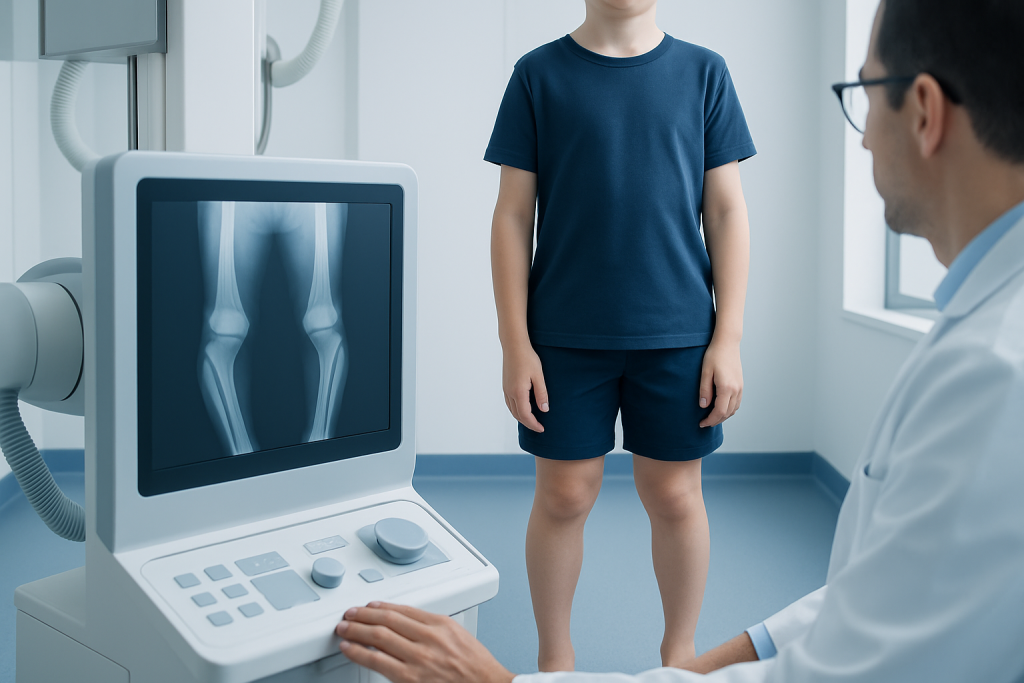
Bow legged alignment is usually seen first rather than felt. A child may stand with a visible gap between the knees even when the ankles touch. An adult may notice that the lower legs angle inward toward the body while the knees appear farther apart than expected.
Depending on the cause, the appearance may be mild and stable or more obvious over time. Some people also report knee discomfort, fatigue with standing or walking, uneven shoe wear, or a feeling that one leg bears more weight than the other. In children, caregivers may notice that the shape looks uneven from one side to the other or that the curve does not seem to lessen as growth continues.
Symptoms that deserve attention include pain, limping, reduced range of motion, frequent tripping, or a bowing pattern that is only on one leg. These features do not always mean something serious, but they do make a medical evaluation more useful.
Causes and Risk Factors
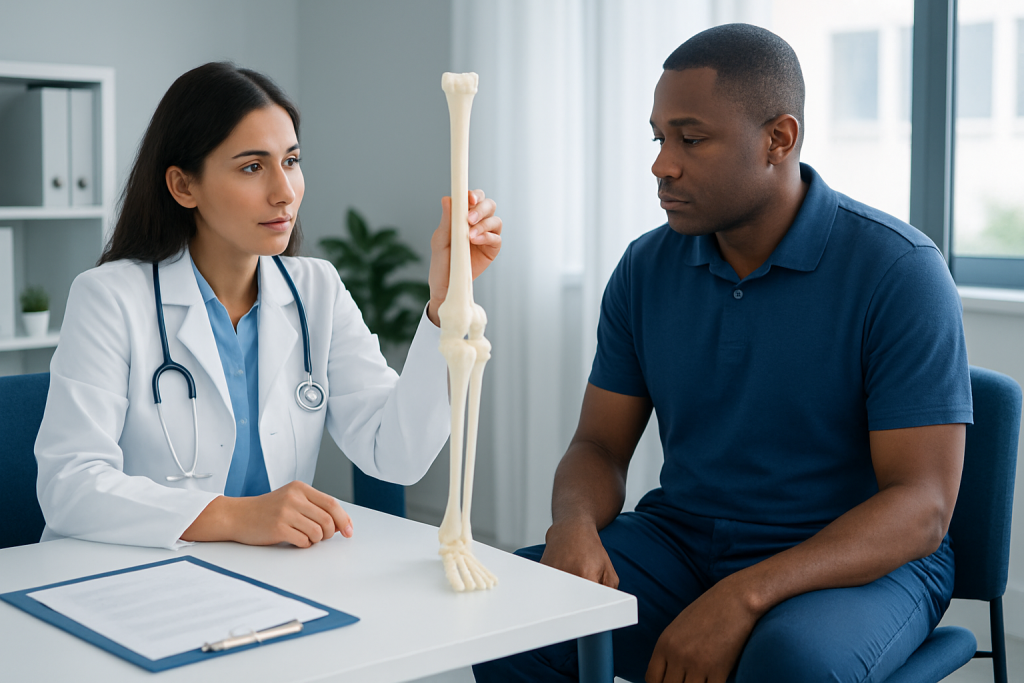
The reasons for bow legs differ by age. In early childhood, it can be part of normal skeletal development as the legs gradually move from a bowed position toward a straighter alignment. In other cases, the shape develops because the bones are not growing in the usual way or because joints are being loaded unevenly.
Possible causes include Blount disease, which affects growth around the upper shin bone; vitamin D deficiency and other bone-mineral problems such as rickets; healed fractures or growth plate injuries; arthritis in adults; and certain bone disorders that affect structure and development. Less commonly, one-sided bowing may be related to infection, congenital bone differences, or other orthopedic conditions.
Risk factors vary with the cause. A family history of growth or bone problems, nutritional deficiencies, excess body weight in children, injury to the leg, or longstanding joint disease can all increase the chance that bowing persists or becomes more noticeable. The key point is that the appearance itself is only part of the story; growth pattern, symptoms, and symmetry often matter just as much.
Diagnosis
Diagnosis begins with a careful history and examination. A clinician will usually ask when the leg shape was first noticed, whether it is changing, whether pain or limping is present, and whether there has been any injury, illness, or nutritional concern that could affect bone health.
The physical exam looks at posture, walking pattern, knee spacing, ankle position, and whether both legs are affected similarly. In younger children, the clinician may compare findings with the child’s age and stage of growth, because a temporary bowing pattern can still be normal at certain points in development.
If the curve seems pronounced, asymmetric, painful, or persistent, imaging may be recommended. Standing X-rays are commonly used to assess the overall alignment of the legs and to see whether the bowing is coming from the thigh bone, shin bone, or the knee itself. In selected cases, blood tests or other studies may be ordered to look for rickets, metabolic bone disease, or another underlying condition.
Treatment Options
Treatment depends on the cause, the age of the patient, and how much the alignment is affecting function. For many young children with mild bowing and no other concerning features, the safest approach is observation over time. The legs are monitored as growth continues to see whether the alignment improves naturally.
When bowing is related to a treatable medical issue, treatment focuses on the underlying cause. For example, nutritional deficiencies may be corrected, or a child with a growth-related orthopedic disorder may need closer specialist follow-up. In some situations, braces or guided-growth procedures may be considered, especially when the bones are still developing and the alignment can be influenced before maturity.
In older children, adolescents, or adults with more significant deformity, surgery may be discussed. Procedures are chosen based on whether the problem is mainly in the bone shape, the joint position, or the way weight is distributed across the knee. An orthopedic surgeon may recommend osteotomy or other corrective techniques when the goal is to improve alignment, reduce pain, and protect the joint over time. A personalized plan matters, especially for international patients who may need coordination of imaging, surgery, rehabilitation, and follow-up in one care pathway.
Prevention and Self-care
Not all bow legs can be prevented, particularly when the cause is developmental or genetic. Still, general bone and joint care can support healthy growth and reduce stress on the legs. Good nutrition, including adequate calcium and vitamin D intake through diet or supplements when advised by a doctor, is one part of that picture.
For children, regular pediatric checkups are useful because growth patterns are easiest to interpret over time. Caregivers can help by noticing whether the legs appear more curved, whether a child begins to limp, or whether physical activity becomes uncomfortable. Avoiding unverified treatments marketed to “straighten” the legs is also important, since not every product addresses the real cause.
- Keep follow-up visits if a clinician is monitoring leg alignment.
- Use supportive footwear if recommended for comfort, but recognize that shoes alone do not correct bone alignment.
- Encourage age-appropriate movement and healthy body weight to lessen joint strain.
- Seek professional advice before starting supplements for a child or adult with suspected bone problems.
Adults with bow legs may also benefit from low-impact exercise, symptom-guided activity modification, and weight management when appropriate, because these measures can reduce pressure on the knees. Self-care is best viewed as support, not a substitute for evaluation when the alignment is changing or causing pain.
When to See a Doctor
Medical assessment is a good idea when bowing is pronounced, getting worse, or present on only one side. It is especially important if the person has pain, stiffness, limping, reduced activity, or repeated falls. In children, persistent bowing after the age when legs usually begin to straighten should be reviewed by a clinician.
Adults should seek care if the leg shape is new or changing, if one knee is becoming more painful, or if walking feels unsteady. These signs can point to arthritis or another structural issue that may benefit from treatment before joint wear becomes more advanced.
For families traveling for care, an orthopedic consultation can usually clarify the next step after a physical exam and imaging review. Acibadem Health Point works with multidisciplinary specialists and JCI-accredited hospitals to diagnose and treat conditions like bow legged alignment for international patients, with attention to both the medical plan and the practical details of follow-up.
Frequently asked questions
Is bow legged always abnormal in children?
No. A bow legged appearance can be a normal part of early childhood development, especially in infants and toddlers. The key is whether the shape is improving with growth and whether there are any symptoms or asymmetry.
Can bow legs correct themselves?
Mild bowing often improves naturally in young children as the legs grow. If the bowing is severe, one-sided, painful, or still present beyond the expected age range, it should be checked by a doctor.
Does bow legged mean a person will need surgery?
Not usually. Many cases are monitored without surgery, and some improve on their own or are treated by addressing the underlying cause. Surgery is generally reserved for more significant deformity or symptoms that do not respond to simpler measures.
What tests are commonly used to evaluate bow legs?
A doctor usually starts with a physical examination and walking assessment. If needed, standing X-rays help show the alignment of the bones, and blood tests may be used when a nutritional or metabolic bone problem is suspected.
Can exercise fix bow legs?
Exercise can support joint health and general fitness, but it does not change bone alignment by itself. In some people, especially adults, exercise and weight management can reduce knee strain and improve comfort.
When should an adult with bow legs see an orthopedist?
An adult should seek orthopedic evaluation if the bowing is new, worsening, painful, or affecting walking. It is also wise to get checked if one knee is bearing more weight or if arthritis symptoms are developing.
References
- American Academy of Orthopaedic Surgeons
- Mayo Clinic
- NHS
- MedlinePlus
- American Academy of Pediatrics
This article is for general information only and is not a substitute for professional medical advice. Please consult a qualified doctor about your individual situation.
Joint and spine care in Turkey — expert assessment & treatment
JCI-accredited · board-certified surgeons · reply within 24h
Add us as a Preferred Source to see more of our trusted health content across Google Search, AI Overviews and Discover.
More from the Health Library


Related Specialists

Prof. Dr. Ahmet Alanay
Orthopedic Surgery & Traumatology
Dr. Sinan Aksu
Orthopedic Surgery & Traumatology
Dr. Sirri Baştürk
Orthopedic Surgery & Traumatology
Prof. Dr. Korhan Özkan
Orthopedic Surgery & Traumatology