Barrett’s Esophagus: Symptoms, Causes and Treatment

Key Takeaways
- Barrett's esophagus usually develops after long-standing gastroesophageal reflux disease (GERD).
- Many people do not notice new symptoms from Barrett's esophagus itself; reflux symptoms often come first.
- Diagnosis is typically made with upper endoscopy and tissue sampling (biopsy).
- Treatment focuses on controlling reflux, monitoring the esophagus, and treating abnormal cell changes when needed.
- Lifestyle measures can support symptom control, but regular medical follow-up is important.
- Most people benefit from a personalized plan based on reflux history, biopsy results, and overall risk.
Medically reviewed by the Acıbadem clinical team — August 19, 2026
Barrett's esophagus is a condition in which the lining of the lower esophagus changes after long-term exposure to stomach acid. It often develops in people with chronic reflux and may not cause symptoms on its own, which is why evaluation and follow-up matter.
Overview
Barrett’s esophagus is a change in the cells lining the lower part of the esophagus, the tube that carries food from the mouth to the stomach. It usually happens after years of exposure to stomach acid and digestive juices, most often in people who have chronic gastroesophageal reflux disease, or GERD.
For many patients, Barrett’s esophagus is discovered during an endoscopy done to investigate reflux symptoms rather than because of a symptom unique to the condition. That is one reason it can be easy to overlook until a clinician decides the esophagus should be examined more closely.
The condition matters because the altered lining can, in some people, increase the chance of developing precancerous changes over time. That does not mean cancer will develop, but it does mean the esophagus may need careful monitoring and, in some cases, treatment to reduce risk.
Symptoms

Barrett’s esophagus itself often causes no clear symptoms. When symptoms are present, they usually reflect the reflux that led to the condition in the first place. People may describe a burning feeling behind the breastbone, sour or bitter fluid coming up into the throat, or discomfort after meals and when lying down.
Some patients notice that reflux has become more frequent, or that symptoms are harder to control with usual measures. A persistent cough, hoarseness, throat clearing, or a sensation of something stuck in the throat may also occur, although these are not specific to Barrett’s esophagus.
Warning signs that deserve medical attention include trouble swallowing, food sticking, unexplained weight loss, vomiting blood, black stools, or ongoing chest pain. These symptoms do not confirm Barrett’s esophagus, but they can point to a problem that needs prompt evaluation.
Causes & Risk Factors
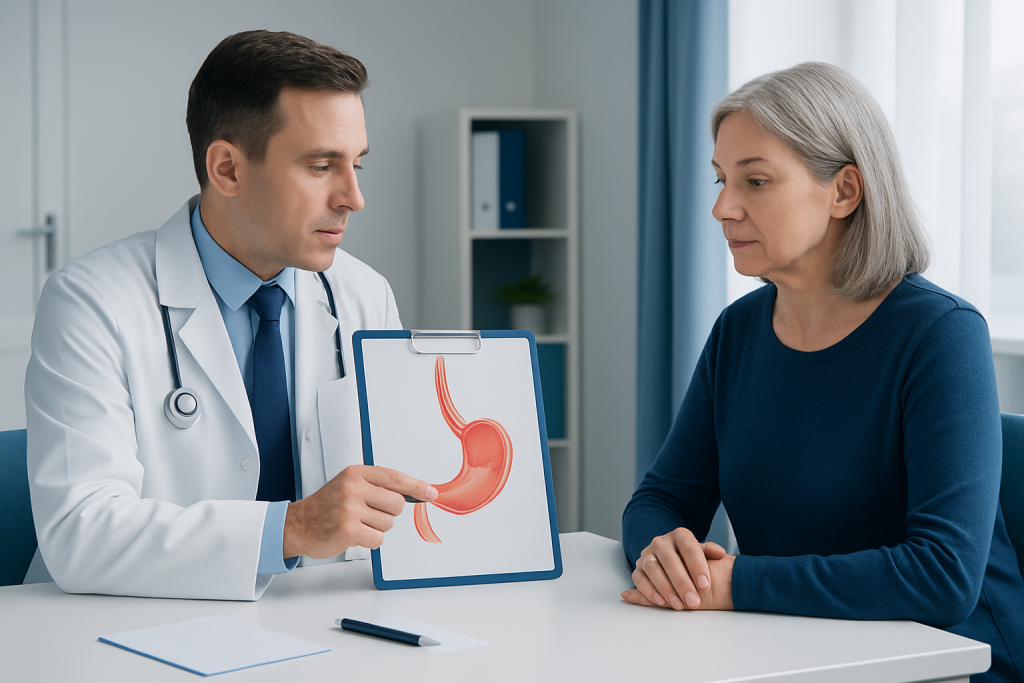
Repeated acid exposure is the main driver of Barrett’s esophagus. When the lower esophagus is irritated by reflux over a long period, the body may adapt by replacing the normal lining with a more acid-resistant type of cell. This adaptation can be helpful in the short term, but it also changes the tissue in a way that needs monitoring.
Risk is higher in people with long-standing GERD, frequent nighttime reflux, obesity, hiatal hernia, and a history of smoking. The condition is also more commonly seen in men and in adults over 50, although it can occur outside those groups as well.
Family history and certain patterns of reflux may also increase concern. Because the condition develops gradually, someone may live with reflux for years before Barrett’s esophagus is ever considered, especially if symptoms have been mild or treated only intermittently.
Diagnosis
Diagnosis usually begins with an upper endoscopy, a procedure in which a thin flexible camera is passed through the mouth to look at the esophagus, stomach, and upper small bowel. If the lining looks suspicious for Barrett’s esophagus, the clinician takes small tissue samples for biopsy.
Biopsy is important because the diagnosis depends on what the cells look like under the microscope. The tissue samples also help show whether there are any precancerous changes, such as dysplasia, which can influence follow-up and treatment choices.
Patients preparing for care from another country often benefit from bringing previous endoscopy reports, biopsy results, and a list of Acid Reflux Medicines: Types, Uses and Side Effects" class="ahp-ilk">reflux medicines they have tried. A clear record helps the specialist decide whether repeat endoscopy is needed and how closely the esophagus should be monitored.
Treatment Options
Treatment is tailored to the biopsy findings, the severity of reflux, and the person’s overall health. In many cases, the first step is strong acid control with reflux medicine and practical measures that reduce irritation of the esophagus. The goal is to ease symptoms and lower ongoing inflammation.
If biopsies show no dysplasia, regular surveillance endoscopy may be recommended so the tissue can be checked over time. If dysplasia is present, treatment may include endoscopic therapy to remove or destroy abnormal tissue. These procedures are often done through the endoscope and may help treat the problem without open surgery.
In selected patients, surgery to improve the anti-reflux barrier may be considered, especially if reflux remains difficult to control or complications are present. The best option depends on a careful discussion of benefits, risks, recovery time, and what follow-up will look like once the patient returns home.
- Reflux medicines to reduce acid exposure
- Endoscopic surveillance to watch for cellular change
- Endoscopic treatment for dysplasia or early precancerous change
- Occasionally, anti-reflux surgery for selected patients
Prevention & Self-care
Not every case of Barrett’s esophagus can be prevented, but reflux control can make a meaningful difference. Eating smaller meals, avoiding lying down soon after eating, and identifying personal trigger foods may reduce symptoms for some people. Weight management and smoking cessation are also important because they can lessen reflux burden.
Sleep habits matter as well. Raising the head of the bed and avoiding late-evening meals can help reduce nighttime reflux in some patients. It is also sensible to take reflux medicines exactly as prescribed and to keep follow-up appointments, even if symptoms feel quieter.
For international patients, self-care includes planning for continuity after travel. Keeping copies of endoscopy and pathology reports, knowing the recommended surveillance interval, and arranging follow-up with a local gastroenterologist can help the care plan stay on track after returning home.
When to See a Doctor
Anyone with frequent reflux symptoms, especially for several years, should speak with a doctor about whether evaluation is appropriate. Barrett’s esophagus is not diagnosed by symptoms alone, so persistent reflux is a good reason to ask whether endoscopy should be considered.
Medical review is also important if reflux suddenly becomes harder to control, swallowing feels difficult, or symptoms are accompanied by weight loss, vomiting, bleeding, or anemia. These changes do not automatically mean something serious is present, but they deserve timely assessment.
After a diagnosis of Barrett’s esophagus, follow-up should be individualized. The timing of repeat endoscopy and any treatment plan depends on biopsy findings and the person’s overall risk profile, so shared decision-making with a gastroenterologist is essential.
Acibadem Health Point’s multidisciplinary specialists and JCI-accredited hospitals diagnose and treat Barrett’s esophagus for international patients, coordinating evaluation, procedure planning, and follow-up with a patient-friendly approach.
Living With Barrett's Esophagus
Many people live well with Barrett’s esophagus when reflux is controlled and the condition is monitored appropriately. The diagnosis can feel unsettling at first, but in practical terms it often becomes a long-term follow-up plan rather than a day-to-day illness.
Patients may find it helpful to think in terms of a rhythm: manage reflux, attend scheduled endoscopy visits, and update the care team if symptoms change. This approach supports early detection of any tissue change and helps the treatment plan stay responsive rather than reactive.
When care is being coordinated across countries, communication is especially valuable. A concise discharge summary, pathology report, and next-step plan make it easier for the patient and the home-country doctor to continue monitoring without losing important details.
Frequently asked questions
Does Barrett's esophagus mean cancer is present?
No. Barrett's esophagus is not cancer, but it can be associated with a higher risk of developing precancerous changes over time. That is why doctors often recommend surveillance and, in some cases, treatment of abnormal tissue.
Can Barrett's esophagus be felt or seen without an endoscopy?
Usually not. Many people have no symptoms from Barrett's esophagus itself, and the diagnosis is generally made during an upper endoscopy with biopsy. Reflux symptoms may be the clue that leads to testing.
What is the difference between GERD and Barrett's esophagus?
GERD is the reflux condition that causes stomach contents to move back into the esophagus. Barrett's esophagus is a tissue change that can develop after long-standing reflux exposure.
Is treatment always surgery?
No. Many patients are treated with reflux-control medicine and regular monitoring. Procedures are usually reserved for cases where biopsies show dysplasia or when other treatment is needed.
Can lifestyle changes cure Barrett's esophagus?
Lifestyle changes can help reduce reflux and protect the esophagus, but they do not reverse Barrett's esophagus by themselves. Medical follow-up remains important because the tissue change needs to be monitored.
How often will follow-up endoscopy be needed?
The schedule depends on biopsy results, whether dysplasia is present, and the person's overall risk profile. A gastroenterologist determines the interval based on individual findings rather than a single fixed timetable.
References
- National Institute of Diabetes and Digestive and Kidney Diseases
- American College of Gastroenterology
- Mayo Clinic
- World Gastroenterology Organisation
- American Gastroenterological Association
This article is for general information only and is not a substitute for professional medical advice. Please consult a qualified doctor about your individual situation.
Persistent digestive symptoms? Get evaluated in Turkey
JCI-accredited · board-certified surgeons · reply within 24h
Add us as a Preferred Source to see more of our trusted health content across Google Search, AI Overviews and Discover.