Ab Exercises

Key Takeaways
- The abdominal muscles are part of a larger core system that supports movement and stability.
- Good form matters more than speed, repetition count, or how intense an exercise feels.
- A balanced routine should train the front, sides, and deep stabilizing muscles of the trunk.
- People with back pain, hernia concerns, recent surgery, or pregnancy-related questions should get personalized advice before starting.
- Consistency, recovery, and safe progression usually matter more than extreme workouts.
Ab exercises are often associated with appearance, but their real value goes much further: they help support posture, balance, breathing control, and everyday movement. A thoughtful routine focuses on the whole core, uses proper technique, and progresses gradually to reduce strain.
Overview
Ab exercises are best understood as core-strength exercises, not just stomach workouts. The abdominal muscles work with the back, hips, and pelvis to help the body stay upright, transfer force, and protect the spine during everyday tasks such as standing up, lifting a suitcase, or reaching overhead.
For many people, the goal is not to chase endless crunches. A more useful approach is to train the core in different ways: resisting movement, supporting posture, and helping the trunk stay steady while the arms and legs move. This is why a well-rounded routine usually includes a mix of flexion, stabilization, rotation control, and anti-extension work.
People traveling for treatment or returning to activity after illness, childbirth, or surgery often need a simpler, safer entry point. In that setting, the right ab routine is not the hardest one; it is the one that matches current strength, symptoms, and recovery stage.
What the Core Really Does
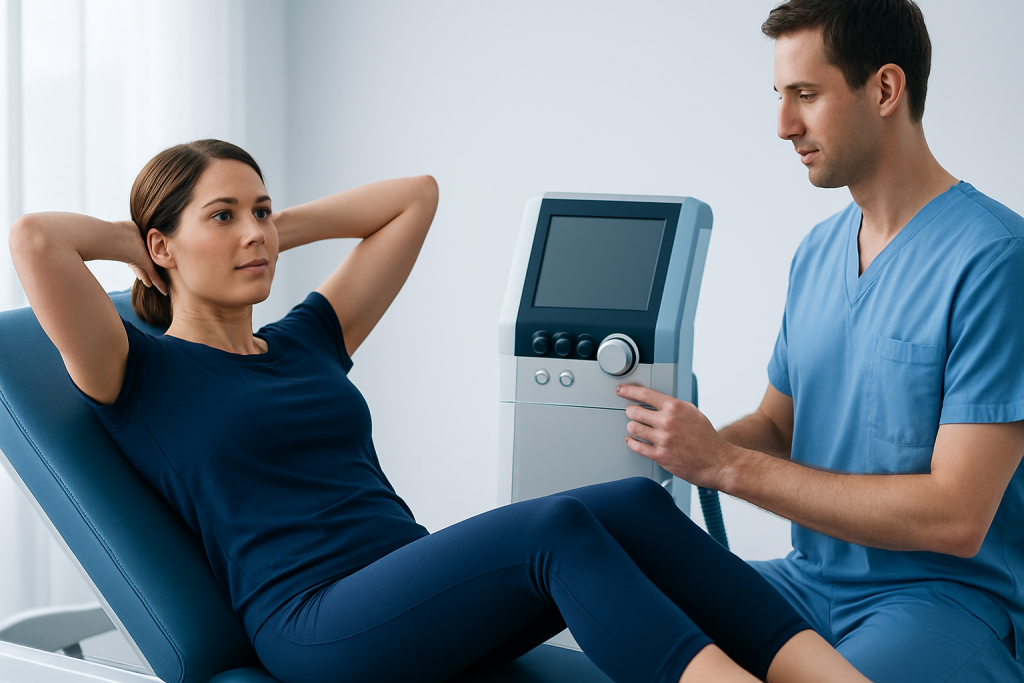
The term “core” includes more than the visible abdominal muscles. It also involves deeper muscles that help create pressure inside the trunk and support the spine. When these muscles work together, the body can move with more control and less unnecessary strain.
Common core muscles include the rectus abdominis, obliques, transverse abdominis, diaphragm, pelvic floor, and muscles along the back. A balanced exercise plan should not focus on only one of these areas, because the body depends on coordination rather than isolated strength alone.
Understanding this broader role can change how a person trains. Instead of asking, “How do I get the burn in my abs?” it can be more helpful to ask, “How do I build stable, useful strength that supports daily life?”
Symptoms That May Affect Exercise Choices

Most healthy adults can benefit from some form of abdominal training, but certain symptoms suggest that the plan should be adjusted. Pain is the most important signal to take seriously, especially if it is sharp, persistent, or worsens during movement.
Other signs that an exercise routine may need review include bulging in the groin or abdominal wall, pressure that feels worse with coughing or straining, lower back discomfort that increases with sit-ups, or a sense of doming along the midline of the abdomen during effort. These findings do not always mean something is serious, but they do deserve attention.
- Ongoing back pain during core work
- Visible abdominal bulging or doming
- Pain after recent surgery
- Pelvic heaviness or pressure
- Discomfort with breathing or bracing
If symptoms appear during exercise, the safest response is usually to stop, rest, and seek individualized guidance rather than pushing through them.
Causes & Risk Factors
The need for abdominal exercise is not caused by one single condition. People often start core training because of deconditioning, posture concerns, sports goals, or a wish to return safely to activity after a period of reduced movement. Sitting for long periods and repeated lifting can also expose weaknesses in trunk control.
Some people face higher risk of strain or poor exercise tolerance. These include individuals with low back problems, hernia history, pregnancy or postpartum changes, recent abdominal surgery, obesity, or a long break from physical activity. None of these situations automatically rules out ab exercises, but they do make careful progression more important.
Technique and breathing also matter. Holding the breath, jerking through movements, or relying on momentum can increase pressure in the abdomen and lower back. Safe training works best when the person can control both effort and breathing.
Diagnosis and Assessment
There is no special medical test for deciding whether someone should do ab exercises, but a clinical assessment can be useful when pain, weakness, or abdominal wall problems are present. A doctor, physiotherapist, or rehabilitation specialist may ask about symptoms, recent injuries, surgery, pregnancy history, and daily movement habits.
The examination may include posture checks, trunk strength testing, movement observation, and assessment for abdominal separation, hernia, or back-related concerns when appropriate. The aim is not to label a person as “weak,” but to understand how the core is functioning and what level of exercise is safe.
For international patients, this evaluation can be especially helpful before beginning a new program abroad or resuming exercise after travel. A clear assessment reduces guesswork and helps the person return home with a practical plan they can continue confidently.
Treatment Options and Exercise Examples
When people ask about treatment for weak or painful abdominal muscles, the answer is usually a graded exercise plan matched to the underlying issue. For some, that means learning gentle activation first; for others, it means modifying sports training or rebuilding core endurance after a long break.
Useful ab exercises often include movements that teach control rather than force. Examples may include abdominal bracing, dead bug variations, bird dog, side plank progressions, pelvic tilts, and supported marching or anti-rotation drills. Traditional crunches can have a place in some routines, but they are not the only option and may not be the best starting point for everyone.
A thoughtful program often progresses through stages:
- Breathing and gentle core engagement
- Stability exercises in supported positions
- Dynamic movements with arms and legs
- Sport- or task-specific core training
People recovering from surgery, childbirth, or injury should follow professional guidance on timing and exercise selection. In some cases, physical therapy or rehabilitation supervision is the most efficient way to progress safely.
Prevention & Self-care
Preventing abdominal strain is less about avoiding movement and more about moving with better control. A warm-up before exercise, steady breathing, and gradual increases in intensity all help the trunk adapt without being overloaded.
Simple habits can make a difference. Walking, posture breaks during long sitting periods, and exercises that include the hips and back all support core function. Core training should also be paired with basic recovery practices such as sleep, hydration, and rest days.
Self-care tips for a safer routine include:
- Start with exercises you can control smoothly
- Exhale during the hardest part of the movement
- Avoid holding the breath for long periods
- Stop if pain, bulging, or dizziness appears
- Increase only one challenge at a time
For people training while traveling, it helps to choose a routine that does not depend on special equipment. Bodyweight exercises, a mat, and a stable wall or bench are often enough to maintain progress between appointments or after returning home.
When to See a Doctor
Medical advice is important when abdominal pain is persistent, exercise causes a new bulge, or the core feels unstable after an injury or surgery. A doctor should also be consulted if there is unexplained swelling, nausea with abdominal discomfort, or pain that interferes with daily activity.
It is also wise to seek professional guidance before starting ab exercises if there is a history of hernia, significant back pain, pregnancy-related concerns, or recent delivery. Personalized advice helps distinguish normal muscle effort from a problem that needs treatment or a different exercise approach.
Acibadem Health Point’s multidisciplinary specialists and JCI-accredited hospitals diagnose and treat abdominal and core-related conditions for international patients, helping them get evaluated and start an appropriate plan with confidence. No matter where care is received, the most important step is choosing a program that fits the person’s body, goals, and recovery stage.
Practical Examples for a Safer Routine
Many people find it easier to stay consistent when ab training is simple and repeatable. A short routine done several times a week often works better than an occasional exhausting session, especially when the goal is stable strength rather than a short-lived burn.
One practical approach is to combine one breathing drill, one stabilization exercise, and one dynamic movement. That structure keeps the routine balanced and can be adapted for beginners, older adults, postpartum patients, or active travelers who need a low-equipment plan.
Examples of sensible pairings include:
- Diaphragmatic breathing plus pelvic tilts
- Dead bug plus side plank variation
- Bird dog plus controlled marching
- Anti-rotation hold plus gentle hip bridge
Form should remain smooth, and the person should finish feeling challenged but not strained. If a movement cannot be done without pain or compensation, it is usually better to reduce the range, slow the pace, or choose an easier variation.
Frequently asked questions
Are ab exercises enough to get strong core muscles?
Usually not on their own. A strong core is built with a mix of stability, breathing control, rotation work, and exercises for the back and hips as well as the abdominals. A balanced program is more useful than doing one move repeatedly.
Do crunches work better than other ab exercises?
Crunches can strengthen part of the abdominal wall, but they are not the only effective option. Many people benefit from exercises that challenge the core while the spine stays stable, such as planks, dead bug variations, or bird dog movements. The best choice depends on the person’s goals and symptoms.
Can ab exercises help with back pain?
They can help some people, especially when the program improves trunk control and supports better movement habits. However, not every back pain pattern responds the same way, so the exercise plan may need to be adjusted. Persistent or worsening pain should be evaluated by a clinician.
Is it normal to feel the abs working during exercise?
Yes, a mild to moderate muscle effort is expected during effective training. What is not normal is sharp pain, visible bulging, dizziness, or pressure that feels wrong. Those signs suggest the exercise should be stopped and reviewed.
How often should someone do ab exercises?
That depends on the person’s fitness level, recovery status, and the type of exercise chosen. Many people do well with core work several times a week, with rest between harder sessions. A qualified professional can help set the right frequency.
When should someone avoid starting a new ab routine alone?
It is better to get guidance first if there has been recent surgery, pregnancy or postpartum changes, a hernia concern, or pain during daily movement. A clinician or physiotherapist can help choose exercises that are safe and appropriate. This is especially helpful when returning to training after time away from home or medical care.
References
- American Council on Exercise
- Mayo Clinic
- National Institute of Arthritis and Musculoskeletal and Skin Diseases
- American Physical Therapy Association
- NHS
This article is for general information only and is not a substitute for professional medical advice. Please consult a qualified doctor about your individual situation.