Dead Bug
Key Takeaways
- The dead bug is a low-impact exercise that emphasizes core control rather than speed or repetition.
- Good form matters more than how many repetitions are completed.
- It can be useful in rehabilitation, back-friendly exercise plans, and general fitness routines.
- People with pain, recent injury, or surgery should ask a clinician or physiotherapist before starting.
- Breathing steadily and keeping the lower back comfortable are central to safe practice.
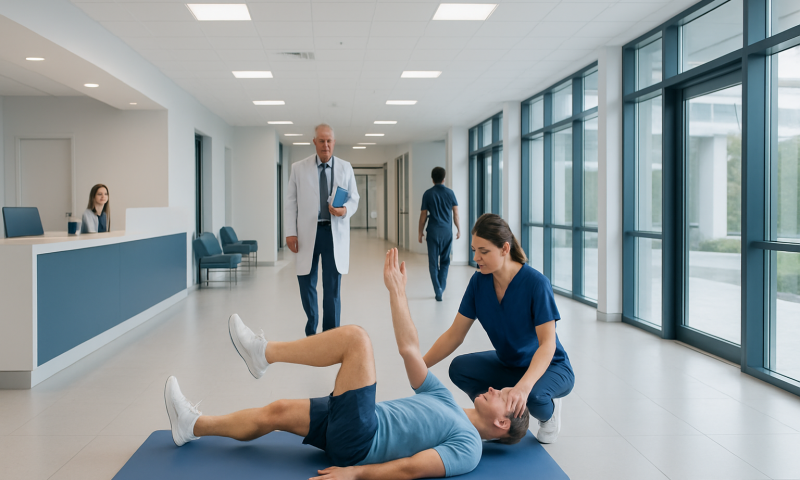
The dead bug exercise is a controlled core-strengthening movement that helps train abdominal stability while keeping the spine in a neutral position. It is often used in rehabilitation and general fitness because it can be adapted to different abilities and recovery stages.
Overview
The dead bug exercise looks simple, but its purpose is precise: it teaches the trunk to stay steady while the arms and legs move. That combination makes it a valuable part of core training, especially for people who need a careful, low-impact way to rebuild control after inactivity, pain, or injury.
Rather than focusing on visible effort, the movement asks the body to resist unwanted motion. The lower back, deep abdominal muscles, and hip stabilizers work together to keep the torso quiet as one arm and the opposite leg extend. This is why the exercise is often included in rehabilitation programs and in general conditioning plans for people who want safer core work.
For international patients planning treatment or recovery away from home, exercises like the dead bug can also fit well into a guided follow-up program. They are easy to learn, do not require equipment, and can usually be adjusted to match a clinician’s recommendations after assessment.
What the Exercise Is Meant to Train
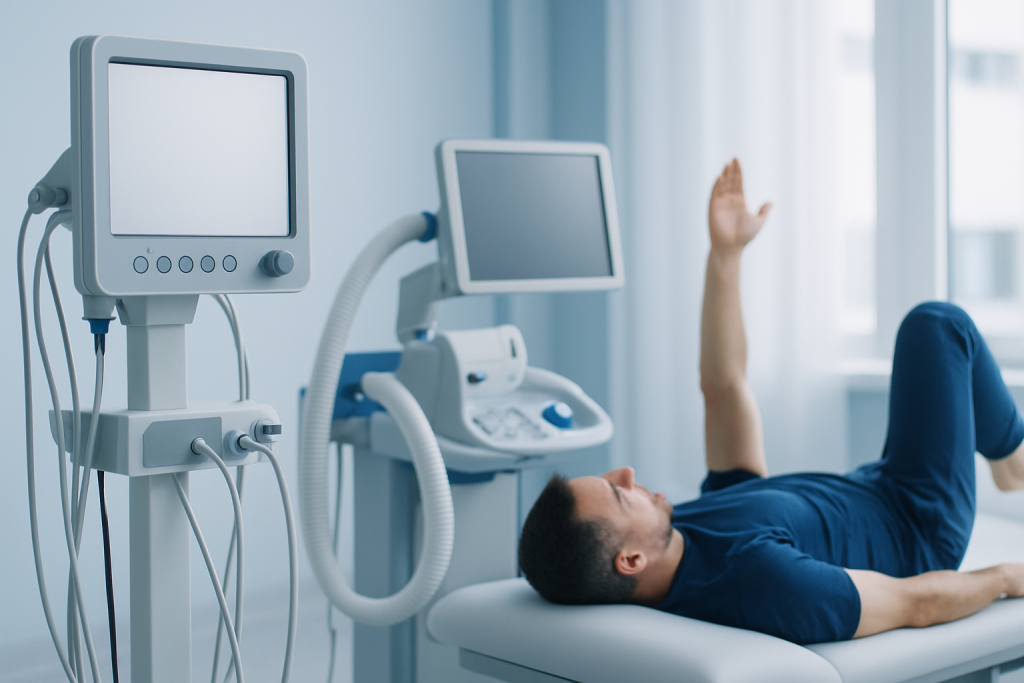
The dead bug is less about building a six-pack and more about coordination. It helps the brain and muscles learn how to keep the trunk stable while the limbs move independently, which is an important part of everyday movement such as walking, lifting, and reaching.
When performed correctly, the exercise encourages the abdominal wall to support the spine without gripping too hard. That balance can be helpful for people who feel their core is weak, who notice strain during other exercises, or who are returning to movement after a period of rest.
Because the movement is controlled and predictable, it is often easier to learn than more demanding core exercises. That makes it useful for beginners, older adults, and people following a physiotherapy plan where safe progression matters more than intensity.
How to Perform It Safely
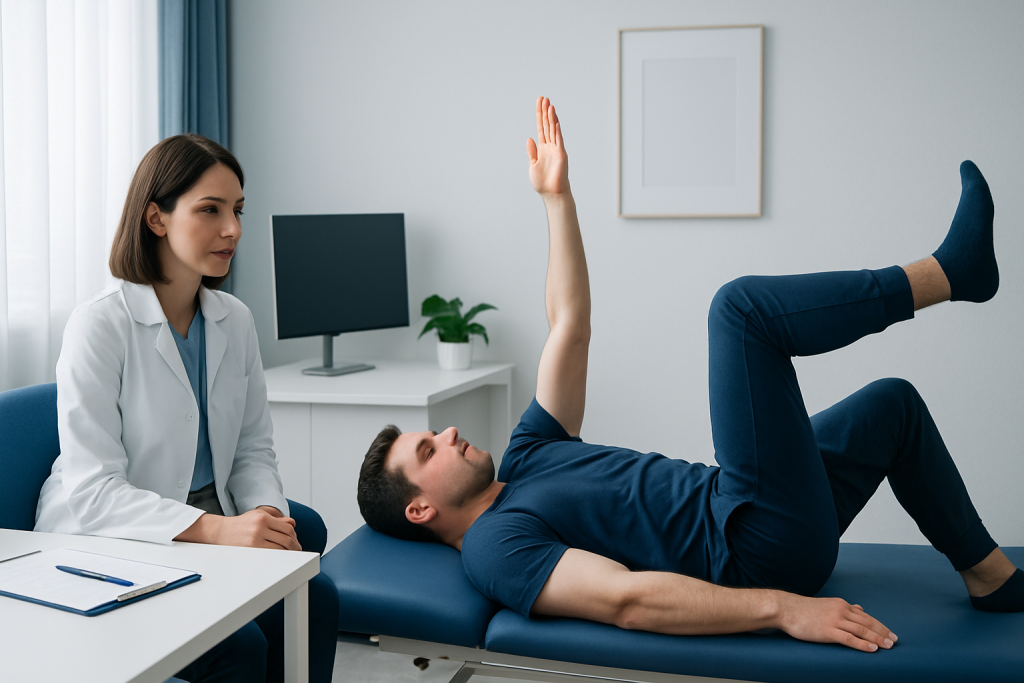
To begin, lie on the back with the knees bent and lifted so the legs form a tabletop position, or keep the feet on the floor if that is easier. The arms point upward. Before moving, the person should gently draw the ribs down, keep the neck relaxed, and notice whether the lower back feels supported rather than arched.
From there, one arm reaches back overhead while the opposite leg extends away from the body. The movement should be slow enough that the torso does not wobble. After returning to the start, the same pattern is repeated on the other side. Small movements done with control are more valuable than large movements done quickly.
- Keep breathing; do not hold the breath.
- Move only as far as the back can remain comfortable and steady.
- Stop if pain, pinching, or marked strain appears.
- Quality of motion is more important than the number of repetitions.
Many people benefit from learning the exercise under supervision first, especially if they are recovering from back pain, abdominal surgery, hip issues, or childbirth-related changes in core function.
Common Mistakes and Why They Matter
One of the most common errors is letting the lower back arch away from the floor. That usually means the legs or arms are moving beyond what the person can control at that stage, and the exercise stops doing its intended job. Reducing the range of motion often fixes the problem.
Another frequent mistake is rushing through the movement. Speed can make the trunk twist or rock, which shifts the effort away from the deep stabilizing muscles. The exercise works best when each repetition is deliberate and calm.
People also sometimes forget to breathe. A held breath may temporarily increase tension, but it does not teach the body good control. Smooth exhalation during the effort phase usually helps maintain steadiness and comfort.
Who May Benefit and Who Should Be Cautious
The dead bug can be useful for a wide range of people, including those building general core strength, people returning to exercise after a break, and patients in rehabilitation who need a gentle foundation before progressing to harder training. It is often chosen because it can be scaled down or up without equipment.
It may be especially helpful for people who want to practice trunk control without loading the spine heavily. For that reason, clinicians sometimes use it when designing a program for low back discomfort, movement retraining, or postural support.
Caution is important for anyone with recent abdominal surgery, severe back pain, uncontrolled symptoms, or a condition that changes safe exercise choices. A qualified doctor or physiotherapist can decide whether the movement is appropriate and how it should be modified.
Diagnosis and Professional Assessment Before Exercise
The dead bug itself does not require a diagnosis, but a person’s symptoms and medical history may need review before starting. A clinician may ask where pain is felt, what movements aggravate it, whether surgery has been performed recently, and whether there are problems such as hernia, pelvic floor symptoms, or spinal conditions.
A physical assessment often focuses on movement quality rather than strength alone. The clinician may observe how the ribs, pelvis, and lower back respond as the arms and legs move, because those patterns can reveal whether the exercise is suitable or whether it should be simplified first.
For patients traveling for care, this evaluation may be part of a broader rehabilitation plan arranged before departure or continued after return home. Clear instructions, written exercise guidance, and follow-up appointments help make the program safer and easier to maintain.
Progressions, Modifications, and Related Core Work
The dead bug can be modified in many ways. Beginners may keep the feet on the floor and move only the arms, or perform very small leg movements. People with more control may progress to extending both the arm and leg farther, using slower tempo, or adding a light resistance band under supervision.
Progress should be gradual. If the back starts to arch or the torso twists, that is usually a sign that the current version is enough for now. A simpler variation is often more effective than forcing a harder one.
Other exercises may be added around it, such as glute bridges, bird-dog variations, side planks, or breathing and pelvic control drills. The best combination depends on the person’s goals, symptoms, and stage of recovery.
Prevention, Self-care, and When to See a Doctor
For most people, the dead bug is safest when it is introduced slowly and practiced with attention. A short session with good form is usually better than a long session done with fatigue and compensation. If the exercise is part of home care after an injury or procedure, it should follow the plan given by the treating team.
People should seek medical advice if the movement causes sharp pain, a sense of instability, numbness, weakness, worsening back pain, or abdominal discomfort that does not settle after stopping. It is also wise to ask a clinician before starting if there has been recent surgery, pregnancy-related concerns, or a history of spine, hip, or abdominal problems.
When guidance is needed, Acibadem Health Point’s multidisciplinary specialists and JCI-accredited hospitals can diagnose and treat this condition for international patients as part of coordinated rehabilitation and follow-up care. That can be especially helpful for people who need a clear plan across travel, treatment, and recovery.
Frequently asked questions
What does the dead bug exercise work?
The dead bug mainly trains core stability, coordination, and control of the trunk while the arms and legs move. It also helps people practice keeping the spine in a comfortable neutral position. Because of that, it is often used in rehabilitation and general conditioning.
Is the dead bug safe for people with back pain?
It can be, but not for everyone. Many people with mild or improving back pain tolerate it well when the movement is small and controlled. If pain is severe, new, or linked to a specific injury, a doctor or physiotherapist should guide whether it is appropriate.
How many repetitions should someone do?
There is no single correct number for everyone. The better question is whether the person can keep the torso steady and breathe normally throughout the movement. A clinician or trainer can suggest a starting amount based on fitness level and medical history.
Should the lower back touch the floor during the exercise?
The goal is not to force the lower back flat, but to keep it comfortable and stable. Some people notice a gentle connection with the floor, while others maintain a very small natural curve. Discomfort or arching usually means the movement should be made easier.
Can the dead bug be done after surgery or childbirth?
Sometimes, but only with professional clearance. The timing and variation depend on the type of surgery, healing progress, and any symptoms that are present. It is best introduced as part of an individualized rehabilitation plan.
What is a simple sign that the exercise is too hard?
If the torso rocks, the back arches, the breath becomes strained, or pain appears, the exercise is probably too demanding at that moment. Reducing the range of motion or choosing an easier variation is usually the next step. A physiotherapist can help match the exercise to the person’s current capacity.
References
- American College of Sports Medicine
- National Institute of Arthritis and Musculoskeletal and Skin Diseases
- Mayo Clinic
- National Health Service
- World Physiotherapy
This article is for general information only and is not a substitute for professional medical advice. Please consult a qualified doctor about your individual situation.