When Is a Thyroid Nodule Really an ENT Problem?

Key Takeaways
- Many thyroid nodules are benign and cause no symptoms, but some need further evaluation to rule out cancer or pressure on nearby structures.
- An ENT specialist is especially important when a nodule affects swallowing, breathing, voice, or causes visible neck swelling.
- Ultrasound and fine-needle aspiration are common tools used to assess whether a thyroid nodule needs treatment.
- Treatment may range from observation to surgery, depending on size, symptoms, growth, and biopsy results.
- Anyone with a new neck mass, persistent hoarseness, or trouble swallowing should be assessed by a qualified clinician.
Medically reviewed by the Acıbadem clinical team — June 13, 2026
A thyroid nodule is a lump in the thyroid gland that is often found incidentally, but certain symptoms or exam findings make an ENT evaluation important. Understanding which nodules need closer attention can help patients seek the right specialist at the right time.
Overview
A thyroid nodule is a discrete lump within the thyroid gland, a small butterfly-shaped organ at the base of the neck. Many people discover it by chance during a routine examination or an imaging test done for another reason. In most cases, these nodules are benign, but the location of the thyroid means that even noncancerous growths can sometimes affect nearby structures such as the voice box, windpipe, or esophagus.
This is where an ENT specialist can become important. While thyroid care often involves endocrinology, nodules that change the voice, create a neck mass, or raise questions about surgery often benefit from ENT evaluation. An ENT doctor is trained to examine the neck, assess the vocal cords, and determine whether the nodule is simply being watched or whether it needs a more active approach.
For international patients, it can be helpful to think of thyroid care as a pathway rather than a single appointment. The first step may be a neck ultrasound or blood tests, followed by biopsy if needed, and sometimes surgical planning if the nodule is suspicious or causing symptoms. The right specialist depends less on the word “thyroid” alone and more on whether the problem is hormonal, structural, or affecting nearby airway and voice function.
Symptoms That Make It More Than a Routine Finding
Some thyroid nodules stay silent for years and are discovered only on imaging. Others announce themselves more clearly. A visible lump in the lower neck, a feeling of pressure, or discomfort when wearing collars or scarves can be early signs that the nodule is large enough to matter clinically.
Symptoms become more concerning when the nodule seems to interfere with nearby anatomy. A persistent hoarse voice, trouble swallowing, a choking sensation, shortness of breath, or a feeling that food “sticks” in the throat can indicate that the thyroid mass is pressing on adjacent structures. These symptoms do not automatically mean cancer, but they do deserve timely evaluation.
Other clues can come from the way the neck feels during daily life. A rapidly enlarging lump, pain in the front of the neck, or swollen lymph nodes in the neck area may warrant closer review. If the thyroid nodule is accompanied by unexplained weight changes, heat intolerance, palpitations, or fatigue, hormone testing may also be part of the assessment.
Causes & Risk Factors

Thyroid nodules can arise for several reasons, and many do not have a single identifiable cause. Common benign explanations include thyroid cysts, areas of overgrowth in normal thyroid tissue, and nodules related to long-standing thyroid inflammation. Some nodules are simply part of a thyroid gland that has developed uneven growth over time.
Certain factors increase the likelihood that a nodule will be found or that it will deserve a more detailed workup. A history of radiation exposure to the head or neck, family history of thyroid cancer, or a personal history of thyroid disease can increase concern. Nodules are also more likely to be examined carefully if they are hard, fixed, enlarging, or associated with enlarged neck lymph nodes.
It is important to remember that most risk factors guide evaluation rather than predict an outcome. A patient may have several risk factors and still have a benign result, while another person with no obvious risk factors may still need a biopsy. That is why the pattern on imaging, the physical exam, and the patient’s symptoms all matter together.
Diagnosis
The diagnostic process usually begins with a careful history and neck examination. An ENT specialist may ask when the lump was first noticed, whether the voice has changed, whether swallowing is comfortable, and whether there has been any prior radiation exposure or family history of thyroid disease. The neck may be examined for firmness, mobility, tenderness, and nearby lymph nodes.
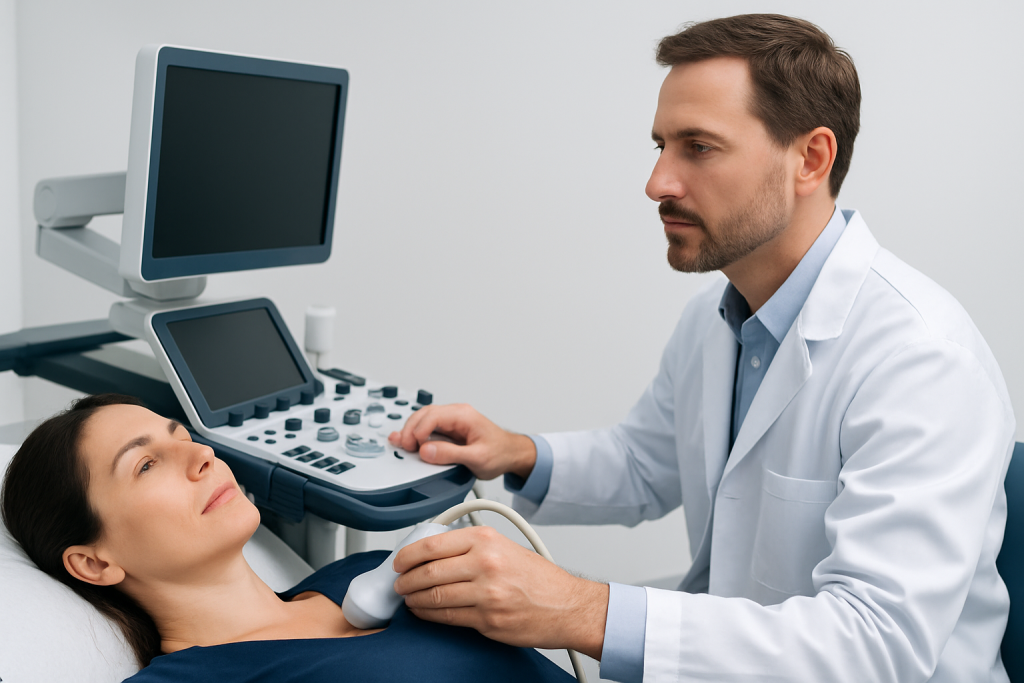
Ultrasound is the most common imaging study used to assess a thyroid nodule. It helps define the nodule’s size, shape, borders, and internal characteristics, and it can identify features that suggest a need for biopsy. Blood tests may also be ordered to check thyroid function, especially if symptoms suggest the thyroid is overactive or underactive.
If the nodule has concerning features or reaches a certain size depending on ultrasound appearance, fine-needle aspiration may be recommended. This is a minimally invasive biopsy that uses a thin needle to collect cells for examination. In some situations, an ENT doctor may also perform laryngoscopy to look directly at the vocal cords, especially if the patient has hoarseness, is being considered for surgery, or has a history suggesting possible nerve involvement.
Treatment Options
Treatment depends on what the nodule is doing, not only on how it looks on paper. A small benign nodule that is not changing and is not causing symptoms may only need observation with periodic exams and repeat ultrasound. This watchful approach is common and often appropriate when the risk of harm is low.
If the biopsy suggests cancer, if the nodule keeps growing, or if it causes pressure symptoms, surgery may be recommended. The type of surgery depends on the case: some patients need only part of the thyroid removed, while others may need more extensive surgery. When surgery is planned, ENT involvement is especially valuable because the surgeon is working in a region where voice and swallowing function must be protected carefully.
Not every thyroid issue requires an operation. Some nodules can be monitored, and some cystic nodules may be treated with drainage or other procedures in selected cases. If the thyroid is overactive, treatment may also include medications or endocrine management, showing why care is often shared between specialties rather than handled in isolation.
Prevention & Self-care
There is no guaranteed way to prevent thyroid nodules, but patients can support safer follow-up by staying alert to changes in the neck and voice. A lump that seems stable one month but is larger the next month should not be ignored. Likewise, hoarseness that lingers beyond a short cold deserves attention, especially when it occurs with a neck mass.
Patients preparing for evaluation abroad can make the process easier by gathering prior test results, ultrasound reports, biopsy results, and a list of medications. Bringing this information helps the clinician compare changes over time and avoid repeating tests unnecessarily. It also supports smoother coordination if the patient is planning surgery or follow-up after returning home.
General self-care is straightforward: do not press repeatedly on the lump, do not delay evaluation because the nodule is painless, and do not assume that all thyroid problems are endocrine-only. The best next step is usually a structured medical assessment, especially when a nodule is new, enlarging, or producing symptoms.
When to See a Doctor
Medical evaluation is appropriate for any new neck lump that lasts more than a short time, especially if it feels firm or is growing. A thyroid nodule should be assessed sooner if there is hoarseness, difficulty swallowing, breathing discomfort, pain, or a sensation of pressure in the throat or lower neck.
Urgent assessment is not usually needed for every thyroid nodule, but the combination of a nodule with voice change, swallowing difficulty, or enlarged neck lymph nodes should not wait. These symptoms can help determine whether the issue belongs with ENT, endocrinology, or both. In many real-world cases, the answer is collaborative care rather than a single specialty deciding everything alone.
Acibadem Health Point can help international patients access multidisciplinary specialists and JCI-accredited hospitals for diagnosis and treatment planning, including cases where an ENT evaluation is needed. If a thyroid nodule is affecting voice, swallowing, or neck comfort, a qualified clinician can guide the next steps with clarity and calm.
What ENT Specialists Look for in the Voice and Neck
ENT doctors pay close attention to symptoms that suggest the thyroid nodule may be influencing structures around it, not just the thyroid itself. A change in the voice can be especially important because the nerves that control the vocal cords travel close to the thyroid gland. If those nerves are affected by pressure, inflammation, or surgery, the voice may become weak, breathy, or tired.
They also evaluate how the neck moves and feels during swallowing and breathing. A patient may describe a tight feeling when lying flat, a sense that the throat is narrower, or the need to clear the throat often. These details help distinguish a harmless incidental finding from a nodule that is creating functional problems.
In practice, ENT involvement is often most valuable when surgery is being considered or when the nodule’s impact on nearby anatomy needs a careful look. That means the conversation is not only about the nodule’s size, but also about what it is doing to the patient’s daily life and airway safety.
Frequently asked questions
Is every thyroid nodule an ENT problem?
No. Many thyroid nodules are first evaluated by an endocrinologist or primary care doctor, especially if they are found incidentally and do not cause symptoms. ENT becomes more relevant when the nodule affects the voice, swallowing, breathing, or may require surgery.
Can a thyroid nodule cause hoarseness?
Yes, a thyroid nodule can sometimes cause hoarseness if it presses on or affects nearby structures involved in voice production. Persistent hoarseness should be evaluated, particularly when it comes with a neck lump.
How is a thyroid nodule checked?
Ultrasound is usually the main test, and blood tests may be added to assess thyroid function. If the ultrasound shows concerning features, a fine-needle aspiration biopsy may be recommended.
Does a thyroid nodule mean cancer?
No. Most thyroid nodules are benign. The goal of evaluation is to identify the smaller number that need closer follow-up or treatment.
When might surgery be needed?
Surgery may be considered if the nodule is suspicious for cancer, keeps growing, or causes pressure symptoms such as trouble swallowing or breathing. The decision depends on imaging, biopsy results, symptoms, and overall health.
Should international patients bring previous thyroid records?
Yes. Prior ultrasounds, biopsy reports, and lab results can help the doctor see whether the nodule has changed over time. That information often makes consultation more efficient and helps with planning follow-up care after travel.
References
- American Thyroid Association
- National Institute of Diabetes and Digestive and Kidney Diseases
- American Academy of Otolaryngology–Head and Neck Surgery
- Mayo Clinic
- NHS
This article is for general information only and is not a substitute for professional medical advice. Please consult a qualified doctor about your individual situation.