Vasectomy Reversal vs. IVF/ICSI: How Couples Weigh the Trade-Offs

Key Takeaways
- Vasectomy reversal can restore natural conception, but it depends on surgical findings and the fertility of both partners.
- IVF/ICSI bypasses the blocked vas deferens and may be preferred when female-factor fertility issues or advanced age are also part of the picture.
- The decision is rarely only about one procedure; timing, desired family size, and travel or follow-up needs matter too.
- A thorough fertility workup helps couples avoid choosing a path that looks simpler at first but fits their situation poorly.
- Both options can be effective, and the best choice is the one that matches the couple’s medical realities and priorities.
Medically reviewed by the Acıbadem clinical team — June 13, 2026
When a couple wants another child after vasectomy, the main paths are surgical reversal or assisted reproduction with IVF/ICSI. The better choice depends on the couple’s age, fertility history, time horizon, and whether they want to try for more than one pregnancy.
Overview
For couples hoping to conceive after a vasectomy, the decision often comes down to two very different strategies: reopen the path for sperm with a vasectomy reversal, or work around the blockage with in vitro fertilization and intracytoplasmic sperm injection, commonly called IVF/ICSI.
Neither option is automatically “better.” Vasectomy reversal aims to restore natural fertility, which can be appealing for couples who want the possibility of more than one pregnancy without repeated procedures. IVF/ICSI, by contrast, is usually chosen when speed matters, when the female partner’s fertility has its own challenges, or when a reversal is less likely to succeed.
What makes this decision personal is that the vasectomy is only one part of the fertility picture. Age, ovarian reserve, prior pregnancies, surgical history, and how quickly a couple wants to move forward all influence the most sensible route. A conversation with a reproductive urologist and fertility specialist can make the options much clearer.
How vasectomy reversal works
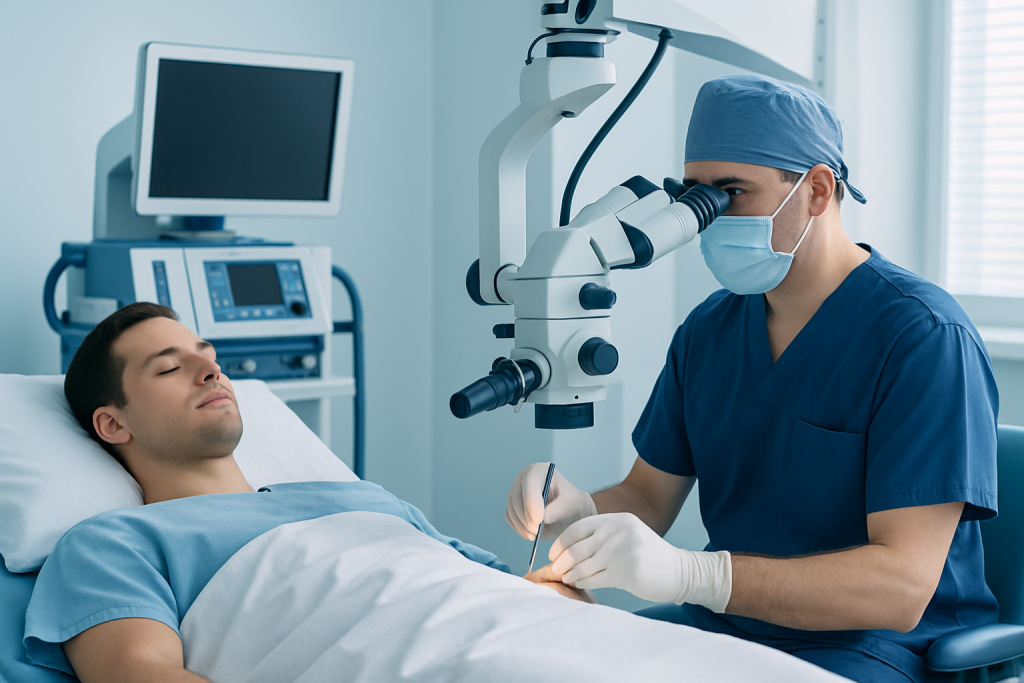
A vasectomy reversal is a microsurgical procedure that reconnects the tubes carrying sperm from the testicles so sperm can return to the ejaculate. Depending on what the surgeon finds during the operation, the repair may be a vasovasostomy, which reconnects the vas deferens, or a more complex epididymovasostomy, which bypasses a blockage closer to the testicle.
The main advantage of reversal is that it can allow conception through intercourse, without the need for egg retrieval, laboratory fertilization, or embryo transfer. If the repair works well, the couple may be able to try for more than one child over time. That can be especially meaningful for people who want a less medicalized path after the initial surgery and recovery.
Reversal is not instant. Sperm may not appear in the semen right away, and follow-up semen testing is usually needed. Even after a technically successful operation, pregnancy depends on partner fertility, timing, and the natural course of conception.
How IVF/ICSI works

IVF/ICSI takes a different route. The female partner’s ovaries are stimulated to produce multiple eggs, the eggs are collected, and sperm are used in the laboratory to fertilize them. With ICSI, a single sperm is injected directly into each mature egg, which can be especially helpful when there are very few sperm available or when sperm must be retrieved surgically.
This approach avoids the need to restore the vas deferens. For some couples, that means less uncertainty about whether a reversal will succeed. It can also be a practical choice when the female partner has age-related fertility concerns, blocked tubes, or other factors that make natural conception less likely even if sperm return to the ejaculate.
IVF/ICSI may also be preferred when genetic testing of embryos is being considered or when the couple wants to try for pregnancy on a defined timeline. However, it is usually a more involved process for the female partner, with medication, monitoring, egg retrieval, and embryo transfer.
What affects success on each path
Several variables shape the outcome of vasectomy reversal. Time since vasectomy is important because the chance of needing a more complex repair may rise over time, and sperm quality can vary. The surgeon’s findings, the couple’s ages, and the presence of other fertility issues all matter as well.
For IVF/ICSI, success depends on factors such as the female partner’s age, egg reserve, uterine health, and the quality of sperm available for ICSI. If sperm are absent from the ejaculate after vasectomy, they may be retrieved directly from the testicle or epididymis for use in the laboratory. That makes sperm count less of a barrier, but it does not remove the need to consider the broader reproductive picture.
- Vasectomy reversal may be more attractive when the couple wants several future pregnancies.
- IVF/ICSI may be more practical when time is limited or female-factor infertility is present.
- Prior fertility history can help predict which route is more realistic.
- Both options work best when the full fertility workup is done first.
Diagnosis and pre-treatment evaluation
The decision between reversal and IVF/ICSI should start with a careful evaluation, not a guess. For the man, this usually includes a review of the vasectomy date, prior children, any scrotal or groin surgery, and a physical examination. For the couple, it also means understanding the female partner’s age, menstrual pattern, ovarian reserve testing when appropriate, and any known uterine or tubal issues.
A reproductive urologist may explain whether the anatomy and timing make reversal a reasonable first option. A fertility specialist may review whether IVF/ICSI would likely offer a quicker or more reliable path to pregnancy. In many cases, both consultations are valuable because the answer is often hidden in the details that a simple phone call cannot capture.
Couples traveling internationally for care should also ask how follow-up will work after they return home. Reversal requires postoperative checks and semen analyses, while IVF/ICSI may require coordination of medications, monitoring, and embryo transfer timing. Clear planning can reduce stress and prevent delays once treatment begins.
Treatment options and practical trade-offs
From a medical standpoint, vasectomy reversal and IVF/ICSI solve the same problem in very different ways. Reversal attempts to re-establish the natural route for sperm, while IVF/ICSI bypasses that route entirely. The trade-off is often between a one-time surgical repair with a chance at ongoing natural conception and a treatment cycle that is more controlled but more procedural for the female partner.
Couples often weigh convenience, invasiveness, and future family goals. Reversal may be the better match if they hope for more than one child and are comfortable waiting for sperm to reappear. IVF/ICSI may be favored if pregnancy needs to happen sooner, if the female partner is already undergoing Male Fertility Evaluation: Which Test Answers Which Question First" class="ahp-ilk">fertility evaluation, or if a reversal is not likely to restore sperm in the ejaculate.
Emotional factors matter too. Some couples prefer the idea of a single surgery and a return to natural attempts. Others feel more comfortable with the predictability of IVF/ICSI, especially if they want tighter control over timing or have already faced prolonged infertility. There is no universal answer; the right decision is the one that aligns with both medical facts and family plans.
Prevention, self-care, and recovery planning
Once a treatment direction is chosen, the most useful self-care is preparation. Before reversal, that may mean arranging time off, understanding activity restrictions, and making a plan for postoperative follow-up. Before IVF/ICSI, it may mean learning the medication schedule, planning for monitoring visits, and deciding how embryo transfer and possible frozen embryo storage will be handled.
Healthy habits support either path. Avoiding tobacco, limiting excess alcohol, maintaining a balanced weight, and addressing chronic conditions such as diabetes or thyroid disease can help overall reproductive health. For the female partner, any fertility treatment should also include attention to sleep, stress, and medication review.
International patients may benefit from writing down all medicines, prior surgeries, and fertility test results before travel. That makes the first consultation more productive and helps the team build a realistic plan that fits the couple’s time in the country and their follow-up needs at home.
When to see a doctor
A specialist visit is sensible whenever a couple is unsure which route to take, especially if the female partner is over 35, if there is a history of miscarriage or infertility, or if the vasectomy occurred many years ago. A prompt consultation can prevent months of uncertainty and help avoid starting on a path that does not match the couple’s goals.
Medical advice is also important if there is pain, swelling, prior scrotal surgery, or any concern about another fertility problem. For couples who are considering travel for care, it is wise to speak with the team before booking flights so that testing, surgery, or IVF scheduling can be coordinated efficiently.
At Acibadem Health Point, multidisciplinary specialists and JCI-accredited hospitals can help diagnose and treat these fertility issues for international patients, with coordinated planning from consultation through follow-up.
Frequently asked questions
Is vasectomy reversal or IVF/ICSI better for pregnancy after vasectomy?
There is no single best option for every couple. Vasectomy reversal may be a good choice when natural conception and the possibility of multiple pregnancies are important, while IVF/ICSI may be better when time is limited or there are additional fertility factors.
How do doctors decide between the two options?
They look at both partners, not only the man’s vasectomy history. Age, ovarian reserve, prior fertility, time since vasectomy, and whether the couple wants one child or more all influence the recommendation.
Can sperm be used for IVF/ICSI if there is no sperm in the semen after vasectomy?
Yes. Sperm can often be retrieved directly from the epididymis or testicle and used for ICSI. This is one reason IVF/ICSI can work even when the vasectomy has fully blocked sperm from appearing in the ejaculate.
Does a vasectomy reversal guarantee natural pregnancy?
No. It can restore the pathway for sperm, but pregnancy still depends on sperm quality, the female partner’s fertility, and the couple’s natural chances of conception. Follow-up semen testing helps confirm whether the repair is working.
Is recovery easier with reversal or IVF/ICSI?
Recovery depends on which procedure is being considered and on the person undergoing treatment. Reversal involves surgery and healing for the man, while IVF/ICSI places more of the physical burden on the female partner through medications, monitoring, egg retrieval, and embryo transfer.
Should international patients plan follow-up before choosing a treatment?
Yes. Reversal needs postoperative checks and semen analyses, while IVF/ICSI requires careful timing and coordination. Planning follow-up early can make travel-based fertility care much smoother.
References
- American Urological Association
- American Society for Reproductive Medicine
- European Association of Urology
- World Health Organization
This article is for general information only and is not a substitute for professional medical advice. Please consult a qualified doctor about your individual situation.