Sleep Apnea Treatment Choices: CPAP, Oral Devices, or Surgery—What Fits Your Case?

Key Takeaways
- Sleep apnea treatment is not one-size-fits-all; the best option depends on the cause and severity of the disorder.
- CPAP is often the most reliable first-line treatment for obstructive sleep apnea because it keeps the airway open during sleep.
- Oral devices may suit some people with mild to moderate sleep apnea or those who cannot tolerate CPAP.
- Surgery can help selected patients when anatomy plays a major role or when other treatments are not effective.
- Weight management, sleep-position changes, and avoiding alcohol or sedatives can support treatment, but they do not replace medical care.
Medically reviewed by the Acıbadem clinical team — July 13, 2026
Sleep apnea treatment is usually chosen by matching the therapy to the type and severity of the condition, along with a person’s anatomy, symptoms, and lifestyle. Many patients improve with CPAP or oral devices, while surgery may be considered in selected cases after careful evaluation.
Overview
Sleep apnea is more than loud snoring or restless nights. It is a sleep-related breathing disorder in which the airway narrows or closes repeatedly, interrupting breathing and reducing sleep quality. The most common form is obstructive sleep apnea, where soft tissues in the throat collapse during sleep; central sleep apnea is less common and has a different cause, involving the brain’s breathing control signals.
Choosing treatment is usually less about finding a single “best” option and more about finding the right fit. A person’s sleep study results, airway anatomy, symptom burden, weight, dental structure, and ability to use a device every night all influence the plan. For international patients, this often means the first step is a detailed review of records, followed by a sleep and airway assessment that can clarify whether CPAP, an oral appliance, surgery, or a combination is most appropriate.
Most people begin with non-surgical treatment, especially CPAP or an oral device. Surgery is generally reserved for selected situations, such as when a structural problem is clearly contributing to airway blockage or when other therapies have not worked well enough. A careful evaluation helps avoid both undertreatment and unnecessary procedures.
Symptoms
Sleep apnea can show up in ways that are easy to dismiss at first. Snoring is common, but not everyone who snores has sleep apnea, and not everyone with sleep apnea snores loudly. Other clues may appear during the day, such as feeling unrefreshed after a full night’s sleep, trouble concentrating, morning headaches, dry mouth on waking, or an urge to nap during ordinary activities.
People sleeping near the patient may notice pauses in breathing, gasping, choking sounds, or repeated awakenings. Some individuals also wake often to urinate, feel irritable, or notice a drop in memory and attention. In children and teens, sleep apnea can present differently, sometimes with hyperactivity, restless sleep, mouth breathing, or learning difficulties rather than obvious daytime sleepiness.
Symptoms do not always reflect how severe the condition is. A person with only mild snoring may have frequent breathing interruptions, while another person with stronger daytime fatigue may have fewer recorded events. That is one reason a sleep study matters: it helps connect symptoms with what is actually happening overnight.
Causes & Risk Factors

Obstructive sleep apnea develops when the upper airway becomes too narrow or collapses during sleep. This can happen because of anatomy, such as a small jaw, enlarged tonsils, a large tongue, a thick neck, nasal obstruction, or a naturally crowded airway. During sleep, muscle tone falls, making these structural factors more likely to interfere with airflow.
Certain factors increase the chance that sleep apnea will appear or worsen. Higher body weight is a major one, since extra tissue around the neck and abdomen can make breathing harder during sleep. Age, male sex, menopause, family history, smoking, alcohol use, and sedative medicines may also contribute. Nasal congestion, allergies, and some craniofacial features can make obstruction more likely.
Central sleep apnea has different triggers. It may be associated with heart failure, neurologic conditions, certain medications, altitude exposure, or problems with the body’s breathing regulation. Because the causes differ, treatment also differs, so identifying the exact type of sleep apnea is essential before deciding between CPAP, a dental device, or surgery.
Diagnosis
Diagnosis usually starts with a medical history and an examination of the nose, mouth, throat, jaw, and neck. A clinician may ask about snoring, breathing pauses, sleep quality, morning symptoms, medical conditions, medications, and daytime functioning. For patients traveling from abroad, reviewing previous test results, imaging, and treatment records can save time and help the specialist build on prior care instead of repeating it unnecessarily.
The main test is a sleep study, which may be done in a sleep lab or, in some cases, at home with a simplified monitoring device. The study measures breathing patterns, oxygen levels, sleep position, and other signals that help determine whether sleep apnea is present and how severe it is. It also helps distinguish obstructive sleep apnea from central sleep apnea.
In some patients, additional evaluation of the upper airway is useful. This may include nasal examination, endoscopy, dental assessment, or imaging when anatomy needs to be mapped more closely. The goal is not just to confirm the diagnosis, but to understand why the airway is collapsing and which treatment is most likely to work.
Treatment Options
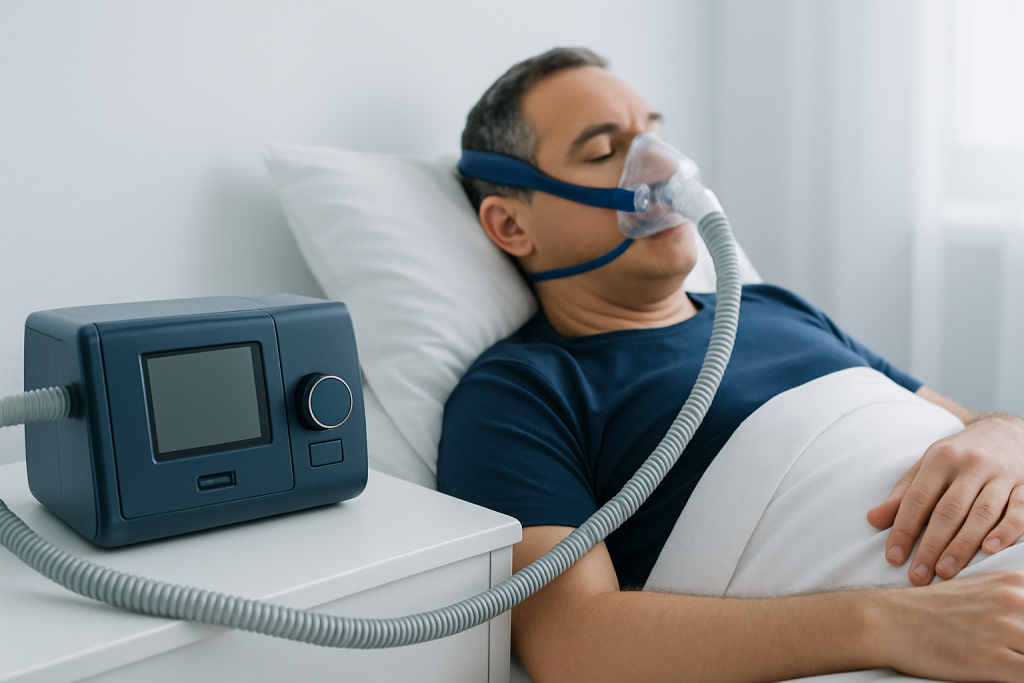
CPAP, or continuous positive airway pressure, is often the first treatment discussed for obstructive sleep apnea. It uses a mask and a small machine to deliver air pressure that keeps the airway open throughout sleep. When it is used comfortably and consistently, CPAP can reduce breathing interruptions and improve sleep quality, alertness, and snoring. Some people need time to adjust to the mask, pressure, or airflow, so fitting, humidification, and follow-up matter.
Oral appliance therapy offers a different approach. These custom-fitted devices, made by a dentist or dental sleep specialist, hold the lower jaw slightly forward to help keep the airway open. They are often considered for mild to moderate obstructive sleep apnea, for primary snoring, or for patients who cannot tolerate CPAP. Because bite comfort and jaw position matter, regular dental follow-up is important.
Surgery may be appropriate when anatomy strongly contributes to airway blockage or when conservative treatments are not enough. Procedures vary widely and may involve the nose, tonsils, soft palate, tongue base, jaw position, or more than one area. In selected patients, surgery can reduce obstruction and lower the need for nightly devices, but it requires careful planning because no operation fits every airway pattern.
- CPAP tends to be favored when sleep apnea is more significant or when the airway needs reliable nightly support.
- Oral devices may work well when the problem is milder or when CPAP is not tolerated.
- Surgery is usually reserved for carefully chosen patients after a detailed airway evaluation.
Prevention & Self-care
Self-care can make treatment work better, even though it does not replace medical therapy. Weight management, if relevant, may lessen airway collapse in some people. Sleeping on the side rather than the back can help certain patients, and avoiding alcohol or sedative medicines before bed may reduce airway relaxation and nighttime breathing problems.
Nasal care can also matter. Treating allergies or chronic congestion may improve comfort with CPAP or an oral device and can make sleep less fragmented. Good sleep habits, such as keeping a regular bedtime and limiting late caffeine, support overall sleep quality, though they do not correct the underlying disorder.
For patients using CPAP, consistency is usually more important than perfection. A mask that fits well, a pressure setting that is reviewed when symptoms change, and patience during the adjustment period can make the difference between giving up and succeeding. For those using an oral appliance, keeping dental follow-up appointments helps monitor the bite, jaw comfort, and long-term fit.
When to See a Doctor
Medical review is worthwhile if snoring is accompanied by pauses in breathing, gasping, choking, or significant daytime sleepiness. It is also important to seek evaluation when fatigue affects work, driving, memory, mood, or daily safety. People with high blood pressure, heart disease, diabetes, stroke history, or a family history of sleep apnea should not ignore ongoing symptoms.
Anyone who has already been diagnosed but is struggling with treatment should return for reassessment rather than stopping therapy on their own. CPAP discomfort, dry mouth, mask leakage, jaw pain from an oral appliance, or persistent fatigue despite treatment are all reasons to fine-tune the plan. Sometimes the issue is simple to solve; sometimes the original diagnosis or treatment choice needs to be revisited.
Traveling for care can be practical when the condition is complex, when multiple specialties need to collaborate, or when a second opinion is desirable. At Acibadem Health Point, multidisciplinary specialists and JCI-accredited hospitals diagnose and treat sleep apnea for international patients in a coordinated setting. The main goal is always the same: to match the treatment to the patient’s airway, symptoms, and everyday life.
Recovery and Long-Term Management
Sleep apnea is usually managed over time rather than fixed in a single visit. CPAP users often need early follow-up to refine mask choice, pressure settings, humidification, and comfort. Oral appliance users may need repeat checks to confirm that the device is effective and to watch for jaw or bite changes. After surgery, recovery depends on the procedure, but follow-up is still important to assess whether breathing during sleep has improved as expected.
Long-term management often includes repeat testing or periodic reassessment, especially if weight changes, symptoms return, or other health conditions develop. Sleep apnea can shift over time, so a treatment that once worked well may need adjustment later. Patients who move between countries or receive part of their care abroad should keep copies of their sleep studies, procedure notes, and device settings for future review.
The most useful mindset is often a practical one: treat sleep apnea as a chronic airway condition that can usually be controlled well with the right tools. For many people, success comes from combining the main therapy with small lifestyle changes and staying in touch with a clinician when the picture changes.
Frequently asked questions
How does a doctor decide between CPAP, an oral device, and surgery?
The choice depends on the type of sleep apnea, how severe it is, and whether anatomy or lifestyle factors make one treatment more practical than another. CPAP is often the first option for obstructive sleep apnea, while oral devices may suit milder cases or people who cannot tolerate CPAP. Surgery is usually considered when a structural problem is important or when non-surgical treatments are not enough.
Is CPAP always better than other treatments?
CPAP is often the most dependable way to keep the airway open during sleep, but “better” depends on whether the patient can use it consistently. A treatment that works on paper but is not tolerated in daily life may be less effective than a simpler option that the patient uses every night. The best therapy is the one that is both medically appropriate and sustainable.
Can an oral appliance replace CPAP?
Sometimes, but not always. Oral appliances can be a good fit for selected people with mild to moderate obstructive sleep apnea or for those who cannot use CPAP comfortably. In more significant sleep apnea, they may reduce symptoms but not fully control the condition, so follow-up testing is important.
What types of surgery are used for sleep apnea?
Surgery can target different parts of the airway, such as the tonsils, soft palate, nose, tongue base, or jaw position. The procedure depends on where the blockage is happening and how the airway looks during evaluation. Because sleep apnea has more than one possible cause, surgery is highly individualized.
Do weight loss and lifestyle changes cure sleep apnea?
Weight loss and healthy sleep habits can improve symptoms in some people and may reduce how severe sleep apnea is. However, they do not reliably cure the condition on their own, especially when anatomy plays a major role. They are best used as support alongside the recommended medical treatment.
What should a patient do if CPAP is uncomfortable?
They should ask for a follow-up rather than abandoning treatment. Small adjustments to the mask, humidification, pressure settings, or cleaning routine can make CPAP much easier to use. If it still does not suit the patient, a clinician may consider an oral device or another option after reassessment.
References
- American Academy of Sleep Medicine
- National Heart, Lung, and Blood Institute
- Mayo Clinic
- Cleveland Clinic
- National Health Service
This article is for general information only and is not a substitute for professional medical advice. Please consult a qualified doctor about your individual situation.