Select All That Are Functions Of Neurons And Glial Cells.

Key Takeaways
- Neurons transmit electrical and chemical messages throughout the body.
- Glial cells do not only “support” the brain; they also nourish, protect, and regulate nerve function.
- Different glial cells have different jobs, including insulation, immune defense, and cleanup.
- Problems affecting either cell type can lead to neurological symptoms that deserve medical review.
- Understanding these cells helps explain common questions about memory, movement, sensation, and nerve repair.
Medically reviewed by the Acıbadem clinical team — August 19, 2026
Neurons and glial cells are the two major cell types that make the nervous system work. Neurons carry signals, while glial cells support, protect, and help maintain the environment those signals need.
Overview
The nervous system depends on two closely connected cell families: neurons and glial cells. Neurons are the communication specialists, carrying messages that allow a person to think, move, feel, and respond to the world. Glial cells are the quieter partners, but they are no less important. They create the conditions that let neurons work properly and help keep nervous tissue healthy.
For many people, these cells first come up when they are trying to understand a symptom such as numbness, weakness, memory changes, or a diagnosis related to the brain or spinal cord. A useful way to think about them is that neurons send the message, while glial cells make sure the message can be sent safely, quickly, and in the right environment.
This balance matters throughout life. From early development to recovery after injury, the interaction between neurons and glial cells shapes how the nervous system functions. In a practical sense, that is why doctors often look at both signal transmission and tissue support when evaluating neurological concerns.
What Neurons Do
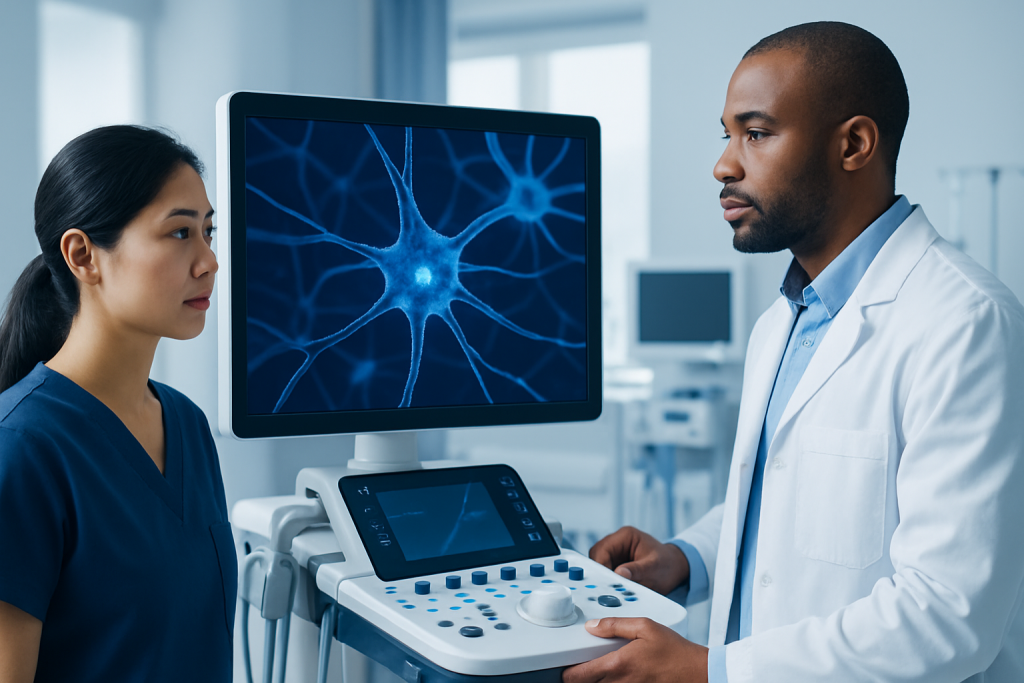
Neurons are specialized cells built for communication. They receive information from other neurons or from the body’s senses, process it, and then pass it on as electrical impulses and chemical signals. This is how the brain talks to the spinal cord, muscles, organs, and sensory systems.
Different neurons handle different tasks. Some carry touch, pain, and temperature information from the skin and internal organs. Others control muscle movement. Still others help with memory, attention, language, and emotional processing. Even simple actions, such as picking up a cup of tea or recognizing a familiar voice on a video call, depend on coordinated neuronal signaling.
Neurons also help the body respond quickly. Reflexes, for example, use neural pathways that can act before conscious thought is involved. That speed is possible because neurons are structured to pass information efficiently across long distances, sometimes from the brain all the way down to the hands or feet.
What Glial Cells Do

Glial cells were once described as the nervous system’s “support cells,” but that description is too narrow. They do support neurons, yet they also regulate the chemical environment around them, remove waste, shape communication, and assist with repair. Without glial cells, neurons cannot function normally for long.
There are several major types of glial cells, each with specific roles. Astrocytes help nourish neurons and maintain a stable environment in the brain. Oligodendrocytes in the central nervous system and Schwann cells in the peripheral nervous system produce myelin, a fatty covering that helps nerve signals travel more quickly. Microglia act as the nervous system’s immune defense, responding to injury and infection-like changes. Ependymal cells help line fluid spaces in the brain and spinal cord.
In everyday terms, glial cells are the maintenance team, communication partners, and cleanup crew all at once. They help balance nutrients, control inflammation, guide developing neural connections, and keep messages moving smoothly. This is why disorders that affect glial cells can influence cognition, sensation, coordination, and recovery after injury.
How Neurons and Glial Cells Work Together
Healthy nervous system function depends on constant teamwork. Neurons generate and transmit signals, but those signals are influenced by the surrounding glial cells at nearly every step. Glial cells help decide which connections strengthen, which weaken, and how efficiently impulses travel through nerve pathways.
Myelin is one of the clearest examples of this partnership. When Schwann cells or oligodendrocytes wrap nerve fibers in myelin, the signal moves faster and more reliably. If myelin is damaged, messages may slow down or fail to reach their destination, which can affect movement, sensation, vision, or balance.
Glial cells also help during recovery. After an injury, they participate in cleanup, inflammation control, and tissue remodeling. This process can be helpful, although in some conditions too much or too little glial activity may contribute to symptoms. Understanding this relationship is especially important when planning follow-up care across borders, because nerve-related symptoms often improve gradually and need ongoing evaluation rather than a single visit.
Common Conditions Linked to These Cells
Many neurological conditions involve disruption of neurons, glial cells, or both. Some diseases primarily affect the protective myelin made by glial cells, such as multiple sclerosis. Others damage neurons directly, as can happen in some degenerative disorders. In many cases, the problem is not one cell type alone, but the way several nervous system processes interact.
Inflammation, reduced blood flow, infection, trauma, genetic changes, and toxin exposure can all interfere with nerve cell function. When that happens, symptoms may include weakness, tingling, walking difficulty, speech changes, memory problems, seizures, or changes in coordination. The exact pattern depends on which part of the nervous system is involved.
Because these symptoms can have many causes, a careful medical evaluation is important. Doctors usually combine the history, neurological examination, and targeted tests to understand whether the issue is related to neurons, glial cells, or another body system affecting the nervous system indirectly.
Symptoms That May Suggest a Nervous System Problem
Symptoms vary widely because the nervous system has many jobs. A problem affecting neurons or glial cells may show up as numbness, burning pain, muscle weakness, tremor, blurred vision, memory trouble, speech difficulty, or a change in mood or alertness. Some people notice symptoms gradually, while others experience a sudden change.
It is also possible for symptoms to come and go. Episodes of weakness, visual disturbance, imbalance, or unusual fatigue may reflect inflammation, nerve irritation, or conduction problems in the nervous system. In international patients, it can be helpful to keep a written symptom timeline, including when the problem started, what makes it better or worse, and whether any imaging or blood tests have already been done.
Not every neurological symptom means severe disease. Still, because nerves carry essential messages, persistent or worsening changes deserve medical attention. A prompt assessment can help identify whether the issue is minor, treatable, or in need of specialist care.
Diagnosis
Doctors evaluate suspected neuron- or glia-related problems by starting with the story of the symptoms, followed by a neurological examination. They may ask about onset, progression, triggers, family history, infections, injuries, medications, and exposure to toxins. This helps narrow down which part of the nervous system may be involved.
Depending on the symptoms, testing may include MRI or CT imaging, nerve conduction studies, electromyography, blood tests, lumbar puncture, or cognitive assessment. Each test answers a different question. Imaging can show structural changes, nerve studies can measure signal transmission, and lab work can look for inflammation, autoimmune activity, vitamin deficiencies, infection, or metabolic causes.
No single test can explain every neurological complaint. The most useful diagnosis often comes from combining exam findings with test results and, when needed, specialist input from neurology, rehabilitation, or related fields. This is particularly important for patients who are traveling for care, since a complete review helps plan treatment and follow-up more safely.
Treatment Options, Prevention & Self-care
Treatment depends on the underlying cause rather than on neurons or glial cells in isolation. If symptoms come from inflammation, doctors may recommend anti-inflammatory or immune-directed treatment. If the issue is a seizure disorder, stroke, neuropathy, movement disorder, or myelin-related condition, the plan will be different. Some problems are managed with medication, while others benefit from rehabilitation, lifestyle changes, or monitoring over time.
There is no universal way to “boost” neurons or glial cells, but general nervous system care can be helpful. This includes good sleep, balanced nutrition, regular physical activity as tolerated, controlling blood sugar and blood pressure, avoiding smoking, and limiting alcohol. For some patients, occupational therapy, physical therapy, or speech therapy can support function and independence while the nervous system heals or adapts.
Self-care also includes practical tracking. People who notice neurologic symptoms can keep a symptom log, bring prior scans or test results to appointments, and note any changes after illness or injury. For patients seeking care abroad, organized records can make it easier for specialists to review the history and recommend the next step efficiently. Acibadem Health Point’s multidisciplinary specialists and JCI-accredited hospitals diagnose and treat neurological conditions for international patients in a coordinated way.
- Follow prescribed treatment and do not stop medication without medical advice.
- Protect sleep, hydration, and nutrition, especially during recovery.
- Use mobility aids or safety measures if balance or weakness is present.
- Arrange follow-up if symptoms are changing, even if they are mild.
When to See a Doctor
Medical evaluation is advisable when neurological symptoms are new, persistent, or getting worse. This includes unexplained weakness, numbness, severe headaches, repeated falls, vision changes, confusion, or ongoing memory concerns. Even if symptoms seem minor, a clinician can help decide whether monitoring is enough or whether more testing is needed.
Immediate care is important for sudden stroke-like symptoms, a seizure, sudden severe headache, sudden loss of vision, or abrupt weakness on one side of the body. These situations may need urgent assessment because early treatment can matter. For non-emergency concerns, a neurologist can help determine whether the issue involves neurons, glial cells, or another part of the nervous system.
People who are planning care from another country may benefit from arranging records in advance and confirming how follow-up will be handled after returning home. That continuity matters, because nervous system conditions often need both a clear diagnosis and a realistic long-term plan.
Frequently asked questions
What is the main difference between neurons and glial cells?
Neurons send electrical and chemical messages, while glial cells support, protect, nourish, and regulate the environment around neurons. Both are essential for normal nervous system function. The nervous system works best when these cells act together.
Are glial cells just support cells?
No. Although they were once described that way, glial cells do much more than provide support. They help form myelin, manage inflammation, remove waste, and maintain the chemical balance needed for neurons to communicate well.
Can damage to these cells cause symptoms?
Yes. Problems affecting neurons or glial cells can lead to weakness, numbness, pain, vision changes, memory issues, balance problems, or other neurological symptoms. The pattern of symptoms depends on which part of the nervous system is involved.
What tests are used to look at nerve cell problems?
Doctors may use neurological examination, MRI or CT scans, blood tests, nerve conduction studies, electromyography, or sometimes lumbar puncture. The right tests depend on the symptom pattern and the suspected cause. No single test fits every situation.
Can neurons or glial cells recover after injury?
Some nervous system injuries improve over time, especially when the underlying cause is treated early. Recovery varies depending on the condition, the location of the damage, and the person’s overall health. Rehabilitation and follow-up care can be important parts of recovery.
When should someone seek urgent help for a neurological symptom?
Urgent help is recommended for sudden weakness, stroke-like symptoms, seizure, severe sudden headache, or abrupt vision loss. These may need prompt assessment. If symptoms are not urgent but keep returning or getting worse, a doctor should still evaluate them.
References
- National Institute of Neurological Disorders and Stroke
- National Institutes of Health
- World Health Organization
- Mayo Clinic
- American Academy of Neurology
This article is for general information only and is not a substitute for professional medical advice. Please consult a qualified doctor about your individual situation.
Joint and spine care in Turkey — expert assessment & treatment
JCI-accredited · board-certified surgeons · reply within 24h
Add us as a Preferred Source to see more of our trusted health content across Google Search, AI Overviews and Discover.