Scoliosis Correction in Adults: When Curve Size Is Only Part of the Story

Key Takeaways
- Adult scoliosis treatment depends on symptoms, balance, and function, not just the angle of the curve.
- Some adults live with scoliosis for years without major problems, while others develop pain, nerve symptoms, or posture changes.
- Imaging, physical examination, and sometimes bone-health testing help guide the right plan.
- Treatment may include observation, pain management, physical therapy, bracing in selected cases, or surgery.
- Recovery and follow-up matter, especially for patients traveling from another country for care.
Adult scoliosis is not judged by curve size alone. Symptoms, balance, spinal flexibility, bone health, and daily function all help determine whether treatment should be conservative or surgical.
Overview
Adult scoliosis describes a sideways curve of the spine that is present in adulthood, either because it began earlier in life or because it developed later from age-related changes in the spine. For many people, the first clue is not the curve itself but a changing sense of posture, uneven shoulders, back fatigue, or discomfort that seems to linger after ordinary daily activity.
What makes adult scoliosis different from childhood scoliosis is the context around it. In adults, doctors look beyond the Cobb angle, which measures curve size on an X-ray. They also consider pain, nerve compression, spinal balance, mobility, bone quality, and whether the curve is affecting breathing, standing, walking, or sleep. A moderate curve that is stable and quiet may be monitored, while a smaller curve that causes nerve symptoms or major imbalance may need more active treatment.
For international patients, the decision to seek care often comes after months or years of adapting to symptoms, changing work habits, or searching for clarity across several opinions. A careful orthopedic evaluation can help separate what is likely to improve with conservative care from what may need a more structured plan, including surgery in selected cases.
Symptoms
Adult scoliosis may cause no symptoms at all, especially when the curve is mild or long-standing. When symptoms do appear, they often reflect the way the spine is loading muscles, joints, and nerves rather than the curve alone. Pain is common, but it is not the only concern.
People may notice one shoulder sitting higher than the other, a hip that appears uneven, ribs that seem more prominent on one side, or clothing that no longer hangs as expected. Some adults describe a tired, aching back after standing or walking, while others feel stiffness when trying to twist or bend. In more advanced cases, the curve can contribute to reduced stamina, a forward-leaning posture, or difficulty staying balanced during daily activities.
Nerve-related symptoms deserve particular attention. If the curve or the surrounding degeneration narrows the spinal canal or nerve passages, a person may feel pain that travels into the buttocks or legs, tingling, numbness, or weakness. These symptoms can be intermittent at first and then become more persistent, especially with walking or standing for longer periods.
- Uneven shoulders, waist, or hips
- Back pain or muscle fatigue
- Stiffness and reduced flexibility
- Leg pain, numbness, or weakness
- Visible leaning to one side or forward
Causes & Risk Factors
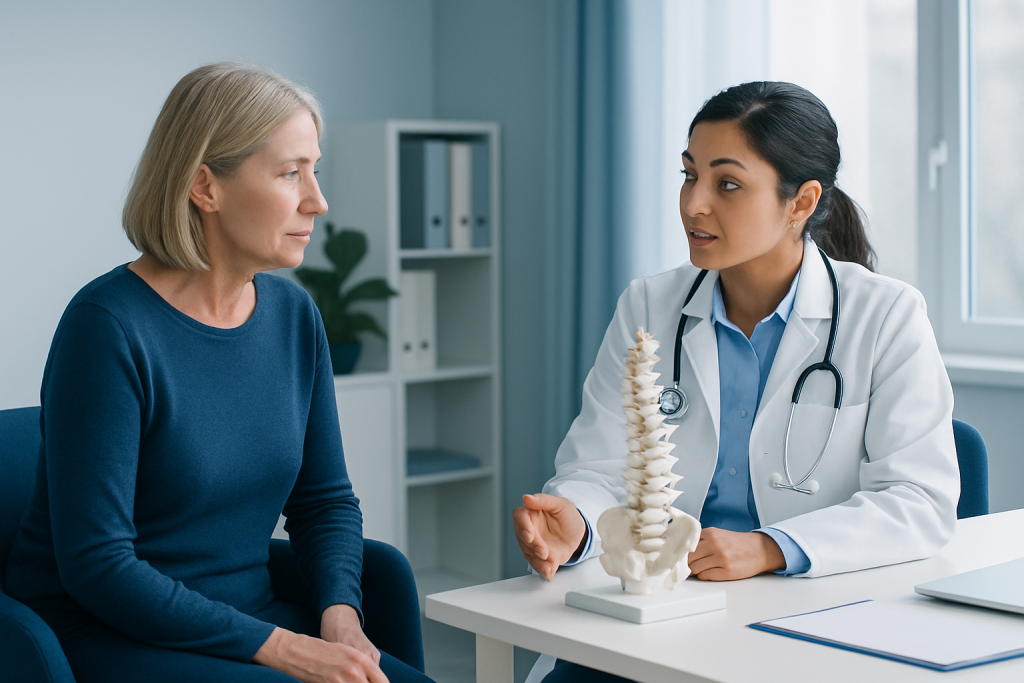
Adult scoliosis has more than one pathway. Some adults have idiopathic scoliosis that began in adolescence and gradually remained present into adulthood. Others develop what is often called degenerative or de novo scoliosis, which is linked to wear-and-tear changes in discs, joints, and ligaments over time. In these cases, the curve may emerge later in life even if the spine was previously straight.
Bone weakness, previous spine surgery, injury, and certain neuromuscular conditions can also influence spinal alignment. A curve may become more symptomatic when the spine loses support from discs and facet joints, or when nearby segments compensate and become overloaded. The effect is often more complex than the curve number on a report suggests.
Risk factors include older age, osteoporosis or low bone density, a history of scoliosis in childhood, chronic spinal degeneration, and occupations or routines that place repeated strain on the back. Genetics can play a role in some cases, but lifestyle and overall musculoskeletal health matter as well. For adults planning treatment, doctors also consider general health, because conditions such as diabetes, smoking, or poor bone health can influence healing if surgery is discussed.
Diagnosis
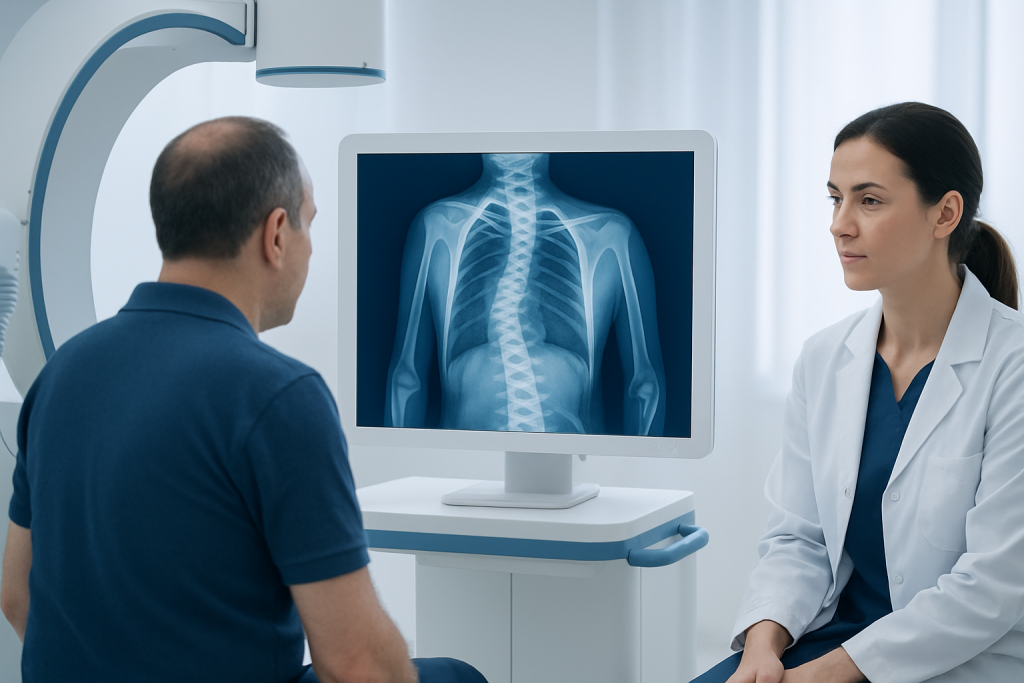
Diagnosis begins with a conversation about symptoms, daily limitations, previous spine problems, and how the condition has changed over time. The orthopedic specialist then examines posture, shoulder and hip alignment, spinal movement, muscle strength, and walking pattern. This hands-on assessment helps determine whether the visible curve is also causing functional imbalance.
X-rays are usually central to the evaluation. They help measure the curve, show whether it is increasing, and reveal how the spine lines up from the neck to the pelvis. In adults, doctors often look at sagittal balance, which describes how the spine stacks from the side. A person can have a curve that is not especially large but still have significant trouble if the overall alignment is poor.
Other imaging tests may be used when needed. MRI can help assess nerve compression, discs, and soft tissues, especially when leg symptoms are present. CT scans may be helpful for surgical planning in selected cases. Bone density testing is often important too, because strong treatment decisions depend on understanding how well the skeleton can support healing and correction.
For patients traveling from abroad, diagnosis may be organized in a stepwise way so that imaging, consultation, and treatment planning are coordinated efficiently. That can reduce unnecessary back-and-forth and give the patient a clearer path forward before returning home.
Treatment Options
Adult scoliosis treatment is individualized. The right option depends on pain severity, curve behavior, nerve involvement, balance, and the person’s overall health goals. Not every adult with scoliosis needs surgery, and not every painful spine requires the same approach.
Non-surgical care is often the first step when symptoms are manageable. This may include activity modification, targeted physical therapy, posture and core strengthening, anti-inflammatory or other pain-relief strategies recommended by a doctor, and sometimes injections for nerve or joint irritation. Bracing has a more limited role in adults than in children, but in selected cases it may support comfort or stability for certain activities.
Surgery is considered when symptoms remain significant despite conservative care, when nerve compression causes persistent leg pain or weakness, when the curve is progressing, or when spinal imbalance is making standing and walking increasingly difficult. Adult scoliosis surgery may involve decompression to relieve nerves, fusion to stabilize the spine, and instrumentation to help maintain correction. The exact plan depends on the pattern of the curve and the patient’s overall condition.
It is important to know that curve size is only part of the surgical conversation. A smaller curve can still require surgery if it is causing disabling nerve symptoms or marked imbalance, while a larger curve may be monitored if it is stable and the person is functioning well. The best decision usually comes from combining imaging with the patient’s lived experience.
For international patients, planning surgery also means planning the full journey: preoperative evaluation, travel timing, hospital stay, early mobility, and follow-up after returning home. Acibadem Health Point’s multidisciplinary specialists and JCI-accredited hospitals diagnose and treat adult scoliosis for international patients within a coordinated care pathway.
Prevention & Self-care
Not every case of adult scoliosis can be prevented, especially when the curve began years earlier or is linked to age-related spinal change. Even so, self-care can make a meaningful difference in comfort, mobility, and day-to-day function. The goal is usually not to “fix” the curve at home, but to support the spine so symptoms stay manageable.
Gentle movement tends to help more than long periods of rest. A physical therapist may recommend exercises that strengthen the core, hips, and back muscles while avoiding movements that aggravate pain. Good sleep positioning, thoughtful workstation setup, and regular breaks from prolonged sitting or standing can also reduce strain. If bone density is low, doctors may advise steps to protect bone health, since stronger bones support better spinal stability.
People considering treatment from another country should plan for the practical side of recovery as well. Comfortable clothing, help with luggage, a clear medication list, and a local follow-up plan all make the process smoother. After surgery or other treatment, rehabilitation, wound care, and gradually increasing activity are just as important as the procedure itself. Keeping expectations realistic helps patients stay engaged and confident during recovery.
- Stay active with doctor-approved exercises
- Avoid smoking, which can impair healing
- Support bone health through medical guidance
- Use ergonomic seating and lifting habits
- Follow the recommended rehabilitation plan
When to See a Doctor
An orthopedic or spine specialist should evaluate adult scoliosis when back pain persists, posture seems to be changing, or daily activity is becoming harder. A consultation is especially useful when symptoms are slowly building and the person wants to understand whether the curve is stable or part of a larger spinal problem.
Medical review should not be delayed if there is leg weakness, numbness, worsening walking tolerance, frequent falls, or pain that radiates below the knee and does not settle. New bowel or bladder changes, severe unrelenting pain, or rapidly increasing deformity also deserve prompt attention. These findings do not always mean surgery is needed, but they do signal that the spine should be assessed carefully.
Adults who already know they have scoliosis may benefit from periodic follow-up, especially if they have osteoporosis, prior spine surgery, or a history of changing symptoms. When treatment is being considered across borders, a specialist can help organize records, images, and a realistic timeline so care feels coordinated rather than fragmented.
Recovery and Follow-up
Recovery after treatment depends on what kind of care is chosen. With non-surgical management, improvement is often gradual and tied to consistency: regular exercises, symptom monitoring, and steady communication with the care team. If surgery is performed, the early weeks usually focus on safe movement, wound care, pain control, and gradually restoring independence.
Follow-up visits matter because adult scoliosis is not a one-time diagnosis. The spine can change over time, and healing after surgery needs to be watched carefully, especially in adults with other medical conditions or lower bone density. Imaging may be repeated to confirm that alignment is stable and that hardware, if used, is functioning as planned.
Patients returning home after treatment abroad should leave with clear instructions about activity limits, warning signs, and the schedule for virtual or in-person follow-up. A well-planned transition makes it easier to protect the results of treatment and stay on track during recovery.
Frequently asked questions
Does adult scoliosis always get worse with age?
Not always. Some curves remain stable for years, while others change slowly because of degeneration or bone loss. Regular follow-up helps determine whether the curve is stable or evolving.
Is surgery decided only by the size of the curve?
No. Curve size is only one part of the decision. Doctors also look at pain, nerve symptoms, posture, balance, progression, and overall health before recommending surgery.
Can physical therapy help adult scoliosis?
Yes, it can help many adults manage pain, improve strength, and move more comfortably. Therapy does not usually straighten the curve in adulthood, but it can support function and reduce strain.
What imaging tests are usually needed?
X-rays are commonly used to measure the curve and assess alignment. MRI or CT may be added if nerve symptoms or surgical planning require more detail.
Is bracing useful in adults?
Bracing has a limited role in adults compared with children. In some cases it may help with comfort or support, but it is not usually a permanent solution for correcting the curve.
How long is recovery after adult scoliosis surgery?
Recovery varies depending on the extent of surgery and the person’s overall health. Most patients need a gradual return to activity, structured follow-up, and time for bones and soft tissues to heal.
References
- American Academy of Orthopaedic Surgeons
- Scoliosis Research Society
- National Institute of Arthritis and Musculoskeletal and Skin Diseases
- Mayo Clinic
This article is for general information only and is not a substitute for professional medical advice. Please consult a qualified doctor about your individual situation.