Over The Counter Antifungal Creams For Athlete’s Foot

Key Takeaways
- Athlete’s foot is usually caused by a fungus that thrives in warm, damp places and often affects the skin between the toes.
- Over-the-counter antifungal creams can be effective for mild to moderate cases when used consistently and as directed.
- Keeping feet clean, dry, and well-ventilated helps treatment work better and lowers the chance of recurrence.
- Symptoms that spread, last despite treatment, or look infected should be evaluated by a doctor.
- People with diabetes, poor circulation, or weakened immunity should seek medical guidance sooner rather than later.
Athlete’s foot is a common fungal skin infection that often improves with over-the-counter antifungal creams and careful foot hygiene. This article explains how these treatments work, how to use them safely, and when a clinician should be involved.
Overview
Athlete’s foot, also called tinea pedis, is a fungal infection of the skin on the feet. It often starts in the spaces between the toes, but it can also affect the soles, sides of the feet, and, at times, the toenails. Because the fungus grows best in warm, moist environments, it commonly appears after long hours in closed shoes, frequent sweating, or exposure to shared changing-room surfaces.
For many people, the first line of care is an over-the-counter antifungal cream. These products are designed to slow or stop fungal growth on the skin, which allows the irritated area to heal. When chosen correctly and used long enough, they can be a practical option for mild cases without the need for a prescription.
Even so, athlete’s foot is not always a simple nuisance. The rash can be confused with eczema, contact dermatitis, or other skin problems, and repeated episodes may signal a need for more tailored treatment. A careful, step-by-step approach helps patients decide whether self-care is appropriate or whether a clinician should examine the skin.
Symptoms

The symptoms of athlete’s foot can be easy to overlook at first. Many people notice itching, burning, or stinging between the toes before they see a rash. The skin may become white and soft from moisture, then begin to peel, crack, or flake as the infection progresses.
Some cases cause redness and scaling on the sole or around the edges of the foot. Others lead to tiny blisters, especially on the arch or side of the foot. When the skin cracks deeply, walking may become uncomfortable and the area can feel tender.
- Itching or burning, especially between the toes
- Dry, scaly, or peeling skin
- Redness or mild swelling
- Cracks or fissures in the skin
- Blisters in some cases
Because these features can overlap with non-fungal skin conditions, the appearance alone is not always enough to confirm the cause. If the rash is unusual, painful, or not improving as expected, a professional assessment is helpful.
Causes & Risk Factors
Athlete’s foot is caused by dermatophyte fungi, which feed on keratin, a protein found in skin. These organisms spread easily in shared or damp environments such as locker rooms, pool areas, communal showers, and tightly enclosed shoes. Infection may start when the fungus gets trapped against skin that stays moist for long periods.
Certain habits and conditions make the infection more likely. Sweaty feet, wearing the same shoes repeatedly without allowing them to dry, and walking barefoot in shared spaces all increase risk. The fungus can also spread from one foot to another or from contaminated socks, towels, or footwear.
Some people are more vulnerable to persistent or recurrent infections. This includes individuals with diabetes, poor circulation, weakened immune systems, or skin conditions that disrupt the natural barrier of the feet. In these situations, even a minor infection deserves closer attention because healing may be slower and the skin may be easier to injure.
Diagnosis
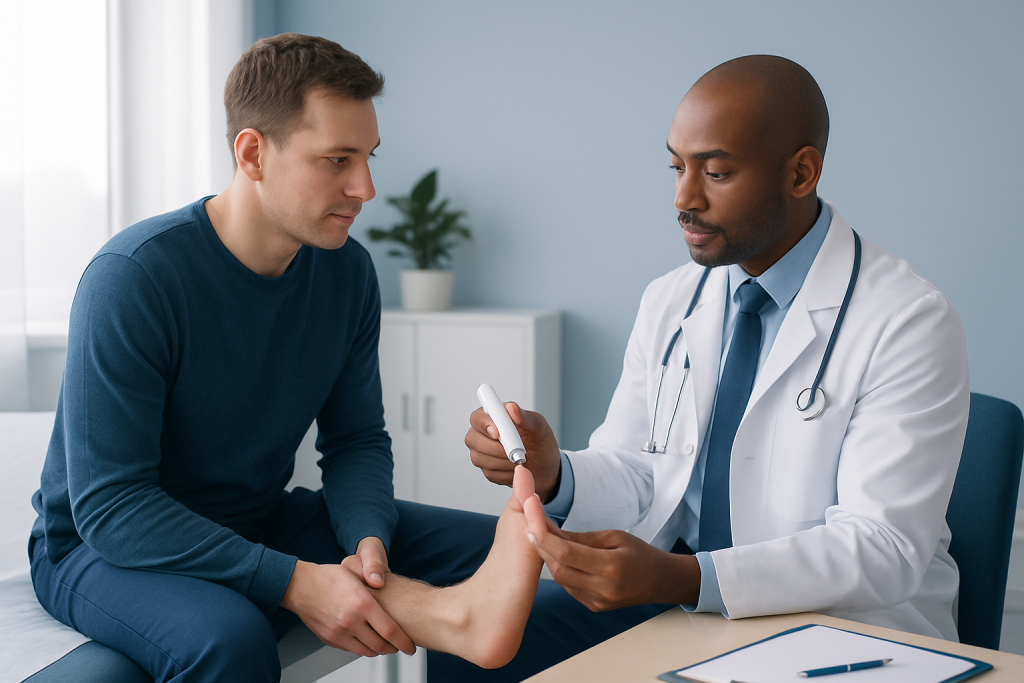
In many cases, athlete’s foot can be recognized by a doctor through a simple skin examination. The clinician looks at the pattern of redness, scaling, moisture, and cracking, and asks about where the symptoms began, how long they have lasted, and whether any treatment has already been tried. That history often helps distinguish fungal infection from eczema or irritation caused by footwear or detergents.
If the appearance is unclear or the infection is not responding, a skin scraping may be taken and examined under a microscope or sent for laboratory testing. This can confirm whether fungus is present and help guide treatment. It is especially useful when the rash is persistent, widespread, or affecting the toenails as well as the skin.
International patients sometimes arrive after trying several creams on their own, which can make the skin picture harder to interpret. Bringing along the names or photos of products already used can help the medical team understand what may have helped, irritated, or masked the problem.
Treatment Options
Over-the-counter antifungal creams are commonly used for athlete’s foot because they are easy to apply and effective for many mild cases. They usually contain an ingredient that targets the fungus directly on the skin surface. Consistency matters: the medicine needs to be applied exactly as directed and continued for the full recommended course, even if the skin starts looking better sooner.
Different products may be chosen based on the type and location of the rash. Creams are often preferred for dry, flaky areas, while other formulations may be more suitable in certain situations. A doctor or pharmacist can help patients choose a product that matches the symptoms and fits daily routines, especially when language barriers or travel schedules make follow-up more complicated.
Other treatment elements can support recovery. Keeping the feet dry, changing socks regularly, allowing shoes to air out, and avoiding tight footwear help create an environment where fungus is less likely to spread. If the infection is extensive, recurrent, or involves the nails, a prescription treatment may be needed instead of — or in addition to — an over-the-counter cream.
Some situations call for in-person assessment rather than continued self-treatment. This includes cases where the rash is spreading quickly, the skin is broken or oozing, or a person has diabetes, neuropathy, or circulation problems. In those settings, a clinician can decide whether stronger medicine, closer monitoring, or a different diagnosis should be considered.
Prevention & Self-care
Good foot care can shorten the course of athlete’s foot and help prevent it from coming back. Washing the feet with mild soap, drying carefully between the toes, and changing socks when they become damp are simple but important habits. Breathable shoes and socks that wick moisture away from the skin can also reduce the conditions that allow fungus to thrive.
Shared spaces deserve special attention. Wearing sandals or shower shoes in locker rooms, communal bathrooms, and pool areas lowers the chance of picking up fungal spores from surfaces. Towels, nail tools, and footwear should not be shared, and washed items should be fully dry before being worn again.
For people traveling for medical care, these measures are easy to keep using during the journey and after returning home. Packing extra socks, a backup pair of shoes, and a small towel can make it easier to stay consistent with treatment in different climates or hotel settings. If symptoms improve but keep returning, that pattern may suggest an ongoing source of exposure or an incomplete treatment course.
When to See a Doctor
Medical advice is appropriate if the rash does not improve after a full course of over-the-counter treatment, if it spreads beyond the feet, or if it keeps returning. A clinician can check whether the problem is truly fungal or whether another skin condition is involved. That distinction matters because the wrong cream can delay recovery.
Prompt evaluation is especially important if the skin becomes very painful, swollen, warm, or begins to ooze, since these changes may indicate a secondary infection. People with diabetes, immune suppression, or poor circulation should not wait long before seeking care, even for what seems like a mild rash. The feet are an area where small problems can become more complicated if ignored.
Patients who are traveling internationally for treatment may benefit from a coordinated plan that includes diagnosis, medication guidance, and follow-up advice before departure. Acibadem Health Point’s multidisciplinary specialists and JCI-accredited hospitals diagnose and treat this condition for international patients, with an emphasis on clear instructions that can be continued safely at home.
Living With Athlete’s Foot During Treatment
Recovery is usually smoother when treatment and daily habits are handled together. People often want to stop the cream once the itching settles, but the fungus may still be present under the surface. Finishing the recommended course helps reduce relapse and gives the skin time to rebuild its barrier.
It is also useful to look for hidden sources of reinfection. Shoes that stay damp, old insoles, shared bathroom floors, and untreated fungal toenails can all keep the cycle going. Replacing worn socks, rotating shoes, and cleaning footwear as advised can make a meaningful difference.
If a patient is managing athlete’s foot while away from home, a simple written plan can be reassuring: what product to use, how long to use it, what to avoid, and which warning signs should trigger medical review. That kind of practical guidance often makes self-care more successful than relying on memory alone.
Frequently asked questions
Do over-the-counter antifungal creams really work for athlete’s foot?
Yes, they often work well for mild to moderate athlete’s foot when the correct product is used consistently. The key is to apply it for the full recommended time, even if symptoms improve early. If the rash does not improve, a doctor should reassess the diagnosis.
How long does athlete’s foot usually take to clear?
The timeline varies depending on how severe the infection is and how carefully treatment is followed. Itching and redness may improve before the skin looks fully healed. Continued use of the antifungal as directed helps reduce the chance of recurrence.
Can athlete’s foot spread to other parts of the body?
Yes, it can spread to the other foot, the groin, or the hands through direct contact or contaminated towels and clothing. Scratching can also move the fungus around the skin. Good hygiene and separate towels help limit spread.
Should socks and shoes be treated too?
They should be cleaned and kept dry, because damp footwear can support fungal growth. Changing socks regularly and letting shoes air out between uses are helpful steps. In some cases, a doctor may recommend additional cleaning measures for recurrent infection.
Is it safe to use antifungal cream if the skin is cracked?
Mild cracking is common, and many people can still use an over-the-counter antifungal cream. However, deep fissures, open sores, or signs of infection need medical attention. A clinician can advise whether a different approach is needed.
When should someone with diabetes get checked?
People with diabetes should seek medical advice sooner rather than later, even if symptoms seem mild. Foot skin infections can be harder to manage and may lead to complications if neglected. A doctor can confirm the cause and recommend the safest treatment plan.
References
- World Health Organization
- American Academy of Dermatology
- Mayo Clinic
- National Health Service
This article is for general information only and is not a substitute for professional medical advice. Please consult a qualified doctor about your individual situation.