Scalp Micropigmentation vs. Hair Transplant: Which Problem Does Each Solve Best?

Key Takeaways
- Scalp micropigmentation creates the look of closely shaved hair or added density; it does not regrow hair.
- Hair transplant moves real hair follicles and can restore hair growth in suitable areas.
- The two treatments can sometimes be combined for a fuller cosmetic result.
- The right option depends on the type of hair loss, hair characteristics, scalp health, and donor hair availability.
- A specialist evaluation is important before choosing either treatment, especially for progressive hair loss.
Medically reviewed by the Acıbadem clinical team — June 13, 2026
Scalp micropigmentation and hair transplant address hair loss in different ways, and the best choice depends on the pattern of thinning, the available donor hair, and the person’s goals. This guide explains what each option can and cannot do, so patients can make a more informed decision with a qualified specialist.
Overview
Scalp micropigmentation and hair transplant are often mentioned together, but they solve different problems. One is a cosmetic camouflage technique that uses tiny pigment deposits to create the appearance of hair follicles. The other is a surgical procedure that relocates living hair follicles so they can grow in a new area.
That difference matters. A person with a shaved head and visible thinning may be looking mainly for a cleaner, fuller-looking hairline. Another person may want actual regrowth in a receding hairline, crown, or scar area. The best treatment depends less on the name of the procedure and more on the pattern of hair loss, expectations, and how much donor hair is available.
For international patients, the decision can also depend on practical issues such as how many visits are needed, how much time is available for recovery, and whether follow-up can be done locally or through remote review. A careful consultation should clarify what each option can realistically achieve before any commitment is made.
What Scalp Micropigmentation Does Best
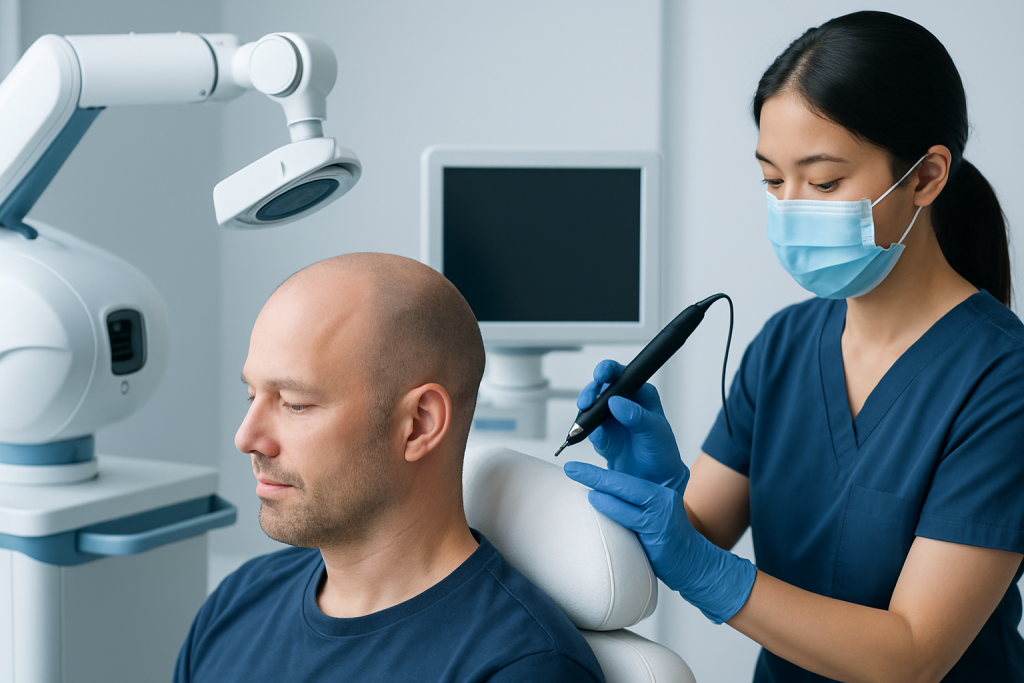
Scalp micropigmentation, often called SMP, is best for creating the visual effect of denser hair or a closely shaved style. It is commonly used to soften the look of thinning areas, define the hairline, or reduce the contrast between hair and scalp in people who prefer a buzz-cut appearance.
It can also help conceal certain scars, including some scars from previous Transplant Surgery" class="ahp-ilk">hair transplant surgery or other scalp procedures. For people who are not ideal candidates for surgery, SMP can offer a predictable cosmetic result without the need to harvest follicles.
What SMP does not do is restore hair growth. The pigments are placed in the scalp to mimic the look of hair stubble or shadow. It is important for patients to think of it as a visual solution rather than a biological one.
- Best for the appearance of density in thinning hair
- Useful for a shaved-head look
- Can camouflage scars in selected cases
- Does not replace lost follicles or create new hair growth
What Hair Transplant Does Best

Hair transplant surgery is designed to move healthy follicles, usually from the back or sides of the scalp, into areas where hair has thinned or been lost. Because the transplanted follicles are living tissue, they can continue to grow hair after healing is complete.
This makes hair transplant especially useful for restoring a receding hairline, filling in the crown in suitable cases, or improving areas where hair loss is stable enough for surgery to make sense. It can also be used in some scarred areas, although results depend on skin quality, blood supply, and the cause of the scar.
The strongest advantage of a transplant is that it creates real hair growth rather than the appearance of hair. The trade-off is that it requires surgery, recovery time, and enough donor hair to support the planned result. People with diffuse loss or advanced thinning may need a specialist to determine whether surgery will provide a balanced, lasting outcome.
Symptoms and Patterns That Help Guide the Choice
The visible pattern of hair loss often points toward the more suitable option. A person with overall thinning but still wanting to wear hair very short may be a good SMP candidate, while someone with a defined receding hairline may be better served by transplant if donor hair is adequate.
Hair texture, color, and contrast with the scalp also matter. SMP is usually easier to blend when the hair is dark and the hair style is short. Hair transplant can offer a more natural change in many cases, but the result depends on the surgeon’s plan, the quality of donor hair, and the person’s ongoing hair loss pattern.
Typical features specialists consider include:
- Whether thinning is diffuse, localized, or advanced
- Whether the person wants short hair, longer hair, or a restored hairline
- How stable the hair loss has been over time
- Whether there is enough donor hair for transplant
- Whether previous procedures or scars are present
Causes & Risk Factors
Most discussions about hair restoration begin with the cause of hair loss, because the cause affects which treatment is appropriate. Androgenetic alopecia, also known as male or female pattern hair loss, is the most common reason people consider either SMP or transplant. Other causes include traction, scarring conditions, autoimmune hair loss, hormonal changes, and hair loss after illness or medication exposure.
Risk factors for progressive thinning include family history, age, certain medical conditions, and repeated tension or chemical damage to the hair and scalp. Some people seek SMP because their hair loss is extensive or because surgery is not a good fit. Others choose transplant after their hair loss has stabilized enough that moving follicles is more likely to produce a lasting result.
Hair loss should not be assumed to be cosmetic only. A specialist may want to rule out treatable underlying causes before recommending either procedure. That is especially important when shedding is sudden, patchy, inflamed, or associated with scalp symptoms.
Diagnosis and Consultation
Before choosing between SMP and hair transplant, the first step is a proper hair and scalp assessment. This usually includes looking at the pattern of hair loss, reviewing medical history, checking scalp health, and discussing previous treatments. In some cases, dermoscopy or other diagnostic tools may be used to examine follicles more closely.
A transplant consultation also needs to estimate donor supply and predict how the hair loss may progress over time. A patient who still has active thinning may not be a good candidate for a large surgical plan unless the long-term strategy is carefully thought through.
SMP consultations focus on hairline design, pigment match, hair density, and the style the patient expects to maintain. Good planning is essential because the result is visible every day, and it is meant to complement facial features rather than simply cover the scalp.
Treatment Options, Recovery, and Results
SMP is usually performed in sessions, with pigment layered gradually to build the desired look. Recovery is generally simple, although the scalp must be cared for carefully while healing. The result is immediate in appearance, but final refinement may take multiple visits.
Hair transplant surgery requires more planning and a longer recovery period. After the procedure, the transplanted follicles typically go through a healing phase before new hair growth becomes visible. The process is gradual, and the final appearance develops over months rather than days.
In practical terms, SMP is often chosen when the goal is faster cosmetic improvement with less downtime, while transplant is chosen when the goal is actual hair regrowth in selected areas. In some patients, the two treatments are combined: transplant adds real hair where possible, and SMP improves the look of density between grafts or in areas with limited donor supply.
- SMP: cosmetic coverage, shorter downtime, no hair regrowth
- Hair transplant: surgical restoration, longer healing, actual growth from moved follicles
- Combination approach: may help maximize the visual result in selected patients
Prevention & Self-care
Neither procedure prevents future hair loss on its own. If the underlying condition is progressive, ongoing management may still be needed after either SMP or transplant. That is why many specialists discuss medical hair-loss treatment, gentle hair care, and realistic long-term planning alongside the procedure itself.
Self-care can support the scalp before and after treatment. Patients are generally advised to follow the clinic’s instructions closely, avoid harsh products or aggressive styling, and protect the scalp from sun exposure during healing. If a transplant has been performed, it is especially important not to disturb the grafts during the early recovery period.
For people traveling from another country, planning matters. It helps to understand how many days should be set aside for the procedure, when washing can resume, and how follow-up will be handled once the patient returns home. Clear aftercare guidance makes the experience smoother and supports better healing.
When to See a Doctor
Medical evaluation is recommended before choosing either treatment, particularly if hair loss is sudden, patchy, painful, itchy, or associated with redness and scaling. These features can point to a condition that needs treatment beyond cosmetic restoration.
A doctor’s visit is also important when a person is unsure whether they are a better candidate for SMP, transplant, both, or neither. The right answer depends on scalp condition, donor hair, pattern of hair loss, and personal goals. A rushed decision can lead to disappointment, especially if hair loss is still changing.
Patients who are considering treatment abroad should choose a team that can explain the plan clearly, discuss follow-up, and coordinate care across time zones. At Acibadem Health Point, multidisciplinary specialists and JCI-accredited hospitals help diagnose and treat hair loss conditions for international patients in a structured, patient-centered way.
Frequently asked questions
Is scalp micropigmentation the same as a hair transplant?
No. Scalp micropigmentation places pigment in the scalp to create the look of hair density, while a hair transplant moves real follicles to a new area. One is cosmetic camouflage and the other is surgical restoration.
Which option looks more natural?
That depends on the person’s goals and hair loss pattern. A well-planned transplant can produce natural hair growth, while SMP can look very natural for a short hairstyle or added density effect.
Can SMP and hair transplant be used together?
Yes, in some cases they are combined. Transplant can restore hair where donor supply allows, and SMP can improve the visual density in between or around transplanted areas.
How do doctors decide which treatment is better?
They look at the pattern and cause of hair loss, the amount of donor hair, scalp health, and whether the person wants real growth or a fuller visual appearance. A stable diagnosis is important before any procedure is chosen.
Does hair transplant work for everyone with thinning hair?
Not always. Some people do not have enough donor hair, or their hair loss may still be too active for surgery to be the best option. In those cases, SMP or another treatment plan may be more appropriate.
How long do results last?
SMP usually lasts for years but may fade gradually and need touch-ups. Hair transplant results can be long-lasting for transplanted follicles, although natural aging and future hair loss can still change overall appearance.
References
- American Academy of Dermatology
- International Society of Hair Restoration Surgery
- Mayo Clinic
- British Association of Dermatologists
This article is for general information only and is not a substitute for professional medical advice. Please consult a qualified doctor about your individual situation.