Nystagmus: Symptoms, Causes and Treatment

Key Takeaways
- Nystagmus causes the eyes to move in a repetitive pattern that is not under voluntary control.
- It may be lifelong or appear later in life, and the cause can shape the symptoms and treatment plan.
- Diagnosis usually involves a detailed eye exam and, when needed, neurologic or imaging tests.
- Treatment focuses on the underlying cause, improving vision, and reducing symptoms rather than eliminating every eye movement.
- People with new, worsening, or one-sided symptoms should seek medical evaluation promptly.
Medically reviewed by the Acıbadem clinical team — August 19, 2026
Nystagmus is an involuntary eye movement condition that can affect vision, balance, and daily comfort. It may be present from birth or develop later from eye, inner ear, neurologic, or medication-related causes, and the right evaluation can clarify what is driving it.
Overview
Nystagmus is a condition in which the eyes make repetitive, involuntary movements. These movements may look side-to-side, up and down, or in a circular pattern, and they can be present all the time or only in certain situations. For some people, the eye motion is barely noticeable; for others, it can make reading, focusing, or walking in visually busy places more difficult.
There are several forms of nystagmus. Some people are born with it, often called infantile nystagmus, while others develop it later in childhood or adulthood. When it appears later in life, clinicians usually look carefully for an eye, inner ear, neurologic, or medication-related cause. That difference matters because the treatment plan is guided by the underlying reason, not just the eye movement itself.
Many patients first notice nystagmus indirectly: a child may tilt the head to see better, an adult may feel that vision “shakes,” or a person may become dizzy or unsteady when looking in certain directions. Because the condition can overlap with other eye and balance disorders, a structured evaluation is often the most efficient way to understand what is happening.
Symptoms
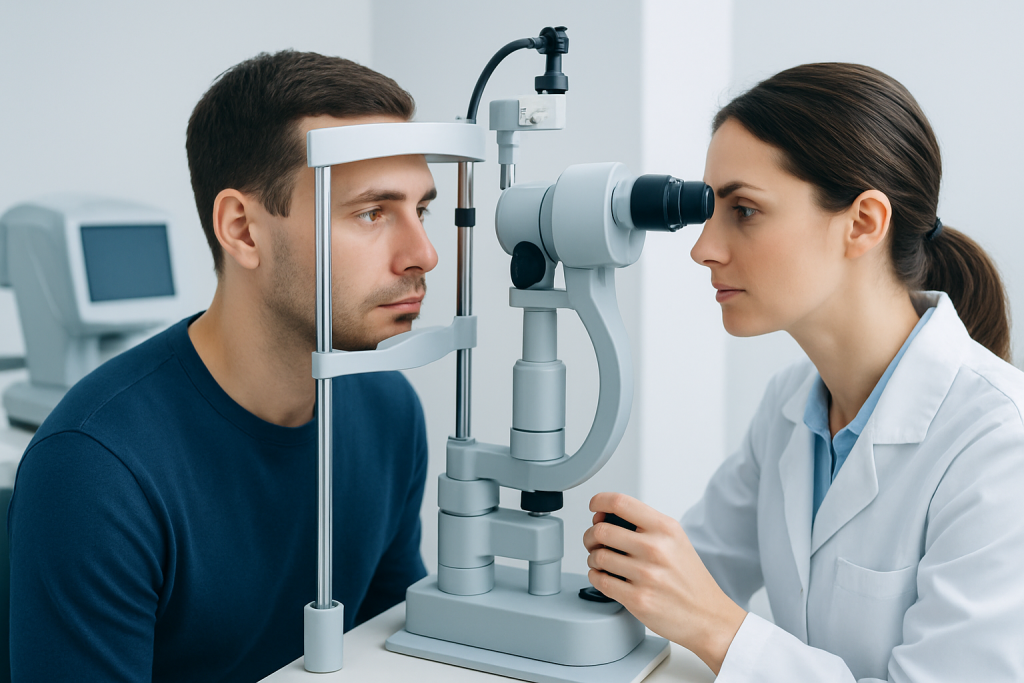
The hallmark sign is the involuntary movement of one or both eyes. The motion may be rhythmic, jerky, or smooth and pendular. Some people notice that the eye movement becomes more obvious when they are tired, stressed, or trying to focus on a distant object.
Symptoms can extend beyond the visible eye movements. Depending on the cause, a person may also experience blurred vision, reduced depth perception, light sensitivity, dizziness, difficulty reading, or trouble keeping objects in focus. Children may adopt a head turn or tilt to use a position where vision is clearer.
Common features may include:
- Repetitive eye movements that are difficult to control
- Blurred or unstable vision
- Head positioning to reduce visual discomfort
- Balance problems or a sense of motion
- Eye strain, especially during reading or screen use
The pattern of symptoms can help clinicians narrow the diagnosis. For example, symptoms that improve with a particular head position may suggest a compensatory “null point,” while new eye movements with vertigo may point toward an inner ear or neurologic problem.
Causes & Risk Factors

Nystagmus is not a disease in itself; it is a sign that something in the visual or balance system is not working in the usual way. In infantile cases, it may be linked to early eye development issues, such as refractive errors, congenital cataract, albinism, optic nerve abnormalities, or retinal conditions. In some children, no single cause is found despite careful testing.
When nystagmus begins later in life, clinicians consider a broader set of possibilities. Inner ear disorders, multiple sclerosis, stroke, head injury, certain medications, alcohol exposure, and brain or cerebellar conditions can all affect the eye movement control system. Eye disease, such as cataract, macular disease, or severe visual loss in one eye, may also contribute.
Risk is not limited to one age group, but the timing of onset matters. A person is more likely to need evaluation for an acquired cause if the nystagmus appears suddenly, comes with new neurological symptoms, or is accompanied by hearing changes, severe headache, weakness, or changes in speech. Family history can also be relevant in some inherited forms.
Diagnosis
Diagnosis usually starts with a careful history and an eye examination. A clinician will ask when the symptoms began, whether they are constant or episodic, what makes them better or worse, and whether there are associated vision, balance, or neurologic symptoms. The exam may include testing visual acuity, eye alignment, pupil responses, and the direction and pattern of the eye movements.
Because nystagmus can reflect problems outside the eye, additional testing is often recommended. Depending on the clinical picture, that may include refraction testing, retinal evaluation, vestibular assessment, blood work, or neuroimaging such as MRI. In children, the workup may also look for congenital eye conditions or hereditary patterns.
The goal is not simply to label the eye movement, but to understand why it is happening and whether it is part of a broader condition. A precise diagnosis helps avoid unnecessary treatment and makes it easier to choose the right mix of vision support, medication review, or specialist referral.
Treatment Options
Treatment depends on the cause, the age of onset, and how much the symptoms interfere with daily life. If nystagmus is due to an underlying eye condition, correcting that problem may improve stability. If a medication or substance is contributing, a clinician may review alternatives or adjust the overall plan under careful supervision.
Some people benefit from vision-focused strategies. Glasses or contact lenses can improve clarity, and in certain cases prism lenses may help reduce the need for a compensatory head turn. For selected patients, specialized contact lenses or low-vision support can make reading and daily tasks easier. In some forms of nystagmus, the eye movement lessens in a specific gaze position; treatment may aim to bring that position into a more natural head posture.
Medication or procedures may be considered in specific circumstances, especially when symptoms are disabling. These approaches are individualized and usually managed by an eye specialist familiar with eye movement disorders. If nystagmus is linked to neurologic or inner ear disease, treatment of the underlying condition is often the most important step.
In complex cases, care is often shared across specialists. A patient who is traveling from another country may need coordinated planning so that testing, treatment, and follow-up fit together clearly before returning home. This is one reason multidisciplinary evaluation can be valuable when the diagnosis is uncertain or symptoms are affecting work, driving, or mobility.
Prevention & Self-care
Not every case of nystagmus can be prevented, especially when it is congenital or related to an inherited condition. Still, self-care can reduce strain and help daily life feel more manageable. Good lighting, regular eye examinations, and keeping prescriptions current are practical starting points.
People who notice that fatigue makes symptoms worse may benefit from pacing visually demanding tasks. Reading in shorter sessions, adjusting screen brightness, and taking breaks during prolonged focus can reduce discomfort. If balance is affected, moving cautiously in crowded or uneven environments can lower the risk of falls.
Helpful self-care measures may include:
- Wearing the recommended glasses or contact lenses consistently
- Using larger print or accessibility tools for reading and screens
- Keeping follow-up appointments, especially if symptoms change
- Avoiding alcohol or non-prescribed substances that worsen eye control
- Noticing whether stress, fatigue, or specific gaze positions trigger symptoms
For international patients, it can help to bring previous eye records, imaging reports, and medication lists when seeking care abroad. That information often shortens the path to a clear plan and makes it easier to continue treatment safely once home.
When to See a Doctor
Medical evaluation is important if nystagmus is new, getting worse, or affecting vision, balance, or daily function. Adults who develop sudden eye movements, especially with dizziness, weakness, numbness, severe headache, or speech changes, should seek prompt assessment because those symptoms may point to an urgent neurologic problem.
Children should be evaluated if caregivers notice persistent eye shaking, an unusual head posture, delayed visual development, or difficulty tracking objects. Even when a child seems otherwise well, early assessment can protect vision and help identify treatable eye conditions.
A doctor should also be consulted if nystagmus is accompanied by hearing loss, double vision, eye pain, or a recent head injury. A timely diagnosis can be reassuring, and in many cases it opens the door to practical changes that improve comfort and function.
When appropriate, Acibadem Health Point’s multidisciplinary specialists and JCI-accredited hospitals can diagnose and treat nystagmus for international patients as part of a coordinated care pathway.
Frequently asked questions
Is nystagmus always a sign of a serious problem?
Not always. Some people are born with nystagmus and adapt well over time, while others develop it because of an eye, inner ear, or neurologic condition that needs attention. The timing of onset and the associated symptoms help determine how concerning it is.
Can nystagmus go away on its own?
It depends on the cause. Temporary nystagmus related to an acute illness, medication effect, or inner ear issue may improve when the trigger is addressed, while congenital forms often persist but can still be managed. A specialist can explain what is realistic in a specific case.
Does nystagmus always mean poor vision?
No, but it can affect visual clarity and stability. Some people have only mild symptoms, while others have reduced visual acuity, trouble reading, or difficulty with depth perception. The impact varies widely from person to person.
What tests are commonly used to diagnose nystagmus?
An eye examination is usually the first step, followed by targeted tests based on the suspected cause. These may include refraction, retinal evaluation, vestibular testing, or MRI if a neurologic cause is being considered. The exact workup depends on age, symptom pattern, and associated findings.
Can glasses help nystagmus?
Glasses can help if vision correction is needed, and prism lenses may be useful in some cases. They do not stop the eye movements themselves, but they may improve clarity and reduce strain. A clinician can determine whether optical correction is likely to help.
When should someone seek urgent care for nystagmus?
Urgent care is appropriate if the eye movements begin suddenly or come with severe headache, weakness, numbness, double vision, trouble speaking, or significant dizziness. These features can indicate a more serious neurologic issue and should not be ignored. New symptoms always deserve timely medical review.
References
- American Academy of Ophthalmology
- National Eye Institute
- NHS
- Mayo Clinic
- MedlinePlus
This article is for general information only and is not a substitute for professional medical advice. Please consult a qualified doctor about your individual situation.
Explore treatments in Turkey — costs, top hospitals & a free quote
JCI-accredited · board-certified surgeons · reply within 24h
Add us as a Preferred Source to see more of our trusted health content across Google Search, AI Overviews and Discover.