Nasal Polyp Treatment: Steroids, Surgery, or Both?

Key Takeaways
- Nasal polyps often respond first to anti-inflammatory treatment, especially steroid sprays or short courses of other steroid forms when appropriate.
- Surgery can improve nasal airflow and sinus drainage when medicines are not enough, but it does not remove the tendency for polyps to return.
- The best plan depends on symptom severity, sinus inflammation, asthma or allergy history, and whether the person needs ongoing maintenance therapy.
- Diagnosis usually involves a nasal examination, and sometimes endoscopy or imaging to understand how much the sinuses are involved.
- Daily rinsing, correct inhaler or spray technique, and follow-up care can make treatment work better over time.
Medically reviewed by the Acıbadem clinical team — June 13, 2026
Nasal polyps are soft, noncancerous growths that can block the nose, reduce smell, and make breathing harder. Treatment often starts with medicines such as steroids, while surgery is considered when symptoms remain bothersome or polyps keep returning.
Overview
Nasal polyps are soft, painless growths that develop from the lining of the nose or sinuses. They are usually linked to long-standing inflammation rather than an infection, and they can quietly narrow the nasal passages before a person realizes what is happening.
For many patients, the real question is not whether treatment is needed, but which path makes the most sense: steroids, surgery, or a combination of both. The answer depends on how blocked the nose feels, whether smell has changed, how much sinus disease is present, and how the person has responded to earlier treatment.
In practice, care often begins with medication because it can reduce swelling and shrink polyps without an operation. Surgery is then considered when symptoms remain significant, the sinuses stay blocked, or polyps repeatedly come back despite good medical treatment.
Symptoms
Nasal polyps can be surprisingly subtle at first. Many people notice that they are breathing more through the mouth, struggling with congestion that does not seem to clear, or losing their sense of smell and taste.
As the condition progresses, the nose may feel persistently stuffed, mucus can drip down the throat, and pressure may build across the face. Some people also develop snoring, poor sleep, or a feeling of constant “fullness” in the nose that makes travel, exercise, and daily work more tiring than usual.
When polyps are larger or more numerous, they may contribute to repeated sinus infections or ongoing sinus inflammation. Symptoms often come and go in intensity, which can delay diagnosis because people assume they are dealing with ordinary congestion or seasonal allergies.
Causes & Risk Factors

Nasal polyps usually appear when the lining of the nose and sinuses stays inflamed for a long time. That inflammation may be associated with chronic sinusitis, asthma, allergies, aspirin sensitivity, or certain inflammatory conditions, though the exact cause is not always easy to identify.
People with long-term nasal blockage or repeated sinus symptoms are more likely to be evaluated for polyps. A history of poor smell, wheezing, allergy flares, or recurrent sinus treatment can also point an ENT specialist toward this diagnosis.
Risk can be higher when inflammation is not well controlled, but polyps are not caused by something the patient did wrong. Understanding the underlying pattern matters because treatment is usually aimed at calming the inflammation, not just removing the visible growths.
Diagnosis
Diagnosis begins with a careful conversation about symptoms, duration, and any prior treatment. An ENT doctor will usually ask about nasal blockage, smell changes, sinus infections, asthma, allergy history, and whether symptoms improve or worsen with medication.
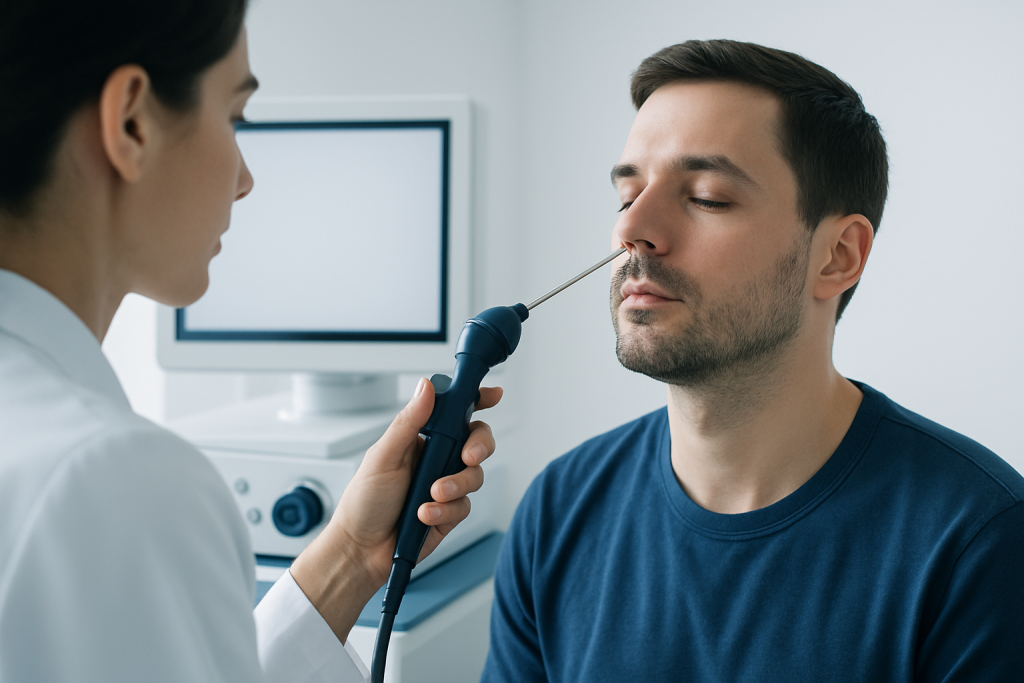
A nasal examination can often reveal polyps directly. In many cases, a small camera called a nasal endoscope is used to look deeper into the nasal passages and sinus openings, which helps show how extensive the problem is and whether both sides are involved.
Sometimes a CT scan of the sinuses is recommended, especially if surgery is being considered or symptoms are severe. Imaging helps map sinus inflammation and shows whether there are other structural concerns that might affect treatment planning.
Treatment Options
For many patients, treatment starts with steroids because they target the inflammation that drives polyp growth. These may be steroid nasal sprays, which are commonly used for ongoing control, or other steroid-based approaches chosen by the doctor when symptoms are more intense.
If symptoms are persistent, the ENT specialist may add saline rinses or consider other supportive medicines. The aim is to open the nose, reduce swelling, and improve breathing and smell without unnecessary intervention.
Surgery is usually considered when medication does not provide enough relief, when the sinuses remain blocked, or when polyps keep returning. The operation is generally done endoscopically through the nose, so there are no external facial incisions; the surgeon removes the polyps and improves drainage pathways to help medicines work better afterward.
Many people do best with both treatment approaches over time. Surgery can create space and restore airflow, while steroid therapy after the procedure helps maintain the benefit and lower the chance of recurrence. For international patients, this is often a staged journey: evaluation, treatment planning, and follow-up arranged so recovery and long-term medication use remain practical once the person returns home.
Prevention & Self-care
Nasal polyps cannot always be prevented, but day-to-day care can reduce flare-ups and support treatment. Regular saline rinsing may help clear mucus and lessen irritation, especially for people who feel chronically congested or have thick nasal drainage.
Using prescribed nasal sprays correctly is also important. A doctor or nurse can show the best technique, since aiming the spray the right way improves delivery and reduces avoidable irritation.
- Take prescribed medicines consistently, even when symptoms temporarily improve.
- Keep follow-up appointments so the treatment plan can be adjusted early if needed.
- Manage related conditions such as allergies or asthma with medical guidance.
- Avoid overusing decongestant sprays unless a doctor specifically recommends them.
- Tell the ENT team if smell loss, congestion, or infections return after treatment.
When to See a Doctor
A medical evaluation is a good idea when nasal blockage lasts for weeks, smell or taste declines, or sinus symptoms keep returning despite basic home care. Persistent mouth breathing, sleep disruption, or a feeling that one side of the nose is always blocked should also prompt an ENT visit.
People who have asthma, aspirin sensitivity, or repeated sinus infections may benefit from earlier assessment because these conditions can travel together with nasal polyps. A doctor can help decide whether the next best step is medical therapy, imaging, or a discussion about surgery.
Anyone with severe facial pain, high fever, vision changes, or sudden worsening symptoms should seek prompt medical attention, because those features may point to another problem that needs urgent care. Acibadem Health Point’s multidisciplinary specialists and JCI-accredited hospitals can diagnose and treat nasal polyps for international patients with coordinated ENT care.
Living With Nasal Polyps Over Time
One of the most useful things to know about nasal polyps is that treatment is often ongoing rather than one-time. Even after the nose feels better, maintenance therapy may still be needed to keep inflammation under control and preserve breathing and smell.
That long view matters when someone is traveling for care or arranging follow-up from another country. A good treatment plan should be easy to understand, realistic to continue at home, and clear about what to do if symptoms return.
When patients know which symptoms matter most, how to use their medications, and when to check back with an ENT specialist, they are better prepared to keep the condition manageable and avoid repeated setbacks.
Frequently asked questions
Do nasal polyps always need surgery?
No. Many people first try steroid-based medical treatment, especially if symptoms are mild to moderate. Surgery is usually considered when medicines do not control symptoms well enough or when polyps return repeatedly.
Can nasal polyps come back after surgery?
Yes, they can. Surgery removes existing polyps and improves sinus drainage, but the inflammation that caused them may still be present. Ongoing medical care often helps reduce the chance of recurrence.
Are nasal steroid sprays safe to use long term?
They are commonly used for long-term control when prescribed and monitored by a doctor. The exact plan depends on the person’s condition, other medicines, and any side effects that appear over time.
How are nasal polyps different from ordinary congestion?
Ordinary congestion often improves as a cold or allergy flare settles, while polyps cause more persistent blockage and may reduce smell. An ENT examination helps distinguish between swelling, infection, and actual polyp growths.
What happens before nasal polyp surgery?
The doctor usually reviews symptoms, medication history, and imaging such as a CT scan if needed. The goal is to understand the extent of the disease and choose the safest, most effective surgical plan.
Can lifestyle changes cure nasal polyps?
Lifestyle measures cannot usually cure polyps on their own, because the condition is driven by inflammation inside the nose and sinuses. However, saline rinses, correct spray use, and management of allergies or asthma can support medical treatment.
References
- American Academy of Otolaryngology–Head and Neck Surgery
- National Institute of Allergy and Infectious Diseases
- National Health Service
- Mayo Clinic
- Cleveland Clinic
This article is for general information only and is not a substitute for professional medical advice. Please consult a qualified doctor about your individual situation.