Braces

Key Takeaways
- Braces gradually move teeth into a healthier, more balanced position.
- Treatment may improve chewing, cleaning, and long-term dental stability.
- Several types of braces are available, including fixed and clear options.
- Good oral hygiene and follow-up visits are essential during treatment.
- An orthodontist can help determine the most suitable approach for each person.
Braces are an orthodontic treatment used to straighten teeth, improve bite alignment, and support long-term oral health. They can be helpful for children, teenagers, and adults, with treatment planned according to the person’s dental needs and lifestyle.
Overview
Braces are designed to guide teeth into a more even position and improve how the upper and lower teeth meet. For some people, the main goal is appearance; for others, the bigger concern is function, such as difficulty chewing, cleaning crowded teeth, or dealing with a bite that puts extra stress on the jaw.
Orthodontic treatment is usually planned over time rather than adjusted all at once. Gentle, steady forces help teeth move through the bone in a controlled way. That is why braces often require repeated visits, careful monitoring, and a treatment plan that fits the person’s age, dental condition, and goals.
For international patients considering care abroad, braces treatment is often attractive because it can combine consultation, imaging, and a clear treatment roadmap in one system. A well-coordinated dental team can also help plan follow-up care, which is especially useful when appointments need to be balanced with travel schedules.
Symptoms
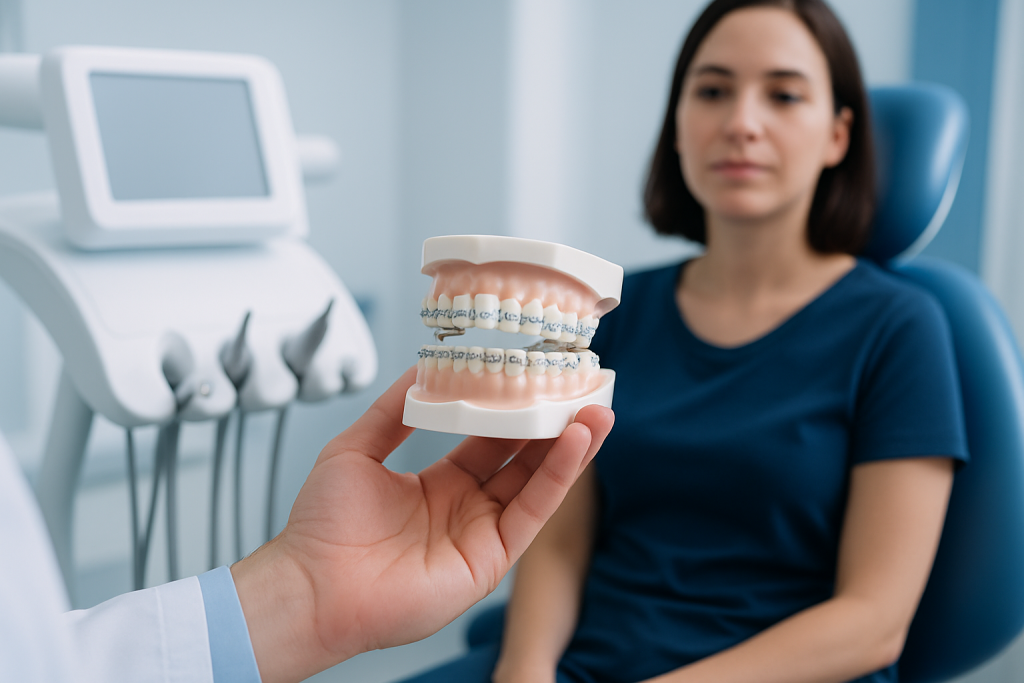
Braces are not a symptom themselves, but they are often recommended when certain signs suggest that the teeth or jaws are not aligned ideally. Some people notice these concerns early, while others learn about them during a routine dental examination.
Common reasons an orthodontist may suggest braces include crowded teeth, gaps between teeth, teeth that protrude too far forward, or an uneven bite. In some cases, the teeth may meet only on one side, or the upper and lower teeth may not come together comfortably when chewing or speaking.
- Crowded or overlapping teeth
- Visible gaps between teeth
- Overbite, underbite, or crossbite
- Difficulty biting or chewing evenly
- Speech concerns related to alignment
- Frequent biting of the cheeks or lips
Some people also notice jaw discomfort, wear on certain teeth, or difficulty keeping the mouth clean in tight spaces. These problems do not always mean braces are required, but they are good reasons to ask an orthodontist for an evaluation.
Causes & Risk Factors

Teeth and jaw alignment can be influenced by genetics, childhood habits, tooth loss, and the way the jaws grow. Often, there is no single cause. Instead, a combination of factors shapes how the teeth come together over time.
Inherited jaw size or tooth size differences are common reasons for crowding or spacing. A child who loses baby teeth early, has prolonged thumb sucking, mouth breathing, or a long-standing habit of tongue thrusting may also be more likely to develop an orthodontic problem.
Additional factors can include:
- Missing teeth or extra teeth
- Injuries that change bite position
- Prolonged use of pacifiers or sucking habits in childhood
- Jaw development that is not symmetrical
- Dental work that changes how teeth meet
Adults can also need braces. Teeth may shift slowly over time, especially if gums or supporting bone are affected, or if teeth were not fully aligned earlier in life. For some international patients, this is the first opportunity to receive a specialist assessment and decide whether treatment should begin now or be combined with other dental work.
Diagnosis
Diagnosis usually begins with a consultation and a detailed look at how the teeth fit together. The orthodontist may ask about chewing, biting, speech, previous dental treatment, habits from childhood, and any concerns about appearance or comfort.
An examination often includes photographs, X-rays, and sometimes digital scans or impressions of the teeth. These records help the specialist see the position of the roots, the spacing between teeth, and the relationship of the jaws. They also support a treatment plan that is tailored rather than generic.
Because orthodontic care is often a long process, planning matters. For patients traveling from another country, it can be helpful to ask in advance how many visits are likely, what can be completed during the first trip, and how follow-up will be organized after returning home. Clear communication at this stage can make the entire experience smoother.
Treatment Options
Braces come in several forms, and the best choice depends on the complexity of the alignment issue, the person’s age, aesthetic preferences, and how much maintenance they can comfortably manage. Traditional metal braces remain widely used because they are versatile and effective for many bite problems.
Other options may include ceramic braces, which are less noticeable, or clear aligner systems for selected cases. Some people need a combination of approaches, especially if tooth movement must be carefully staged. In more complex situations, treatment may also involve removing a tooth, using elastics, or coordinating with other dental procedures.
Common braces-related treatment steps include:
- Initial planning and records
- Placement of brackets or another appliance
- Regular adjustment visits
- Use of elastics or other add-ons when needed
- Retention after active treatment to help maintain results
The active treatment phase can last months to a few years, depending on the situation. Once braces are removed, retainers are usually important. Teeth have a natural tendency to shift, and retention helps keep the new alignment stable over time.
Prevention & Self-care
Not every orthodontic problem can be prevented, especially when it is linked to jaw growth or inherited tooth size. Still, early dental care can reduce the chance that small issues become more complicated. Routine checkups during childhood and adolescence give dentists a chance to identify alignment concerns before they become harder to manage.
During braces treatment, self-care becomes part of the treatment itself. Careful brushing, cleaning around wires or attachments, and keeping regular appointments all support healthy teeth and gums while orthodontic work is in progress.
Helpful self-care habits include:
- Brushing after meals when possible
- Cleaning between teeth with floss or orthodontic aids
- Avoiding very hard, sticky, or chewy foods if advised
- Wearing elastics or retainers exactly as directed
- Attending follow-up visits on schedule
It is also sensible to protect the mouth during sports if recommended and to report broken brackets, loose wires, or persistent soreness. Small issues are often easy to manage when they are addressed early.
When to See a Doctor
A dental or orthodontic evaluation is appropriate when teeth look crowded, bite alignment feels off, or chewing is uncomfortable. Parents may also seek advice if a child has habits such as thumb sucking, mouth breathing, or an early loss of baby teeth that seems to affect how the teeth are coming in.
Adults should not assume they are “too old” for braces. If teeth are shifting, cleaning has become harder, or the bite feels uneven, an orthodontist can explain whether treatment would be beneficial and what options are realistic.
Prompt advice is especially helpful if there is jaw pain, tooth wear, repeated biting of the cheeks, or if a tooth no longer meets its partner correctly after injury. These changes do not always require urgent care, but they do deserve professional assessment.
For patients considering treatment abroad, Acibadem Health Point offers multidisciplinary specialists and JCI-accredited hospitals that diagnose and treat orthodontic concerns for international patients, with care planning designed to support both treatment and follow-up.
Living With Braces
Adjusting to braces is often more about routine than pain. People usually adapt as they learn which foods are easiest to eat, how to clean effectively, and what sensations are normal after an adjustment visit. Mild soreness or pressure can happen when teeth begin to move, and it generally settles as the mouth adapts.
It can help to think of braces as a process rather than a device. Progress is usually gradual, and the most successful treatment plans are the ones that combine professional monitoring with steady daily care. Patients who travel for orthodontic treatment may find it useful to keep copies of records, appointment summaries, and retainer instructions so continuity is easier when they return home.
With the right plan, braces can support better alignment, easier oral hygiene, and a more stable bite. A qualified orthodontist can explain the expected timeline, the practical demands of treatment, and what results are realistic for each individual case.
Frequently asked questions
Are braces only for children and teenagers?
No. Many adults have braces as well, especially if they did not receive orthodontic treatment earlier or if their teeth have shifted over time. The treatment plan is based on dental needs, not age alone.
Do braces hurt?
Braces can cause temporary pressure or soreness, especially after they are first placed or adjusted. This usually improves as the mouth gets used to the movement, and an orthodontist can suggest general ways to stay comfortable.
How long does braces treatment take?
The length of treatment varies widely depending on the bite problem, the type of appliance, and how closely the instructions are followed. Some cases are relatively straightforward, while others need a longer, more detailed approach.
Can someone eat normally with braces?
Most people can still eat a wide range of foods, but they may need to be more careful with very hard, sticky, or chewy items. A dentist or orthodontist usually gives practical food guidance once treatment begins.
What happens after braces are removed?
Retainers are usually used to help keep the teeth in their new position. This stage is important because teeth can slowly shift again if they are not supported after active treatment ends.
How should a person choose an orthodontist abroad?
It helps to look for a qualified specialist, clear communication, and a treatment plan that includes records, follow-up, and retainer instructions. For international patients, organized care and realistic scheduling can make treatment much easier to manage.
References
- American Association of Orthodontists
- American Dental Association
- National Institute of Dental and Craniofacial Research
- NHS
This article is for general information only and is not a substitute for professional medical advice. Please consult a qualified doctor about your individual situation.