Low Testosterone Testing: Which Symptoms Matter and Which Lab Results Actually Count

Key Takeaways
- Symptoms matter most when they are persistent and affect energy, sexual function, mood, or muscle strength.
- A morning total testosterone blood test is usually the first lab used, and it is often repeated to confirm the result.
- Free testosterone, SHBG, LH, FSH, and prolactin may help clarify why testosterone is low.
- Temporary illness, poor sleep, certain medicines, and weight changes can influence testosterone results.
- Treatment decisions should be based on the full picture, not on a lab value alone.
Low testosterone is diagnosed by combining symptoms with carefully timed blood tests, not by a single number alone. This guide explains which symptoms matter, which lab results are most useful, and how doctors decide whether treatment is appropriate.
Overview
Low testosterone testing is most useful when it answers a practical question: are a man’s symptoms being driven by a true hormone problem, or by something else that can look very similar? That is why diagnosis is not built on fatigue alone or on a single blood test taken at random. Clinicians look for a pattern of symptoms, then confirm that pattern with appropriately timed lab work.
Testosterone naturally varies during the day and can be affected by sleep, stress, acute illness, weight changes, and some medicines. For that reason, the first result is often only the beginning of the evaluation. A careful review of symptoms and repeat testing usually gives a clearer picture than one isolated measurement.
For international patients, this stepwise approach can be especially helpful. If care is being arranged across countries, it is useful to arrive with prior labs, a list of medications, and a short symptom history so the first consultation can focus on what truly matters.
Symptoms That Matter
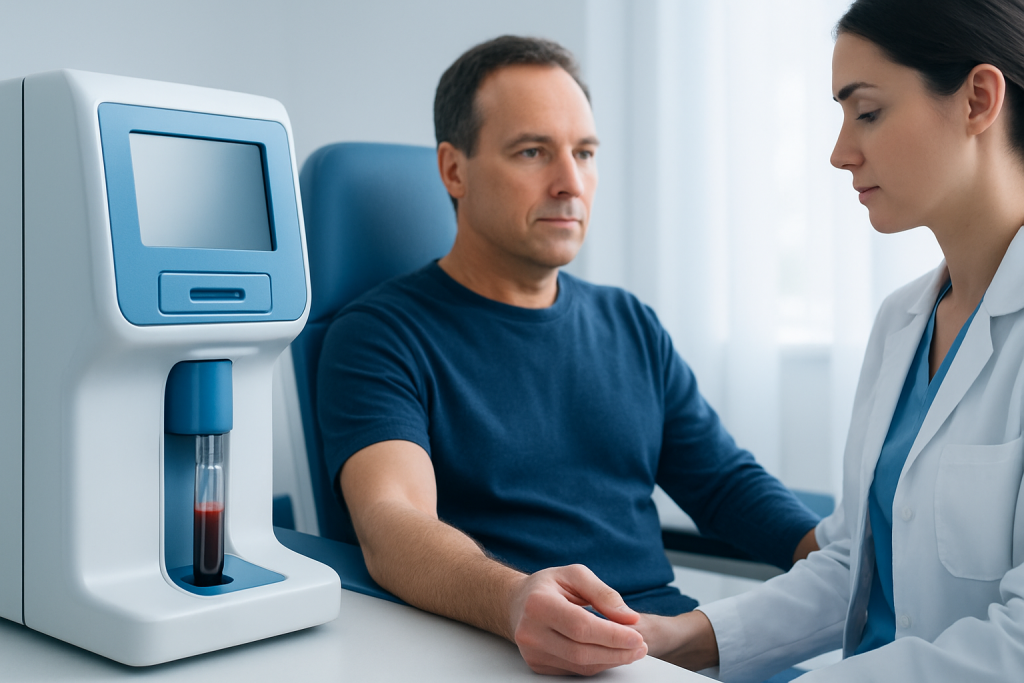
Not every complaint sometimes associated with low testosterone carries the same diagnostic weight. General tiredness, for example, is common and nonspecific, while reduced sexual desire or fewer morning erections tends to be more suggestive when it appears with other features. Doctors usually pay closer attention when symptoms are persistent, progressive, and affecting day-to-day life.
Common symptoms that may prompt testing include:
- Reduced sex drive
- Erectile difficulties, especially when they are new or persistent
- Fewer spontaneous morning erections
- Low energy or reduced stamina
- Loss of muscle mass or strength despite normal activity
- Increased body fat, especially around the abdomen
- Low mood, irritability, or reduced motivation
- Difficulty concentrating or a sense of “mental fog”
These symptoms do not prove low testosterone on their own. Sleep apnea, depression, thyroid disorders, diabetes, obesity, chronic illness, alcohol use, and certain medications can create a similar picture. The value of the symptom review is that it helps determine whether blood testing is likely to be meaningful.
Causes & Risk Factors

Low testosterone can begin in the testes, in the pituitary gland, or as part of a broader health issue. Primary hypogonadism means the testes are not producing enough testosterone. Secondary hypogonadism means the brain’s signaling to the testes is reduced. Both patterns can produce similar symptoms, but they often lead to different next steps in evaluation.
Several factors are linked with lower testosterone levels or with symptoms that mimic it. These include aging, obesity, diabetes, pituitary disorders, testicular injury, chemotherapy or radiation, chronic opioid use, glucocorticoid use, heavy alcohol use, sleep apnea, and some genetic conditions. Severe stress, acute illness, and major calorie restriction can also temporarily lower levels.
Because some causes are reversible, the diagnosis is not just about naming a hormone deficiency. It is also about finding the reason behind it. That is particularly important when a patient is traveling for care, since the doctor may need to separate a short-term, correctable change from a longer-term endocrine disorder that needs ongoing follow-up.
Which Lab Results Actually Count
The most important laboratory value is usually a morning total testosterone level measured with a reliable assay. Testosterone is highest in the morning for many men, so testing is often done early in the day. If the result is low or borderline, clinicians commonly repeat it on a different morning before drawing conclusions.
Total testosterone is often the starting point, but it does not always tell the full story. In some situations, free testosterone is helpful, especially when sex hormone-binding globulin, or SHBG, may be unusually high or low. SHBG can change with age, thyroid disease, liver disease, obesity, and certain medications, which can make total testosterone appear misleadingly normal or low.
Other blood tests help explain why testosterone is low and whether more evaluation is needed:
- Luteinizing hormone (LH) and follicle-stimulating hormone (FSH): help distinguish testicular from pituitary or hypothalamic causes
- Prolactin: may be checked if pituitary causes are suspected
- SHBG: helps interpret total versus free testosterone
- Complete blood count, thyroid tests, or metabolic tests: may be ordered to look for related conditions
A result only becomes meaningful in context. A mildly low value in a man who is acutely ill, sleep-deprived, or recovering from a major health issue may not represent a stable hormone disorder. In contrast, repeat low morning values plus compatible symptoms make the diagnosis more convincing.
Diagnosis: How Doctors Put the Pieces Together
Diagnosis begins with a conversation, not a tube of blood. A clinician will ask when symptoms started, whether they are affecting sexual function, mood, sleep, physical performance, and whether there are relevant medications or medical conditions. That discussion often guides which tests should be ordered first and which conditions should be ruled out in parallel.
Most clinicians confirm low testosterone with two separate morning measurements, usually when the patient is otherwise well. If the results are borderline or inconsistent with the symptoms, additional testing may be needed. The goal is to avoid overdiagnosis in men whose symptoms come from another cause and to avoid missing men whose hormone deficiency is real but subtle.
Depending on the findings, the evaluation may also include a physical examination of body composition and testicular size, assessment for breast tissue changes, and review of fertility goals. Men who still want children need a different discussion than men whose family planning is complete, because some testosterone treatments can suppress sperm production.
Treatment Options
Treatment depends on the cause, symptom burden, age, and future fertility plans. In some men, the first step is not testosterone therapy at all. Addressing sleep apnea, losing excess weight, improving diabetes control, reviewing medications, or treating a pituitary problem may improve symptoms and hormone levels without replacing testosterone.
When testosterone treatment is appropriate, the doctor will choose a form that fits the person’s medical situation and ability to follow up. Options may include gels, injections, patches, or other prescribed forms available in different settings. The choice is usually based on absorption, convenience, side effect profile, and how closely levels need to be monitored.
Testosterone therapy is not suitable for everyone. It requires medical supervision because it can affect blood counts, prostate monitoring decisions, fertility, and sleep apnea symptoms. Men considering treatment should understand both the possible benefits and the need for ongoing lab follow-up after therapy begins.
Prevention & Self-care
Not all low testosterone can be prevented, but some contributors can be improved. Regular sleep, resistance exercise, balanced nutrition, weight management, and limiting alcohol can support overall hormonal health. These measures are not a substitute for medical evaluation, yet they often help the same symptoms that lead men to request testing in the first place.
Self-care also includes making the test itself more reliable. If possible, blood draw appointments should be scheduled in the morning, and testing should be postponed during acute illness whenever clinically reasonable. It is also wise to bring a complete medication list, including opioids, steroids, and supplements, because these can influence both hormone levels and interpretation.
For men seeking care abroad, preparation can streamline the visit. Previous endocrine labs, fertility history, sleep apnea diagnosis, and prior imaging reports can all help the specialist decide whether the issue is straightforward or needs a broader workup after the trip.
When to See a Doctor
A doctor should be consulted when symptoms of low testosterone persist for weeks or months, interfere with sexual health, energy, mood, or physical function, or appear alongside infertility concerns. Evaluation is also appropriate when a man has a history of testicular injury, pituitary disease, chemotherapy, radiation, or long-term use of medications known to affect hormones.
Prompt medical review is especially important if symptoms are paired with headache, vision changes, nipple discharge, a major drop in body hair, or testicular shrinkage, as these may point to a pituitary or other endocrine issue. These findings do not automatically mean something serious, but they do justify a more complete assessment.
Acibadem Health Point’s multidisciplinary specialists and JCI-accredited hospitals can diagnose and treat low testosterone and related endocrine conditions for international patients, with coordinated testing and follow-up designed to make the process clearer from the first visit onward.
Living With the Results: What Happens After Testing
A low result is not the end of the story; it is the beginning of a more precise conversation. Some men feel relieved to have a name for symptoms that had been dismissed or misunderstood, while others discover that another condition is the real driver. In both cases, the value of testing lies in turning uncertainty into a plan.
Follow-up matters, especially when care spans countries. If treatment starts abroad, the patient may need a monitoring strategy for repeat labs, symptom review, and medication adjustment after returning home. A clear written summary of the diagnosis, lab values, and treatment plan helps local doctors continue care smoothly.
The most useful outcome is not simply a number moving up or down. It is a plan that fits the patient’s symptoms, health status, and future goals, with enough monitoring to keep treatment safe and effective.
Frequently asked questions
What symptoms are most suggestive of low testosterone?
Reduced sex drive, fewer morning erections, and persistent erectile difficulties are often more suggestive than nonspecific tiredness alone. Symptoms become more meaningful when they are ongoing and affect daily function. Doctors usually look for a combination of symptoms rather than relying on one complaint.
Is one low testosterone test enough to make the diagnosis?
Usually not. Doctors commonly repeat a morning total testosterone test on a different day to confirm the result. This helps avoid diagnosing a temporary dip caused by illness, poor sleep, or other short-term factors.
Why is the morning blood test important?
Testosterone levels normally fluctuate during the day and are often highest in the morning. Testing early makes the result easier to compare with standard reference ranges. It also improves the chance of detecting a true deficiency.
What is the difference between total and free testosterone?
Total testosterone measures all testosterone in the blood, while free testosterone measures the small portion not tightly bound to proteins. Free testosterone can be useful when SHBG levels are abnormal or when total testosterone does not match the symptoms. A doctor decides which result is most helpful in each case.
Can stress or poor sleep affect the result?
Yes, they can. Acute illness, sleep deprivation, major stress, and significant weight changes may temporarily lower testosterone. That is why doctors interpret lab results together with the patient’s recent health and symptom history.
Does low testosterone always mean treatment is needed?
No. Treatment depends on symptoms, repeat lab results, the underlying cause, and fertility goals. Some men improve by treating sleep apnea, changing medications, or addressing other health conditions first.
References
- American Urological Association
- Endocrine Society
- National Institute of Diabetes and Digestive and Kidney Diseases
- Mayo Clinic
- UpToDate
This article is for general information only and is not a substitute for professional medical advice. Please consult a qualified doctor about your individual situation.