

Keloid Scar

Key Takeaways
- Keloid scars form when healing tissue grows beyond the original wound boundary.
- They may be itchy, firm, tender, or darker than nearby skin.
- People with darker skin tones and a personal or family history of keloids may be at higher risk.
- Treatment can include silicone, injections, pressure therapy, laser, cryotherapy, or surgery with careful follow-up.
- Early care of cuts, burns, acne, and pierced skin may help reduce the chance of keloid formation.
A keloid scar is a raised overgrowth of scar tissue that can extend beyond the original skin injury. It is not dangerous in most cases, but it may itch, feel tender, or cause cosmetic concern, and treatment is often focused on reducing symptoms and improving appearance.
Overview
A keloid scar is the skin’s overenthusiastic response to injury. Instead of stopping once a wound has closed, scar tissue continues to grow and forms a thick, raised area that can spread beyond the original cut, burn, acne spot, piercing, or surgical incision.
For many people, the main concern is appearance. Others notice itching, tightness, tenderness, or sensitivity when clothing rubs against the area. Although keloids are benign, they can be emotionally frustrating because they may keep growing slowly over time and can return after treatment.
Keloids are different from typical scars and also different from hypertrophic scars, which stay within the boundaries of the original wound and sometimes flatten with time. Understanding that distinction helps patients and doctors choose the most suitable treatment plan.
Symptoms and How They Usually Look
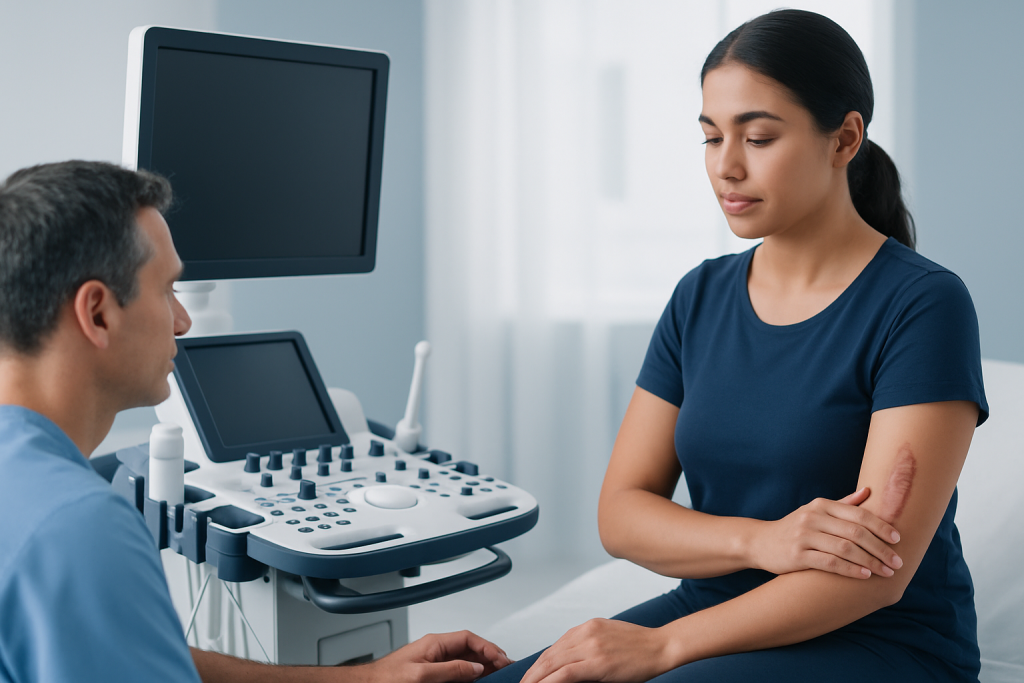
Keloids often begin as a small, firm bump in an area that has healed after an injury. Over weeks or months, the scar may become thicker, smoother, and shinier. Its color may range from pink or red to brown or deeper than the surrounding skin, depending on skin tone and healing pattern.
Common symptoms can include itching, mild pain, burning, or a feeling of pressure. Some keloids stay relatively stable, while others continue to enlarge. They may appear on the chest, shoulders, earlobes, jawline, upper back, or any area that has been repeatedly irritated.
- Raised, firm, rubbery scar tissue
- Growth beyond the original wound edge
- Itching or tenderness
- Skin color changes over the scar
- Possible discomfort from friction or stretching
Because the appearance can vary, a new raised scar should be assessed if it is enlarging, uncomfortable, or uncertain in type. Early evaluation is especially useful when a recent wound seems to be thickening instead of settling down.
Causes and Risk Factors

A keloid forms when the body produces too much collagen during wound healing. Collagen is necessary for repair, but in keloids the process does not switch off in time, so the scar continues to build and becomes more prominent than expected.
The exact reason some people form keloids and others do not is not fully understood. Risk is higher in people with a personal history of keloids, a family history of keloids, darker skin tones, and wounds in areas under tension or frequent movement. Keloids may also follow acne, ear piercing, surgical wounds, chickenpox, burns, or even minor skin trauma.
Repeated irritation can make matters worse. Picking at acne, scratching healing skin, or placing unnecessary tension on a wound may increase the chance of problematic scarring. For patients planning elective procedures abroad, it is important to mention any previous keloid history before surgery, tattooing, or piercing.
Diagnosis
In most cases, a doctor can diagnose a keloid by examining the skin and asking about the injury that came before it. The shape, firmness, and growth pattern usually make the diagnosis clear without special tests.
Occasionally, a doctor may want to rule out another skin condition if the scar looks unusual, changes quickly, ulcerates, or appears in an unexpected location. A biopsy is not always needed, but it may be considered if the diagnosis is uncertain or if the lesion behaves in a way that does not fit a typical keloid.
For international patients, diagnosis is often done in the same visit as the treatment discussion. That can be especially helpful when travel time is limited, because the doctor can explain whether the scar is likely to respond to conservative care, whether repeat visits are needed, and how to plan follow-up once the patient returns home.
Treatment Options
Treatment is usually chosen based on the scar’s size, location, age, and symptoms. Because keloids can recur, care often works best when more than one approach is used and when treatment is followed by regular monitoring.
Common options include silicone gel or silicone sheets, which may help flatten and soften the scar over time. Corticosteroid injections are often used to reduce inflammation and thickness. Other treatments may include pressure therapy for certain locations, cryotherapy, laser treatment, or medications injected directly into the scar in selected cases.
Surgery can remove a keloid, but surgery alone may not be the best answer because a new keloid can form at the incision line. When surgery is considered, doctors often combine it with other measures to lower recurrence risk, such as injections, silicone, or radiation in carefully selected adult cases. The best plan depends on the individual scar and the patient’s broader skin history.
Some people need several treatment sessions before seeing meaningful improvement. Setting realistic expectations matters: treatment aims to reduce height, itch, discomfort, and visibility, rather than promise complete disappearance.
Prevention and Self-care
Not every keloid can be prevented, especially in someone with a strong personal tendency to form them. Even so, thoughtful wound care can support calmer healing and may reduce the chance of excessive scarring.
Clean minor cuts gently, keep healing skin protected, and avoid picking crusts or acne lesions. If a patient knows they are prone to keloids, they should tell a doctor before ear piercing, cosmetic procedures, or surgery, so preventive steps can be discussed in advance. In some cases, early silicone therapy or close wound follow-up may be recommended.
Useful habits include:
- Keeping wounds clean and covered as advised
- Avoiding friction, scratching, or pressure on healing skin
- Managing acne early to reduce skin injury
- Using sun protection on healing scars, since sunlight can darken them
- Attending follow-up visits if a wound begins to thicken
For patients traveling from another country, photos taken over time can help a doctor track scar changes between appointments. That makes follow-up more practical when in-person visits are not immediate.
Living With a Keloid Scar
Keloids can be stubborn, but they are manageable. Many patients do best when they view treatment as a process rather than a one-time fix. A scar that is smaller, softer, and less itchy can still represent a meaningful improvement in comfort and confidence.
Emotional impact should not be overlooked. A visible keloid may affect clothing choices, hairstyle, or willingness to undergo future procedures. Clear counseling helps patients understand what treatment can and cannot do, which often reduces frustration and supports better decisions.
It can also help to keep a simple record of the scar’s size, symptoms, and treatments. This is especially useful for patients coordinating care across borders, because different clinicians can more easily compare progress and plan the next step if needed.
When to See a Doctor
A doctor should be consulted if a raised scar is continuing to grow, causing pain or itching, or interfering with daily comfort. Evaluation is also sensible if a scar appears after a recent piercing, surgery, acne flare, or injury and starts becoming thick instead of settling down.
Medical attention is important if the area becomes red, warm, opens, drains, bleeds, or changes in a way that feels unusual. These signs do not automatically mean something serious, but they deserve prompt assessment so the correct diagnosis can be confirmed.
Patients with a history of keloids are wise to mention that history before any planned skin procedure. At Acibadem Health Point, multidisciplinary specialists and JCI-accredited hospitals help diagnose and treat keloid scars for international patients, with care plans that can be coordinated around travel and follow-up needs.
Frequently asked questions
What is the difference between a keloid scar and a normal scar?
A normal scar usually settles within the original wound area and gradually fades. A keloid scar grows beyond the injury boundary and may continue to thicken over time. It is generally harmless, but it can be more noticeable and more likely to itch or feel tender.
Can a keloid scar go away on its own?
Keloids usually do not disappear without treatment. Some may become less active over time, but many remain raised and visible. Treatment is often aimed at flattening the scar and improving symptoms rather than removing it completely.
Is a keloid scar cancerous?
No, a keloid is not cancer. It is a benign scar overgrowth caused by an exaggerated healing response. A doctor should still evaluate any skin growth that changes rapidly or looks unusual, so the diagnosis can be confirmed.
What treatments work best for keloid scars?
The best option depends on the scar itself and the patient’s history. Silicone products, steroid injections, laser, cryotherapy, pressure therapy, and carefully planned surgery are all used in selected cases. Often, a combination approach gives the most useful result.
Can keloid scars come back after treatment?
Yes, recurrence is possible, especially after surgery alone. That is why doctors often combine treatments and recommend follow-up after the procedure. Ongoing care can help reduce the chance of the scar thickening again.
Are some people more likely to get keloids?
Yes. A personal or family history of keloids increases risk, and they are seen more often in people with darker skin tones. Keloids can also follow relatively minor skin trauma such as acne, ear piercing, or small surgical wounds.
References
- American Academy of Dermatology
- Mayo Clinic
- National Health Service
- DermNet NZ
This article is for general information only and is not a substitute for professional medical advice. Please consult a qualified doctor about your individual situation.
More from the Health Library



Related Specialists

Dr. Serkan Tokgönül
Aesthetic Plastic & Reconstructive Surgery
Dr. Ömercan Yağız Öksüz
Aesthetic Plastic & Reconstructive Surgery
Prof. Dr. Mehmet Veli Karaaltın
Aesthetic Plastic & Reconstructive Surgery
Dr. Nezail Demirciler
Plastic, Reconstructive and Aesthetic Surgery