Implantation Cramps

Key Takeaways
- Implantation cramps are generally mild and short-lived, and not everyone experiences them.
- They can appear around the time a period is due, which is why they are often mistaken for menstrual cramps.
- Light spotting may occur with implantation, but heavier bleeding is not typical and should be discussed with a doctor.
- A home pregnancy test is usually more reliable after a missed period or several days after suspected implantation.
- Severe pain, heavy bleeding, dizziness, or one-sided pain deserve prompt medical attention.
Implantation cramps are mild lower abdominal sensations that some people notice when a fertilized egg attaches to the uterine lining. They are usually brief and subtle, but they can be confusing because they may feel similar to premenstrual cramps.
Overview
Implantation cramps are mild pelvic or lower abdominal sensations that some people notice in the earliest phase of pregnancy. They are thought to happen when a fertilized egg begins attaching to the lining of the uterus, a step that occurs before a pregnancy test is usually positive.
For many people, there is no noticeable discomfort at all. Others describe a gentle pulling, tingling, or cramp-like feeling that is easy to confuse with the approach of a menstrual period. Because the timing can overlap with expected menstruation, implantation cramps often raise questions during the waiting period after ovulation or fertility treatment.
In a fertility or international patient setting, this uncertainty is especially familiar. Someone may have traveled for IVF, timed intercourse, or embryo transfer and then return home wondering whether mild pelvic discomfort is a sign of success, normal hormonal changes, or an early period. The safest approach is to treat symptoms as nonspecific until a pregnancy test and medical review provide clearer information.
Symptoms
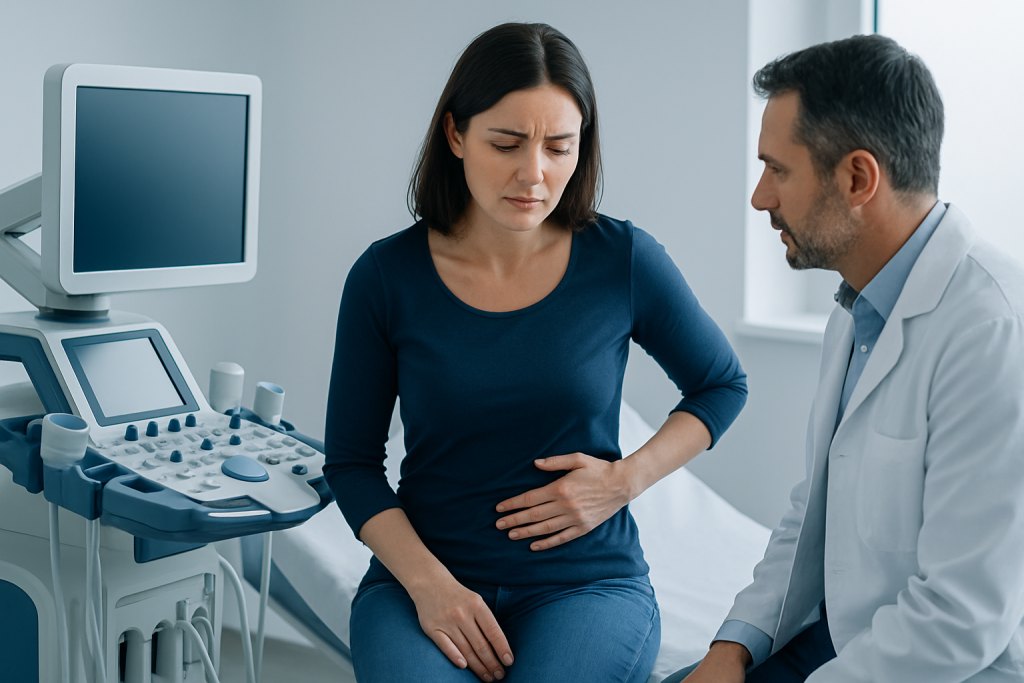
Implantation cramps are usually subtle. They are often described as a mild ache, light tugging, or brief cramp in the lower abdomen or pelvis. The discomfort may come and go rather than remain constant, and it is typically much less intense than severe menstrual cramps.
Some people also notice light spotting at the same time. This is sometimes called implantation bleeding, and it is usually scant, pink, or brown rather than bright red. However, spotting can also happen for other reasons, including hormonal shifts, irritation of the cervix, or the start of a period, so it cannot confirm pregnancy on its own.
- Mild lower abdominal cramping
- Pelvic pressure or pulling sensation
- Light spotting or brown discharge
- Breast tenderness, fatigue, or nausea may appear later, but not from implantation itself
It is important to remember that symptoms vary widely. Many early pregnancy signs overlap with premenstrual symptoms, and the absence of cramps does not mean implantation did not occur.
Causes & Risk Factors

Implantation cramps are linked to the normal process of early pregnancy. After fertilization, the embryo moves toward the uterus and attaches to the endometrium, or uterine lining. This process may trigger mild uterine sensitivity or small amounts of local irritation, which some people feel as cramping.
Not everyone is equally aware of early bodily changes. People who carefully track ovulation, undergo assisted reproduction, or monitor symptoms closely may notice sensations that others might miss. Hormonal influences can also shape how the uterus feels during this time, which helps explain why early pregnancy experiences differ so much from one person to another.
There are no specific “risk factors” for implantation cramps in the way there are for a disease. Instead, there are circumstances that may make them more noticeable, such as heightened body awareness, prior pregnancy experience, fertility treatment cycles, or using progesterone or other medications prescribed during reproductive care. Even then, symptoms alone cannot reliably predict whether implantation has occurred.
Diagnosis
Implantation cramps are not diagnosed by a single test or scan. They are usually identified by context: timing in the menstrual cycle, mild symptom pattern, and follow-up pregnancy testing. A clinician will consider whether the discomfort is consistent with early pregnancy, whether a period is expected soon, and whether there are any warning signs that point to another cause.
A home urine pregnancy test is usually more useful after the expected period date or a few days later, because testing too early can give a false negative. In fertility care, blood testing for hCG may be used earlier and can give more sensitive information than a home test. Even so, one result may not tell the full story, and repeat testing is sometimes needed.
If the pain is unusual, one-sided, severe, or accompanied by heavy bleeding, dizziness, or fainting, a doctor may evaluate for other conditions rather than assuming implantation. This is especially important for people with a history of ectopic pregnancy, pelvic infection, endometriosis, or recent fertility procedures.
Treatment Options
Implantation cramps themselves do not usually need treatment. The discomfort tends to settle on its own and is often so mild that reassurance and observation are enough. If pregnancy is possible, it is sensible to choose symptom relief measures that are generally gentle and compatible with early pregnancy discussions.
Simple comfort strategies may help: resting, drinking enough fluids, avoiding strenuous activity if it worsens symptoms, and using a warm compress on the lower abdomen for a short time if that feels soothing. People who are trying to conceive should check with a clinician before taking any medication, because not all pain relievers are appropriate when pregnancy may have started.
- Observation and symptom tracking
- Hydration and rest
- Gentle movement if comfortable
- Medical review if symptoms change or intensify
If the discomfort turns out to be related to another issue, treatment depends entirely on the cause. For that reason, ongoing, worsening, or atypical pain should not be self-labeled as implantation cramps without assessment.
Prevention & Self-care
There is no proven way to prevent implantation cramps, because implantation itself is a normal biological process. What can help is careful self-observation and a calm, structured approach to the two-week wait after ovulation or embryo transfer. Keeping a simple record of the day symptoms begin, their intensity, and any bleeding can make later medical conversations more precise.
People undergoing fertility treatment often benefit from following the instructions of their reproductive team exactly, including medication schedules and timing of pregnancy tests. This is particularly relevant for Myomectomy Recovery for International Patients: The Usual Travel Timeline" class="ahp-ilk">international patients who may be traveling back home after treatment and need clear written guidance for local follow-up or blood work.
General self-care can also reduce anxiety around ambiguous symptoms. Eating regularly, sleeping adequately, limiting alcohol, and avoiding smoking are sensible habits when pregnancy is possible. Emotional support matters too, because uncertainty during early pregnancy can be as challenging as the physical sensations.
When to See a Doctor
Medical advice is appropriate if cramps are persistent, severe, or clearly different from a usual premenstrual pattern. A doctor should also be contacted if there is heavy bleeding, passage of tissue, fever, shoulder pain, fainting, or pain that is mainly on one side of the pelvis. These symptoms may point to conditions that need prompt evaluation.
Anyone who may be pregnant and has significant pain should not wait for a home test if the symptoms are concerning. This is especially true after fertility treatment, because ectopic pregnancy and other complications require early attention. If a test is negative but the period does not arrive, repeat testing or a clinical assessment may still be needed.
Acibadem Health Point’s multidisciplinary specialists and JCI-accredited hospitals diagnose and treat pregnancy-related concerns for international patients, including early pregnancy symptoms that need careful interpretation. Clear follow-up, especially after travel or fertility care, can help patients understand what is normal and what deserves closer review.
Living With Uncertainty in Early Pregnancy
One of the hardest parts of implantation cramps is not the sensation itself, but the waiting that comes with it. A mild cramp can be interpreted as hope, anxiety, or a sign that a period is about to start. The truth is often less dramatic: early pregnancy symptoms are subtle, variable, and not very specific.
It can help to focus on the pieces that are actually measurable rather than trying to read too much into every twinge. Timing of ovulation, test dates, and any bleeding pattern are more useful than cramp intensity alone. If fertility treatment has been involved, patients should rely on the clinic’s schedule rather than guessing based on symptoms.
When in doubt, a qualified doctor can help sort out whether the symptoms fit normal early pregnancy changes or require additional evaluation. That support is especially valuable for patients managing care across borders, where a clear plan for testing and follow-up can make the experience feel much more manageable.
Frequently asked questions
What do implantation cramps feel like?
They are usually mild and may feel like light period-like cramping, pulling, or a brief ache in the lower abdomen. Many people do not feel anything at all. The sensation is typically much less intense than strong menstrual pain.
When do implantation cramps happen?
They may happen around the time the fertilized egg attaches to the uterine lining, which is often several days before an expected period. The timing can overlap with premenstrual symptoms, so it is not a reliable sign by itself. A pregnancy test is needed for confirmation.
Can implantation cramps happen without bleeding?
Yes, many people notice no bleeding at all. Light spotting may occur in some cases, but its absence does not rule out implantation. Likewise, spotting does not confirm pregnancy because it can have other causes.
How are implantation cramps different from period cramps?
Implantation cramps are usually lighter, shorter, and less intense than menstrual cramps. Period cramps often build as bleeding begins and may feel stronger or more sustained. If pain is severe or unusual, a doctor should evaluate it rather than assuming it is implantation.
When should a pregnancy test be taken?
Testing is usually more reliable after a missed period or a few days after the expected period date. Testing too early can miss a pregnancy because hCG levels may still be low. If results are unclear, repeat testing or blood testing may be recommended.
When should a doctor be contacted about cramping in early pregnancy?
A doctor should be contacted if cramping is severe, persistent, one-sided, or accompanied by heavy bleeding, dizziness, fainting, or fever. These symptoms need medical assessment and should not be watched at home alone. This is especially important after fertility treatment or if ectopic pregnancy is a concern.
References
- American College of Obstetricians and Gynecologists
- National Health Service
- Mayo Clinic
- World Health Organization
This article is for general information only and is not a substitute for professional medical advice. Please consult a qualified doctor about your individual situation.
More from the Health Library



Related Specialists

Prof. Dr. A. Taner Usta
Gynecology & Obstetrics
Prof. Dr. Ahmet Tayyar
Gynecology & Obstetrics
Prof. Dr. Ahmet Cem Batukan
Gynecology & Obstetrics
Dr. Sevgi Selen
Gynecology & Obstetrics