Humidifier: Uses, Benefits and Risks

Key Takeaways
- Humidifiers can ease discomfort caused by dry indoor air, especially in heated or air-conditioned rooms.
- The right humidity level matters; too much moisture may encourage mold and dust mites.
- Regular cleaning is essential because standing water can harbor microbes and mineral buildup.
- Humidifiers do not treat the underlying cause of persistent breathing, skin, or sinus symptoms.
- People with asthma, allergies, or chronic lung disease should ask a clinician which type, if any, is most suitable.
Medically reviewed by the Acıbadem clinical team — August 19, 2026
A humidifier adds moisture to indoor air, which may ease dryness in the nose, throat, skin, and airways. Used correctly and kept clean, it can be a helpful home tool; used poorly, it may spread irritants or make symptoms worse.
Overview
A humidifier is a household device that adds water vapor to the air. For many people, it is not a “treatment” in the medical sense, but a comfort tool that can make dry rooms feel easier to breathe in, especially during winter heating, air travel recovery, or long stays in air-conditioned spaces.
When indoor air becomes too dry, the lining of the nose and throat may feel irritated, lips may crack, and skin can become tight or itchy. A humidifier can reduce that dryness by bringing indoor moisture closer to a comfortable range. The benefit is usually most noticeable when the air is genuinely dry, rather than when symptoms are coming from allergy, infection, reflux, or another condition.
For international patients, humidifiers often become part of the practical side of recovery. A person returning home after a procedure, staying in a hotel for follow-up visits, or adjusting to a different climate may notice that sleep and comfort improve when the room air is less harsh. Even so, the device works best as one small part of a broader care plan, not as a substitute for medical evaluation.
Symptoms That May Improve in Dry Air

Dry indoor air can make a person feel unwell in ways that are easy to overlook. The nose may feel congested even without mucus, the throat may feel scratchy, and coughing can become more frequent, especially at night. Some people also notice more mouth breathing while sleeping, which can lead to waking with a dry mouth or a hoarse voice.
Skin can react as well. Hands, lips, and facial skin may become flaky or sensitive during periods of low humidity, particularly when heating systems run for many hours. A humidifier may help soothe those discomforts, but the effect tends to be gradual and modest rather than dramatic.
It is important to separate dryness from illness. A humidifier may ease irritation caused by dry air, but it will not clear a sinus infection, resolve asthma, or stop an allergic reaction. When symptoms include fever, thick discolored mucus, wheezing, chest tightness, or pain, a doctor should assess the cause rather than assuming the room air is to blame.
Causes & Risk Factors
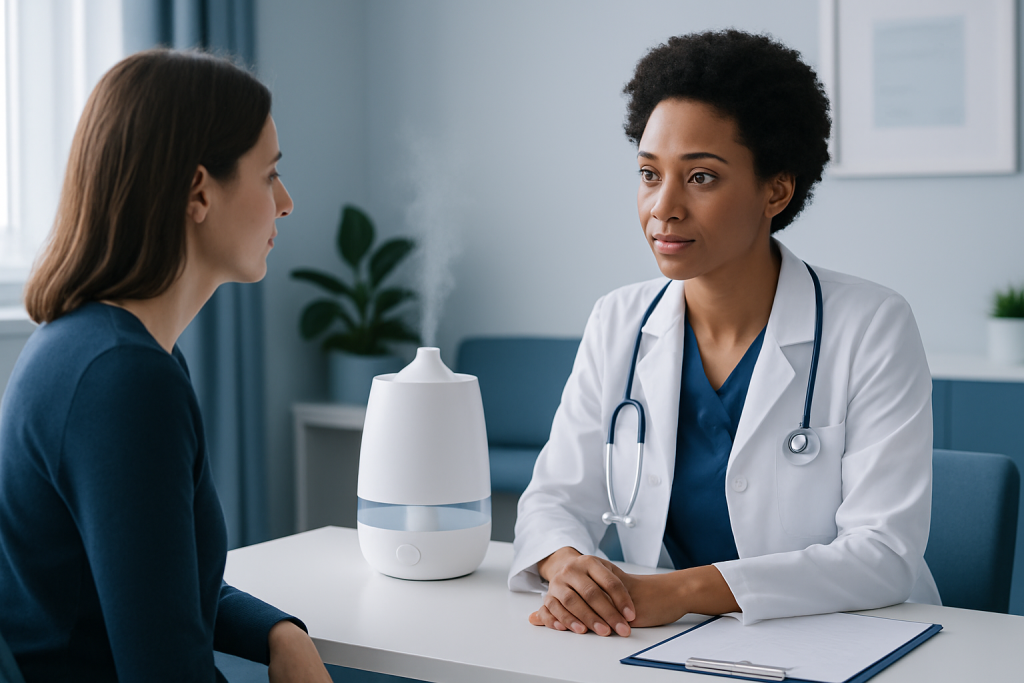
Low indoor humidity is common in certain environments. Central heating, winter weather, air conditioning, desert climates, and long periods in sealed rooms can all remove moisture from the air. Some people are also more sensitive to that dryness because of age, medications that dry the mouth or nose, or underlying skin and airway conditions.
Several everyday situations can increase the appeal of a humidifier. These include sleeping in a heated hotel room, recovering in a private room after surgery, spending time in a child’s nursery during cold months, or living in a climate where humidity changes sharply between seasons. Travelers may notice symptoms more strongly because the body is adjusting to a new environment on top of jet lag and disrupted routines.
At the same time, not everyone benefits from added moisture. In homes that are already damp, or in rooms where condensation appears on windows, a humidifier can worsen the indoor environment. People with mold allergy, dust mite sensitivity, or certain lung conditions should be cautious and seek personalized advice before adding humidity to the air.
Diagnosis: How to Tell Whether Dry Air Is the Problem
There is no medical test for “humidifier need.” Instead, clinicians usually look at the pattern of symptoms, the home environment, and whether complaints improve when humidity changes. A person may be asked about heating and cooling systems, the presence of visible dryness or condensation, and whether symptoms are worse overnight or in one particular room.
If the problem is persistent, other causes should be considered. Ongoing congestion, cough, or sore throat may come from allergies, asthma, reflux, infection, medication side effects, or a structural nasal issue. In those situations, the goal is to identify the true cause rather than simply adding moisture and hoping for the best.
For patients arranging care from another country, this step matters because it prevents unnecessary purchases and delays. A remote consultation or an in-person review during a travel visit can clarify whether a humidifier is appropriate, whether a different room setup is needed, or whether more specific testing is warranted.
Treatment Options and Humidifier Types
Humidifiers come in several forms, and the most suitable choice depends on the room, the user’s age, and the reason for use. Cool-mist models are commonly preferred in households with children because they do not involve heated water. Warm-mist models can feel soothing to some users, but they involve hot surfaces and may be less practical in homes with young children or limited supervision.
Ultrasonic and evaporative models are also widely used. Each type has different maintenance needs, noise levels, and cleaning considerations. The key point is that a humidifier should raise comfort without introducing new problems such as excess moisture, mineral dust, or microbial growth.
In medical settings, humidified air may be used differently, especially for certain respiratory treatments or post-procedure care. At home, however, the focus is usually on comfort and symptom relief. If symptoms are severe or ongoing, the humidifier should be viewed as supportive care while a clinician addresses the underlying issue.
- Cool-mist units: often chosen for general household use
- Warm-mist units: may feel more comfortable in some settings but require caution
- Evaporative models: use a wick or filter and need regular replacement
- Ultrasonic models: quiet and efficient, but careful cleaning is important
Prevention & Self-care
Safe humidifier use depends more on maintenance than on the machine itself. The water tank should be emptied, dried, and refilled regularly according to the manufacturer’s instructions. Standing water can become a source of microbes if it is left in place too long, and mineral deposits can build up when hard water is used.
Room humidity also needs balance. Air that is too dry may irritate the nose and skin, but air that is too moist can encourage mold growth and dust mites. A simple hygrometer can help people avoid guesswork by showing whether the room is staying in a comfortable range. Opening windows briefly, using bathroom exhaust fans, and cleaning visible dampness can also help maintain a healthier indoor environment.
Other practical measures matter too. Drinking enough fluids, using saline nasal spray when appropriate, applying fragrance-free moisturizer to dry skin, and reducing indoor irritants such as smoke can all support comfort. For people recovering after travel or medical procedures, these small habits often make the space feel calmer and more restorative.
When a humidifier is being considered for a long stay abroad or after treatment, it can help to ask the care team which model is easiest to clean and whether any room-specific concerns should be addressed first. Acibadem Health Point’s multidisciplinary specialists and JCI-accredited hospitals diagnose and treat related conditions for international patients, helping them plan follow-up care with practical details in mind.
When to See a Doctor
A humidifier is worth discussing with a doctor when symptoms are persistent, unusual, or tied to a known condition such as asthma, chronic sinus disease, eczema, or COPD. The same applies if someone is unsure whether dryness is the real issue, because similar symptoms can come from allergies, infection, reflux, or medication effects.
Medical advice is especially important if there is wheezing, shortness of breath, chest pain, fever, blood in mucus, recurrent nosebleeds, or symptoms that worsen rather than improve after changing the room environment. In those cases, the goal is not simply to add moisture but to understand what is driving the symptoms.
People planning treatment or recovery while traveling should also ask for guidance before buying or using a humidifier in a hotel, rental apartment, or temporary recovery space. A doctor or nurse can help decide whether humidity control is helpful, neutral, or potentially unhelpful for the person’s situation.
Choosing and Using a Humidifier Wisely
The best humidifier is usually the one that matches the room and can be cleaned consistently. A large, complicated device may be less useful than a simpler unit that can be maintained properly every day. Noise, tank size, ease of cleaning, and the availability of replacement parts are all practical considerations that matter more than brand claims.
It is also sensible to think about placement. A humidifier should not be positioned where it can dampen walls, bedding, or electronics. Directing moisture toward a single person’s face all night is generally unnecessary; the aim is room comfort, not maximum output. If condensation appears, the setting is probably too high.
Used in this balanced way, a humidifier can support sleep, comfort, and nasal or throat soothing during periods of dry air. The device works best when it is treated as part of a clean, well-ventilated room and paired with medical advice when symptoms do not fit the pattern of simple dryness.
Frequently asked questions
What does a humidifier actually do?
A humidifier adds moisture to indoor air. This can help reduce dryness in the nose, throat, skin, and lips when a room is too dry. It does not treat the cause of illness, but it may improve comfort.
Is there a best humidity level for a home?
Many people feel comfortable in a moderate humidity range, but the ideal level can vary by climate and room size. Too little moisture can dry the air, while too much can encourage mold and dust mites. A hygrometer can help monitor conditions more accurately.
Can a humidifier make allergies worse?
It can, if the room becomes too damp or if the device is not cleaned properly. Extra moisture may support mold growth and dust mites, both of which can trigger allergy symptoms. People with allergies should keep humidity balanced and maintain the unit carefully.
How often should a humidifier be cleaned?
The safest routine depends on the model, but regular cleaning is essential. Tanks should be emptied and dried frequently, and the manufacturer’s instructions should be followed closely. This helps reduce the chance of mineral buildup and microbial growth.
Can children use humidifiers?
Yes, but the type and setup matter. Cool-mist devices are often preferred around children because they avoid hot surfaces and steam. Even then, the unit should be cleaned well and placed where it cannot be tipped over or aimed directly at the child.
When is dry air a sign that something else is going on?
If dryness comes with fever, wheezing, chest symptoms, thick colored mucus, repeated nosebleeds, or symptoms that do not improve, another cause may be present. A doctor can help determine whether the issue is simple dryness or a condition that needs treatment.
References
- World Health Organization
- Centers for Disease Control and Prevention
- Mayo Clinic
- American Lung Association
- Environmental Protection Agency
This article is for general information only and is not a substitute for professional medical advice. Please consult a qualified doctor about your individual situation.
Persistent digestive symptoms? Get evaluated in Turkey
JCI-accredited · board-certified surgeons · reply within 24h
Add us as a Preferred Source to see more of our trusted health content across Google Search, AI Overviews and Discover.