How To Pop Your Ears

Key Takeaways
- Ear popping often reflects normal pressure equalization through the Eustachian tube.
- Swallowing, yawning, and gentle pressure maneuvers can sometimes relieve mild ear fullness.
- Forceful blowing or repeated aggressive attempts can worsen irritation or injury.
- Allergies, colds, sinus congestion, and altitude changes are common reasons ears feel blocked.
- Pain, hearing loss, dizziness, drainage, or symptoms that last should be checked by an ENT specialist.
Ear popping is usually the body’s way of equalizing pressure between the middle ear and the outside environment. When it does not happen easily, simple self-care may help, but persistent blockage or pain can signal an ear problem that deserves medical review.
Overview
People often notice a need to “pop” their ears during a flight, after a cold, or when traveling through hills and mountain roads. That sensation usually comes from pressure differences on either side of the eardrum. The ear is designed to balance that pressure through a small passage called the Eustachian tube.
When the tube opens normally, pressure equalizes and hearing may feel clearer. If it stays narrowed or closed, the ear can feel full, muffled, or mildly uncomfortable. For many people, the problem is temporary and linked to everyday situations such as congestion, seasonal allergies, or quick changes in altitude.
Understanding what is happening inside the ear helps keep the response calm and practical. The goal is not to force the ear open, but to encourage gentle equalization and recognize when symptoms suggest more than simple pressure.
Symptoms
The most common sign is a blocked, clogged, or “underwater” feeling in one or both ears. Hearing may seem slightly muffled, and some people notice crackling, popping, or clicking when they swallow or yawn. These sensations can come and go as the ear adjusts.
Other symptoms may appear when pressure changes are more intense or when the Eustachian tube is inflamed. These can include mild ear discomfort, a sense of ear fullness, or a brief change in hearing during ascent or descent in an airplane. In some cases, the ear may feel better after a yawn, sip of water, or swallow.
Symptoms that are less typical deserve attention. Pain, ringing, dizziness, fluid drainage, or a sudden drop in hearing are not just ordinary “ear popping” and should be assessed by a clinician.
Causes & Risk Factors

The Eustachian tube connects the middle ear to the back of the nose and throat. Its job is to keep air pressure balanced and help fluid drain. When the tube swells or gets blocked, pressure cannot equalize well, and the ear may feel stuffed or painful.
Common triggers include upper respiratory infections, sinus congestion, allergies, environmental irritants, and rapid altitude changes. Flying, scuba diving, driving through steep terrain, and even forceful nose blowing can put extra stress on the ear pressure system. Children may be more prone to blockage because their Eustachian tubes are smaller and less efficient.
- Colds or viral infections
- Allergic rhinitis
- Sinus pressure or congestion
- Air travel and altitude shifts
- Middle ear fluid or recurrent ear infections
- Smoking or exposure to secondhand smoke
Some people have a more sensitive pressure response because of nasal anatomy, chronic inflammation, or repeated ear infections. In these cases, ear popping problems may come back more often until the underlying trigger is addressed.
Diagnosis
When the ear does not pop as expected, diagnosis begins with a careful history. A doctor may ask when the symptoms started, whether they followed a flight or a cold, and whether there is pain, hearing change, or drainage. These details help distinguish simple pressure imbalance from infection, fluid buildup, or injury.
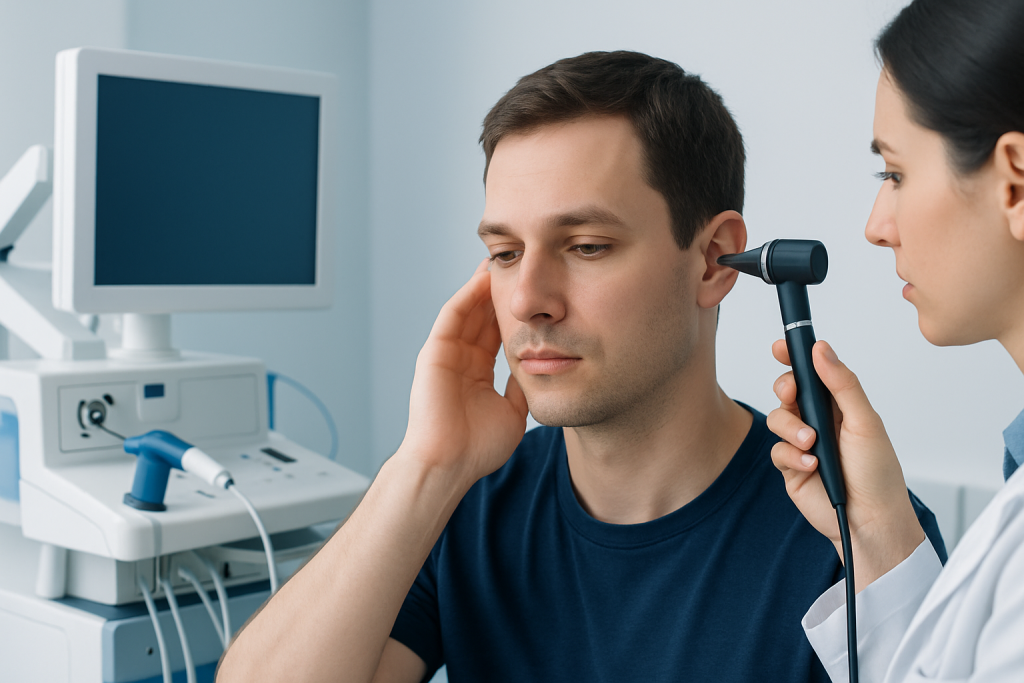
An ENT specialist usually examines the ear canal and eardrum. Depending on the symptoms, the evaluation may include tests that measure eardrum movement, hearing, or the pressure pattern in the middle ear. These tests are often quick and painless, and they can clarify whether the Eustachian tube is functioning normally.
For international patients planning care abroad, this kind of assessment is often straightforward and can be completed soon after arrival if needed. That helps the medical team decide whether the issue can be managed conservatively or whether a longer treatment plan is needed.
Treatment Options
For mild pressure buildup, the safest approach is usually gentle equalization rather than force. Swallowing, yawning, chewing gum, sipping water, or trying a soft nasal pressure maneuver may help the Eustachian tube open. These methods are commonly used during travel because they work with the body’s own pressure mechanism.
When congestion is the main reason the ear feels blocked, treatment may focus on the underlying nasal inflammation. Depending on the cause, a clinician may recommend an allergy plan, nasal saline, or other noninvasive measures. If an ear infection, significant fluid, or barotrauma is present, treatment can differ and should be guided by a medical professional.
Persistent Eustachian tube dysfunction sometimes needs more structured ENT care. In selected cases, specialists may discuss procedures or targeted therapies to improve ventilation and reduce repeated pressure problems. The choice depends on the person’s symptoms, exam findings, and overall ear health.
It is important to avoid aggressive ear popping attempts. Repeated hard blowing through a pinched nose can strain the ear and may worsen discomfort, especially if the ear is already inflamed.
Prevention & Self-care
Prevention starts with reducing situations that block the Eustachian tube when possible. Managing allergies, staying hydrated, and treating a cold carefully can lower the chance of ear pressure problems. For travelers, taking time to clear nasal congestion before flying may make descent more comfortable.
During flights or altitude changes, simple habits can help the ears equalize more smoothly. Swallowing frequently, chewing, and staying awake during descent may be useful for some people. If a clinician has recommended a pressure-equalizing method, it should be done gently and only as instructed.
- Do not forcefully blow against a tightly pinched nose.
- Do not put cotton swabs or other objects into the ear.
- Consider delaying travel if a severe cold or ear infection is active.
- Use nasal saline if recommended by a clinician.
- Seek medical advice before flying or diving if ear symptoms are recurrent.
For people traveling internationally for care, preparing ahead can be helpful. Bringing a list of current medications, knowing recent symptom patterns, and arranging follow-up plans after returning home can make ear treatment smoother and more predictable.
When To See a Doctor
Ear popping that happens occasionally and resolves quickly is usually not worrisome. A doctor should be consulted when the ear remains blocked for several days, or when the sensation keeps returning without a clear reason. Persistent symptoms may reflect ongoing inflammation, fluid, or another condition that needs treatment.
Medical review is especially important if there is significant pain, fever, hearing loss, vertigo, ringing that does not settle, or any fluid or blood from the ear. These signs can point to infection, barotrauma, or another ear disorder that should not be managed by home measures alone.
If symptoms begin after diving, air travel, or a sudden pressure shift and do not improve, an ENT assessment is sensible. Acibadem Health Point’s multidisciplinary specialists and JCI-accredited hospitals diagnose and treat ear and pressure-related conditions for international patients, with coordinated follow-up when needed.
FAQs
Can everyone safely pop their ears at home?
Many people can relieve mild pressure with swallowing, yawning, or other gentle methods. The safest approach is to avoid force and to stop if pain increases.
Why do my ears pop on airplanes?
Air pressure changes during takeoff and landing, and the middle ear has to adjust to those changes. If the Eustachian tube opens slowly, the ear can feel full or painful until pressure equalizes.
Is it normal if only one ear will not pop?
It can happen with one-sided congestion, swelling, or wax-related problems. If the one-sided blockage lasts or is paired with hearing loss or pain, it should be checked.
Can allergies make ears feel blocked?
Yes. Allergies can inflame the nose and the Eustachian tube, making pressure equalization harder. Treating the nasal symptoms often helps the ear symptoms as well.
Should a person fly with a cold?
Sometimes it is better to postpone travel if congestion is severe, especially if ear pain has already started. A doctor can advise based on the person’s symptoms and travel needs.
When is ear fullness an emergency?
Sudden hearing loss, severe dizziness, intense pain, or drainage from the ear needs prompt medical evaluation. These symptoms are not typical of simple pressure changes.
Frequently asked questions
Can everyone safely pop their ears at home?
Many people can relieve mild pressure with swallowing, yawning, or other gentle methods. The safest approach is to avoid force and to stop if pain increases.
Why do my ears pop on airplanes?
Air pressure changes during takeoff and landing, and the middle ear has to adjust to those changes. If the Eustachian tube opens slowly, the ear can feel full or painful until pressure equalizes.
Is it normal if only one ear will not pop?
It can happen with one-sided congestion, swelling, or wax-related problems. If the one-sided blockage lasts or is paired with hearing loss or pain, it should be checked.
Can allergies make ears feel blocked?
Yes. Allergies can inflame the nose and the Eustachian tube, making pressure equalization harder. Treating the nasal symptoms often helps the ear symptoms as well.
Should a person fly with a cold?
Sometimes it is better to postpone travel if congestion is severe, especially if ear pain has already started. A doctor can advise based on the person’s symptoms and travel needs.
When is ear fullness an emergency?
Sudden hearing loss, severe dizziness, intense pain, or drainage from the ear needs prompt medical evaluation. These symptoms are not typical of simple pressure changes.
References
- American Academy of Otolaryngology–Head and Neck Surgery
- Mayo Clinic
- Merck Manual Professional Edition
- NHS
This article is for general information only and is not a substitute for professional medical advice. Please consult a qualified doctor about your individual situation.