Tonsil Stones

Key Takeaways
- Tonsil stones form when debris becomes trapped in the tonsils and hardens over time.
- Many people have no symptoms, but some notice bad breath, throat irritation, or visible white spots.
- Good oral hygiene and simple home measures may reduce recurrence in mild cases.
- Persistent, painful, or recurrent tonsil stones may need evaluation by an ENT specialist.
- Surgery is not usually the first step, but it may be considered for frequent or troublesome cases.
Tonsil stones are small, often harmless deposits that can form in the crevices of the tonsils and sometimes cause bad breath, throat discomfort, or a feeling that something is stuck. Understanding why they form and when they need medical attention can help a person choose the right next step with confidence.
Overview
Tonsil stones, also called tonsilloliths, are small collections of hardened material that form in the natural pockets of the tonsils. They are usually made of trapped food particles, dead cells, mucus, and bacteria that settle in the crevices and gradually calcify.
For many people, tonsil stones are an incidental finding. They may be noticed during a mirror check, during a dental visit, or only after someone asks about ongoing bad breath. Others become aware of them because of throat discomfort, a dry cough, or the sensation that something is caught at the back of the throat.
Although the name can sound worrying, tonsil stones are usually not dangerous. The main issue is that they can be annoying, recur over time, and occasionally overlap with other throat problems such as chronic tonsillitis or enlarged tonsil crypts. That is why a careful evaluation can help distinguish a simple tonsil stone from a condition that needs a different plan.
Symptoms
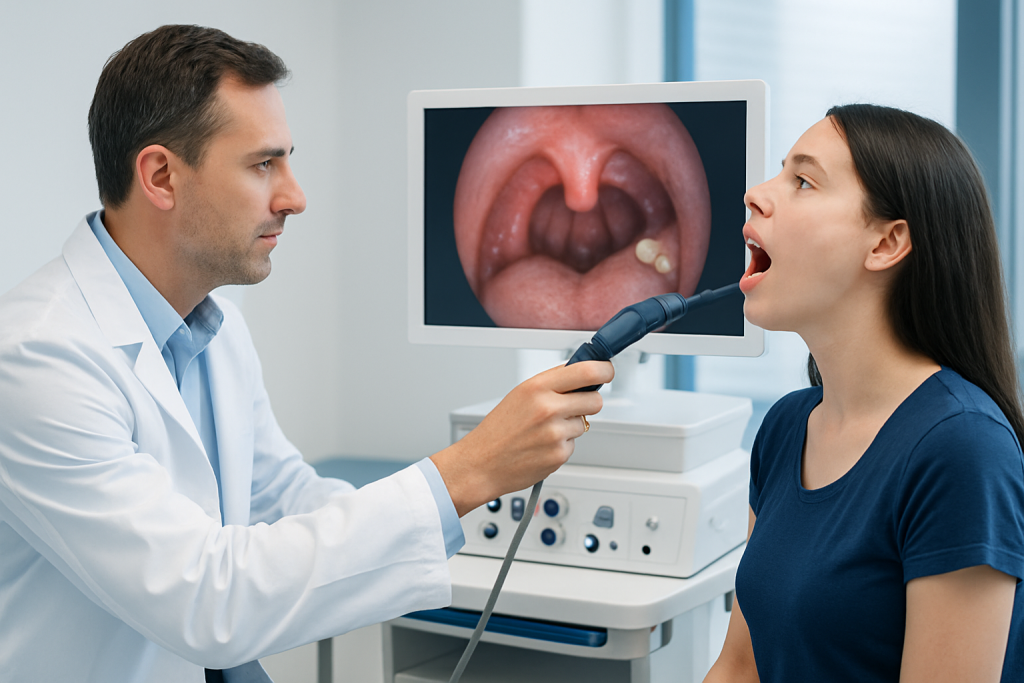
Some tonsil stones cause no symptoms at all. When they do make themselves known, the signs can vary from a mild nuisance to a more persistent throat complaint. The most common clue is bad breath that does not improve much with brushing, flossing, or mouthwash.
Other possible symptoms include a scratchy or irritated throat, a feeling of something lodged in the throat, coughing, difficulty swallowing in some situations, or an unpleasant taste in the mouth. Small white or yellowish specks may be visible on the tonsils, especially when the mouth is open wide and the tongue is gently out of the way.
Less commonly, a person may feel ear pressure or intermittent throat pain. These symptoms are not unique to tonsil stones, so a clinician may want to rule out infection, tonsillitis, tonsil abscess, or another cause of throat discomfort before recommending treatment.
- Persistent bad breath
- White or yellow deposits on the tonsils
- Throat irritation or soreness
- Foreign-body sensation in the throat
- Occasional cough or swallowing discomfort
Causes & Risk Factors

Tonsils have natural folds and tiny pockets, sometimes described as crypts. These spaces can collect material from the mouth and throat. When debris remains trapped, it can become compacted, mixed with bacteria, and eventually form a stone.
People with deeper tonsil crypts, frequent throat infections, postnasal drip, or ongoing mucus drainage may be more likely to develop tonsil stones. Dry mouth can also contribute because saliva normally helps wash away debris and limits bacterial buildup.
Other factors may raise the chance of recurrence, including poor oral hygiene, smoking, and a history of chronic tonsillitis. Tonsil stones can occur in adults and children, but they are more often discussed in adults because the tonsils tend to become more pitted and irregular over time.
It is useful to remember that tonsil stones are not usually caused by one single behavior. They often arise from a combination of anatomy, oral bacteria, and local irritation in the throat. That means management often focuses on reducing buildup rather than expecting one quick fix.
Diagnosis
Diagnosis often begins with a straightforward history and a look at the throat. A clinician may ask about bad breath, recurrent sore throat, coughing, swallowing issues, or the frequency of throat infections. Many tonsil stones can be seen with a good light and a careful oral exam.
If the stones are not obvious, an ENT specialist may use a closer examination to inspect the tonsils and surrounding areas. In most cases, imaging is not required. Testing is usually reserved for situations where symptoms suggest another diagnosis or where the throat exam is limited.
Because several conditions can look or feel similar, the aim is not simply to confirm the presence of a stone. The real goal is to understand why the symptoms are happening and whether a person needs conservative care, repeated removal, or treatment for a related problem such as chronic infection.
Treatment Options
Treatment depends on how often the stones appear and how much they affect daily life. When tonsil stones are small and not causing much trouble, observation and home care may be all that is needed. In other cases, a clinician may suggest gentle removal in the office.
Home measures often include warm saltwater gargles, careful oral hygiene, and methods that help loosen surface debris. Some people use a low-pressure oral irrigator or a cotton swab with caution, but anything inserted into the throat should be done gently to avoid injury. Forceful poking is not recommended because it can scratch the tonsils or trigger bleeding.
If stones recur frequently, cause significant symptoms, or occur along with chronic tonsillitis, an ENT doctor may discuss additional options. These can include in-office removal, treatment of underlying infection or inflammation, or in selected cases tonsillectomy. Surgery is generally reserved for people whose symptoms are persistent, troublesome, or repeatedly return despite conservative care.
For international patients deciding whether to travel for evaluation, it can help to bring previous throat records, photos of the stones if available, and a summary of past treatments. That makes it easier for the treating team to understand the pattern and decide whether conservative care or a more definitive approach is most appropriate.
Prevention & Self-care
Prevention is usually aimed at reducing the material that gets trapped in the tonsils and improving the mouth’s natural cleaning process. Regular brushing, flossing, and tongue cleaning can lower bacterial load and help limit the buildup that contributes to stones.
Staying well hydrated may also help, especially for people with dry mouth. Gargling with warm salt water can be soothing and may help dislodge small particles. If postnasal drip or allergies are part of the picture, treating those problems can sometimes reduce recurring debris in the throat.
It is best to avoid aggressive scraping, sharp objects, or any technique that causes pain or bleeding. A gentle approach is usually safer and more effective over time. For people who travel for care, it is especially important to learn a simple follow-up routine before leaving, so daily self-care remains practical after returning home.
- Brush and floss consistently
- Clean the tongue as part of oral hygiene
- Drink enough fluids to reduce dryness
- Use gentle saltwater gargles when appropriate
- Address chronic congestion, allergies, or postnasal drip if present
When to See a Doctor
A medical review is sensible when tonsil stones keep coming back, become painful, or interfere with eating, speaking, or social comfort because of breath odor. A doctor can confirm whether the problem is really a tonsil stone and not a different throat condition.
Prompt evaluation is especially important if there is fever, significant one-sided swelling, trouble opening the mouth, severe pain, bleeding, or difficulty swallowing or breathing. Those symptoms are not typical of a simple tonsil stone and deserve timely attention.
People who are considering treatment from another country may find it helpful to seek an ENT consultation that includes clear aftercare instructions and a plan for follow-up once they are back home. Acibadem Health Point’s multidisciplinary specialists and JCI-accredited hospitals diagnose and treat tonsil stones for international patients, with attention to both the throat problem and the practicalities of recovery.
Living With Recurrent Tonsil Stones
When tonsil stones keep returning, the condition can become more of a quality-of-life issue than a medical emergency. Many people feel self-conscious because of breath concerns or frustrated by the repeated need to clear the throat or check the tonsils.
A useful strategy is to treat recurrence as a pattern worth tracking. Noting whether stones appear after upper respiratory infections, allergy flares, dry periods, or changes in oral care can help a clinician tailor advice. In some cases, small changes to daily routine make a noticeable difference over time.
If symptoms remain bothersome despite good self-care, an ENT specialist can talk through the balance between repeated conservative care and more definitive procedures. The best plan is usually the one that fits the person’s symptoms, anatomy, and long-term goals, rather than a one-size-fits-all approach.
Frequently asked questions
Are tonsil stones dangerous?
Tonsil stones are usually not dangerous. They are more often a nuisance than a serious health problem, although they can be uncomfortable or embarrassing. A doctor should still assess symptoms that are severe, one-sided, or associated with fever or swallowing problems.
Can tonsil stones go away on their own?
Yes, small stones may loosen or fall out without treatment. Some people never notice them unless they become larger or cause bad breath or irritation. Recurrent stones, however, may keep coming back unless the underlying buildup is addressed.
What is the safest way to remove a tonsil stone at home?
The safest home approaches are usually gentle gargling, good oral hygiene, and careful rinsing to help loosen debris. Anything that involves poking the tonsil should be done with great caution, if at all, because the tissue is delicate. If the stone is hard to remove or causes pain, medical guidance is better than force.
Why do tonsil stones smell bad?
Tonsil stones can trap bacteria and debris, and that material may produce a noticeable odor. This is one reason bad breath is such a common complaint. Improving oral hygiene and reducing trapped debris can sometimes help, but persistent odor may need a clinician’s evaluation.
Do tonsil stones mean someone has poor hygiene?
Not necessarily. Oral hygiene matters, but anatomy, tonsil crypt depth, dry mouth, allergies, and repeated throat irritation can all play a role. Even people with good hygiene can develop tonsil stones.
When is tonsil surgery considered?
Tonsil surgery is usually considered only when symptoms are frequent, troublesome, or linked to recurrent tonsillitis. It is not the first choice for most mild cases. An ENT specialist can explain whether the potential benefit is worth the recovery involved.
References
- Cleveland Clinic
- Mayo Clinic
- American Academy of Otolaryngology–Head and Neck Surgery
- NHS
This article is for general information only and is not a substitute for professional medical advice. Please consult a qualified doctor about your individual situation.