What Does Strep Throat Look Like

Key Takeaways
- Strep throat often causes a suddenly painful sore throat with a red, irritated throat and swollen tonsils.
- White spots, pus on the tonsils, fever, and tender neck glands can support the suspicion, but they do not confirm the diagnosis on their own.
- A throat swab is the most reliable way to tell strep throat apart from viral throat infections.
- Antibiotics may be recommended when strep is confirmed, while supportive care can help with comfort and recovery.
- Good hand hygiene, not sharing personal items, and replacing old toothbrushes after recovery may help lower spread and reinfection risk.
Strep throat is a bacterial infection that can make the throat look red, swollen, and sometimes dotted with white patches. Because its signs can overlap with viral sore throats, a proper medical assessment is often the safest way to confirm the cause and choose the right treatment.
Overview
When people ask what strep throat looks like, they are usually trying to separate a routine sore throat from one that may need medical treatment. The appearance can be striking: the throat may look very red, the tonsils may be enlarged, and there may be white patches or streaks of pus. Even so, strep throat cannot be diagnosed by appearance alone.
Strep throat is caused by group A Streptococcus, a bacterium that infects the throat and tonsils. It tends to come on quickly and often causes a more intense sore throat than many viral colds. A person may feel well one day and wake up the next with pain on swallowing, fever, and a throat that looks inflamed in the mirror or during an examination.
For international patients considering care away from home, it is helpful to know that sore throats can be evaluated efficiently with a physical exam and, when needed, a throat swab. That matters because the right diagnosis prevents unnecessary antibiotics and helps ensure that bacterial infections are treated promptly.
Symptoms and What the Throat May Look Like
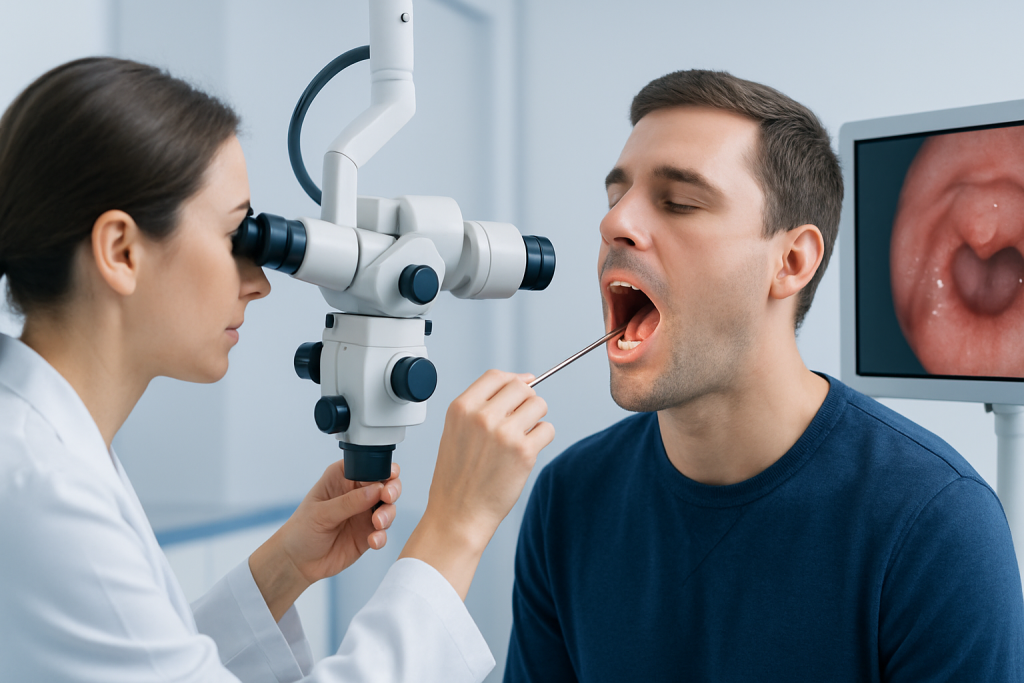
The classic visual clues of strep throat involve redness and swelling. The throat may appear bright red, the tonsils may look enlarged, and the back of the mouth may seem irritated or rough. In some cases, small red spots may appear on the roof of the mouth, and the uvula may look swollen.
White patches on the tonsils are one of the best-known findings people notice, but they are not unique to strep. Viral infections and other throat conditions can also cause exudate or coating. A person may also have difficulty swallowing, painful swallowing, and a fever that feels out of proportion to a simple cold.
Other common symptoms include:
- Sudden sore throat without much cough
- Fever and chills
- Swollen, tender lymph nodes in the neck
- Headache or body aches
- Feeling tired or generally unwell
Children may also complain of stomach pain, nausea, or vomiting. In younger children, the signs may be less specific, which is one reason clinicians often rely on both the exam and testing rather than the appearance alone.
Causes and Risk Factors

Strep throat develops when group A streptococcal bacteria enter the throat, usually through droplets from coughing, sneezing, or close contact with an infected person. It spreads easily in households, schools, offices, and other places where people share air and surfaces.
Some situations make infection more likely. Children and adolescents are affected more often than adults, although adults can certainly get strep throat as well. Crowded living conditions, close contact with someone who is ill, and exposure during peak respiratory infection seasons can increase the chance of catching it.
Risk is also influenced by practical everyday details: sharing cups or utensils, poor hand hygiene, and touching the face after contact with contaminated surfaces. People who have repeated strep infections may need a broader look at household exposure, treatment completion, and possible carriers in close contact.
Diagnosis
Because many sore throats look similar, diagnosis starts with a clinical assessment. A clinician examines the throat, asks about symptoms such as fever and cough, and checks the neck for swollen lymph nodes. Certain features may raise suspicion for strep throat, but they do not replace testing.
The usual confirmation method is a throat swab. Depending on the setting, this may be a rapid antigen test, a molecular test, or a throat culture. Rapid tests can provide quick answers, while culture and some molecular methods are more sensitive. The testing approach may vary by age, symptoms, and local practice.
For patients traveling for care, this step is especially valuable because it helps avoid guesswork. A clear diagnosis can guide whether antibiotics are appropriate, how contagious the person may be, and when it is generally safe to resume work, school, or travel plans.
Treatment Options
When strep throat is confirmed, treatment usually includes antibiotics chosen by a qualified clinician. The goal is to treat the infection, reduce the chance of complications, and shorten the period during which the person may spread the bacteria to others. Antibiotics are not helpful for viral sore throats, which is why testing matters.
Supportive care is also important. Rest, fluids, and soft foods can make swallowing easier. Warm liquids, salt-water gargles, and throat lozenges may provide comfort for older children and adults, depending on age and safety considerations. Fever or pain medicines may be recommended by a clinician for symptom relief.
If symptoms are severe, if swallowing becomes difficult, or if there are signs of dehydration, additional assessment may be needed. In some cases, recurrent tonsil infections lead clinicians to discuss longer-term ENT evaluation. A careful plan is particularly useful for international patients who may need treatment coordination, follow-up instructions, and communication with a home physician after travel.
Prevention and Self-care
Simple habits go a long way in reducing spread. Frequent handwashing, covering coughs and sneezes, and avoiding sharing drinks, utensils, towels, or lip balm can lower the chance of passing infection within a family or group. If someone in the household is diagnosed, cleaning commonly touched items can also be helpful.
During recovery, it is sensible to replace a toothbrush after treatment has started or after the clinician advises it, especially if the toothbrush was used while the person was contagious. Keeping to the full prescribed treatment plan, if antibiotics are given, also matters even when symptoms improve early.
Supportive self-care can include:
- Drinking enough fluids to stay hydrated
- Choosing soft, soothing foods
- Resting voice and body when possible
- Avoiding smoke and irritants
- Following guidance on when returning to school, work, or travel is reasonable
People who are traveling internationally for care may find it useful to keep medication instructions, test results, and follow-up notes together in one place for easy reference after they return home.
When to See a Doctor
A medical evaluation is appropriate when a sore throat is severe, lasts more than a few days, or is accompanied by fever, swollen neck glands, or white patches on the tonsils. It is also wise to seek care if the sore throat starts suddenly and there is little or no cough, since that pattern can fit strep throat.
Urgent assessment is important if breathing is difficult, saliva cannot be swallowed, the voice changes markedly, the neck swells, or there are signs of dehydration. These symptoms do not automatically mean a serious complication, but they deserve prompt review.
People with repeated sore throats, a history of rheumatic fever, or questions about whether symptoms might be strep rather than a viral illness should speak with a clinician. Acibadem Health Point’s multidisciplinary specialists and JCI-accredited hospitals can diagnose and treat this condition for international patients, with coordinated care that supports both recovery and follow-up.
Frequently asked questions
What does strep throat look like in the throat?
It often looks red, swollen, and irritated, with enlarged tonsils and sometimes white patches or streaks of pus. The throat may also have small red spots on the palate or swollen lymph nodes in the neck. Appearance alone cannot confirm the diagnosis.
Can strep throat happen without white spots?
Yes. White spots are common, but they are not always present. Some people have strep throat with mainly redness, swelling, and pain when swallowing.
How is strep throat different from a viral sore throat?
Strep throat often causes sudden throat pain, fever, and tender neck glands, and it may occur without cough. Viral sore throats more often come with cough, runny nose, hoarseness, or other cold-like symptoms. A throat swab is the best way to tell them apart.
Is strep throat contagious?
Yes, it can spread easily through droplets and close contact. It is usually most contagious before treatment and early in the illness. Good hand hygiene and avoiding shared personal items can help reduce spread.
Do antibiotics always help if the throat looks bad?
Not necessarily. Many sore throats that look inflamed are caused by viruses, and antibiotics do not treat viral infections. Testing helps make sure antibiotics are used only when they are likely to help.
When should someone go back to school or work after strep throat?
That depends on the clinician’s advice and whether treatment has started. People are often less contagious after they have been on antibiotics for a period of time and have improved, but local guidance and individual recovery should be followed.
References
- Centers for Disease Control and Prevention
- World Health Organization
- American Academy of Pediatrics
- Mayo Clinic
- National Health Service
This article is for general information only and is not a substitute for professional medical advice. Please consult a qualified doctor about your individual situation.