

How Many Eggs Does A Woman Have

Key Takeaways
- Women are born with all the eggs they will ever have, and the number declines with age.
- Egg count is often described as ovarian reserve, but fertility also depends on egg quality, hormones, and overall reproductive health.
- Tests such as AMH and antral follicle count can help estimate ovarian reserve, though they cannot predict pregnancy with certainty.
- Lifestyle factors, medical conditions, and some treatments can influence ovarian function.
- A fertility specialist can help interpret results and discuss family-planning options with clarity and sensitivity.
Medically reviewed by the Acıbadem clinical team — August 19, 2026
A woman is born with a finite number of eggs, and that supply naturally changes over time. Understanding ovarian reserve can help explain fertility, but it does not tell the full story of a person’s reproductive health.
Overview
The question “How many eggs does a woman have?” usually leads to a simple answer, but the biology behind it is more nuanced. A female fetus develops millions of immature egg cells before birth, yet only a fraction remain by the time puberty begins, and the number continues to decline throughout life.
This limited supply is often called ovarian reserve. It describes the number of eggs remaining in the ovaries, but it does not measure the full chance of becoming pregnant. Age, egg quality, ovulation patterns, sperm health, and the condition of the uterus all play a part.
For many patients, especially those planning care across borders, learning about egg supply is less about chasing a single number and more about timing important decisions. Whether someone is considering natural conception, egg freezing, IVF, or simply wanting to understand test results, a clear explanation can make the next steps feel more manageable.
How egg supply changes over time
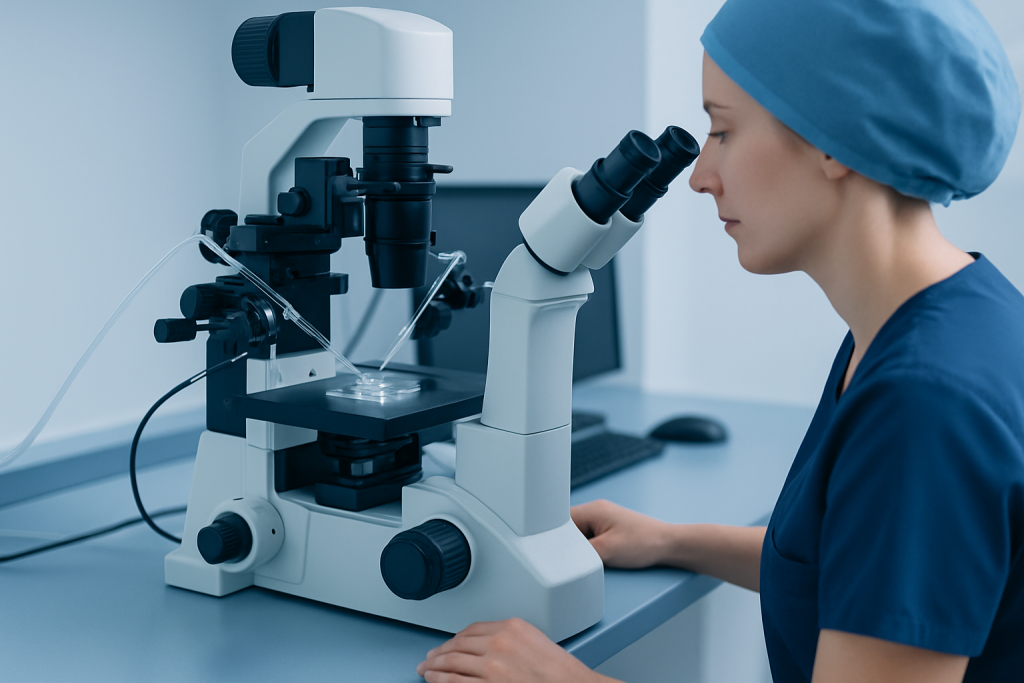
Eggs begin forming before birth. During fetal development, the ovaries contain a very large number of immature eggs, but many are lost naturally before a baby is born. By birth, the total has fallen substantially, and by puberty only a smaller pool remains.
From puberty onward, a group of eggs starts to develop each month, but usually only one egg is released during ovulation. The rest are naturally reabsorbed by the body. This means the ovarian reserve slowly declines with each menstrual cycle and continues to decrease more noticeably with age.
The pace of decline varies from person to person. Some women reach menopause earlier than expected, while others maintain regular cycles for longer. Family history, smoking, ovarian surgery, chemotherapy, and certain medical conditions can all influence this timeline.
Symptoms and signs that may suggest lower ovarian reserve

Lower ovarian reserve often does not cause obvious symptoms. Many women feel completely well until they begin trying to conceive, when pregnancy takes longer than expected or fertility treatment shows fewer eggs than anticipated.
Some changes can offer clues, although they are not specific to egg count alone. These may include shorter or irregular menstrual cycles, lighter periods, difficulty conceiving after several months of trying, or a family pattern of early menopause.
- Cycles that become noticeably shorter
- Irregular or skipped periods
- Reduced response to fertility medication
- Concern after prior ovarian surgery or cancer treatment
Because these signs can overlap with other hormone-related conditions, they are best interpreted by a clinician who can look at the whole picture rather than one symptom in isolation.
Causes and risk factors
The natural decline in egg supply is part of human reproduction, but several factors can make the decline steeper or more clinically important. Age remains the strongest and most consistent factor. Egg quality also changes over time, which is one reason fertility becomes harder to predict as women get older.
Other factors may include a history of endometriosis, Cyst Surgery" class="ahp-ilk">ovarian cyst surgery, pelvic infection, autoimmune disease, genetic conditions, smoking, and exposure to chemotherapy or radiation. In some cases, unexplained low ovarian reserve is discovered without an obvious cause.
For international patients planning treatment, it is useful to share a complete medical history before travel whenever possible. Prior scans, hormone tests, operative reports, and treatment records can help specialists decide which tests are needed and whether a visit should focus on fertility planning, preservation, or treatment.
Diagnosis and fertility testing
Doctors do not count every egg directly in a living woman. Instead, they use tests that estimate ovarian reserve and help guide care. These tests are useful, but they are not perfect predictors of pregnancy or live birth.
Common assessments include blood tests such as anti-Müllerian hormone (AMH) and follicle-stimulating hormone (FSH), often interpreted together with estradiol levels. A transvaginal ultrasound may be used to measure the antral follicle count, which looks at small resting follicles in the ovaries.
Results are usually combined with age, menstrual history, previous pregnancies, and the partner’s fertility evaluation if relevant. A lower test result does not always mean pregnancy is impossible; it may simply mean the ovaries are likely to respond differently to treatment or that time may matter more in family planning.
Treatment options and family-planning paths
There is no treatment that restores the original egg supply, but there are ways to work with the information and protect future options. The right plan depends on the patient’s age, test results, current goals, and whether she is trying to conceive now or later.
Some women may choose to try for pregnancy sooner rather than later. Others may consider egg freezing, embryo freezing, or IVF if they need more time, have a medical condition affecting fertility, or want to preserve reproductive options before a treatment such as chemotherapy.
In selected cases, doctors may also look for and treat hormonal or gynecologic conditions that interfere with ovulation or fertility. If the issue is not the number of eggs alone, but irregular ovulation or another contributing factor, addressing that condition can improve the overall chances of conception.
For patients traveling from abroad, coordination matters. A fertility team may review records in advance, arrange targeted testing in a short visit, and then build a follow-up plan that can continue safely after the patient returns home.
Prevention and self-care
No lifestyle choice can stop the natural aging of the ovaries, but healthy habits can support general reproductive health. Avoiding smoking is especially important, since tobacco use is associated with earlier ovarian aging. Balanced nutrition, regular activity, and healthy sleep routines support hormone regulation and overall well-being.
It also helps to avoid unnecessary delays when a pregnancy is desired. Women who are concerned about fertility can speak with a doctor earlier than they might expect, particularly if they are over 35, have irregular cycles, or have a medical history that could affect the ovaries.
- Keep a record of cycle length and symptoms
- Review medications and past surgeries with a clinician
- Ask about fertility planning before cancer treatment or pelvic surgery
- Seek counseling early if family-building goals are time-sensitive
Self-care also includes emotional support. Questions about egg count can bring anxiety, especially when patients are making decisions from another country. Clear information and a calm, structured plan often help reduce uncertainty.
When to see a doctor
A medical consultation is appropriate if pregnancy has not occurred after a year of trying, or after six months if the woman is 35 or older. It is also sensible to seek advice sooner if periods are irregular, there is a history of endometriosis or pelvic surgery, or there has been exposure to chemotherapy or radiation.
Women who are not trying to conceive yet may still benefit from an evaluation if they want to understand their reproductive timeline, especially when planning education, career, marriage, or travel around future family-building goals. A clinician can explain whether testing is appropriate now or whether watchful planning is enough.
Acibadem Health Point’s multidisciplinary specialists and JCI-accredited hospitals can diagnose and treat fertility-related concerns for international patients, with care plans that are organized around both medical needs and practical travel considerations.
A clearer way to think about egg count
Egg number is only one part of fertility, but it is an important part. The most useful question is often not “How many eggs does a woman have?” but “What does this person’s ovarian reserve mean for her goals right now?”
That perspective shifts the conversation from fear to planning. Some women may need reassurance, some may need timely treatment, and some may need help deciding between preservation and trying for pregnancy now. In every case, the best next step is a personalized discussion with a qualified doctor who can interpret test results in context.
Frequently asked questions
How many eggs is a woman born with?
A female fetus develops a very large number of immature egg cells before birth, but many are naturally lost before delivery. By birth, only a fraction remain, and the supply continues to decline over time. The exact number varies, and it cannot be measured precisely in routine care.
Can a woman run out of eggs before menopause?
Yes, some women experience diminished ovarian reserve or premature ovarian insufficiency, which means the egg supply declines earlier than expected. Menopause is the point when periods stop permanently, and it usually happens later than the first signs of reduced reserve. A doctor can help evaluate whether hormonal changes are contributing.
Does a low egg count mean pregnancy is impossible?
Not necessarily. A low ovarian reserve can make conception more difficult, but pregnancy may still be possible depending on age, egg quality, ovulation, sperm factors, and uterine health. Test results should be interpreted by a fertility specialist rather than used alone to make assumptions.
What tests show how many eggs a woman has?
Doctors commonly use AMH blood testing, FSH and estradiol levels, and ultrasound-based antral follicle count. These tests estimate ovarian reserve rather than counting every egg directly. They are most helpful when reviewed together with age and medical history.
Can lifestyle improve egg count?
Lifestyle choices cannot increase the number of eggs a woman was born with. Still, avoiding smoking, maintaining a healthy routine, and managing medical conditions can support overall reproductive health. These habits may not change ovarian reserve, but they can support fertility more broadly.
When should someone think about egg freezing or fertility testing?
It may be worth discussing earlier if pregnancy is not planned soon, cycles are irregular, or there is a history of ovarian surgery, endometriosis, or cancer treatment. Women who are over 35 often benefit from earlier conversations about fertility timing. A clinician can advise whether testing or preservation is appropriate.
References
- American College of Obstetricians and Gynecologists
- American Society for Reproductive Medicine
- National Institute for Health and Care Excellence
- Mayo Clinic
- World Health Organization
This article is for general information only and is not a substitute for professional medical advice. Please consult a qualified doctor about your individual situation.
IVF & fertility treatment in Turkey — success rates and costs
JCI-accredited · board-certified surgeons · reply within 24h
Add us as a Preferred Source to see more of our trusted health content across Google Search, AI Overviews and Discover.
More from the Health Library



Related Specialists
Dr. Gamze Karababa
Gynecology & Obstetrics
Dr. Onur Özdenoğlu
Gynecology & Obstetrics
Dr. Selcen Bahadır
Gynecology & Obstetrics
Prof. Dr. A. Taner Usta
Gynecology & Obstetrics