How Long Should You Stay Abroad After Orthopedic Surgery? A Recovery Planning Guide

Key Takeaways
- There is no single correct number of days to remain abroad after orthopedic surgery; the plan should be based on procedure type and recovery progress.
- Patients usually need time for pain control, wound checks, mobility assessment, and safe travel preparation before leaving the country.
- Long-distance travel too soon after surgery can raise comfort and safety concerns, so the surgeon’s guidance should always be followed.
- A recovery plan should include local follow-up instructions, medication management, and an arrangement for care once the patient returns home.
- Warning signs such as increasing pain, fever, shortness of breath, or wound changes should be reviewed promptly with a doctor.
The right length of stay after orthopedic surgery depends on the procedure, the patient’s overall health, mobility, pain control, and the surgeon’s discharge criteria. A thoughtful recovery plan helps international patients travel home safely, continue healing, and arrange follow-up care without unnecessary stress.
Overview
For international patients, one of the first practical questions after orthopedic surgery is not only what was done, but how long they should stay abroad afterward. That answer is rarely identical from one person to another. A simple knee arthroscopy, for example, follows a very different recovery path from a joint replacement or a spinal procedure.
The most helpful way to think about the post-surgery stay is as a short recovery window that allows the surgical team to confirm that healing is on track and that travel will not interfere with recovery. During that time, the patient may need pain review, dressing changes, mobility checks, physiotherapy guidance, and clearance for the journey home. In international care, the goal is not to prolong the stay unnecessarily; it is to leave at the right time, with enough support in place to continue healing safely.
Because each body heals at its own pace, the final decision should always be personalized. The surgeon’s recommendations, the patient’s general health, the type of anesthesia used, the distance and mode of travel, and the availability of follow-up care back home all matter. A careful plan can make the return journey smoother and reduce avoidable setbacks.
What Determines the Length of Stay
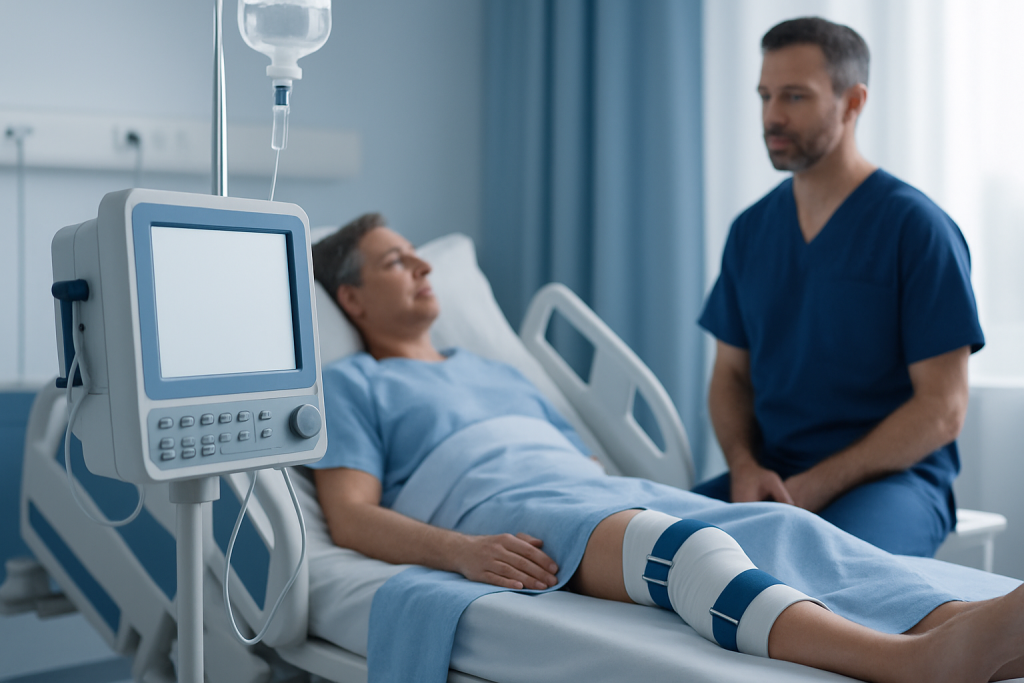
The type of orthopedic procedure is usually the biggest factor. Patients after minimally invasive procedures may be able to travel sooner than those recovering from major reconstructive surgery. Operations involving weight-bearing restrictions, drains, large incisions, or a higher chance of complications often require a longer observation period before flying or embarking on a long trip.
Overall health also shapes recovery timing. Age alone does not decide readiness to travel, but conditions such as diabetes, heart disease, blood clotting disorders, smoking, obesity, or previous wound-healing problems may slow recovery or require closer monitoring. The surgical team may also be more cautious if the patient lives far away and would have limited access to urgent care once home.
Practical details matter too. A patient who must manage stairs, airport transfers, baggage, and a long flight may need more time than someone returning by a shorter route with assistance. Even if the surgery itself went well, the person must be able to sit, stand, transfer, and use prescribed mobility aids with reasonable confidence before leaving.
- Procedure complexity and surgical site
- Pain control and medication stability
- Mobility and weight-bearing status
- Wound condition and dressing needs
- Travel distance, flight length, and home support
- Existing medical conditions and clot risk
Typical Recovery Windows for Common Orthopedic Procedures

There is no universal timetable, but some broad patterns are useful. Patients undergoing smaller procedures, such as arthroscopy or minor tendon work, may only need a short stay for immediate monitoring and a final check before travel. More involved operations, such as fracture fixation, ligament reconstruction, spine surgery, or total joint replacement, usually need a longer period of observation and early rehabilitation.
In joint replacement recovery, for example, the first few days are often focused on pain control, walking safely with support, and monitoring the wound. Before a long-haul flight, the surgeon may want to see that the patient can move comfortably enough, manage swelling, and follow the home exercise plan. For spine surgery, the team may be especially attentive to posture, sitting tolerance, and neurological symptoms before discharge to international travel.
The exact number of days to stay abroad should come from the treating surgeon rather than a generic travel guideline. Even when two patients have the same operation, one may recover faster because of better fitness, fewer medical conditions, and a smoother surgery, while another may need extra time because healing is slower or pain is harder to control.
How Surgeons Decide When a Patient Is Ready to Travel Home
Readiness for travel is usually based on functional milestones rather than the calendar alone. The care team may want to confirm that the patient can get in and out of bed, walk safely with the recommended aid, use the bathroom independently enough, and manage pain with oral medication rather than intensive medical support. They will also review the incision, swelling, and any concern for infection or blood clots.
The surgeon may ask whether the patient can tolerate the expected travel position. A patient recovering from hip surgery, for instance, may need positioning instructions to protect the joint. Someone after lower-limb surgery may require advice on leg elevation, compression use, and frequent movement during travel. If the patient has anemia, nausea, dizziness, or significant fatigue, the team may recommend waiting longer before departure.
Clear discharge planning is especially important when care is received abroad. Patients should leave with written instructions, copies of operation notes if appropriate, medication lists, wound-care advice, and a plan for what to do if symptoms change after arrival home. When this information is organized before discharge, the transition is usually much easier.
Travel Considerations After Orthopedic Surgery
Travel soon after orthopedic surgery deserves thoughtful planning because immobility, swelling, dehydration, and fatigue can make the journey uncomfortable. On long flights or long car rides, patients are usually encouraged to move as allowed by the surgeon, drink fluids if permitted, and avoid sitting in one position for too long. The exact advice varies by procedure and individual clot risk.
Patients should also think about luggage, airport walking distances, steps, and the availability of help. A traveler who still needs a cane, walker, or crutches may need wheelchair assistance at the airport. It can be helpful to arrange transport in advance and make sure the seat, transfer, and rest opportunities are compatible with the surgical site.
In some cases, the surgeon may advise delaying travel if the journey is especially long or if the patient has a higher risk profile. That is not a setback; it is a protective measure. The best time to leave is the time that balances healing, safety, and the realities of the trip home.
- Ask whether air travel is appropriate for the procedure and the patient’s condition
- Plan for assistance with luggage, transfers, and mobility aids
- Keep medicines and documents in carry-on baggage
- Follow movement and hydration advice provided by the surgical team
- Know where to seek urgent help during the journey if symptoms change
Recovery Planning Before Leaving the Country
Good recovery planning begins before the operation, especially when treatment is being arranged internationally. Patients should ask in advance how many days the surgeon expects them to remain nearby after the procedure, what follow-up checks are needed, and whether a second visit or local physio plan will be recommended. These early conversations help reduce surprises once the surgery is over.
It is also wise to line up support at home before traveling abroad for care. That may include a local primary care doctor, an orthopedic clinic, a physiotherapist, or a family member who can help during the first days back. If the patient will need a wound check, dressing change, or rehabilitation, those details should be arranged before boarding the return flight whenever possible.
Patients sometimes focus on the surgery date and overlook the practical return journey. A clear plan should include medication refills, emergency contacts, a summary of postoperative restrictions, and guidance on when normal activity can resume. This is especially important for those recovering far from the surgical team, where quick in-person review may not be possible.
When to Seek Medical Advice
Most orthopedic recoveries include some pain, stiffness, bruising, and swelling. Those symptoms are often expected early on, but changes that feel worse instead of gradually better should be discussed with a doctor. The same applies if the incision becomes more red, warm, wet, or increasingly tender, or if the patient develops a fever or feels unwell in a new way.
It is also important to seek prompt medical attention for symptoms that may suggest a blood clot or another urgent issue, such as shortness of breath, chest pain, sudden calf swelling, or severe pain that is not responding as expected. New numbness, weakness, loss of bladder or bowel control, or a sudden inability to bear weight also deserves urgent review.
For international patients, having a clear route for follow-up is particularly important. The surgical team should explain whether concerns should be reported to the treating hospital, the local doctor at home, or emergency services if the situation is urgent. A straightforward escalation plan helps patients act early and confidently if recovery does not go as expected.
A Practical Closing Thought for International Patients
There is no one-size-fits-all answer to how long someone should stay abroad after orthopedic surgery. The safest plan is the one that matches the operation, the healing progress, the travel distance, and the support available after the journey home. A patient who leaves with a clear wound plan, mobility guidance, and follow-up instructions is usually better prepared for a steady recovery.
For people considering treatment outside their home country, it can be reassuring to choose a center that understands both surgery and the logistics of returning home afterward. Acibadem Health Point supports international patients with multidisciplinary specialists and JCI-accredited hospitals that diagnose and treat orthopedic conditions while helping plan safe postoperative follow-up.
With the right timing and coordinated care, travel after orthopedic surgery can be managed calmly and responsibly. The key is not to rush the departure, but to align it with recovery milestones and medical advice.
Frequently asked questions
How long do patients usually stay abroad after orthopedic surgery?
It depends on the procedure and the patient’s recovery progress. Minor procedures may require only a short stay, while major surgeries often need a longer period for monitoring, mobility assessment, and wound review.
Can a patient fly soon after orthopedic surgery?
Sometimes, but only if the surgeon says it is safe. The team will consider pain control, clot risk, mobility, wound condition, and the length of the flight before giving clearance.
What should be checked before traveling home?
The incision, swelling, pain control, mobility, and ability to manage daily tasks are commonly reviewed. Patients should also leave with medication instructions and a follow-up plan for home.
Why is staying nearby after surgery important?
The early recovery period is when wound issues, medication questions, and mobility challenges are most likely to appear. Staying nearby gives the surgical team time to confirm that healing is progressing as expected before the patient travels.
What if the patient lives far from the treating hospital?
That is common in international care, which is why discharge planning matters so much. The patient should know who to contact after returning home and should arrange local follow-up in advance if needed.
Is more rest always better after orthopedic surgery?
Rest is important, but so is safe movement as advised by the surgeon. Walking, gentle exercises, and following rehabilitation instructions can help support circulation and recovery.
References
- American Academy of Orthopaedic Surgeons
- Centers for Disease Control and Prevention
- World Health Organization
- NHS
- International Society of Arthroscopy, Knee Surgery and Orthopaedic Sports Medicine
This article is for general information only and is not a substitute for professional medical advice. Please consult a qualified doctor about your individual situation.