Herpes Photos In Different Stages

Key Takeaways
- Herpes lesions often progress from tingling or burning to blisters, then open sores, crusting, and healing.
- Cold sores and genital herpes can look similar to other skin conditions, so photos are not enough for diagnosis.
- Early medical evaluation can help confirm the cause and guide appropriate treatment.
- Outbreaks may be more likely with stress, illness, sun exposure, friction, or a weakened immune system.
- People with frequent, severe, or first-time symptoms should contact a clinician for testing and advice.
Herpes can look different depending on the stage of the outbreak, from tingling and redness to blisters, sores, and healing skin. Understanding these changes can help a person seek timely care, but visual comparison alone cannot confirm a diagnosis.
Overview
Searching for herpes photos in different stages is often a way for people to make sense of a new spot, blister, or sore on the skin. Herpes infections can affect the mouth, lips, genital area, or nearby skin, and they often change appearance as an outbreak moves from one stage to the next.
A typical herpes outbreak does not begin as an open sore. It often starts with subtle changes such as tingling, itching, burning, or tenderness. Over the next hours or days, small fluid-filled blisters may appear, then break open and become shallow sores before crusting or healing. That progression can be helpful to know, but a visual pattern alone cannot confirm herpes with certainty.
Because many skin problems can resemble herpes, including irritation, insect bites, impetigo, eczema, and other infections, a clinician may recommend an examination or testing. For people who are traveling for care, having clear photos of how the lesion changed over time can be useful during a specialist consultation, but they should be used as one part of the assessment rather than the only clue.
Symptoms by stage
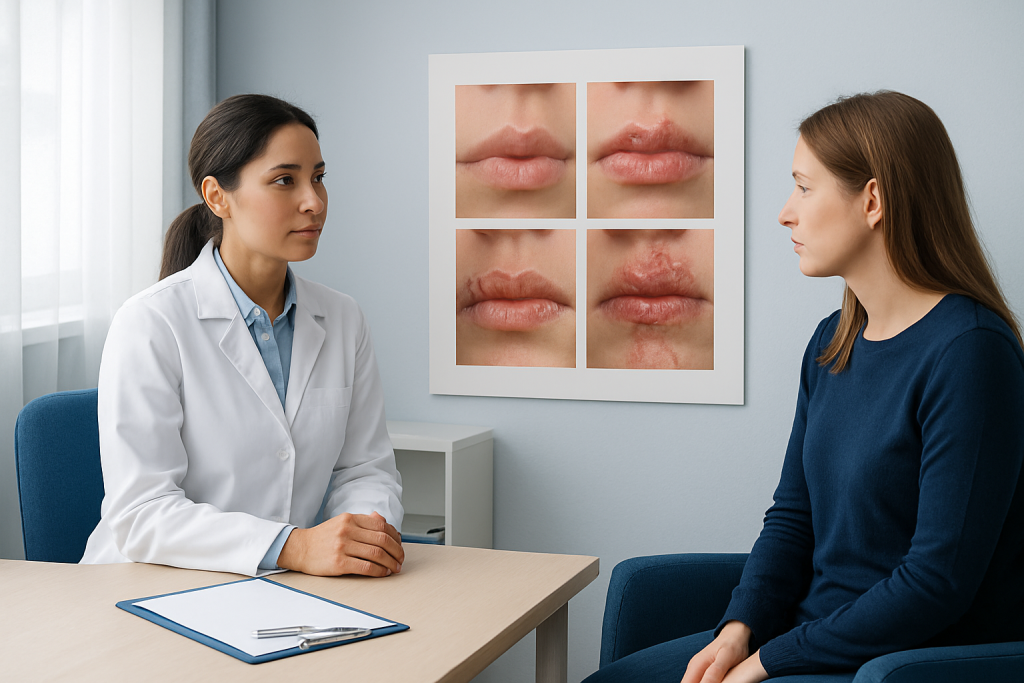
Herpes symptoms commonly unfold in phases. In the earliest stage, a person may notice a warning sensation before any visible lesion appears. This prodrome can include tingling, stinging, itching, or a localized burning feeling. Some people also describe skin tenderness or mild swelling in the area that will later develop lesions.
As the outbreak progresses, small blisters often appear in clusters. They may be clear, cloudy, or fragile enough to rupture easily. When they break, the area can turn into shallow, painful sores that may ooze and then crust as healing begins. On the lips or face, this can look like a cold sore; in the genital area, lesions may be more subtle at first and can be mistaken for shaving irritation or friction.
Not every outbreak follows the same pattern. Some are mild and short-lived, while others involve more widespread discomfort, swollen lymph nodes, fever, body aches, or pain with urination if lesions are near the urinary opening. The first episode is often more noticeable than later recurrences, but even mild symptoms deserve attention if the diagnosis has never been confirmed.
- Early stage: tingling, itching, burning, or tenderness
- Blister stage: small fluid-filled bumps, often in clusters
- Ulcer stage: open, shallow, painful sores after blisters break
- Crusting/healing stage: dry scabs or fading redness as skin recovers
Causes & risk factors
Herpes is caused by the herpes simplex virus, usually HSV-1 or HSV-2. HSV-1 is commonly linked with oral herpes, though it can also cause genital infection. HSV-2 is more often associated with genital herpes. After the first infection, the virus remains in the body and may reactivate later, which is why outbreaks can recur.
Several factors may make outbreaks more likely or more noticeable. These include physical stress, emotional stress, illness, fever, lack of sleep, sun exposure, skin friction, hormonal shifts, and a weakened immune system. In some people, outbreaks happen without a clear trigger, which can be frustrating but is still common.
Risk is also influenced by exposure to the virus through close skin-to-skin contact, kissing, or sexual contact depending on the site of infection. Transmission can occur even when symptoms are not obvious, which is one reason a thoughtful clinical discussion matters. For international patients arranging care from another country, understanding the likely site of infection and how often symptoms recur can help a specialist decide which tests or follow-up plan may be most appropriate.
Diagnosis
Doctors usually diagnose herpes by combining the appearance of the lesion with the person’s symptom history. If a sore is active, a swab from the lesion may be tested to check for HSV. This can be especially helpful in the early blister or ulcer stage, when the virus is more likely to be detected.
Blood tests may be considered in some situations, particularly when symptoms are absent at the time of the visit or when the clinician needs to determine whether someone has been exposed before. However, blood tests do not show exactly where the infection is located, and they may not explain the cause of a current rash if the lesion is from something else.
When people bring photos of the outbreak from different stages, those images can help a clinician see how the skin changed over time. Still, many conditions can mimic herpes, so testing is often the safest way to clarify the diagnosis. A careful exam is particularly useful if symptoms are new, severe, recurrent, or occurring during pregnancy or immune suppression.
Treatment options
Herpes treatment is aimed at easing symptoms, shortening outbreaks, and reducing the chance of future episodes when appropriate. Antiviral medicines are commonly used and may be started early in an outbreak or sometimes taken longer term for people with frequent recurrences. A clinician can explain which approach fits the pattern of symptoms and the person’s overall health.
Supportive care can also make a difference. Keeping the area clean and dry, avoiding picking at sores, and using gentle pain-relief measures recommended by a clinician may help comfort during healing. If lesions are painful, especially on the mouth or genitals, small changes in daily habits such as choosing soft clothing, staying hydrated, and avoiding irritating products may reduce discomfort.
People with more extensive disease, severe pain, eye involvement, difficulty urinating, or a first episode should seek medical advice promptly. Treatment decisions should be individualized, particularly for patients managing care across borders, because a specialist may need to coordinate laboratory testing, medication plans, and follow-up after travel.
Prevention & self-care
There is no simple home method that can erase herpes, but thoughtful self-care can help limit discomfort and reduce spread. During an active outbreak, it is sensible to avoid kissing, oral sex, vaginal sex, or anal sex until the skin has fully healed and a clinician says it is safe to resume. Sharing lip products, razors, or towels can also be avoided while sores are present.
People who know their triggers may be able to reduce recurrences by protecting the skin from sun exposure, managing stress, getting adequate rest, and treating other illnesses promptly. For some, a doctor may discuss suppressive antiviral therapy if outbreaks happen often or if transmission reduction is a goal within a relationship.
Simple daily habits can also help with comfort and hygiene:
- Wash hands after touching the affected area
- Avoid scratching, squeezing, or popping blisters
- Use only clinician-approved creams or ointments
- Wear loose, breathable clothing if lesions are in a friction-prone area
- Keep follow-up appointments if symptoms are recurring or changing
When to see a doctor
Medical evaluation is a good idea when a person has a first-time blistering sore, a lesion that does not improve, or symptoms that are painful enough to interfere with eating, walking, or urinating. It is also important to be seen if sores appear near the eyes, if there is a fever, or if the person has a weakened immune system.
Testing may be especially helpful when a person is unsure whether the lesion is herpes or another skin condition. A doctor can also discuss timing of treatment, the possibility of transmission, and how to handle future outbreaks with less uncertainty. For people seeking treatment from abroad, bringing dated photos, symptom notes, and any previous test results can make the consultation more efficient.
Acibadem Health Point’s multidisciplinary specialists and JCI-accredited hospitals diagnose and treat herpes for international patients, with care plans tailored to the individual’s symptoms and follow-up needs.
Living with recurrent outbreaks
Recurring herpes can be emotionally frustrating, especially when a person is trying to decide what a new spot on the skin means. It may help to remember that outbreaks often become easier to recognize over time, and many people learn their own warning signs before visible sores appear. A clinician can help separate expected flare patterns from changes that deserve reassessment.
Keeping a simple record of when outbreaks happen, how long they last, and what seemed to trigger them can be useful. This is especially helpful for people coordinating care across countries, since it gives the next doctor a clearer picture even if the outbreak has already healed by the time of the visit.
With a confirmed diagnosis, practical treatment, and a sensible follow-up plan, many people manage herpes effectively while keeping daily routines intact. The most reassuring step is often not guessing from photos, but getting a clear answer from a qualified healthcare professional.
Frequently asked questions
Can herpes be diagnosed from photos alone?
Photos can suggest a pattern, but they cannot confirm herpes with certainty. Many other skin conditions can look similar, so a clinician may recommend an exam or a swab test for accurate diagnosis.
What do herpes lesions usually look like in the early stage?
Early herpes may begin with tingling, itching, burning, or tenderness before any blister appears. Small clusters of blisters may then form and later turn into shallow sores.
How long does a herpes outbreak last?
The duration varies from person to person and from one outbreak to another. Many outbreaks improve over days to a couple of weeks, especially with early medical care and supportive measures.
Is cold sore herpes the same as genital herpes?
They are both caused by the herpes simplex virus, but they often affect different areas of the body. HSV-1 is commonly linked with oral herpes, while HSV-2 is more often linked with genital herpes, though either type can occur in either location.
When should someone get tested?
Testing is useful when symptoms are new, unclear, severe, or recurring, or when a person wants confirmation before assuming the cause. A swab test from an active sore is often most informative.
Can herpes come back after it heals?
Yes, the virus stays in the body and may reactivate later. Some people have rare recurrences, while others notice more frequent flare-ups, often influenced by triggers such as stress or illness.
References
- Centers for Disease Control and Prevention
- World Health Organization
- Mayo Clinic
- American Academy of Dermatology
- National Health Service
This article is for general information only and is not a substitute for professional medical advice. Please consult a qualified doctor about your individual situation.