Hernia Repair Decisions: When Waiting, Watching, or Operating Makes Sense

Key Takeaways
- Some hernias can be watched safely for a period, especially if they are small and cause little or no discomfort.
- Pain, growth, bowel symptoms, or sudden irreducibility are reasons to move from observation to surgery planning.
- Diagnosis usually begins with a physical exam and may include imaging when the hernia is not obvious.
- Repair options include open and minimally invasive surgery; the best approach depends on the hernia and the person’s overall health.
- Good pre-op planning, follow-up, and activity guidance matter as much as the operation itself.
- A doctor should assess any new, painful, or changing bulge rather than relying on self-monitoring alone.
Medically reviewed by the Acıbadem clinical team — June 13, 2026
A hernia does not always need immediate surgery, but it should never be ignored. The right choice often depends on the hernia type, symptoms, risk of complications, and how it affects daily life.
Overview
A hernia happens when an internal tissue or organ pushes through a weakened area in the muscle or connective tissue that normally holds it in place. In everyday practice, hernias most often appear in the groin, belly button, upper abdomen, or at the site of a previous operation. They may look small and manageable at first, yet the decision about what to do next is not always simple.
For many people, the key question is not whether a hernia exists, but whether it should be watched, repaired soon, or treated urgently. That decision depends on more than size alone. A doctor will consider the hernia’s location, whether it can be pushed back in, the level of discomfort, the person’s age and activity level, and whether the hernia seems to be changing over time.
Some hernias remain stable for long periods and can be observed with regular medical review. Others cause increasing pain, interfere with work or exercise, or carry a higher chance of becoming trapped. Understanding these differences helps patients plan care with confidence, including when they are traveling for treatment and need clear guidance before and after a procedure.
Symptoms
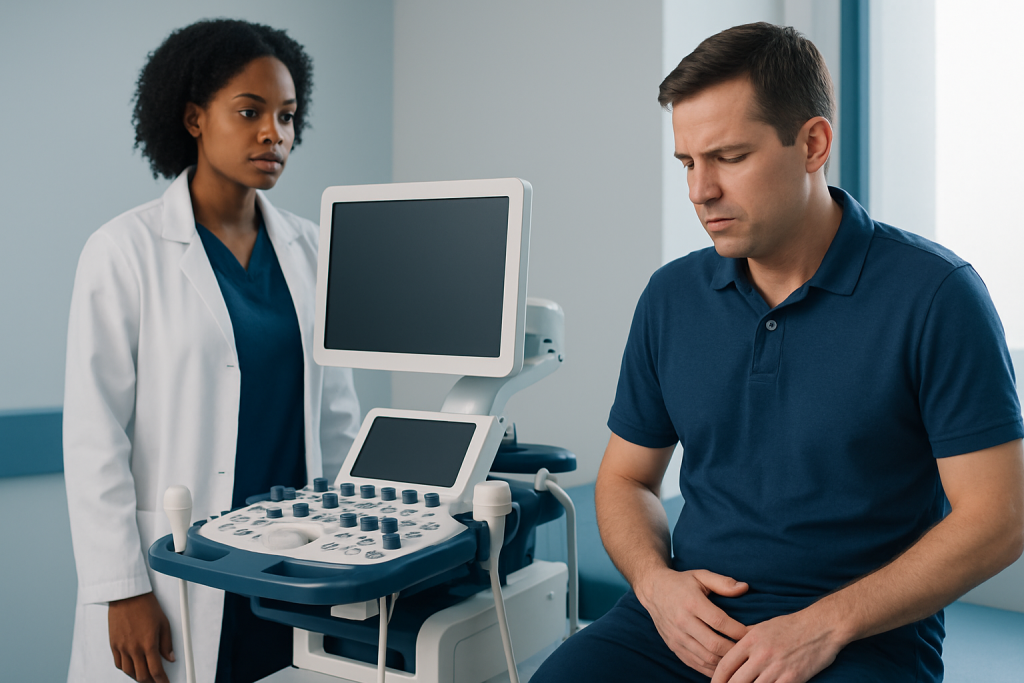
The most common sign of a hernia is a bulge that becomes more noticeable when standing, coughing, lifting, or straining. The bulge may reduce when lying down or pressing gently on it. Some hernias are painless, which is one reason they may be overlooked until a routine exam or imaging study finds them.
When symptoms do occur, they often start as a feeling of pressure, heaviness, or mild aching in the area. The discomfort may be worse after physical effort or after long periods on one’s feet. In groin hernias, some people notice pain extending into the thigh, groin, or scrotum. In abdominal wall hernias, the bulge may be more obvious after meals, coughing, or exercise.
Symptoms that deserve prompt attention include:
- Sudden, increasing, or constant pain at the hernia site
- A bulge that cannot be pushed back in
- Redness, warmth, or tenderness over the area
- Nausea, vomiting, bloating, or inability to pass stool or gas
- Fever or feeling generally unwell along with the hernia
These changes may suggest that the hernia has become trapped or is affecting the bowel, which needs medical assessment without delay.
Causes & Risk Factors
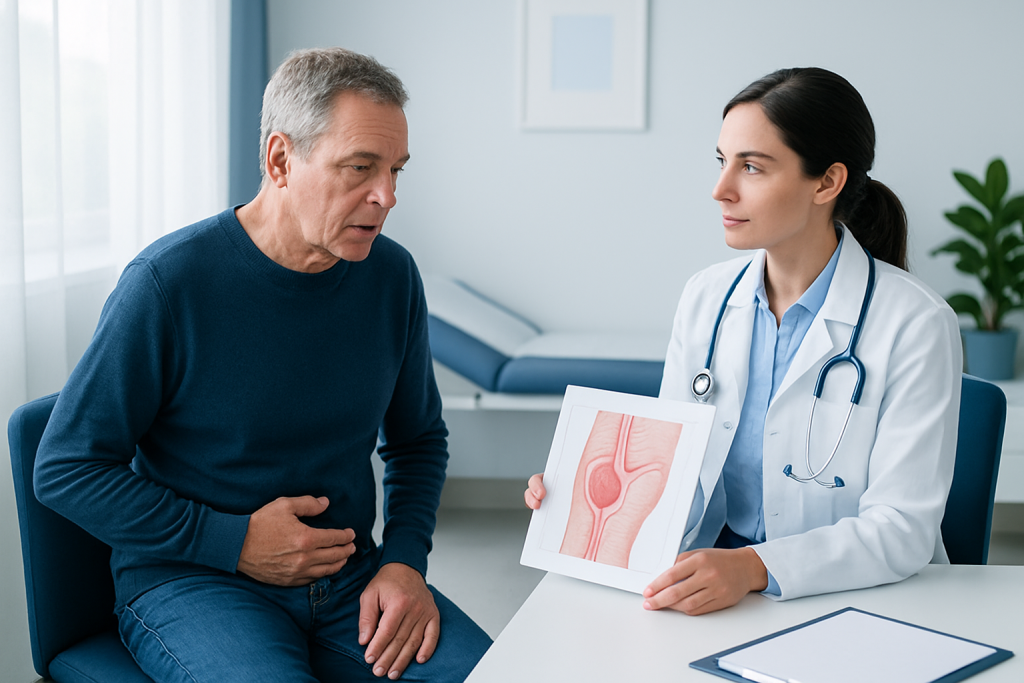
Hernias form where tissue support is weaker than usual. Sometimes that weakness is present from birth; in other cases, it develops over time because of repeated strain or prior surgery. The result is not a single event but a gradual loss of support in a specific area.
Several factors can increase the likelihood of a hernia or make an existing hernia more likely to enlarge. These include chronic coughing, constipation, heavy lifting, pregnancy, obesity, smoking, and a history of abdominal surgery. Age can also play a role, since muscle and tissue strength naturally change over time.
It is helpful to remember that these factors do not mean a person has done anything wrong. Many hernias occur even in active, healthy people. The practical issue is identifying which hernias are likely to stay quiet and which may progress, because that affects whether waiting is reasonable or whether repair is the safer choice.
Diagnosis
Diagnosis usually begins with a careful history and physical examination. A doctor will ask when the bulge first appeared, whether it changes with movement or coughing, and whether it causes pain or digestive symptoms. Often, the exam provides enough information to identify the type of hernia and discuss next steps.
In some cases, imaging is used to clarify the diagnosis or map the hernia before surgery. Ultrasound is often useful for soft-tissue assessment, while CT scanning can help when the anatomy is less straightforward or when symptoms suggest a complication. Imaging is also helpful when a person has had prior surgery, body habitus makes the exam harder, or the bulge is not obvious during the appointment.
Patients who are considering treatment abroad often benefit from bringing prior records, medication lists, and any past imaging. That information helps the surgical team compare findings over time and avoid repeating tests unnecessarily. A good diagnosis is not only about naming the hernia; it is about understanding how much it is affecting the body and whether it can be safely observed.
Treatment Options
Hernia treatment ranges from observation to surgical repair. Watching a hernia may be appropriate when it is small, causes little or no pain, and can be reduced easily. In that setting, the main goal is not to dismiss the hernia, but to monitor it for change and decide if repair becomes more sensible later.
Surgery is generally considered when the hernia causes symptoms, interferes with normal activity, continues to enlarge, or appears at higher risk for incarceration or strangulation. The operation usually repairs the weak area and may use sutures, mesh, or both, depending on the hernia type and the surgeon’s assessment. Two broad approaches are common: open repair and minimally invasive repair. The best option depends on the location of the hernia, prior operations, and the person’s overall health.
Emergency surgery may be needed if the hernia becomes trapped and the bowel or other tissue is threatened. That situation is different from a planned repair, because timing matters more and preparation may be limited. For that reason, people are often advised not to wait until a painful bulge turns into a medical emergency if the hernia has already shown signs of progression.
When patients are evaluating care from another country, it is especially important to ask what the recovery plan will look like after discharge, how follow-up will be handled, and which symptoms should prompt re-evaluation once they are back home. Acibadem Health Point’s multidisciplinary specialists and JCI-accredited hospitals diagnose and treat hernia conditions for international patients, with care plans that include these practical steps.
Prevention & Self-care
Not every hernia can be prevented, but certain habits may reduce strain on the abdominal wall and support recovery after diagnosis or repair. The aim is not perfection; it is lowering unnecessary pressure on weakened tissue and recognizing change early.
Helpful self-care measures may include avoiding heavy lifting without guidance, treating constipation so bowel movements are easier, managing chronic cough, maintaining a healthy body weight, and stopping smoking if possible. People with a known hernia are often advised to use proper lifting technique and to ask their clinician which exercises are safe, especially if they are active or preparing for travel.
After repair, recovery instructions vary by procedure and by the size and location of the hernia. Patients may need to limit strenuous activity for a period, gradually return to walking and light tasks, and watch the incision for signs of infection. It can be useful to plan recovery logistics before surgery—such as transport home, help with luggage, and follow-up appointments—so healing is less stressful, particularly for international patients who may need to coordinate care across time zones.
When to See a Doctor
Any new bulge that does not go away, especially in the groin or abdomen, should be evaluated by a doctor. Even when the hernia is not painful, an exam can help determine whether observation is reasonable or whether repair should be discussed sooner. Early assessment is especially worthwhile if the hernia is affecting exercise, work, or daily comfort.
Medical review becomes more urgent if the bulge becomes painful, firm, red, or impossible to reduce. Nausea, vomiting, abdominal swelling, or inability to pass stool or gas may signal a complication that needs prompt care. People should not assume these symptoms will settle on their own.
It is also wise to seek advice before long travel if a known hernia has become more symptomatic. A surgeon or gastroenterology-related specialist can help clarify whether it is safe to wait, what to watch for, and whether a planned repair would be more appropriate than postponing care until symptoms worsen.
Living With the Decision
One of the hardest parts of hernia care is not the diagnosis itself, but deciding what to do with it. Some patients feel reassured by observation and periodic review; others prefer repair because the bulge is limiting activity or creating constant worry. Both approaches can be valid when they are based on careful medical advice.
Choosing surgery does not mean the hernia was “bad enough” to justify waiting for a crisis. It means the balance between symptoms, risks, and quality of life has shifted toward repair. Choosing watchful waiting does not mean nothing is happening; it means the hernia is being followed with enough attention to notice change before complications develop.
The best plan is individualized, clear, and realistic. Patients should leave the consultation knowing what symptoms matter, when to return, how recovery will be managed, and whether their treatment can be coordinated around travel, work, or family responsibilities. That clarity often makes the next step feel far less daunting.
Frequently asked questions
Can a hernia go away on its own?
No, a true hernia does not usually disappear permanently without treatment. The bulge may seem smaller at times, especially when lying down, but the weak area in the tissue remains. A doctor can advise whether it can be watched or should be repaired.
Is watchful waiting safe for every hernia?
No, watchful waiting is only appropriate for selected hernias and selected patients. It is more reasonable when the hernia is small, stable, and not causing meaningful symptoms. Pain, growth, or digestive symptoms shift the discussion toward repair.
What does it mean if a hernia cannot be pushed back in?
A hernia that cannot be reduced may be trapped, which needs medical evaluation. If it is also painful, red, or associated with nausea or vomiting, urgent care is important. The doctor will check whether the tissue is at risk and decide on the next step.
How is hernia repair usually done?
Repair may be performed through an open incision or with minimally invasive techniques, depending on the hernia type and the surgeon’s assessment. The goal is to strengthen the weak area and reduce the chance of recurrence. The exact approach is chosen after reviewing symptoms, anatomy, and health history.
How long is recovery after hernia surgery?
Recovery varies by the type of repair, the size of the hernia, and the patient’s overall health. Many people return gradually to light activity before resuming heavier tasks. The surgeon should give personalized instructions about lifting, bathing, work, and follow-up.
Should someone travel with a known hernia?
Travel is often possible, but it depends on symptoms and whether the hernia is stable. If the bulge is painful, changing, or difficult to reduce, it is better to get medical advice before departure. Planning ahead is especially important if care will be done in another country.
References
- National Institute of Diabetes and Digestive and Kidney Diseases
- American College of Surgeons
- Mayo Clinic
- Cleveland Clinic
- Society of American Gastrointestinal and Endoscopic Surgeons
This article is for general information only and is not a substitute for professional medical advice. Please consult a qualified doctor about your individual situation.