

Hemoglobin Levels: What’s Normal and What’s Not

Key Takeaways
- Hemoglobin helps transport oxygen, so both low and high levels can affect how the body feels and functions.
- Normal hemoglobin ranges vary by age, sex, pregnancy, altitude, and laboratory reference values.
- Low hemoglobin is commonly linked to anemia, blood loss, iron deficiency, vitamin deficiencies, or chronic illness.
- High hemoglobin can occur with dehydration, smoking, sleep-related breathing problems, lung disease, or certain blood disorders.
- A hemoglobin test is usually part of a complete blood count and is often the first clue that further evaluation is needed.
- Persistent symptoms such as fatigue, shortness of breath, dizziness, or unexplained headaches deserve medical assessment.
Hemoglobin is the protein in red blood cells that carries oxygen through the body, so changes in its level can affect energy, breathing, and overall well-being. Understanding what is normal—and what may signal an underlying issue—can help patients know when simple monitoring is enough and when a doctor should evaluate the cause.
Overview
Hemoglobin is one of the body’s most important transport proteins. Found inside red blood cells, it binds oxygen in the lungs and carries it to tissues throughout the body. When hemoglobin is too low, cells may not receive enough oxygen; when it is too high, the reason is not always dangerous, but it still deserves attention.
For many people, a hemoglobin result appears on a routine blood test before any symptoms are obvious. That is often how mild anemia, dehydration, or an early blood-related condition is first noticed. In other cases, the result is part of a longer diagnostic journey, especially for people traveling for care or seeking a second opinion after abnormal blood work at home.
What counts as “normal” is not a single fixed number. Age, sex, pregnancy, living at high altitude, and the laboratory’s own reference range all matter. A patient can have a result that is technically normal on paper but still not fully explain their symptoms, which is why context is just as important as the number itself.
What Hemoglobin Does
Hemoglobin gives red blood cells their oxygen-carrying job. Each molecule can pick up oxygen in the lungs and release it where the body needs it most, including the brain, muscles, and organs. It also helps carry a small amount of carbon dioxide back to the lungs for exhalation.
Because oxygen delivery depends on hemoglobin, even modest changes can be felt. Some people notice tiredness first; others feel short of breath during activity, have reduced exercise tolerance, or describe brain fog and lightheadedness. The body often adapts gradually, which is why slow changes may go unnoticed for a while.
Hemoglobin is not checked in isolation. It is usually interpreted alongside red blood cell count, hematocrit, mean corpuscular volume, and sometimes iron studies or vitamin levels. This broader picture helps clinicians understand whether the issue is related to production, loss, destruction, or concentration of red blood cells.
Normal Hemoglobin Ranges
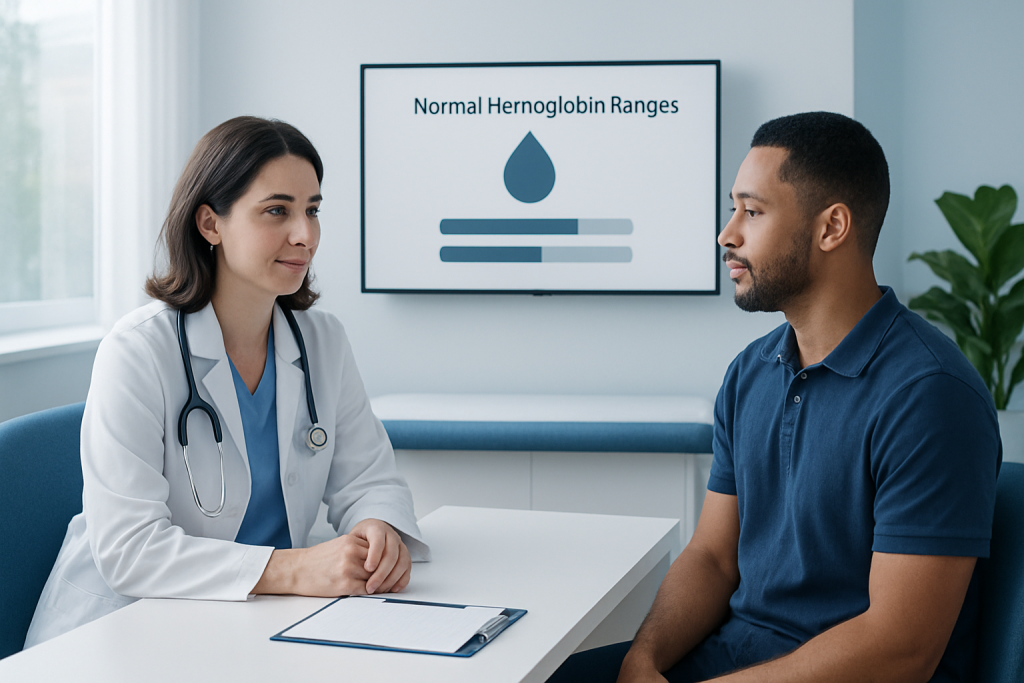
Normal hemoglobin ranges differ slightly from one laboratory to another, but they are usually reported in grams per deciliter. In adults, reference ranges are commonly lower in women and higher in men, while pregnancy has its own expected range because blood volume expands during that time.
Children and adolescents also have changing ranges as they grow, and newborns have different values again. Altitude can raise hemoglobin naturally because the body compensates for thinner air by making more red blood cells. For this reason, the same number may be interpreted differently depending on where a patient lives.
Rather than focusing on a single “perfect” number, doctors look for patterns and compare the result with the person’s history. A slightly low reading that has been stable for years may be handled differently from a sudden drop after surgery, heavy menstrual bleeding, digestive symptoms, or an illness.
- Reference ranges are lab-specific and should be read with the report.
- Pregnancy, age, and altitude can shift expected values.
- Trends over time often matter more than one isolated result.
Symptoms of Low or High Hemoglobin
Low hemoglobin is often associated with anemia, and symptoms may range from subtle to very noticeable. People may feel unusually tired, weak, pale, short of breath with mild activity, dizzy when standing, or unable to concentrate as well as usual. Some also report headaches, cold hands and feet, or a faster heartbeat.
High hemoglobin may not cause symptoms at all, especially when it is only mildly elevated. When symptoms do appear, they can include headache, flushing, itching after a warm shower, visual changes, or a feeling of fullness in the head. These signs are not specific to hemoglobin alone, which is why testing is needed to understand the cause.
Symptoms should be viewed in context. Fatigue, for example, can come from sleep problems, thyroid disease, depression, infection, or nutritional deficiencies. Hemoglobin is one piece of the puzzle, not the whole diagnosis.
Causes & Risk Factors
Low hemoglobin has many possible causes, and the right explanation depends on the patient’s age, health history, diet, and bleeding risk. Common reasons include iron deficiency, blood loss, vitamin B12 or folate deficiency, inherited blood conditions, chronic kidney disease, inflammation, and bone marrow disorders. In some people, a combination of factors is present.
Risk can increase with heavy menstrual bleeding, digestive tract bleeding, frequent blood donation, restrictive diets, pregnancy, recent surgery, or chronic illnesses that affect red blood cell production. People with long-term inflammatory conditions or kidney disease may develop anemia even when their diet seems adequate.
High hemoglobin may be related to dehydration, smoking, chronic lung disease, sleep apnea, living at altitude, testosterone use, or less commonly, a bone marrow condition that produces too many red blood cells. Temporary dehydration can make hemoglobin look higher because there is less plasma in the blood, concentrating the red cells.
- Low hemoglobin: blood loss, iron deficiency, nutrient deficiency, chronic disease, inherited conditions.
- High hemoglobin: dehydration, smoking, low oxygen states, altitude, some blood disorders.
- Underlying causes should be identified before any treatment is started.
How Hemoglobin Is Diagnosed
Hemoglobin is usually measured as part of a complete blood count, or CBC. The test is done from a blood sample and is often requested during a general checkup, when symptoms suggest anemia, before surgery, or as part of monitoring for a known condition. Results are typically available quickly, making the CBC a practical first step.
If hemoglobin is outside the expected range, clinicians may order additional tests to find out why. These can include iron studies, vitamin B12 and folate levels, kidney function tests, inflammatory markers, stool testing for hidden blood, or a reticulocyte count to see how actively the bone marrow is making new red blood cells. In some cases, a smear or more specialized blood work is needed.
For patients arranging care across borders, it helps to bring prior lab reports rather than only the newest result. Comparing old and new values can reveal whether the change is new, long-standing, or related to treatment already started. A doctor can then decide whether repeat testing, imaging, or referral to a specialist is appropriate.
Treatment Options
Treatment depends entirely on the cause, not just the number. Low hemoglobin from iron deficiency may be managed with iron replacement and by addressing the source of blood loss, while vitamin-related anemia is treated by correcting the deficiency. When chronic disease is contributing, treatment often focuses on the underlying illness as well as the blood count.
In some situations, transfusion or other urgent treatment may be needed, particularly if hemoglobin is very low, the patient is unstable, or symptoms are severe. However, many cases are not emergencies and can be managed step by step with a doctor’s guidance. People should not start iron or other supplements long-term without understanding why the hemoglobin is low.
High hemoglobin is handled differently. The first step is often to correct dehydration or identify whether smoking, breathing problems, sleep apnea, or another condition is driving the elevation. In selected cases, specialists may recommend further evaluation of the bone marrow or blood thickness, especially if the elevation is persistent.
- Treat the cause, not only the lab result.
- Iron, B12, or folate should be used when deficiency is confirmed or strongly suspected.
- Persistent high values may need specialist assessment.
Prevention & Self-care
Not every change in hemoglobin can be prevented, but several practical habits support healthy red blood cell production. A balanced diet with adequate iron, B12, folate, and protein is important, especially for people with restricted eating patterns, heavy menstrual bleeding, or increased needs during pregnancy. Hydration also matters, because dehydration can distort readings and strain the body.
People with known anemia or borderline results should keep follow-up appointments and repeat tests when advised. If treatment has been prescribed, it is important to take it consistently and discuss side effects rather than stopping on one’s own. For international patients, carrying a concise record of prior blood tests, medications, and any bleeding history can make follow-up smoother whether care continues at home or abroad.
Smoking cessation and evaluation for snoring, daytime sleepiness, or possible sleep apnea can be helpful when hemoglobin is high. Gentle self-care does not replace medical investigation, but it can support recovery and make it easier to interpret lab trends over time.
- Eat a varied diet that includes iron-rich and vitamin-rich foods.
- Stay well hydrated before routine testing unless instructed otherwise.
- Keep track of symptoms such as fatigue, dizziness, or shortness of breath.
When to See a Doctor
A doctor should evaluate hemoglobin results that are clearly outside the reference range, especially if the change is new or paired with symptoms. Medical review is also important if there is heavy menstrual bleeding, black or bloody stools, ongoing digestive issues, chronic kidney disease, repeated infections, or an unintentional drop in energy or exercise tolerance.
Prompt assessment is wise when symptoms interfere with daily life, when someone becomes short of breath with minimal exertion, or when dizziness is frequent. Very low hemoglobin, chest pain, fainting, or signs of significant bleeding need urgent medical attention. On the other hand, a mildly abnormal result in an otherwise well person may simply need repeat testing and a careful explanation.
Acibadem Health Point’s multidisciplinary specialists and JCI-accredited hospitals diagnose and treat hemoglobin-related conditions for international patients, helping coordinate evaluation, treatment, and follow-up in a patient-friendly way. The most useful next step is usually a conversation with a qualified clinician who can match the hemoglobin result to the person’s full medical picture.
Frequently asked questions
What is hemoglobin in a blood test?
Hemoglobin is the protein in red blood cells that carries oxygen throughout the body. A blood test measures how much of it is present, which helps clinicians assess for anemia, dehydration, and other blood-related conditions.
Is a slightly low hemoglobin always serious?
Not always. Mildly low values can happen for many reasons, including temporary blood loss, nutritional deficiency, or recent illness, and may need only follow-up testing. The importance of the result depends on symptoms, history, and whether the level is changing over time.
Can dehydration raise hemoglobin?
Yes. When the body is dehydrated, the blood becomes more concentrated, which can make hemoglobin appear higher than it really is. Repeating the test after hydration may help clarify whether the elevation is persistent.
What symptoms are common with low hemoglobin?
Common symptoms include fatigue, weakness, shortness of breath, dizziness, pale skin, and reduced stamina. Some people also notice headaches, cold extremities, or a faster heartbeat, although symptoms can be mild at first.
Can diet alone fix low hemoglobin?
Diet can help when the cause is a nutrient shortfall, but it is not enough for every case. If blood loss, chronic disease, or another medical issue is driving the problem, a doctor needs to identify and treat that cause as well.
When should a person seek urgent care for hemoglobin problems?
Urgent care is important if there is chest pain, fainting, severe shortness of breath, heavy bleeding, or a very sudden drop in energy with pallor or weakness. These signs may indicate a serious problem that needs immediate assessment.
References
- World Health Organization
- Mayo Clinic
- MedlinePlus
- National Heart, Lung, and Blood Institute
- American Society of Hematology
This article is for general information only and is not a substitute for professional medical advice. Please consult a qualified doctor about your individual situation.
More from the Health Library



Related Specialists

Dr. Özlem Altay Yücel
Pediatrics
Dr. Resül Altınayak
Clinical Laboratory
Prof. Dr. Mehmet Akif Sargin
Gynecology & Obstetrics
Prof. Dr. Özlem Aydın
Pathology