

Hamstring Curls: Benefits, How To Do Them and Risks

Key Takeaways
- Hamstring curls primarily train the hamstring muscles at the back of the thigh.
- Good technique matters more than lifting heavy resistance or rushing through repetitions.
- The exercise can be modified for different settings, including machines, bands, or bodyweight variations.
- People recovering from injury should match the exercise to their current phase of rehabilitation.
- Persistent pain, swelling, or weakness during exercise should be discussed with a clinician or physiotherapist.
Medically reviewed by the Acıbadem clinical team — August 19, 2026
Hamstring curls are a simple strengthening exercise that targets the muscles along the back of the thigh. When performed with proper technique, they can support knee stability, improve lower-limb function, and complement rehabilitation or general fitness routines.
Overview
Hamstring curls are a focused lower-body exercise designed to strengthen the muscles at the back of the thigh. These muscles help bend the knee, support walking and running, and assist with control during everyday movements such as climbing stairs, standing up from a chair, or slowing the leg during a step.
People may encounter hamstring curls in a gym, a physiotherapy plan, or a return-to-sport program after injury. The exercise can be done on a machine, with resistance bands, or sometimes in simpler bodyweight forms. In all settings, the goal is the same: to train the hamstrings in a controlled way so they can better support the knee and the rest of the leg.
For international patients planning care abroad, this exercise often appears as part of a broader rehabilitation pathway after orthopedic surgery or a Knee Pain Relief: Causes and Treatment" class="ahp-ilk">Pain Relief" class="ahp-ilk">sports injury. It is usually one small piece of a larger program that may also include movement assessment, gait training, flexibility work, and home exercises tailored to the person’s needs.
Symptoms and What the Exercise May Help With
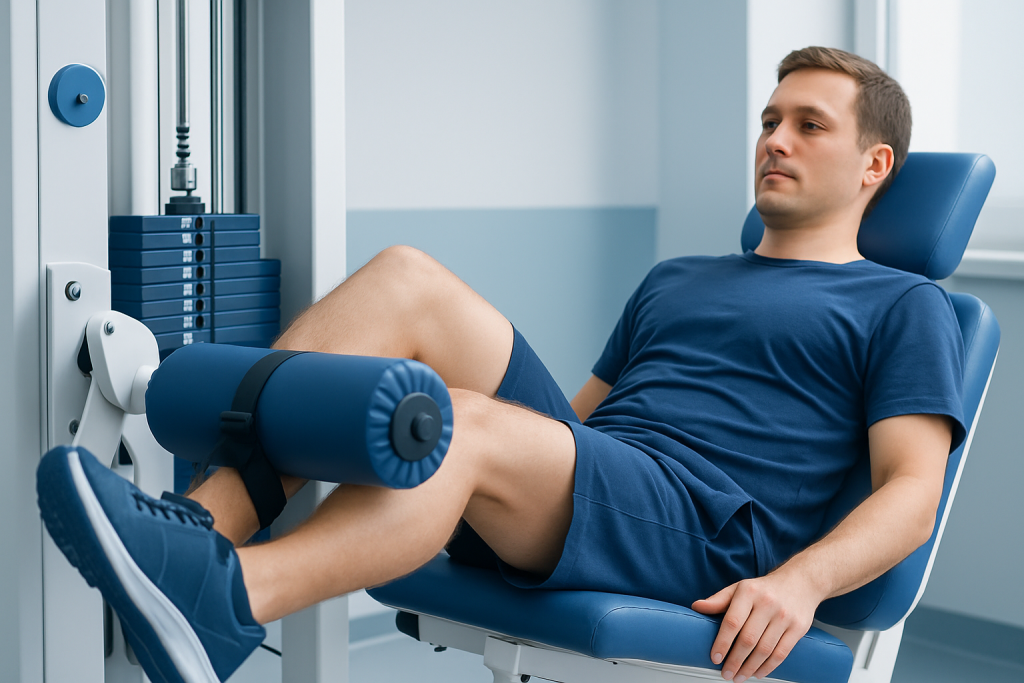
Hamstring curls are not a treatment for a disease by themselves, but they may help when weakness, stiffness, or poor control in the back of the thigh is affecting function. A clinician may recommend them after a hamstring strain, after certain knee injuries, or as part of strengthening for general deconditioning.
When hamstrings are weak, a person may notice difficulty bending the knee against resistance, reduced control during sports, or fatigue in the back of the thigh when walking uphill or using stairs. Some people also experience imbalance between the front and back of the thigh, which can place extra stress on the knee during activity.
- Difficulty bending the knee smoothly
- Weakness during running, jumping, or stair climbing
- Rehabilitation after a hamstring or knee injury
- General lower-limb strengthening in a supervised program
Because symptoms can overlap with other issues, persistent pain, swelling, or a feeling of instability should be assessed rather than worked through. An exercise that feels appropriate for one person may be too demanding for another, especially after surgery or a recent injury.
Causes & Risk Factors

There are several reasons a person might need hamstring-focused strengthening. Sports that involve sprinting, sudden stopping, kicking, or rapid direction changes place heavy demands on the hamstrings. Desk-based work, reduced activity, or recovery after illness can also leave these muscles undertrained.
Risk increases when the hamstrings are significantly weaker than the muscles at the front of the thigh, when movement patterns are inefficient, or when the body returns to sport too quickly after a strain. A previous hamstring injury is a known reason to pay closer attention to strength, flexibility, and load progression.
People with knee pain, lower-back discomfort, or postoperative restrictions may also be advised to use hamstring curls carefully, because the exercise can be helpful but must be matched to the overall condition. In rehabilitation, the right dose is less about intensity and more about timing, control, and gradual progression.
Diagnosis and Exercise Assessment
Hamstring curls themselves do not require a formal diagnosis, but deciding whether they are appropriate usually begins with a clinical assessment. A doctor, sports medicine specialist, or physiotherapist may ask about pain, prior injuries, activity goals, and any surgery or imaging results relevant to the knee, hip, or thigh.
Assessment often includes watching how the person moves, checking strength on both sides, and looking for signs of pain with bending the knee or during tasks such as squatting or stepping. If the exercise is being used in rehabilitation, the clinician may also monitor range of motion, swelling, and how the tissue responds over time.
In some cases, imaging such as ultrasound or MRI may already be part of the workup for a hamstring strain or associated injury. Even then, exercise decisions are usually based on the whole picture, not on the scan alone.
Treatment Options and How Hamstring Curls Fit In
Hamstring curls are usually one component of a wider treatment plan rather than a stand-alone fix. Depending on the situation, that plan may include rest from aggravating activity, gradual return to movement, pain management advice, and supervised rehabilitation.
The exercise itself can be performed in several ways. A machine-based curl is common in gyms and rehab clinics, while resistance bands or ankle weights may be used in other settings. Some programs begin with very light resistance and a small range of motion, then gradually progress as strength and comfort improve.
Typical coaching points focus on quality: the pelvis should remain steady, movement should be smooth, and the person should avoid swinging the leg or arching the back to compensate. If pain appears sharp, increases noticeably afterward, or changes the way the person walks, the exercise should be reviewed rather than simply continued.
- Start with a resistance level that allows controlled movement
- Move through a comfortable range first, then expand gradually
- Pause if form begins to slip
- Combine with other lower-body exercises for balanced rehabilitation
For patients traveling for orthopedic care, a multidisciplinary team can help coordinate exercise progress with surgery timing, physiotherapy access, and follow-up planning once the patient returns home. That coordination matters because rehabilitation is often a long process that continues beyond the hospital visit itself.
Prevention & Self-care
Strong hamstrings can help protect the knee and support everyday movement, but prevention is not only about adding one exercise. A balanced program usually includes strength work for the hips, quadriceps, and core, along with flexibility and movement control.
People who train regularly benefit from increasing activity gradually, especially after a break or after an injury. Warm-up routines, attention to fatigue, and sensible recovery days all help reduce the chance of overloading the back of the thigh. For those already rehabbing, home exercise adherence is often just as important as clinic sessions.
Self-care also means listening to the body. Mild muscle effort during the exercise is expected, but worsening pain, a sudden pulling sensation, bruising, or difficulty walking afterwards deserves attention. Good footwear, appropriate surfaces for sport, and proper technique during lifting and sprinting can also reduce strain on the hamstrings.
- Progress resistance gradually
- Use slow, controlled repetitions
- Keep the hips steady and avoid jerking
- Balance hamstring work with front-thigh and glute exercises
When to See a Doctor
Medical advice is sensible if hamstring curls cause pain that does not settle, if there is visible swelling or bruising, or if the leg feels weak in a way that limits daily activity. A sudden “pop,” trouble bearing weight, or pain high in the back of the thigh may suggest a more significant injury that needs assessment.
People recovering from surgery or managing a known knee or hamstring condition should ask their care team before changing the exercise load. A physiotherapist can help determine whether the exercise should be modified, paused, or replaced with another movement that better matches the current stage of recovery.
If care is being arranged internationally, it can help to bring prior imaging, operation notes, and a list of current exercises so the receiving team can continue rehabilitation without interruption. Acibadem Health Point’s multidisciplinary specialists and JCI-accredited hospitals diagnose and treat orthopedic conditions for international patients in a coordinated way.
When symptoms are mild but persistent, or when someone is unsure whether the exercise is helping or hindering recovery, a professional review is the safest next step. A small adjustment early on can prevent a larger setback later.
Frequently asked questions
What muscles do hamstring curls work?
Hamstring curls mainly work the hamstring group, which runs along the back of the thigh. Depending on how the exercise is done, other muscles that help stabilize the hip and knee may also be involved.
Are hamstring curls good for knee pain?
They can be helpful in some knee rehabilitation plans because stronger hamstrings support knee control. However, not every type of knee pain responds the same way, so the exercise should be matched to the underlying issue.
Should hamstring curls hurt?
A mild sense of effort or muscle fatigue is normal, but sharp pain is not. If pain increases during or after the exercise, the technique or load may need to be changed.
Can hamstring curls be done at home?
Yes, many people can do them at home with a resistance band or other light equipment. It is still important to learn the correct form first, especially after injury or surgery.
How often should someone do hamstring curls?
That depends on the person’s goals, fitness level, and recovery status. A doctor or physiotherapist can suggest a schedule that fits the overall program without overloading the muscle.
What if one side feels much weaker than the other?
Some difference between sides is common, especially after injury, but a large gap should be assessed. A clinician can decide whether more targeted strengthening or a different rehabilitation plan is needed.
References
- American Academy of Orthopaedic Surgeons
- National Health Service
- Mayo Clinic
- American College of Sports Medicine
- World Physiotherapy
This article is for general information only and is not a substitute for professional medical advice. Please consult a qualified doctor about your individual situation.
Joint and spine care in Turkey — expert assessment & treatment
JCI-accredited · board-certified surgeons · reply within 24h
Add us as a Preferred Source to see more of our trusted health content across Google Search, AI Overviews and Discover.
More from the Health Library



Related Specialists

Prof. Dr. Ahmet Alanay
Orthopedic Surgery & Traumatology
Dr. Sinan Aksu
Orthopedic Surgery & Traumatology
Dr. Sirri Baştürk
Orthopedic Surgery & Traumatology
Prof. Dr. Korhan Özkan
Orthopedic Surgery & Traumatology