Hair Transplant And

Key Takeaways
- A hair transplant redistributes healthy follicles; it does not stop the underlying tendency to lose hair.
- The most common techniques are FUE and FUT, each with different trade-offs in scarring, recovery, and donor-hair use.
- Good candidates usually have stable donor hair and a pattern of loss that can be mapped clearly by a specialist.
- Results develop gradually, and temporary shedding after surgery can be part of the normal healing process.
- Long-term planning matters because existing hair may continue to thin over time, even after a transplant.
Hair transplant and related restoration procedures can help move healthy hair to areas affected by thinning or pattern hair loss. Understanding candidacy, technique options, recovery, and long-term planning helps patients make confident, realistic decisions.
Overview
Hair transplant and hair restoration procedures are designed to move healthy hair follicles from one part of the scalp, usually the back or sides, to areas with thinning or baldness. The goal is not simply to add hair, but to create coverage that looks natural in everyday life, including under different lighting, hairstyles, and recovery patterns.
For many people, hair loss becomes emotionally visible before it becomes medically urgent. That is why the most useful conversations are often practical ones: what type of loss is present, how stable it is, how much donor hair is available, and what result is realistic over the long term. A careful plan matters as much as the procedure itself.
Hair restoration is not limited to one operation. It may include surgery, medical treatment, camouflage strategies, scalp care, or a combination of approaches. In international care settings, patients often benefit from a clear timeline that explains consultation, travel, procedure day, early healing, and follow-up once they return home.
Symptoms
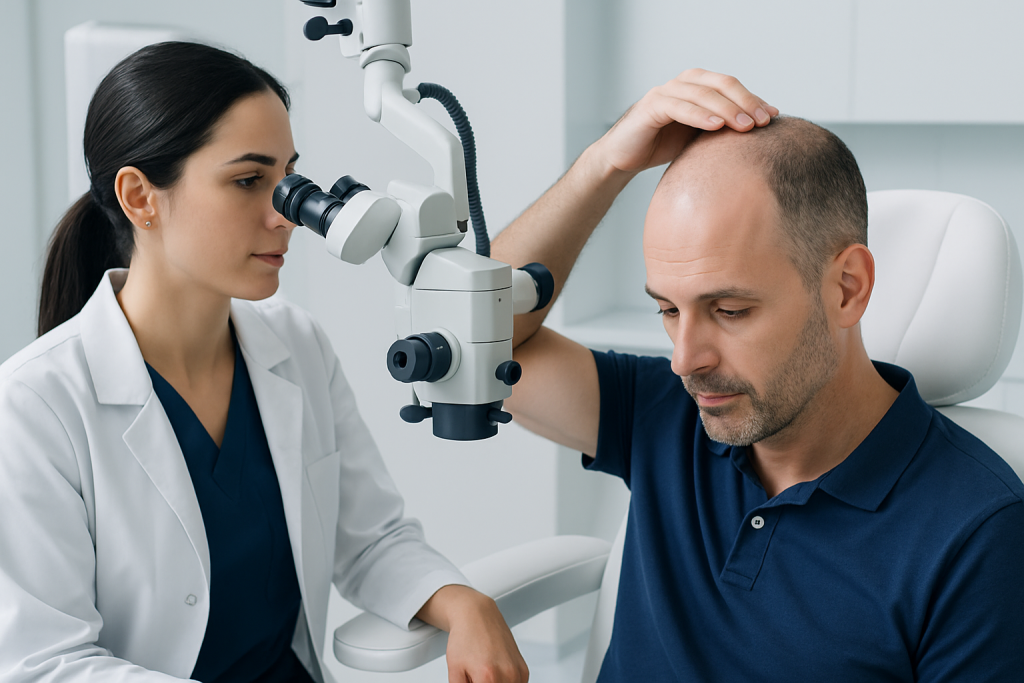
The main reason people seek a hair transplant is not pain or illness, but visible change. Hair may gradually thin at the temples, crown, or part line, or the hairline may move backward over time. Some people notice widening of the part, reduced density, or a scalp that becomes easier to see in photos than in person.
Hair loss can also appear in patches, after illness, stress, medication changes, or traction from repeated styling. In those cases, the pattern may not be suitable for immediate transplant surgery until the cause is better understood and the hair loss has stabilized.
Common signs that prompt evaluation include:
- Progressive thinning at the crown or frontal hairline
- Receding temples or a changing hairline shape
- Visible scalp through the hair
- Patches of hair loss after scarring, injury, or surgery
- Uneven beard or eyebrow density when restoration is being considered outside the scalp
Because hair loss has several causes, an assessment should begin with determining whether the condition is pattern hair loss, temporary shedding, inflammatory disease, scarring alopecia, or another dermatologic issue.
Causes & Risk Factors
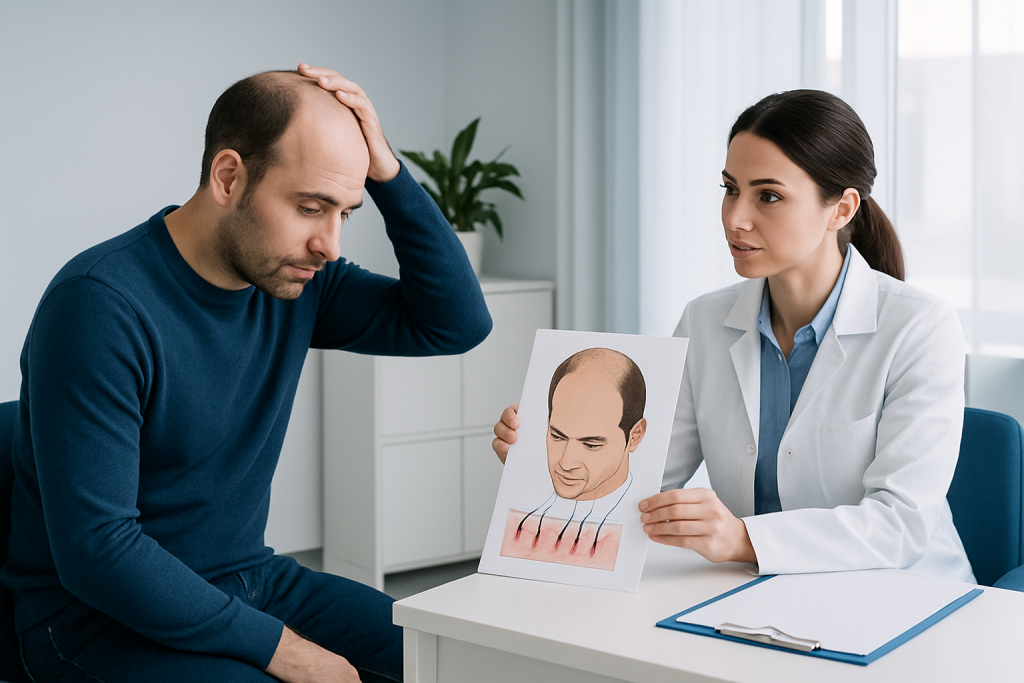
The most common reason for hair transplant surgery is androgenetic alopecia, also known as pattern hair loss. This condition is influenced by genetics and hormones and tends to follow recognizable patterns in men and women. In many patients, the donor area remains relatively resistant to this kind of thinning, which makes transplantation possible.
Other causes of hair loss are more complex. Stress-related shedding, nutritional deficiencies, thyroid disorders, autoimmune disease, traction from hairstyles, and scarring conditions can all affect the scalp. A transplant is usually best considered after the underlying cause has been identified and managed.
Factors that may influence candidacy and planning include:
- Stability of hair loss over time
- Quality and density of donor hair
- Age and expected future thinning pattern
- Scalp laxity and skin characteristics
- History of scarring, inflammation, or prior hair procedures
- General health and ability to heal well after surgery
Patients traveling internationally should also consider practical factors such as recovery time, the ability to attend follow-up appointments, and whether their long-term hair plan can be maintained with local medical support after they return home.
Diagnosis
Evaluation for hair transplant begins with a detailed medical history and scalp examination. A specialist will usually look at the pattern of thinning, the donor area, hair caliber, scalp health, and any signs that the loss may be temporary or scarring in nature. This helps determine whether surgery is appropriate now or whether another approach should come first.
Some patients may need laboratory tests if the pattern is atypical or if another cause is suspected. These tests might be used to check for thyroid imbalance, iron deficiency, hormonal concerns, or other medical contributors to shedding. The point is not to order tests routinely for everyone, but to avoid missing a treatable reason for hair loss.
Planning often includes photographs, hairline design discussion, and a realistic estimate of graft numbers or coverage needs. A thoughtful surgeon will talk not only about where hair can be placed, but also about what should be reserved for the future if natural hair around the transplant continues to thin over time.
Treatment Options
Hair transplant surgery typically falls into two main techniques: follicular unit extraction (FUE) and follicular unit transplantation (FUT). In FUE, individual follicular units are harvested from the donor area and placed into the thinning area. In FUT, a strip of scalp is removed from the donor region, and the follicles are separated for transplantation.
Each method has advantages and limitations. FUE may leave tiny dot-like scars and can be appealing for patients who prefer shorter hairstyles, while FUT may be efficient when a larger number of grafts is needed in one session. The best choice depends on hair characteristics, donor supply, scarring tolerance, and the surgeon’s assessment of how to use the donor area wisely over a lifetime.
Other options may be part of the treatment plan, either before or after surgery:
- Medical therapy to help slow ongoing hair loss
- Platelet-rich plasma in selected cases, depending on specialist recommendation
- Scalp micropigmentation for the appearance of density
- Eyebrow, beard, or scar restoration in carefully selected patients
Patients should understand that surgery redistributes existing hair; it does not create unlimited new follicles. For that reason, the artistic and medical planning behind the procedure is often just as important as the technical act of placing grafts.
Recovery and What to Expect
Recovery after hair transplant is usually gradual and manageable, but it follows a sequence that can surprise first-time patients. The scalp may feel tender, swollen, tight, or itchy in the first days. Small crusts around grafts are common, and the care instructions are intended to protect the new follicles during this early phase.
Many patients experience temporary shedding of transplanted hairs in the weeks after surgery. This is often a normal part of the cycle and does not mean the grafts have failed. New growth usually begins later, then thickens over months rather than days, so patience is essential when judging the result.
During international treatment, recovery planning should be practical. Patients may need a quiet period before travel, clear instructions for washing and sleeping, and a follow-up schedule that can continue remotely or with a local physician. Good aftercare reduces uncertainty and makes the recovery process easier to manage across borders.
Prevention & Self-care
Not all hair loss can be prevented, but the pace and impact of thinning can sometimes be reduced. If a patient is considering a transplant, preserving existing hair is important because it helps maintain balance around the transplanted area. Treatment plans often work best when surgery and medical management are combined thoughtfully.
Self-care after surgery is straightforward but important. Patients should follow cleaning instructions carefully, avoid scratching or rubbing the scalp, protect the area from sun exposure, and delay strenuous activity until the surgical team says it is safe. The grafts are small, but they are still healing tissue that benefits from calm, consistent care.
Helpful habits may include:
- Using recommended hair-care products only after approval
- Keeping follow-up appointments or virtual check-ins
- Avoiding smoking, which can interfere with healing
- Eating a balanced diet and addressing deficiencies if present
- Managing hairstyles that pull on the hairline
It is also wise to discuss future hair-loss expectations before surgery. A good result today should still make sense if the surrounding hair thins over the next several years.
When to See a Doctor
A doctor or hair-restoration specialist should evaluate hair loss when it is progressing, unexplained, or affecting confidence and daily comfort. Early consultation is especially useful if the scalp shows patchy loss, inflammation, pain, scaling, or scarring, because some conditions need medical treatment rather than surgery.
Patients should also seek an expert opinion before deciding on a transplant if they are young, have rapidly changing hair loss, or have a family history suggesting more thinning ahead. In those situations, the safest plan may be to stabilize the pattern first and then decide on surgery with a clearer long-term view.
For international patients, it is reasonable to ask how the clinic handles follow-up once travel is over, what documentation will be provided, and how concerns will be managed from a distance. Acibadem Health Point’s multidisciplinary specialists and JCI-accredited hospitals diagnose and treat hair loss and transplant candidates for international patients in a coordinated way, which can help simplify planning and follow-up.
Living With the Decision
Choosing hair transplant surgery is often less about chasing perfection and more about restoring a sense of alignment. Some patients want a more defined hairline; others want coverage in the crown or a better match between facial features and scalp density. A thoughtful plan respects those priorities without promising a result that the donor area cannot support.
It is also helpful to remember that hair restoration is a process, not a single day. The consultation clarifies the medical side, the procedure begins the change, and the months after surgery reveal the final direction. Patients who understand that timeline usually feel calmer and more satisfied along the way.
When the decision is made with realistic expectations, good candidate selection, and steady aftercare, hair transplant can be part of a broader, durable approach to hair restoration. The aim is not just more hair, but a result that remains believable, manageable, and appropriate for the person over time.
Frequently asked questions
Who is a good candidate for a hair transplant?
Good candidates usually have a clear pattern of hair loss, healthy donor hair, and enough stability in the thinning pattern to plan surgery responsibly. A specialist will also consider age, scalp health, and whether another medical cause should be treated first.
What is the difference between FUE and FUT?
FUE removes individual follicular units, while FUT removes a thin strip of scalp that is later divided into grafts. Both techniques can produce natural-looking results, and the better choice depends on donor hair, scarring preferences, and the amount of coverage needed.
Is a hair transplant permanent?
Transplanted follicles are usually taken from areas that are more resistant to pattern hair loss, so they often last a long time. However, surrounding natural hair may continue to thin, which is why long-term planning and medical follow-up matter.
Will the transplanted hair fall out after surgery?
Temporary shedding of transplanted hairs is common in the weeks after the procedure and is often part of the normal growth cycle. New growth typically returns later and develops gradually over several months.
How long does recovery take?
The first healing phase usually takes days to a couple of weeks, but the visible result takes much longer to appear. Patients often need several months before early growth is noticeable and longer for density to improve.
Can hair transplant help women as well as men?
Yes, women may be candidates in selected cases, especially when hair loss patterns and donor hair make surgery appropriate. A careful diagnosis is especially important in women because diffuse thinning can have multiple causes.
Do patients need to stay in the country for a long time after the procedure?
Usually not, but enough time should be allowed for early healing, instruction review, and the first check before travel. The exact stay depends on the procedure, the surgeon’s plan, and how follow-up will be handled after returning home.
References
- American Academy of Dermatology
- International Society of Hair Restoration Surgery
- Mayo Clinic
- National Institute of Arthritis and Musculoskeletal and Skin Diseases
- British Association of Dermatologists
This article is for general information only and is not a substitute for professional medical advice. Please consult a qualified doctor about your individual situation.