Hairline Design Before Transplant Surgery: What Makes a Natural Result?
Key Takeaways
- The hairline should be designed to match age, face shape, and future hair loss rather than copied from a youthful pattern.
- A natural result depends on soft irregularity, correct angle and density, and a gradual transition from the hairline into the scalp.
- Planning must account for donor hair limits, the likelihood of ongoing thinning, and how the hair may look years later.
- Patients should review the proposed hairline carefully before surgery because it is difficult to change after graft placement.
- Good aftercare and realistic expectations help protect the result and support a steady recovery.
Medically reviewed by the Acıbadem clinical team — June 13, 2026
A natural-looking hair transplant begins long before grafts are placed. Hairline design shapes how the face will frame the new growth, so careful planning, proportion, and long-term thinking matter as much as surgical technique.
Overview
Hairline design before transplant surgery is the stage where a technically good procedure becomes a believable, face-appropriate result. The goal is not to draw the lowest possible line or to imitate a teenager’s hairline. It is to create a frame that looks like it could have grown there naturally all along.
That planning starts with the person’s age, current pattern of hair loss, donor hair supply, forehead height, facial proportions, and long-term goals. A well-designed hairline should soften the face, suit the person’s features, and still make sense if mild thinning continues over time. For international patients who travel for care, this discussion is especially important because the first consultation may need to cover both immediate surgery and future follow-up plans.
Because the hairline is one of the first things others notice, small design choices matter. Curves, irregularities, density gradients, and the position of single-hair grafts can all influence whether the final look appears subtle and natural. The best planning tends to be individualized rather than formula-based.
What makes a hairline look natural
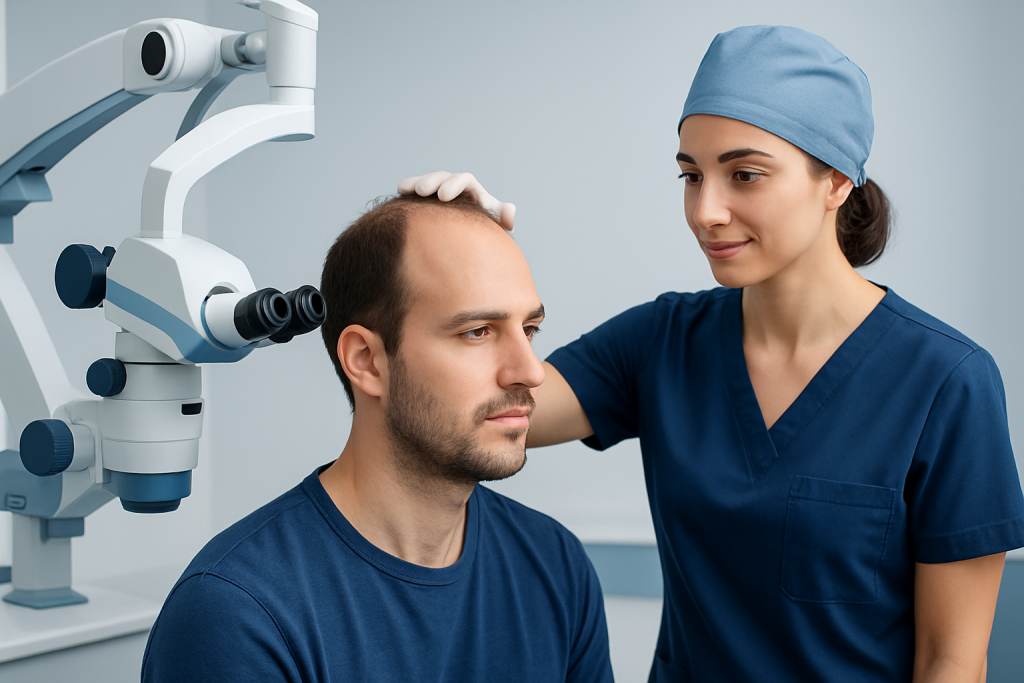
A natural hairline rarely looks perfectly straight. Real hairlines have gentle unevenness, soft corners, and slight variation in density. In transplant surgery, that same visual softness is recreated by placing finer hairs at the front and building thickness gradually behind them.
Another feature of natural design is age-appropriateness. A hairline that is too low or too sharply defined can look out of place, especially as the rest of the face matures. Many patients feel more comfortable when the design is conservative enough to age well, rather than aiming for a dramatic change that may not remain believable later.
Surgeons also consider direction and angle. Hair that grows too uniformly or stands too upright can draw attention for the wrong reasons. Careful angle control helps transplanted hair lie and move in a way that blends with surrounding strands, whether the hair is worn short, styled back, or allowed to fall forward.
- Soft, irregular outline instead of a rigid straight edge
- Single-hair grafts at the front for a feathered look
- Gradual increase in density behind the leading edge
- Angles that match the person’s existing hair growth pattern
- Proportion that suits the forehead and face shape
How doctors plan the hairline

Planning usually begins with a careful scalp examination and a conversation about daily life, styling habits, and expectations. Some people want subtle refinement around the temples, while others want to rebuild a receding front more noticeably. The surgeon then maps a design that balances aesthetics with what the donor area can safely provide.
Measurements are only part of the picture. The doctor also studies facial symmetry, brow position, hair caliber, curl pattern, and the direction of existing miniaturized hairs. These details help determine where the new line should sit and how steep or rounded it should be.
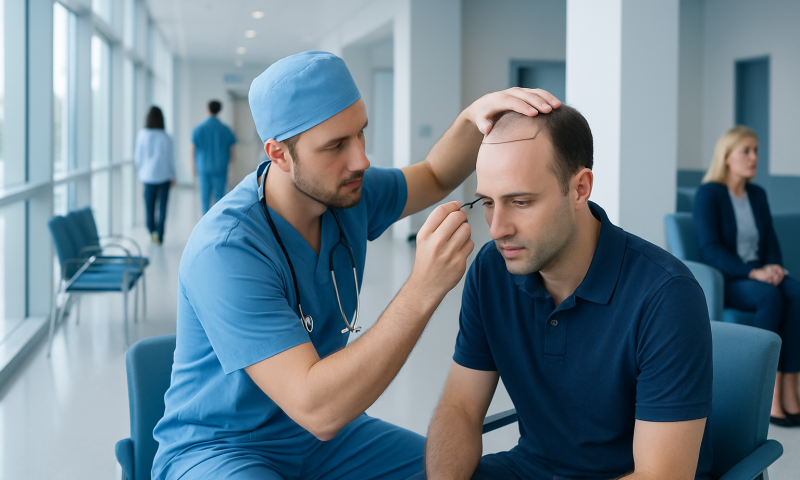
In many cases, the planned hairline is shown and discussed before surgery begins. This step matters because once grafts are placed, changes are much harder to make. A thoughtful consultation leaves room for questions about future thinning, the possibility of additional procedures later, and how the transplanted area will integrate with untreated hair.
Why a conservative approach often works best
Patients sometimes imagine that a lower hairline automatically means a better result. In practice, a more conservative design can be more satisfying over the long term. Lowering the hairline too much may use up valuable grafts, reduce donor reserve for future work, and create a look that no longer fits if hair loss continues.
Hair transplantation is often part of a long view, not a one-time fix. When the donor supply is limited, the surgeon may prioritize a design that frames the face naturally and preserves enough hair for later needs. That approach is especially relevant for younger patients, whose pattern of thinning may still be evolving.
A conservative plan does not mean a flat or timid result. It means placing grafts where they are most useful and building a believable shape that can be maintained. Many patients find that a well-judged hairline looks better than an aggressively low one once healing is complete and the hair begins to grow in.
Technique details that influence the final look
The artistry of the hairline comes from how grafts are distributed. Single-hair grafts are often used at the very front to create a delicate edge, while larger groupings are positioned farther back to improve fullness. This transition helps the hairline read as soft rather than blocky.
Placement angle is equally important. Hair grows at different directions across the front of the scalp, and those natural patterns should be respected. When grafts are inserted with appropriate tilt and direction, they blend with surrounding hair and are easier to style after healing.
The surgeon also pays attention to density variation. A perfectly even row can look artificial, while a slightly irregular and layered arrangement tends to mimic nature. The final appearance depends not only on how many grafts are used, but also on where they are placed and how the surrounding scalp is prepared.
Common technique considerations include:
- Choosing between follicular unit extraction and other methods based on the patient’s needs
- Matching the recipient plan to donor hair quality and availability
- Protecting scalp blood flow and tissue health during placement
- Leaving space for future thinning patterns when appropriate
Diagnosis and pre-surgery assessment
Before any transplant, the doctor usually assesses the type and cause of hair loss. Not every receding hairline follows the same pattern, and some conditions, such as inflammatory scalp disorders, need to be addressed first. A transplant designed without understanding the cause of hair loss may not age well or may underperform.
The pre-surgery assessment can include a scalp examination, a review of family history, photographs, and sometimes blood tests or other investigations if a broader medical issue is suspected. These steps help confirm whether surgery is appropriate now or whether another treatment should come first.
For patients traveling from abroad, it helps to bring any previous medical records, a list of current medicines, and photographs showing how the hair has changed over time. This gives the specialist a clearer picture of progression and makes the consultation more efficient, especially when there is limited time in person before the procedure.
Recovery, self-care, and protecting the design
Once surgery is complete, the hairline’s appearance will change during healing. Early redness, tiny crusts, and temporary shedding of transplanted hairs are expected parts of the process. The true cosmetic outcome becomes easier to judge only after new growth begins and the scalp settles.
Aftercare instructions are important because the front of the scalp is visible and delicate during recovery. Patients are usually advised to avoid rubbing, scratching, heavy sweating, and anything that could disturb the grafts. Gentle washing, sleeping position guidance, and sun protection are often part of the early recovery plan.
Looking after the result also means respecting the surgeon’s long-term plan. If the rest of the scalp continues to thin, non-transplanted hair may need medical management or future treatment. The transplanted hairline is only one piece of the overall pattern, so follow-up care should support the whole scalp, not just the front edge.
When to see a doctor
A consultation is worthwhile if hairline recession is advancing, if the scalp has become visibly thinner, or if a person is considering a transplant and wants to understand whether the design can still look natural over time. A good evaluation can clarify whether surgery, medication, or a combination approach is most suitable.
Medical advice should also be sought if hair loss is sudden, patchy, itchy, painful, scaly, or associated with inflammation. Those features can point to conditions that need diagnosis before any transplant is planned. In those situations, treating the cause first may be more important than redesigning the hairline.
Patients who are unhappy with a previous transplant design can also ask for an expert review. Revision planning may be possible, but it requires careful judgment, especially if donor hair is limited. For international patients, Acibadem Health Point’s multidisciplinary specialists and JCI-accredited hospitals can help diagnose and treat hair loss conditions and plan surgical care with coordinated follow-up.
Frequently asked questions
What makes a hair transplant hairline look natural?
A natural hairline usually has a soft, slightly irregular edge rather than a straight line. It also uses finer hairs at the front and fuller density behind them so the result blends with the face instead of drawing attention to the surgery.
Should the hairline be placed as low as possible?
Not usually. A very low hairline can look unnatural and may use up donor hair too quickly, especially if hair loss continues later. A balanced position often gives a better long-term result.
Can the hairline be changed after the transplant?
It is much easier to plan the hairline correctly before surgery than to correct it afterward. Revision may be possible in some cases, but it is more complex and depends on donor supply, healing, and the original design.
How long does it take to judge the final hairline result?
The appearance changes gradually as the scalp heals and new hair grows. Early shedding is common, and the final look is usually assessed over several months rather than immediately after the procedure.
Why is age important in hairline design?
An age-appropriate hairline tends to look more believable and easier to maintain over time. A design that is too youthful for the rest of the face may seem artificial as the person continues to age.
What should a patient ask before agreeing to surgery?
They should ask how the hairline was chosen, how the surgeon planned for future hair loss, and whether the donor area is sufficient for the intended design. It is also helpful to ask what the recovery will involve and how follow-up is handled if the patient lives in another country.
References
- American Academy of Dermatology
- International Society of Hair Restoration Surgery
- National Institute of Arthritis and Musculoskeletal and Skin Diseases
- Mayo Clinic
This article is for general information only and is not a substitute for professional medical advice. Please consult a qualified doctor about your individual situation.