Fibroids Before IVF: Which Ones Matter, and Which Ones Usually Don’t

Key Takeaways
- Not all fibroids interfere with IVF; location matters more than the mere presence of fibroids.
- Fibroids that change the uterine cavity are more likely to affect implantation and pregnancy outcomes.
- Some fibroids can be monitored, while others may be treated before IVF to improve the chances of success.
- A fertility specialist usually reviews ultrasound findings, symptoms, and prior treatment history before recommending a plan.
- International patients often benefit from a coordinated evaluation that fits diagnosis, treatment, and follow-up into one clear pathway.
Medically reviewed by the Acıbadem clinical team — June 13, 2026
Uterine fibroids are common, and many people discover them during an IVF workup. The key question is not simply whether fibroids are present, but where they sit, how large they are, and whether they distort the uterine cavity.
Overview
Fibroids can feel like an unexpected detour when someone is preparing for IVF. They are common, often harmless, and frequently found during the routine scans that help map the uterus before treatment begins.
The important detail is not whether fibroids exist, but whether they are likely to interfere with embryo implantation, pregnancy, or the practical steps of fertility treatment. Some fibroids sit quietly in the outer wall of the uterus and never change the plan. Others grow in a place where they can crowd the uterine cavity or make it harder for a pregnancy to develop normally.
For that reason, fertility specialists usually look at fibroids through a very practical lens: will this one matter for IVF, or can it be safely observed? The answer depends on type, size, location, symptoms, and the person’s broader fertility history.
Symptoms
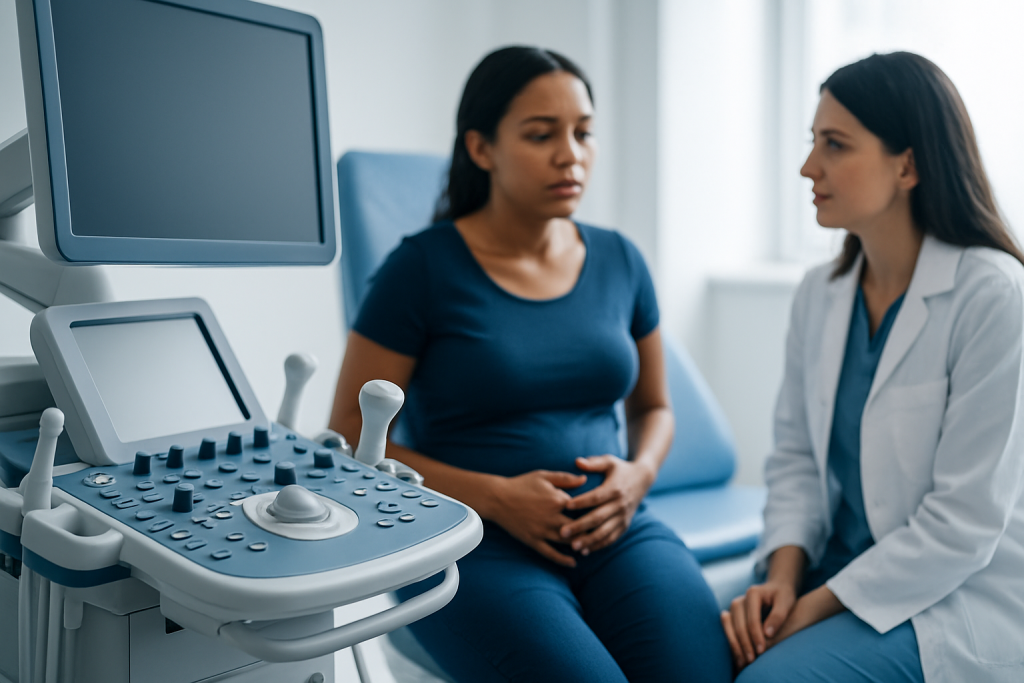
Many fibroids cause no symptoms at all and are found only during an ultrasound or another imaging test. When symptoms do occur, they can include heavy menstrual bleeding, pelvic pressure, frequent urination, constipation, pain during periods, or a sense of fullness in the lower abdomen.
Some people also notice reproductive symptoms, such as difficulty conceiving, repeated implantation failure, or pregnancy loss. These issues do not automatically mean fibroids are the cause, but they do prompt a closer look, especially when IVF is being planned.
In the fertility setting, symptoms are only part of the picture. A fibroid that is silent in daily life may still matter if it pushes into the uterine cavity, while a larger fibroid that stays outside the cavity may have less impact than expected.
Causes & Risk Factors
Fibroids are benign growths of the muscle tissue in the uterus. Their exact cause is not fully understood, but they are known to respond to hormones such as estrogen and progesterone, which is one reason they are more common during the reproductive years.
Several factors can increase the chance of developing fibroids, including family history, age, and being in the later reproductive years. A person’s menstrual history, body weight, and underlying hormonal environment may also play a role, although no single factor explains every case.
When fertility is the concern, risk factors are less important than anatomy. A small fibroid in the outer uterine wall may be observed, while a fibroid that distorts the uterine cavity may need active treatment before IVF is started.
Which Fibroids Matter Most Before IVF
Location is the main reason some fibroids are treated before IVF and others are not. Fibroids are commonly described by where they grow: submucosal fibroids lie beneath the lining of the uterus and often protrude into the cavity; intramural fibroids grow within the muscular wall; and subserosal fibroids project outward from the uterus.
Submucosal fibroids are the type most likely to affect fertility because they can interfere with implantation and the early environment of pregnancy. Even relatively small ones may matter if they distort the uterine cavity.
Intramural fibroids are more nuanced. If they are large or close enough to alter the shape of the cavity, a fertility specialist may recommend treatment first. Subserosal fibroids, by contrast, usually have little effect on IVF unless they are very large or cause symptoms that complicate treatment.
- Most likely to matter: fibroids that distort the uterine cavity
- May matter: larger intramural fibroids near the cavity
- Usually less concerning: subserosal fibroids that stay outside the cavity
Diagnosis
Before IVF, fibroids are usually evaluated with transvaginal ultrasound. This gives a good first look at the number, size, and position of the fibroids, as well as whether the uterine cavity appears regular or distorted.
When the picture is unclear, additional tests may be used. Saline infusion sonography can outline the cavity more clearly, and MRI may help when fibroids are numerous or when surgical planning is needed. In some cases, hysteroscopy is recommended so the doctor can see the inside of the uterus directly.
For international patients, this step is often especially valuable because it helps avoid delays. A clear diagnosis can allow the fertility team to decide whether treatment can move forward, whether a fibroid procedure is needed first, or whether monitoring is the better choice.
Treatment Options
Not every fibroid requires treatment before IVF. If a fibroid is small, outside the uterine cavity, and not causing symptoms, observation may be the most appropriate path. The decision is usually individualized rather than based on size alone.
When treatment is recommended, the goal is to protect the uterus and improve the chance of implantation. Hysteroscopic removal is often used for submucosal fibroids because it can access the fibroid through the cervix without external incisions. Laparoscopic or open surgery may be considered for selected intramural or larger fibroids, especially if they distort the cavity or are causing significant symptoms.
Medication can sometimes help control bleeding or shrink fibroids temporarily, but it is not always a long-term solution before IVF. A fertility specialist will also consider timing carefully, since any procedure should allow enough recovery before Frozen Embryo Transfer vs. Fresh Transfer: When Each One Makes More Sense" class="ahp-ilk">embryo transfer begins.
For some patients, the most useful treatment is not surgery but sequencing: completing fibroid management first, confirming that the uterus has healed well, and then returning to IVF with a clearer anatomical picture.
Prevention & Self-care
There is no guaranteed way to prevent fibroids, but practical self-care can support overall reproductive health. Keeping follow-up appointments, sharing prior ultrasound reports, and discussing cycle changes early can help a specialist identify whether fibroids are stable or changing.
People preparing for IVF may also benefit from a steady approach to general health: maintaining a balanced weight, addressing anemia if heavy bleeding has occurred, and following the fertility team’s instructions about medications and imaging. These steps do not remove fibroids, but they help the body stay ready for treatment if a procedure or transfer is planned.
For international patients, good preparation often includes organizing records before travel, asking which scans should be repeated on arrival, and planning enough time for any needed procedure and recovery. A well-organized timeline can reduce stress and help the care team make decisions based on current findings rather than older reports.
When to See a Doctor
A fertility specialist should review fibroids before IVF if there is any history of heavy bleeding, pelvic pressure, prior uterine surgery, repeated miscarriage, or previous failed embryo transfers. Even when symptoms are mild, an updated assessment is often worthwhile because fertility decisions depend heavily on accurate imaging.
Medical review is especially important if the fibroid may be inside the uterine cavity, if imaging reports are inconsistent, or if the person has been told in the past that a fibroid was “small” but is now planning IVF. Changes over time matter, and the right next step is usually guided by the most recent scan.
For patients traveling from another country, it is sensible to seek a consultation before booking embryo transfer dates, so there is room for diagnostic clarification or treatment if needed. At Acibadem Health Point, multidisciplinary specialists and JCI-accredited hospitals diagnose and treat fibroids for international patients in a coordinated setting, which can make planning smoother across different stages of care.
Living with Fibroids While Preparing for IVF
Learning that fibroids are present does not automatically mean IVF cannot proceed. Many patients move forward successfully once the uterus has been properly evaluated and the treatment plan is tailored to the fibroid’s location and impact.
The most reassuring approach is usually a measured one: confirm the anatomy, distinguish the fibroids that matter from those that usually do not, and avoid unnecessary procedures when monitoring is enough. This balance helps preserve both fertility time and uterine health.
When decisions are made with clear imaging, thoughtful timing, and realistic expectations, fibroids become one more part of the fertility puzzle rather than an obstacle without a plan.
Frequently asked questions
Do all fibroids reduce IVF success?
No. Many fibroids do not affect IVF, especially if they are outside the uterine cavity and not changing its shape. Fibroids that distort the cavity are the ones that are most likely to matter.
Which fibroid type is most concerning before IVF?
Submucosal fibroids are usually the most concerning because they can interfere with the lining where an embryo implants. Larger intramural fibroids may also be important if they alter the cavity.
Can IVF be done with fibroids in place?
Sometimes yes, especially when the fibroids are small and not affecting the cavity. A fertility specialist will weigh the anatomy, symptoms, and treatment history before deciding whether to proceed.
How are fibroids checked before IVF?
Ultrasound is the usual first test, and it may be followed by saline sonography, MRI, or hysteroscopy if more detail is needed. These tests help show whether the cavity is open and regular.
Will fibroid surgery delay IVF?
It may add some time, because the uterus needs a healing period before embryo transfer. The timing depends on the type of procedure and the individual recovery plan.
What should an international patient bring to a fibroid consultation?
Previous ultrasound reports, MRI results, operative notes, and any fertility treatment records are very helpful. Having these documents ready can make the first visit more efficient and help the specialist avoid repeating unnecessary tests.
References
- American Society for Reproductive Medicine
- European Society of Human Reproduction and Embryology
- Mayo Clinic
- Cleveland Clinic
- National Institute of Child Health and Human Development
This article is for general information only and is not a substitute for professional medical advice. Please consult a qualified doctor about your individual situation.
More from the Health Library



Related Specialists

Prof. Dr. A. Taner Usta
Gynecology & Obstetrics
Prof. Dr. Ahmet Tayyar
Gynecology & Obstetrics
Prof. Dr. Ahmet Cem Batukan
Gynecology & Obstetrics
Dr. Sevgi Selen
Gynecology & Obstetrics