Endometriosis and IVF: What Surgeons and Fertility Specialists Check First
Key Takeaways
- Endometriosis can influence fertility through inflammation, adhesions, ovarian cysts, and changes in pelvic anatomy.
- Before IVF, specialists usually review symptoms, fertility history, imaging, ovarian reserve, and whether surgery has already been done.
- Not every person with endometriosis needs surgery before IVF; the decision depends on age, symptoms, ovarian reserve, and the type of disease.
- IVF planning may be adjusted to protect ovarian function and improve the chances of collecting healthy eggs.
- Long-distance patients can often complete much of the assessment before travel, with a clear plan for monitoring, procedure timing, and follow-up.
Medically reviewed by the Acıbadem clinical team — June 13, 2026
Endometriosis can affect fertility in several different ways, which is why a careful first evaluation matters before IVF begins. Surgeons and fertility specialists usually focus on the ovaries, fallopian tubes, pelvic anatomy, pain symptoms, and prior treatments to build a plan that fits the person’s goals and medical picture.
Overview
Endometriosis can make the path to pregnancy more complicated, but it does not mean IVF is off the table. In many cases, IVF becomes part of a carefully designed plan after a fertility specialist and, when needed, a surgeon first map out how endometriosis is affecting the pelvis, the ovaries, and the person’s overall reproductive health.
The first question is rarely “Can IVF be done?” It is usually “What kind of endometriosis is present, and what should be addressed before treatment starts?” That distinction matters because endometriosis is not a single, uniform condition. Some people have minimal symptoms and subtle lesions, while others have ovarian endometriomas, deep infiltrating disease, adhesions, or significant pain that may affect daily life and fertility planning.
For international patients, this first evaluation is especially important because treatment decisions may need to be made before travel, during a short stay, and then carried forward with coordinated follow-up at home. A clear diagnosis helps avoid unnecessary procedures and allows the team to choose the safest, most efficient route toward fertility treatment.
How Endometriosis Can Affect Fertility
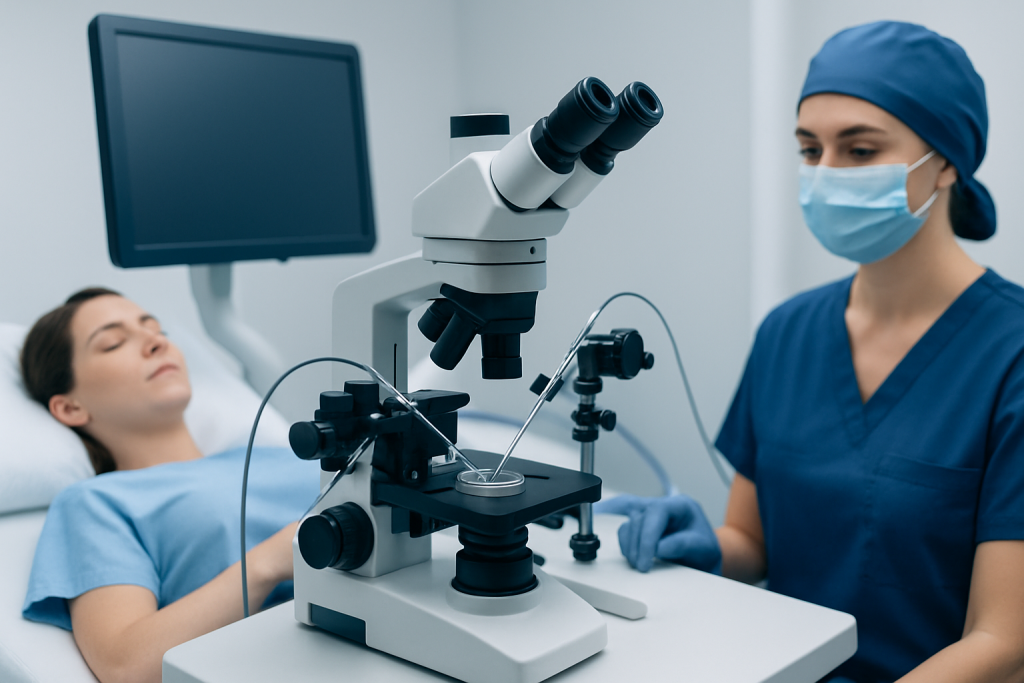
Endometriosis occurs when tissue similar to the lining of the uterus grows outside the uterus. These growths can trigger inflammation, scarring, and adhesions that may change how the ovaries, fallopian tubes, and uterus function together. For some patients, the main issue is pain; for others, the concern is difficulty conceiving; and for many, it is a combination of both.
From a fertility standpoint, specialists look at several possible effects. Fallopian tubes may become blocked or less mobile, ovaries may develop endometriomas, and the inflammatory environment in the pelvis may interfere with egg quality, fertilization, or implantation. Even when anatomy looks fairly preserved, endometriosis can still be associated with reduced fertility, which is why the clinical picture matters more than a single test result.
IVF can bypass some of these obstacles by retrieving eggs directly from the ovaries and creating embryos in the laboratory. However, endometriosis can still shape IVF strategy, especially if surgery has affected ovarian reserve or if endometriomas, pain, or deep lesions need to be considered before stimulation begins.
What Surgeons and Fertility Specialists Check First
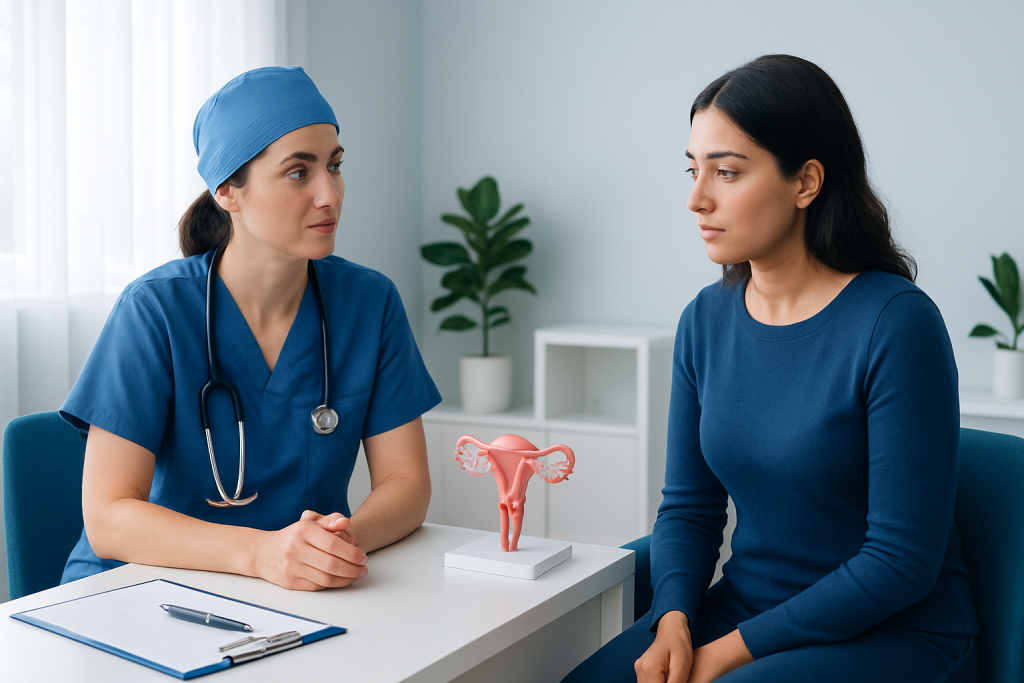
The first assessment is usually practical and stepwise. Specialists want to understand what is already known, what still needs imaging, and whether surgery would help or harm fertility goals. The first checks often include a detailed symptom history, a review of previous surgeries, pelvic examination when appropriate, ultrasound findings, and basic fertility testing.
They also ask about the person’s age, how long pregnancy has been attempted, menstrual pattern, pain severity, previous pregnancies, and whether symptoms worsen around ovulation, menstruation, bowel movements, or intercourse. These details help show whether endometriosis may be mild, moderate, or more deeply infiltrative, even before advanced imaging is done.
- Pelvic ultrasound to look for endometriomas, fibroids, or other structural concerns
- Ovarian reserve tests such as AMH and antral follicle count
- Assessment of fallopian tubes and uterine cavity when indicated
- Review of prior surgery, especially if an ovarian cyst was removed
- Discussion of pain symptoms and daily function
When surgery is being considered, the team also checks whether a procedure is truly necessary before IVF. For example, a large painful endometrioma, suspected adhesions, or concern about distorted anatomy may lead to surgical planning. In other situations, going straight to IVF may preserve ovarian tissue and save time, especially when age or low ovarian reserve makes delay less desirable.
Diagnosis and Staging Before IVF
Endometriosis is often suspected from symptoms and ultrasound, but confirmation and staging may require additional tools. Magnetic resonance imaging can help define deep infiltrating disease in selected cases, and laparoscopy remains an important option when diagnosis is uncertain or when treatment is planned at the same time. Not every patient needs surgery simply to “prove” the diagnosis before IVF.
What matters most is how the disease behaves in the individual patient. A small lesion in one person may be highly symptomatic, while a more visible endometrioma in another may be relatively quiet but still relevant because of its effect on the ovary. Fertility specialists therefore combine imaging, examination, hormone tests, and the full fertility history rather than relying on a staging label alone.
In IVF planning, the team may also evaluate the uterus and other factors unrelated to endometriosis, such as sperm quality, thyroid function, or additional hormone concerns. Fertility care works best when endometriosis is treated as one part of a larger reproductive picture, not the only variable.
Treatment Options and How IVF Planning Changes
The treatment approach depends on the balance between symptom control, fertility goals, ovarian reserve, and the likelihood that surgery will improve outcomes. Some patients benefit from laparoscopic surgery, especially if there is severe pain, bowel or bladder involvement, or a suspicious ovarian cyst that needs removal. Others do better by moving directly to IVF, particularly if surgery could reduce ovarian reserve or cause a delay that is not ideal.
If surgery is planned, fertility specialists and surgeons usually try to coordinate it carefully so that ovarian tissue is protected as much as possible. The team may discuss whether endometriomas should be removed, drained, or observed. This is not a one-size-fits-all decision; removing an ovarian cyst can sometimes ease pain or improve access for egg retrieval, but it may also affect the healthy tissue surrounding the ovary.
IVF itself may be adapted in several ways. The stimulation plan can be selected to suit the ovarian response, the timing of egg retrieval can be coordinated around symptoms, and Frozen Embryo Transfer vs. Fresh Transfer: When Each One Makes More Sense" class="ahp-ilk">embryo transfer may be delayed until the body is ready. In some cases, freezing embryos for later transfer allows the team to separate the egg-retrieval phase from any additional treatment or recovery.
For patients traveling from another country, this coordination matters even more. The clinic may aim to complete testing in advance, provide a precise medication and monitoring schedule, and plan the retrieval or transfer window around the patient’s stay. That kind of structure can make treatment feel far more manageable and less fragmented.
Prevention & Self-care
Endometriosis itself cannot always be prevented, but its impact on fertility care can often be reduced through thoughtful planning. Keeping a record of cycle patterns, pelvic pain, previous surgeries, and past fertility attempts gives the specialist a clearer picture before IVF begins. Even a brief symptom diary can be helpful when appointments are limited or spread across countries.
Self-care is also about protecting energy and avoiding unnecessary delays. Patients are usually encouraged to complete recommended tests on schedule, discuss any pain medication with the fertility team, and clarify what can safely be done before travel. If a clinic has advised against a procedure that may lower ovarian reserve, asking why can help the patient understand the fertility trade-offs more clearly.
- Use one consistent specialist team when possible to avoid mixed messages
- Bring operative notes, ultrasound reports, and prior hormone results to the first visit
- Ask whether surgery should happen before or after fertility treatment
- Plan for recovery time if a procedure is needed before IVF
- Discuss whether embryo or egg freezing is appropriate if treatment must be staged
Healthy habits such as balanced nutrition, gentle movement, adequate sleep, and stress management support overall well-being during treatment. They do not replace medical care, but they can make a demanding process feel more sustainable, especially when appointments, travel, and uncertainty are all part of the experience.
When to See a Doctor
Medical review is a good idea if pelvic pain is recurring, periods are unusually painful, intercourse is painful, bowel or bladder symptoms worsen around the menstrual cycle, or pregnancy has not happened after months of trying. A fertility consultation is also reasonable if endometriosis has already been diagnosed and pregnancy is desired, even if symptoms are mild.
Prompt evaluation is particularly important if there is a known ovarian endometrioma, a history of pelvic surgery, a prior diagnosis of deep endometriosis, or a decline in ovarian reserve. These findings may influence how quickly IVF should begin and whether surgery should be considered first.
Patients who are traveling for care should contact the clinic early if symptoms change before the trip, if test results are pending, or if there is uncertainty about the timing of medication or surgery. Acibadem Health Point’s multidisciplinary specialists and JCI-accredited hospitals diagnose and treat endometriosis for international patients, with coordinated input from fertility and surgical teams when needed.
What to Expect During Follow-up
Follow-up is part of the treatment, not an afterthought. After the first evaluation, the team usually reviews all findings together and decides whether to proceed directly to IVF, treat surgically first, or use a staged approach. That plan may change if a scan reveals a larger endometrioma, if hormone results suggest low ovarian reserve, or if symptoms are more severe than expected.
For international patients, follow-up often involves clear written instructions, timing for repeat scans or blood tests, and a way to stay in contact once they return home. Good fertility care anticipates the next step before the current visit ends, so the patient is not left trying to interpret multiple reports alone.
With endometriosis, the best plan is usually the one that matches the disease pattern, the patient’s symptoms, and the urgency of fertility goals. A careful first check creates that plan and gives IVF a better chance of being both medically appropriate and emotionally manageable.
Frequently asked questions
Can IVF work if endometriosis is present?
Yes, IVF can still be effective for many people with endometriosis. The key is understanding how the condition is affecting the ovaries, tubes, and pelvis so the treatment plan can be tailored appropriately.
Do all patients with endometriosis need surgery before IVF?
No, surgery is not always necessary before IVF. Specialists weigh the possible benefits against the risk of delaying treatment or reducing ovarian reserve, especially if the ovaries are already affected.
Why do doctors check ovarian reserve first?
Ovarian reserve helps estimate how the ovaries may respond to stimulation and whether time is important. This is especially relevant in endometriosis because previous cyst surgery or ovarian involvement can affect the number of follicles available.
Can an endometrioma be left in place during IVF?
Sometimes it can, depending on its size, symptoms, and whether it is likely to interfere with egg retrieval. The decision is individualized because removing an ovarian cyst can help in some cases but may also affect healthy ovarian tissue.
What if pain is the main symptom, not infertility?
Pain still deserves evaluation, even if pregnancy is not being pursued right away. A fertility or gynecology specialist can explain which treatments may help symptoms while preserving future reproductive options.
How should a patient prepare if traveling from another country for IVF evaluation?
It helps to gather previous scans, operative reports, hormone tests, and a list of symptoms before the trip. That allows the clinic to make better use of the visit and decide whether treatment can begin quickly or needs to be staged.
References
- American Society for Reproductive Medicine
- European Society of Human Reproduction and Embryology
- World Health Organization
- Mayo Clinic
- NHS
This article is for general information only and is not a substitute for professional medical advice. Please consult a qualified doctor about your individual situation.
More from the Health Library


Related Specialists

Prof. Dr. A. Taner Usta
Gynecology & Obstetrics
Prof. Dr. Ahmet Tayyar
Gynecology & Obstetrics
Prof. Dr. Ahmet Cem Batukan
Gynecology & Obstetrics
Dr. Sevgi Selen
Gynecology & Obstetrics