Erythema Multiforme: Symptoms, Causes and Treatment

Key Takeaways
- Erythema multiforme commonly causes target-like spots on the skin, sometimes with mouth or eye involvement.
- Infections, especially herpes simplex virus, are frequent triggers; medicines can also play a role.
- Diagnosis is usually based on the appearance of the rash and a review of recent illnesses or medications.
- Treatment focuses on relieving symptoms and addressing the trigger when possible.
- People with fever, widespread rash, eye symptoms, or trouble eating and drinking should seek medical assessment promptly.
Medically reviewed by the Acıbadem clinical team — August 19, 2026
Erythema multiforme is an inflammatory skin reaction that often appears suddenly as distinctive target-shaped spots. It is usually linked to an infection or, less commonly, a medication, and most cases improve with appropriate medical care and symptom relief.
Overview
Erythema multiforme is a short-term inflammatory skin condition that appears when the immune system reacts to a trigger. The rash is often recognizable because many spots develop a “target” or “bull’s-eye” look, with a darker center and rings of color around it.
It most often affects the hands, feet, arms, legs, and face. Some people notice only a few patches and mild discomfort, while others develop sore lesions inside the mouth or on the lips. Because the condition can look dramatic, it may cause understandable concern, but many cases are self-limited and improve as the trigger settles.
For international patients who are deciding whether to travel for care, erythema multiforme is usually evaluated first by a dermatologist or primary care clinician. In many situations, careful history-taking, visual examination, and supportive treatment are enough to guide recovery.
Symptoms
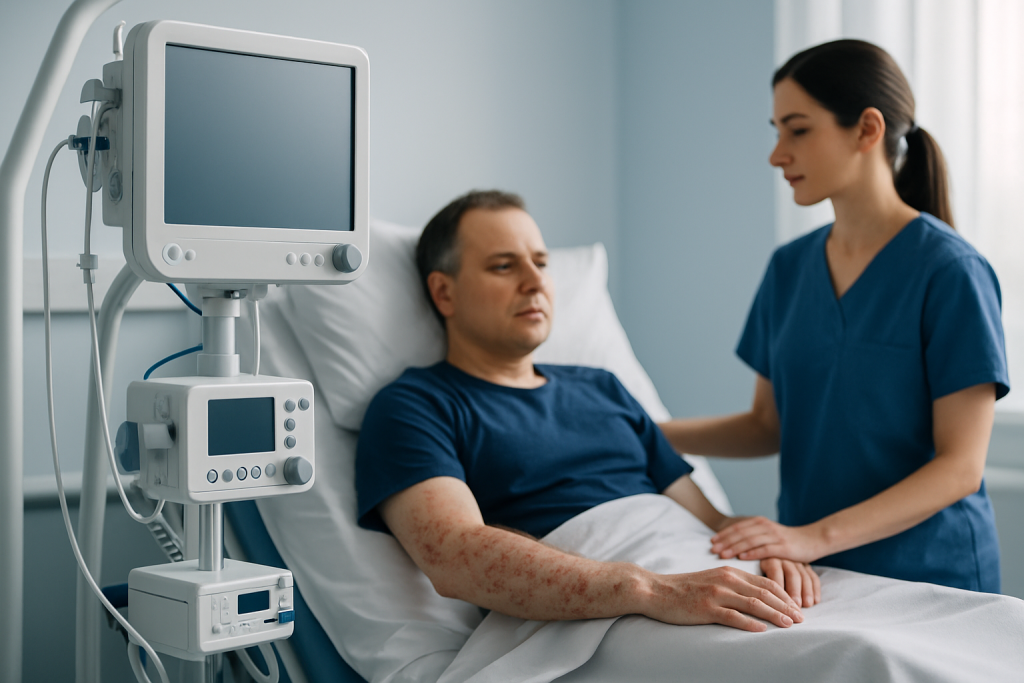
The classic sign is a target lesion: a round or oval spot with three zones of color. These lesions may be red, dusky, or slightly raised, and they can appear in clusters. Some lesions itch, burn, or feel tender, while others are barely noticeable at first.
People with erythema multiforme may also experience mild fever, fatigue, or a general sense of being unwell, especially if an infection has triggered the eruption. When the mouth is involved, eating and drinking can become painful, and the lips may crack or crust.
Less commonly, the eyes or genitals may be affected. Eye redness, irritation, light sensitivity, or discharge deserves medical attention, because eye involvement needs careful evaluation to protect comfort and vision.
- Target-shaped skin spots
- Itching, burning, or tenderness
- Lip or mouth sores
- Fever or malaise in some cases
- Occasional eye or genital irritation
Causes & Risk Factors
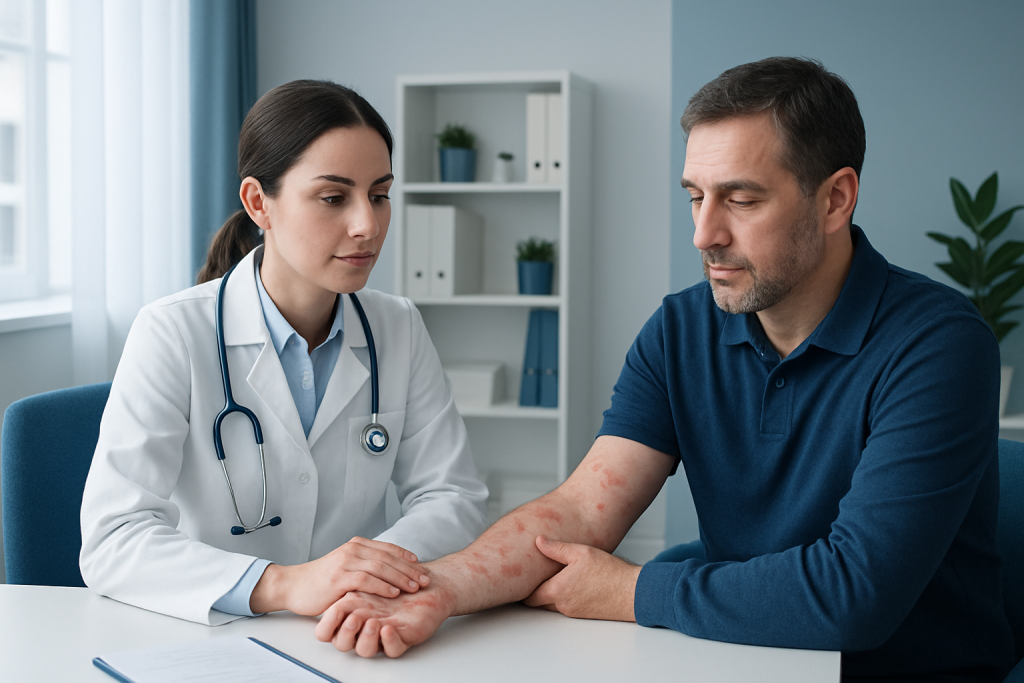
Erythema multiforme is usually a reaction pattern rather than a disease that starts in the skin itself. The body’s immune response becomes activated by a trigger, and that response leads to the visible rash.
Infections are the most common triggers, particularly herpes simplex virus. Other infections, including some respiratory infections, can also be associated with the condition. Medicines may trigger erythema multiforme in some people, although this is less common than infection-related cases.
Certain factors can make a person more likely to experience it, such as a history of herpes outbreaks or a prior episode of erythema multiforme. Recurrence can happen in some individuals, so identifying the trigger is an important part of long-term care.
- Herpes simplex virus infection
- Other infections, including some viral or bacterial illnesses
- Medication exposure in susceptible individuals
- Previous episodes of erythema multiforme
Diagnosis
Diagnosis is often made by looking at the rash and asking about recent infections, cold sores, new medicines, or other exposures. The pattern and distribution of the lesions are helpful clues, and a clinician may ask when the spots first appeared and whether they have changed over time.
When the presentation is not typical, a skin biopsy may be considered to help distinguish erythema multiforme from other rashes. Blood tests are not always required, but they may be used if the clinician wants to look for an underlying infection or another explanation for the symptoms.
Because several skin conditions can resemble erythema multiforme, a careful assessment matters. This is especially true if the mouth, eyes, or a large area of skin is involved, or if the person recently started a new medicine.
Treatment Options
Treatment depends on how extensive the rash is and whether the person has mild skin spots or more troublesome mouth and eye symptoms. In many cases, the main goals are to reduce discomfort, support hydration and nutrition, and manage the trigger.
If a medication is suspected, the prescribing clinician usually reviews whether it should be stopped or replaced. If herpes simplex is the trigger and outbreaks recur, a doctor may consider preventive treatment to reduce future episodes, but the plan should always be individualized.
Supportive care may include gentle skin care, pain relief, and fluids. Mouth soreness can make swallowing difficult, so soft foods and cool drinks are often easier to tolerate. People with eye involvement, extensive skin pain, or signs of dehydration may need closer follow-up or specialist care.
- Address the trigger when possible
- Use soothing, supportive care for skin and mouth symptoms
- Maintain hydration and nutrition
- Seek eye or specialist assessment if mucosal areas are involved
Prevention & Self-care
Not every case can be prevented, but some people can lower the chance of recurrence by understanding their personal trigger. Keeping a note of recent infections, new medicines, and timing of past flare-ups can help a clinician spot patterns that are easy to miss.
At home, gentle skin care is usually best. Harsh soaps, hot water, and scratching can make irritation worse. If the lips or mouth are sore, frequent sips of water and soft foods may help the person stay comfortable and avoid dehydration.
For patients who are traveling for treatment or follow-up, it is useful to carry a list of current medications, known allergies, and any previous skin reactions. That simple record can make consultations smoother across borders and help the next clinician make faster, safer decisions.
- Track recent infections and medicine changes
- Use mild cleansers and lukewarm water
- Avoid picking or rubbing the rash
- Choose soft, cool foods if the mouth is sore
- Keep a clear medication and allergy list when traveling
When to See a Doctor
Medical assessment is sensible whenever a new target-like rash appears, especially if the cause is unclear. Because several conditions can look similar, an exam helps confirm the diagnosis and rule out more serious skin reactions.
Prompt attention is important if the rash spreads quickly, the person has fever, the skin becomes very painful, or there are sores in the mouth that limit drinking. Eye redness, light sensitivity, trouble seeing, or eyelid swelling should also be checked without delay.
Emergency care may be needed if there is trouble breathing, swelling of the face or throat, severe weakness, or signs of dehydration. For international patients, it is reasonable to seek a clinic that can coordinate dermatology, eye care, and follow-up planning in one setting; Acibadem Health Point’s multidisciplinary specialists and JCI-accredited hospitals can diagnose and treat erythema multiforme for international patients.
Frequently asked questions
Is erythema multiforme contagious?
No, erythema multiforme itself is not contagious. The trigger behind it, such as a viral infection, may be contagious in some cases, but the skin reaction is the body’s immune response rather than an infection spread from person to person.
How is erythema multiforme different from hives or Stevens-Johnson syndrome?
Erythema multiforme usually has distinct target lesions, while hives tend to be raised, itchy welts that move or fade quickly. Stevens-Johnson syndrome is a separate, more serious condition with widespread skin pain and mucosal involvement, so any rapidly worsening rash should be assessed by a doctor.
Can erythema multiforme come back?
Yes, it can recur in some people, especially when the same trigger returns. Repeated herpes simplex outbreaks are a common reason for recurrence, which is why identifying triggers matters.
Do all cases need medication?
Not always. Some mild cases improve with supportive care alone, while more troublesome cases may need treatment aimed at the trigger or relief of pain and mouth soreness.
Should someone stop a new medicine right away if a rash appears?
They should contact a doctor promptly for advice rather than making changes without guidance. If a medicine is suspected as the trigger, the clinician will decide whether it should be stopped or replaced safely.
Can erythema multiforme affect the eyes?
Yes, sometimes the eyes are involved, and that needs careful attention. Redness, pain, light sensitivity, or blurred vision should be evaluated soon to protect comfort and eye health.
References
- American Academy of Dermatology
- DermNet
- Mayo Clinic
- National Health Service
- National Organization for Rare Disorders
This article is for general information only and is not a substitute for professional medical advice. Please consult a qualified doctor about your individual situation.
Explore treatments in Turkey — costs, top hospitals & a free quote
JCI-accredited · board-certified surgeons · reply within 24h
Add us as a Preferred Source to see more of our trusted health content across Google Search, AI Overviews and Discover.