Ingrown Hair Cyst: Symptoms, Causes and Treatment

Key Takeaways
- Ingrown hair cysts often start after a hair grows into or beneath the skin.
- They may look like a small bump, inflamed nodule, or pimple-like lump, sometimes with itching or tenderness.
- Shaving, waxing, friction, and curly or coarse hair can increase the chance of developing them.
- Simple care such as warm compresses and avoiding squeezing may help mild cases settle.
- A doctor should assess lumps that are enlarging, repeatedly infected, very painful, or not improving.
Medically reviewed by the Acıbadem clinical team — August 19, 2026
An ingrown hair cyst is a tender or painless skin lump that can form when a hair curls back into the skin or becomes trapped in the hair follicle. Most cases are minor, but persistent, painful, or recurrent lumps should be evaluated to confirm the diagnosis and rule out other skin conditions.
Overview
An ingrown hair cyst is not always a true cyst in the strict medical sense, but many people use the term to describe a raised lump that develops when a hair grows back into the skin or becomes trapped under the surface. The body may respond with irritation, swelling, and sometimes a small pocket of fluid or pus, creating a firm or tender bump.
These lumps often appear where hair is regularly removed or where clothing rubs the skin, such as the beard area, neck, underarms, legs, bikini line, or buttocks. In many cases the problem is minor and temporary, yet repeated ingrown hairs can become uncomfortable and may leave dark marks or scarring if the skin is irritated over and over again.
For people traveling for care, an ingrown hair cyst is usually straightforward to evaluate in person. A dermatologist can examine the skin, explain whether the lump is truly caused by an ingrown hair or by another condition, and suggest a plan that fits the person’s skin type, shaving habits, and follow-up needs after returning home.
Symptoms
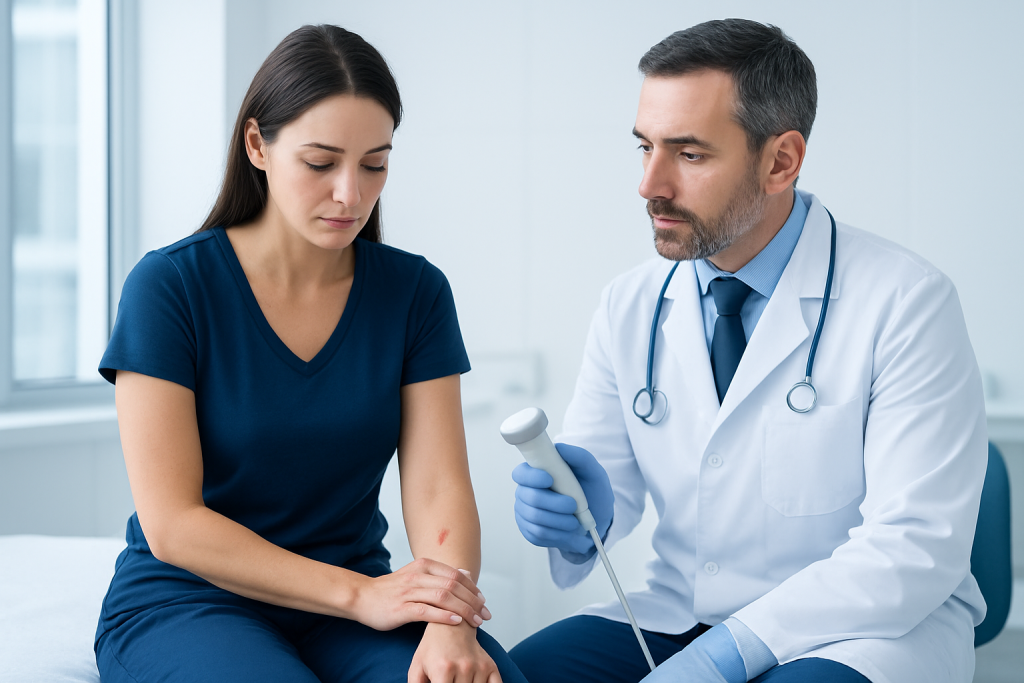
The appearance can vary from a small, skin-colored bump to a red, swollen nodule that feels sore to the touch. Some lumps have a visible hair trapped in the center, while others look like a pimple, a boil, or a deeper bump under the skin.
Common symptoms may include:
- Localized redness or swelling
- Itching, tenderness, or mild pain
- A firm bump beneath the skin
- Occasionally a white or yellow tip if the area becomes inflamed
- Darkening of the skin after healing
If the area becomes infected, the lump may grow more painful, feel warm, or begin draining fluid. Recurrent bumps in the same area can suggest ongoing irritation from hair removal, friction, or a condition such as folliculitis, which a clinician can help distinguish from an ingrown hair cyst.
Causes & Risk Factors

An ingrown hair forms when a shaved, waxed, plucked, or naturally curly hair bends back and grows into the skin instead of out through the follicle opening. The skin sees the hair as a foreign object and reacts with inflammation. That reaction can create a bump that resembles a cyst or infected pimple.
Certain factors make this more likely. Coarse or curly hair, frequent shaving, close shaving, dry skin, tight clothing, repeated friction, and clogged follicles all increase the chance that a hair will become trapped. People with a history of acne-like bumps or folliculitis may also be more prone to these lesions.
There is no single cause in every case. Some ingrown hairs develop after one close shave, while others reflect an ongoing pattern of irritation. Understanding the trigger matters because treatment is usually more effective when the skin-care routine or hair-removal method is adjusted as well.
Diagnosis
Diagnosis is usually based on a skin examination and the history of how the lump appeared. A clinician will look at the shape, location, color, tenderness, and whether there is a visible trapped hair, drainage, or surrounding inflammation.
In many situations no tests are needed. If the bump is unusual, deep, repeatedly returning, or slow to heal, a doctor may consider other possibilities such as an epidermoid cyst, inflamed follicle, abscess, or another benign skin lesion. This step is especially important when a person is seeking care away from home and wants a clear diagnosis before travel ends.
When needed, the clinician may gently examine the area more closely and decide whether the lesion should be watched, drained, or removed. The aim is not only to identify the lump, but also to prevent repeat irritation and future scarring.
Treatment Options
Many mild ingrown hair cysts improve with conservative care. Warm compresses can soothe discomfort and may help the hair or trapped material come closer to the surface. Keeping the area clean, avoiding squeezing, and pausing shaving or waxing over the spot can also help the skin settle.
If the bump is inflamed or infected, a clinician may recommend additional treatment. Depending on the situation, this can include topical medication, an antiseptic approach, or a small procedure to release the trapped hair or drain a collection of fluid. More persistent or recurrent lesions may need removal if a cyst wall has formed or if the same area keeps flaring.
It is important not to pick at the lump with needles, tweezers, or fingernails at home, since this can push bacteria deeper into the skin and increase the risk of scarring. A doctor can decide whether the lesion is suitable for simple observation or whether it needs a procedure performed under clean, controlled conditions.
Prevention & Self-care
Prevention focuses on reducing the chance that hairs will bend back into the skin. People who shave may benefit from shaving in the direction of hair growth, using a clean sharp razor, and avoiding very close shaves. Softening the skin and hair with warm water before shaving can also reduce irritation.
Other helpful habits include:
- Exfoliating gently if the skin tolerates it
- Using non-irritating moisturizers to reduce dryness
- Avoiding tight clothing on areas prone to bumps
- Taking breaks from shaving or waxing when the skin is inflamed
- Choosing hair-removal methods that suit the skin and hair type
For people who travel for medical treatment, self-care advice should be practical enough to continue at home. A dermatologist may suggest a simple routine that fits the climate, available products, and follow-up plan in the person’s own country, making it easier to keep the skin calm after the trip.
When to See a Doctor
Medical evaluation is sensible when a lump is very painful, keeps enlarging, or does not improve after a few days of gentle care. A doctor should also assess the area if there is spreading redness, significant warmth, fever, drainage with a strong odor, or repeated infection.
It is wise to seek care if the bump appears in a sensitive area, recurs often, or leaves a scar each time it heals. A person should not assume every skin lump is an ingrown hair, especially if it is firm, fixed, or changing in an unusual way.
For international patients, a one-time consultation can be especially helpful when the goal is to leave with a clear diagnosis and a plan. In centers such as Acibadem Health Point, multidisciplinary specialists and JCI-accredited hospitals can diagnose and treat this condition for international patients in a coordinated way.
Living With Recurrent Ingrown Hairs
When ingrown hairs happen more than once, the focus shifts from treating a single bump to understanding the pattern behind it. Hair texture, grooming method, skin sensitivity, and repeated friction all matter, so a personalized approach is usually more effective than trying random remedies.
People who are prone to these bumps often do better with small but consistent changes rather than aggressive skin treatments. A clinician can help choose the least irritating hair-removal strategy, suggest when to pause grooming, and explain how to watch for early signs of inflammation before a bump becomes more uncomfortable.
If discoloration or minor scars remain after the bump heals, these usually fade gradually, although this can take time. A dermatologist can advise whether any additional treatment is appropriate and when it is better to let the skin recover naturally.
Frequently asked questions
Is an ingrown hair cyst the same as a cyst?
Not always. Many people use the term for any stubborn bump caused by an ingrown hair, but some lesions are actually inflamed follicles or small abscesses rather than a true cyst. A doctor can tell the difference by examining the skin.
Can an ingrown hair cyst go away on its own?
Yes, mild cases often settle without medical treatment if the irritation is reduced. Warm compresses, avoiding squeezing, and pausing shaving over the area may help. If the lump keeps returning or becomes painful, it should be checked.
Should the bump be popped or squeezed?
No, squeezing can worsen inflammation and may push bacteria deeper into the skin. It can also lead to scarring or a larger infection. Gentle care is safer until a clinician advises otherwise.
Why do ingrown hairs keep happening in the same place?
Repeated ingrown hairs often mean the hair-removal method, friction, or skin condition in that area is continuing to trigger the problem. Curly hair and close shaving are common contributors. A dermatologist can help adjust the routine to reduce repeat episodes.
How does a doctor treat a painful ingrown hair cyst?
Treatment depends on whether the area is inflamed, infected, or forming a deeper cyst-like lump. A doctor may recommend topical care, release the trapped hair, drain fluid if needed, or remove a persistent lesion. The goal is to ease symptoms and prevent recurrence.
When should medical care be urgent?
Urgent assessment is sensible if the area is rapidly spreading, very painful, associated with fever, or draining a large amount of pus. These signs can point to a more significant infection rather than a simple ingrown hair. Prompt evaluation helps ensure the right treatment.
References
This article is for general information only and is not a substitute for professional medical advice. Please consult a qualified doctor about your individual situation.
Hair transplant in Turkey — costs, graft counts & a free assessment
JCI-accredited · board-certified surgeons · reply within 24h
Add us as a Preferred Source to see more of our trusted health content across Google Search, AI Overviews and Discover.