Spine Surgery for Back Pain: When Imaging Does and Does Not Match the Symptoms

Key Takeaways
- Imaging findings do not always explain how much pain a person feels.
- Back pain can come from muscles, joints, discs, nerves, or more than one source at the same time.
- Surgery is usually considered when symptoms, exam findings, and imaging point to the same problem.
- Most back pain improves without surgery, especially when there is no nerve damage or instability.
- A careful second opinion can help when test results and daily symptoms do not seem to fit.
Back pain can be confusing when an MRI or X-ray looks severe but symptoms are mild, or when pain is significant despite only small imaging changes. This article explains why that mismatch happens and how spine specialists decide when surgery may help.
Overview
Back pain is one of the few health problems where an image can look dramatic while the person feels only occasional discomfort, or where the pain is intense even though the scan seems unimpressive. This mismatch is common, and it is one reason spine surgery decisions require more than a single MRI or X-ray report.
Spine specialists look at the whole picture: the type of pain, how long it has been present, whether there is numbness or weakness, how walking, sitting, sleep, and work are affected, and whether the image findings actually match the location of symptoms. A disc bulge or arthritis on imaging does not automatically mean surgery is needed, because some of these changes are also seen in people without pain.
For international patients, this can be especially important when care is being planned across countries. A clear explanation of the diagnosis, the reason a treatment is recommended, and the expected recovery path helps people decide whether to continue with conservative care, seek another opinion, or move forward with surgery.
Symptoms
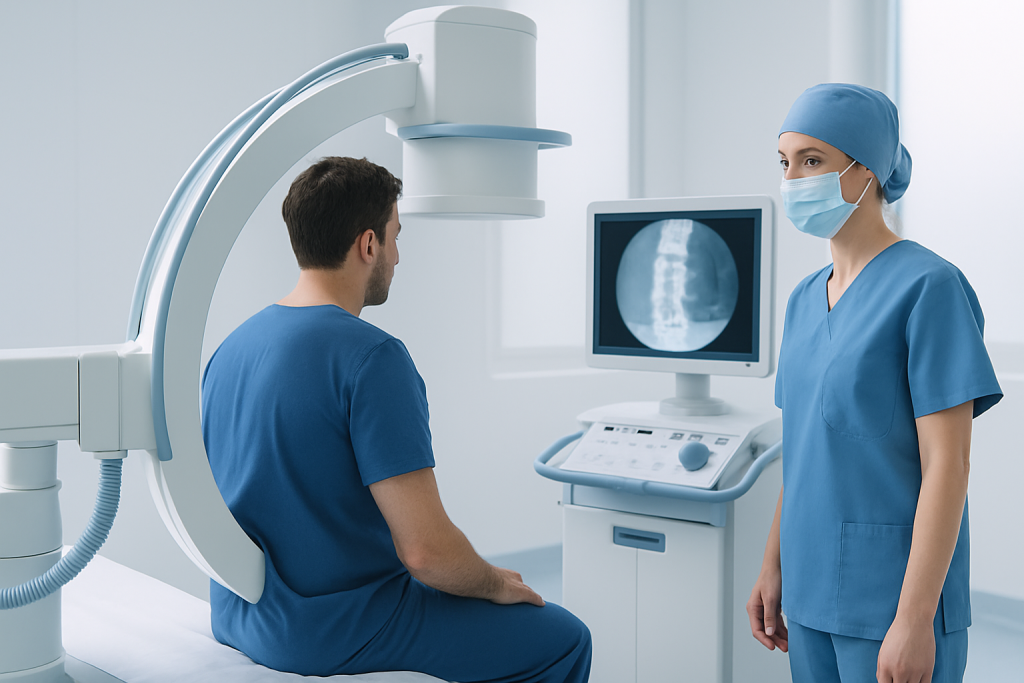
Back pain does not all behave the same way. Some people feel a dull ache that worsens after sitting or lifting, while others notice sharp pain that shoots into the leg, tingling in the foot, stiffness in the morning, or pain that wakes them at night. These details matter because they help identify whether the pain is coming from the muscles, discs, joints, nerves, or a combination of sources.
When imaging and symptoms do not match, doctors often ask where the pain travels, what makes it better or worse, and whether there are signs of nerve involvement. For example, a person may have a lumbar disc herniation on MRI but feel pain mainly in the low back without leg symptoms, or they may have severe leg pain from nerve irritation while the scan shows only a modest disc change.
Symptoms that usually deserve careful specialist assessment include:
- Persistent pain that does not improve with rest and guided conservative care
- Pain radiating below the knee or into an arm, depending on the spinal level involved
- Numbness, tingling, or weakness
- Difficulty standing upright, walking, or climbing stairs
- Changes in balance or coordination
The pattern of symptoms is often more informative than the appearance of the spine alone.
Causes & Risk Factors

Several common conditions can create back pain, and not all of them show a perfect match on imaging. Degenerative disc changes, facet joint arthritis, spinal stenosis, disc herniation, muscle strain, ligament injury, vertebral compression fractures, and scoliosis can each contribute to symptoms in different ways. In some people, more than one issue is present at the same time, which can blur the picture further.
Imaging often detects changes that accumulate with age. A disc may look dehydrated, a joint may show arthritis, or a vertebra may have a small alignment change, yet those findings may be incidental rather than the true source of pain. On the other hand, some painful problems are subtle on imaging, especially when the main issue is inflammation, muscle spasm, posture-related strain, or nerve sensitivity.
Risk factors that can increase the chance of back pain or make recovery slower include prolonged sitting, heavy physical work, repetitive lifting, poor lifting mechanics, smoking, excess body weight, reduced core strength, and previous spine injury. Age also matters, but aging itself does not mean surgery is needed; it only means structural changes become more common on scans.
Understanding the cause is the first step in avoiding unnecessary procedures. A good treatment plan starts by asking whether the symptoms, physical findings, and imaging point to the same level and same type of problem.
Diagnosis
Spine diagnosis begins with a detailed history and physical examination. Doctors usually ask when the pain started, whether it followed an injury, how it changes during the day, and whether it stays in one area or travels. They also test strength, sensation, reflexes, flexibility, and walking pattern to look for signs of nerve compression or spinal instability.
Imaging is then used as one piece of the evaluation. X-rays can show alignment, fractures, or arthritis. MRI is often the most helpful test for discs, nerves, and soft tissues. CT may be useful for bone detail, while other studies are considered in selected cases. The key question is not simply, “What does the scan show?” but “Does the scan explain the symptoms and the exam?”
Doctors may recommend imaging when pain lasts longer than expected, when nerve symptoms are present, or when surgery is being considered. But imaging alone does not prove that pain needs an operation. Many healthy adults have disc bulges, degenerative changes, or mild stenosis on MRI without significant symptoms, which is why test results must be interpreted in context.
In some cases, additional evaluation may help rule out other causes of pain, such as hip disease, sacroiliac joint problems, inflammatory conditions, or referred pain from elsewhere in the body. The goal is to avoid treating a scan instead of treating the person.
Treatment Options
Most back pain is first treated without surgery. Conservative care may include activity modification, guided physical therapy, posture training, targeted exercises, pain-relief medicines when appropriate, and treatment of contributing factors such as poor ergonomics or weak core support. Many patients improve as inflammation settles and movement patterns are corrected.
Surgery becomes more relevant when symptoms are clearly linked to a structural problem that conservative treatment has not improved, or when there is progressive nerve damage, spinal instability, or significant functional limitation. Common procedures may include decompression, discectomy, laminectomy, fusion, or other techniques depending on the diagnosis. The operation is chosen for the specific problem, not for back pain in general.
When imaging and symptoms do not match, a surgeon may recommend against surgery even if the scan looks abnormal. That can feel surprising, but it often reflects a careful judgment that surgery would not reliably help. In other situations, a modest-looking MRI can still support surgery if the person has a classic nerve-pain pattern and exam findings that point to the same spinal level.
Patients traveling for care often benefit from asking several practical questions before making a decision:
- What exact problem is being treated?
- Why is surgery recommended now rather than continued non-surgical care?
- How well do my symptoms match the imaging findings?
- What improvement is realistic, and what symptoms may remain?
- What will recovery and follow-up look like after I return home?
Prevention & Self-care
Not every back problem can be prevented, but many symptoms can be reduced with steady habits. Regular movement, balanced strengthening, and attention to posture often help the spine tolerate daily life better. People who sit for long periods may benefit from brief standing or walking breaks, while those who lift frequently should learn safer lifting mechanics.
Self-care is also about pacing. Overdoing activity on a painful day can trigger more irritation, yet complete rest for long periods may weaken the muscles that support the spine. A physiotherapist or spine team can help set a middle ground that keeps the body active without repeatedly flaring symptoms.
Other helpful steps include maintaining a healthy body weight, stopping smoking, using supportive footwear if needed, and paying attention to sleep position and mattress comfort. If pain is linked to stress or sleep disruption, addressing those factors can improve the overall picture. Small changes often matter more than one dramatic intervention.
For people being evaluated abroad, keeping copies of imaging, reports, medication lists, and past therapy notes can make follow-up smoother. It is easier for a second team to judge whether findings match symptoms when the full history is available.
When to See a Doctor
A medical assessment is important when back pain lasts beyond a few weeks, keeps returning, or starts limiting work, travel, sleep, or basic movement. It is also wise to seek help if pain is paired with numbness, weakness, or a feeling that one leg is not working normally.
More urgent evaluation is needed if there is sudden loss of bladder or bowel control, rapidly worsening weakness, fever with back pain, pain after a significant injury, or severe unrelenting pain that is out of character. These symptoms do not always mean a serious condition, but they should be checked promptly.
Anyone considering spine surgery should ask for a clear explanation of why the operation is expected to help and how closely the symptoms match the imaging. If the picture is unclear, a second opinion is reasonable and often useful. Acibadem Health Point’s multidisciplinary specialists and JCI-accredited hospitals diagnose and treat spine conditions for international patients with this kind of careful, individualized approach.
The most useful spine decision is usually the one that fits the whole person, not just the scan. When symptoms and imaging do not match, thoughtful evaluation can prevent unnecessary surgery and direct attention to the treatment most likely to help.
Frequently asked questions
Why can an MRI show more problems than the patient feels?
MRI can detect age-related changes, such as disc wear or arthritis, that may not be causing symptoms. Some people have noticeable abnormalities on imaging but little or no pain. Doctors interpret MRI findings together with the physical exam and symptom pattern before recommending treatment.
Can severe back pain happen even if the scan looks mild?
Yes. Pain can come from irritated nerves, muscle spasm, inflammation, or structures that do not always appear dramatic on imaging. The level of pain a person feels does not always match the amount of change seen on a scan.
When is spine surgery more likely to help?
Surgery is more likely to help when the symptoms, examination, and imaging all point to the same structural problem. It is usually considered after non-surgical treatment has not worked, or sooner if there is nerve damage, instability, or another clear surgical reason.
Is it normal to get a second opinion for back pain surgery?
Yes, and it can be very helpful when the imaging report and symptoms do not seem to fit. A second specialist may review the images, re-examine the patient, and explain whether surgery is truly the best next step.
Do all disc bulges need treatment?
No. Many disc bulges are incidental findings and may never cause symptoms. Treatment depends on whether the bulge is linked to pain, nerve irritation, or another functional problem.
What should an international patient bring to a spine consultation?
It helps to bring imaging discs or files, written radiology reports, previous surgery notes, medication lists, and any physical therapy records. A detailed history makes it easier for the specialist to compare symptoms with the imaging and plan follow-up care.
References
- American Academy of Orthopaedic Surgeons
- North American Spine Society
- National Institute of Neurological Disorders and Stroke
- Mayo Clinic
- World Health Organization
This article is for general information only and is not a substitute for professional medical advice. Please consult a qualified doctor about your individual situation.