EEG Test: Purpose, Procedure and Results

Key Takeaways
- An EEG test measures electrical signals from the brain through small sensors placed on the scalp.
- It is commonly used to help evaluate seizures, episodes of altered awareness, sleep problems, and some brain disorders.
- The test is usually noninvasive and does not use radiation, but the experience may vary depending on whether it is a routine, sleep-deprived, or prolonged EEG.
- Results are interpreted alongside symptoms, medical history, and sometimes imaging or blood tests.
- Most people can return to normal activities soon after the test, with any special instructions based on the type of EEG performed.
Medically reviewed by the Acıbadem clinical team — August 19, 2026
An EEG test records the brain’s electrical activity and helps doctors evaluate symptoms such as seizures, fainting spells, confusion, and certain sleep-related concerns. It is a noninvasive, painless study that can provide useful clues about how the brain is functioning.
Overview
An EEG test, short for electroencephalogram, is a study that records the brain’s electrical activity. Special sensors are placed on the scalp to pick up tiny signals from nerve cells, creating a pattern that a neurologist can review.
For many patients, the test is part of a wider search for answers rather than a stand-alone diagnosis. It may be requested when a person has seizures, episodes of confusion, unusual movements, fainting that is hard to explain, or sleep concerns that do not fit a simple pattern.
Because the test is noninvasive and does not involve radiation, it is generally considered safe for adults and children. In international-patient care, it can be especially helpful because it gives doctors a shared, objective record that can guide next steps even when symptoms happened far from the treating team.
Symptoms and Reasons an EEG May Be Ordered
An EEG is not performed for every headache or dizzy spell. It is more often used when symptoms suggest that brain activity may be changing in a way that deserves closer attention. A doctor may recommend it after episodes that look like seizures, but it can also be useful for other neurological questions.
Common reasons include unexplained loss of consciousness, spells of staring, sudden muscle jerks, sleepwalking concerns, suspected epilepsy, and some cases of memory or confusion problems. In hospital settings, it may also help assess how a patient is recovering after a serious illness or event affecting the brain.
- Seizure or epilepsy evaluation
- Unexplained fainting or blackout episodes
- Confusion, reduced alertness, or episodes of altered awareness
- Sleep-related events that need neurological assessment
- Monitoring brain activity in selected hospitalized patients
The key point is that an EEG supports clinical decision-making; it does not replace a careful history or physical examination. A neurologist usually uses the symptom pattern to decide whether the test is likely to be helpful.
Causes and Risk Factors
An EEG test does not diagnose a single disease by itself. Instead, it helps identify patterns that may be linked to conditions affecting brain function, such as epilepsy, structural brain problems, prior head injury, infection, metabolic disturbances, or sleep disorders. In some cases, the EEG is normal even when symptoms are real and important.
Doctors may be more likely to suggest the test when there is a family history of seizures, a previous brain injury, a history of stroke, developmental or neurological conditions, or episodes that happen during sleep. Certain medicines and temporary illnesses can also influence brain-wave patterns, which is one reason the full medical picture matters.
For patients traveling for care, it helps to bring a clear timeline of symptoms, previous test reports, medication lists, and any home videos of episodes if available. These details can make the interpretation more accurate, especially when the treating team is meeting the patient for the first time.
Diagnosis: What the Test Shows and How It Is Performed
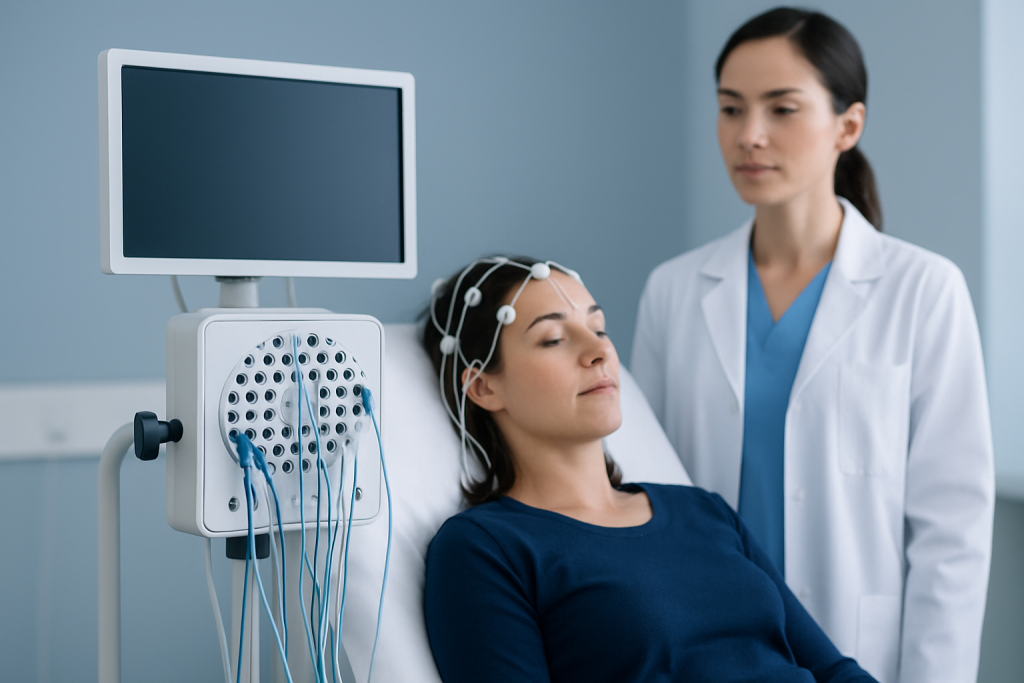
During the test, a technician places small electrodes on the scalp with a conductive paste or cap. The sensors do not send electricity into the brain; they only detect its natural electrical activity. The patient is usually asked to lie still, relax, and sometimes perform simple tasks such as deep breathing, looking at flashing lights, or briefly sleeping.
There are several forms of EEG. A routine EEG is shorter and often done in an outpatient setting. A sleep-deprived EEG asks the patient to sleep less than usual beforehand, which can make certain abnormalities easier to detect. A prolonged or ambulatory EEG records for a longer time and may be used when symptoms are infrequent or when doctors need to capture an event.
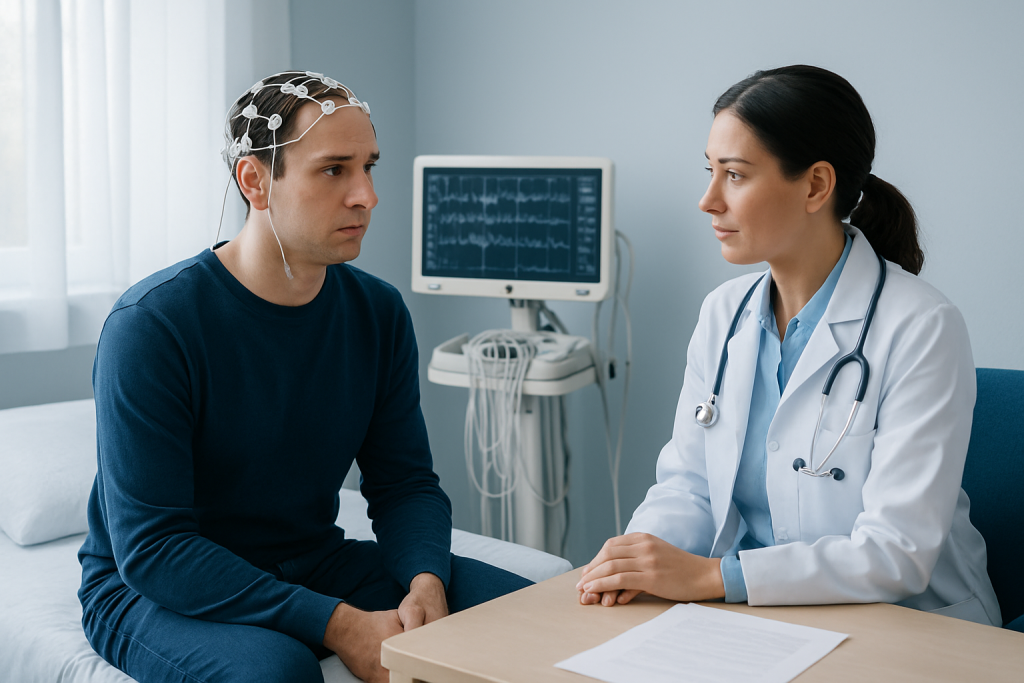
Results are read by a specialist who looks for patterns that may suggest seizure tendency, slowed brain activity, or other electrical changes. Interpretation is nuanced: an abnormal result does not automatically mean epilepsy, and a normal result does not always rule it out. This is why the EEG is considered one piece of a broader diagnostic puzzle.
Treatment Options After an EEG
An EEG itself is not a treatment, but it often shapes the treatment plan. If the findings support epilepsy or another seizure disorder, a neurologist may discuss antiseizure medication, further testing, safety planning, or in selected cases referral for advanced epilepsy evaluation. If the tracing suggests another cause, treatment may focus on the underlying issue rather than the brain waves alone.
Sometimes the next step is another study, such as brain imaging, blood tests, or a longer video EEG to link electrical activity with visible symptoms. If sleep disturbance is part of the picture, a sleep specialist may also be involved. The aim is always to match the plan to the person’s actual symptoms and daily life.
Patients who travel internationally often appreciate a clear written summary, because follow-up may continue with a home-country neurologist. A well-documented EEG report can make handover easier and reduce delays in ongoing care.
Prevention and Self-care
There is no way to “prevent” the need for an EEG when neurological symptoms appear, but some practical steps can help patients prepare for the test and support a smoother experience. Following the instructions from the care team is the most important part, especially if sleep restriction, hair washing guidance, or temporary medication changes are requested.
It can also help to keep a symptom diary before the appointment. Notes about when episodes happen, how long they last, what the person was doing beforehand, and how recovery feels afterward may reveal patterns that are not obvious during a short consultation.
- Wash hair before the appointment if advised, and avoid oils, gels, or sprays unless the clinic says otherwise.
- Bring a medication list and any prior brain scans or test results.
- If asked to sleep less beforehand, arrange extra rest after the procedure.
- Share any known triggers, such as stress, missed sleep, or flashing lights.
After the test, most people can return to usual routines unless sedation was used or the doctor gives different instructions. If the EEG was part of a broader neurological workup, maintaining follow-up is an important form of self-care because results are most useful when combined with ongoing observation.
When to See a Doctor
A doctor’s advice is appropriate whenever episodes of loss of awareness, repeated staring spells, sudden jerking movements, or unexplained blackouts occur. It is also sensible to seek evaluation if someone has memory lapses, confusion, or sleep behaviors that raise concern for a neurological cause.
Urgent medical attention is warranted if seizures are prolonged, repeated without recovery, occur after a serious head injury, or are accompanied by breathing problems, injury, or a first-time episode in a person with no known explanation. Any new neurological symptom deserves a careful assessment, even if it resolves quickly.
For patients coordinating care across borders, it is reasonable to arrange a neurology consultation before travel when possible, especially if symptoms are recurring. Acibadem Health Point’s multidisciplinary specialists and JCI-accredited hospitals can diagnose and treat conditions evaluated by EEG for international patients, with plans that can be shared for continued follow-up at home.
Frequently asked questions
What does an EEG test measure?
An EEG test measures the brain’s electrical activity using sensors placed on the scalp. The recording helps doctors see whether the brain’s signals look normal, slowed, or show patterns that may be linked to seizures or other conditions.
Is an EEG painful?
An EEG is usually painless. The sensors rest on the scalp and do not send electricity into the brain, although some people find the setup slightly uncomfortable or unusual at first.
How long does an EEG take?
A routine EEG often takes less than an hour, but the exact time depends on the type of study. Longer recordings, such as ambulatory or video EEG, may continue for many hours or longer if the doctor needs to capture a symptom episode.
Can a normal EEG rule out epilepsy?
Not always. Some people with epilepsy have a normal EEG between seizures, so doctors interpret the result together with the history, exam, and sometimes imaging or longer monitoring.
Do patients need to stop medicines before an EEG?
Not necessarily. Some medicines can affect the results, so patients should only change or pause medication if the doctor specifically advises it.
What should a patient do after the test?
Most people can go back to normal activities unless they were told otherwise. If the EEG involved sleep deprivation or sedation, resting afterward and following the clinic’s instructions is a good idea.
References
- National Institute of Neurological Disorders and Stroke
- Mayo Clinic
- Epilepsy Foundation
- American Clinical Neurophysiology Society
- MedlinePlus
This article is for general information only and is not a substitute for professional medical advice. Please consult a qualified doctor about your individual situation.
Hair transplant in Turkey — costs, graft counts & a free assessment
JCI-accredited · board-certified surgeons · reply within 24h
Add us as a Preferred Source to see more of our trusted health content across Google Search, AI Overviews and Discover.