Dilated

Key Takeaways
- Dilated pupils may be a normal response to light, emotion, or medications, but persistent or sudden changes deserve attention.
- If one pupil is larger than the other, or dilation comes with pain, blurred vision, headache, or weakness, a doctor should assess it promptly.
- Diagnosis focuses on eye examination, medication review, and sometimes neurological assessment or imaging.
- Treatment depends on the cause and may range from simple monitoring to eye drops, medication changes, or urgent care.
- People traveling for care can benefit from bringing a medication list, prior eye records, and arranging follow-up before returning home.
Dilated pupils, also called mydriasis, can happen for harmless reasons such as dim light, stress, or certain medications, but they may also point to an eye or neurological problem. Understanding the pattern, associated symptoms, and timing helps guide whether observation is enough or medical evaluation is needed.
Overview
Dilated pupils are pupils that look larger than usual. The medical term for this is mydriasis. In everyday life, a little change in pupil size is common because the pupils naturally widen in low light and shrink in bright light.
In many cases, dilation is temporary and expected. It may happen after an eye exam, during an emotional stress response, or after using certain medicines. At other times, enlarged pupils may be a clue that the eye, nerves, or brain need closer evaluation.
For international patients, the practical question is not only “What does it mean?” but also “Does this need care now, or can it wait until I get home?” The answer depends on whether the dilation is one-sided or both-sided, how suddenly it started, and whether any other symptoms are present.
Symptoms
The most obvious sign is a pupil that appears larger than expected. Dilation may affect one eye or both eyes, and the change may be subtle or easy to notice in photographs, mirrors, or phone selfies. Some people also notice that their eyes react differently to light than usual.
Other symptoms can point to the underlying cause rather than the dilation itself. These may include blurred vision, eye pain, light sensitivity, headache, nausea, drooping eyelid, double vision, or trouble focusing on near objects. If the pupils are unequal, that finding is called anisocoria.
- Blurred or distorted vision
- Eye pain or redness
- Headache or facial pain
- Sensitivity to bright light
- Unequal pupil size
- Difficulty seeing at near distances
Symptoms matter because they help separate harmless dilation from conditions that need treatment. A person who recently had an eye exam may expect temporary dilation, while sudden dilation without a clear reason deserves medical review.
Causes & Risk Factors

The pupils are controlled by a balance between the nerves that make them smaller and those that make them larger. Anything that shifts this balance can lead to dilation. Common causes include dim lighting, emotional stress, and some eye drops used during examinations or treatment.
Several medications can also enlarge the pupils, including some allergy medicines, decongestants, antidepressants, anti-nausea medicines, motion-sickness patches, and drugs with anticholinergic or stimulating effects. Recreational substances can do the same. In some people, a pupil stays dilated after direct exposure to certain substances or accidental contamination.
Less commonly, dilated pupils may occur with migraine, eye injury, inflammation inside the eye, nerve palsies, a brain aneurysm, or increased pressure inside the skull. Risk is higher when dilation appears suddenly, is only on one side, or is paired with other neurological or eye symptoms.
Diagnosis
Diagnosis usually starts with a careful history. A clinician will want to know when the dilation began, whether it affects one or both eyes, what medicines or drops were used recently, and whether there was any trauma, headache, or vision change. This information often points strongly toward the cause.
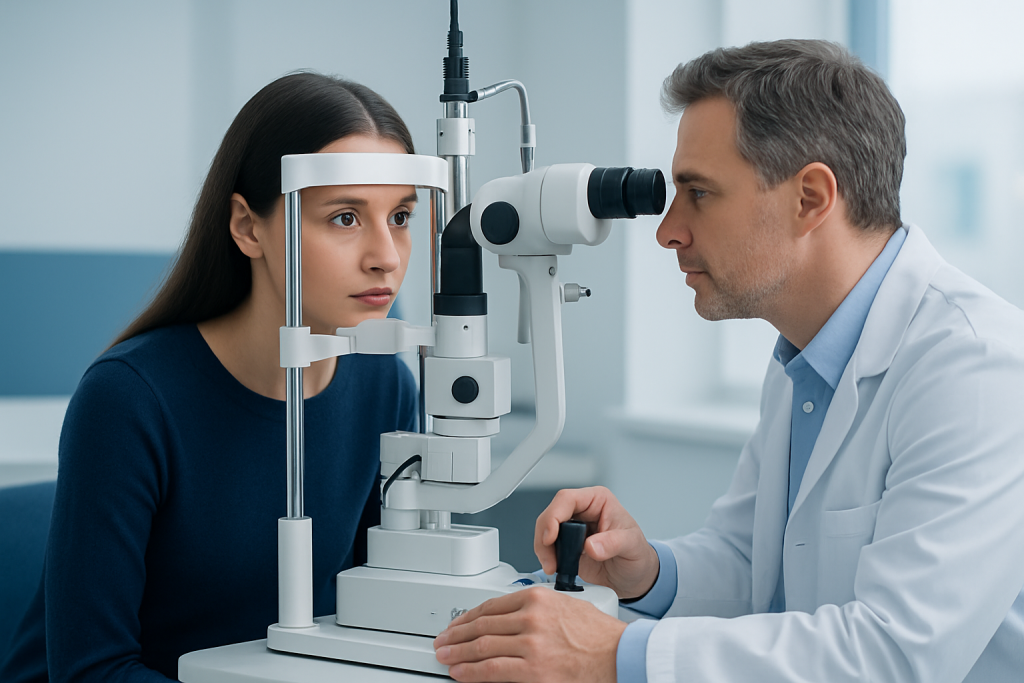
An eye examination may include checking visual acuity, pupil reactivity, eye movements, eyelid position, and the pressure inside the eye. In some cases, the doctor may use a magnifying exam of the eye’s front and back structures to look for inflammation, injury, or nerve-related signs.
If there are warning signs such as severe headache, neurological symptoms, or a suspicious pupil pattern, further testing may be needed. This can include blood tests, imaging such as CT or MRI, or referral to a neurologist or ophthalmologist. For patients who are traveling, it is helpful to keep records of any recent eye drops, prescriptions, and exam findings so follow-up can continue smoothly after returning home.
Treatment Options
Treatment depends entirely on the cause. If dilation is related to a routine eye examination, it generally wears off on its own. If a medication is responsible, the clinician may advise adjusting or stopping it only under medical guidance, especially when the medicine is important for another condition.
When an eye disorder is present, treatment may include prescription drops, management of inflammation, treatment of eye pressure, or care for an injury. If a neurological cause is suspected, urgent treatment focuses on the underlying problem rather than the pupil itself. The pupil size usually improves once the cause is addressed.
Some people do not need active treatment, only observation and reassurance. Others need a timely specialist review. The key is not to guess based on appearance alone, because the same-looking symptom can have very different explanations.
Prevention & Self-care
Not every episode of dilation can be prevented, but some practical steps reduce avoidable causes. Keeping an up-to-date medication list helps both the patient and the clinician identify possible triggers. This is especially useful when care is being received across countries or from different specialists.
General self-care can include protecting the eyes from injury, using medications exactly as prescribed, and avoiding unadvised eye drops or recreational substances. After a dilated eye exam, sunglasses can make bright light more comfortable and temporary blurred near vision easier to manage.
- Carry a list of prescriptions, supplements, and recent eye drops
- Use protective eyewear for sports or work hazards
- Do not share eye drops or take someone else’s medication
- Arrange follow-up if dilation was unexplained or recurrent
For international patients, planning ahead matters. Before traveling home, it is wise to ask what symptoms should trigger urgent review and whether any specialist follow-up is needed after the trip.
When to See a Doctor
Medical evaluation is advisable if dilated pupils are new, persistent, unexplained, or occurring in only one eye. The need becomes more urgent when the dilation is accompanied by pain, headache, blurred vision, double vision, drooping eyelid, nausea, or weakness. These combinations can point to conditions that should not be observed at home.
People should also seek prompt care after a head or eye injury, or if a pupil does not respond normally to light. Even when symptoms seem mild, a sudden change is worth checking, especially if there is no clear medication or lighting explanation.
When care is needed while abroad, having a clear plan for reassessment is important. Acibadem Health Point’s multidisciplinary specialists and JCI-accredited hospitals diagnose and treat eye and neurological causes of dilated pupils for international patients, with coordination that can support follow-up after travel.
Living With the Symptom Between Visits
When a clinician has ruled out urgent causes, the main task is learning what normal looks like for that person. Taking a photo in similar lighting can sometimes help track whether the pupils are returning to baseline, especially if the change is subtle. This can be useful information at the next appointment.
If near vision is temporarily blurred, reading glasses, larger print, and good lighting may make daily activities easier until the effect passes. If one eye remains unusually large, or the symptom keeps returning, it should be reassessed rather than assumed to be harmless.
The most reassuring approach is a measured one: note the context, review possible triggers, and stay alert for associated symptoms. That balance helps patients avoid unnecessary worry while still protecting against causes that need timely treatment.
FAQ
Q: Are dilated pupils always a sign of a problem?
A: No. Pupils normally widen in low light, and dilation can also happen after an eye exam or with certain medicines. The concern rises when the change is sudden, one-sided, persistent, or paired with pain or vision changes.
Q: Why would only one pupil be dilated?
A: One-sided dilation can happen for several reasons, including eye injury, nerve problems, or exposure to certain substances. Because the causes range from minor to urgent, unilateral dilation deserves medical assessment.
Q: Can stress cause dilated pupils?
A: Yes, stress, fear, or excitement can temporarily widen the pupils. This effect is usually short-lived and improves as the body settles.
Q: How long does pupil dilation from an eye exam last?
A: It varies by the drops used and the person’s response, but it is usually temporary. A clinician can explain the expected duration before the exam, especially if the patient needs to travel afterward.
Q: What should someone do if dilated pupils come with a severe headache?
A: They should seek prompt medical care, particularly if the headache is sudden or severe, or if there is nausea, vomiting, weakness, or confusion. Those symptoms can signal a condition that needs immediate evaluation.
Q: Is it safe to drive after the pupils are dilated?
A: Driving may be unsafe if vision is blurred or light sensitivity is strong. It is usually better to arrange a ride, wear sunglasses, and follow the eye doctor’s advice before getting behind the wheel.
References
- American Academy of Ophthalmology
- National Eye Institute
- Mayo Clinic
- Merck Manual Professional Edition
- Cleveland Clinic
This article is for general information only and is not a substitute for professional medical advice. Please consult a qualified doctor about your individual situation.