Calcium Score Test

Key Takeaways
- The calcium score test measures calcified plaque in the coronary arteries, not blood flow itself.
- It can help clarify heart disease risk when traditional risk factors do not give a complete picture.
- The test is fast, noninvasive, and usually does not require contrast dye.
- A zero score is reassuring, but it does not rule out every form of heart disease.
- Higher scores suggest more coronary plaque and may lead to more intensive prevention planning.
A calcium score test is a quick heart scan that looks for calcium in the coronary arteries, which can help estimate future heart disease risk. It is most useful when a person and their doctor want a clearer picture of prevention and next steps.
Overview
A calcium score test, sometimes called coronary artery calcium scoring, is a low-dose CT scan that checks for calcium in the arteries that supply the heart. Calcium in these arteries is usually part of atherosclerosis, the slow buildup of plaque that can narrow or stiffen blood vessels over time.
The test does not diagnose a heart attack, and it does not show every type of plaque. Its real value is in helping doctors estimate how likely coronary artery disease may be in the coming years, especially when the decision about treatment is not obvious from routine blood tests, blood pressure readings, and family history alone.
For international patients, the scan is often attractive because it is quick, usually does not involve contrast dye, and can fit into a short travel window. When a person is planning care abroad, it may be one of the first tests used to decide whether a prevention-focused plan is enough or whether more cardiology evaluation is needed.
Symptoms
A calcium score test is usually not ordered because of a specific symptom alone. Many people who have it feel well and are seeking a more precise estimate of future risk rather than an answer to an active emergency.
Doctors may suggest it when a person has risk factors such as high cholesterol, high blood pressure, diabetes, smoking history, kidney disease, or a strong family history of early heart disease. It can also be considered when someone’s overall risk appears borderline and the next step is not clear.
It is important to know that symptoms like chest pressure, shortness of breath, fainting, or pain spreading to the arm or jaw need prompt medical attention. Those symptoms call for urgent evaluation, not a routine calcium score scan.
- Often used for prevention planning, not for emergency care
- Helpful when risk is uncertain after standard assessment
- May be recommended even if the person feels completely well
Causes & Risk Factors

The scan itself does not find a cause; it measures the result of a long process. Calcium tends to appear in coronary arteries as plaque matures, which is why the score is considered a marker of atherosclerotic burden.
Several factors make plaque buildup more likely. Age, family history, smoking, high LDL cholesterol, diabetes, obesity, high blood pressure, lack of regular physical activity, and chronic kidney disease all influence coronary risk. Men tend to develop coronary calcification earlier, while risk in women often rises after menopause, though either sex can be affected.
A person’s lifestyle and medical history matter because the calcium score is best interpreted as part of the whole picture. A low score in one patient may be reassuring, while the same number in another person with many risk factors may lead to a different discussion.
Diagnosis
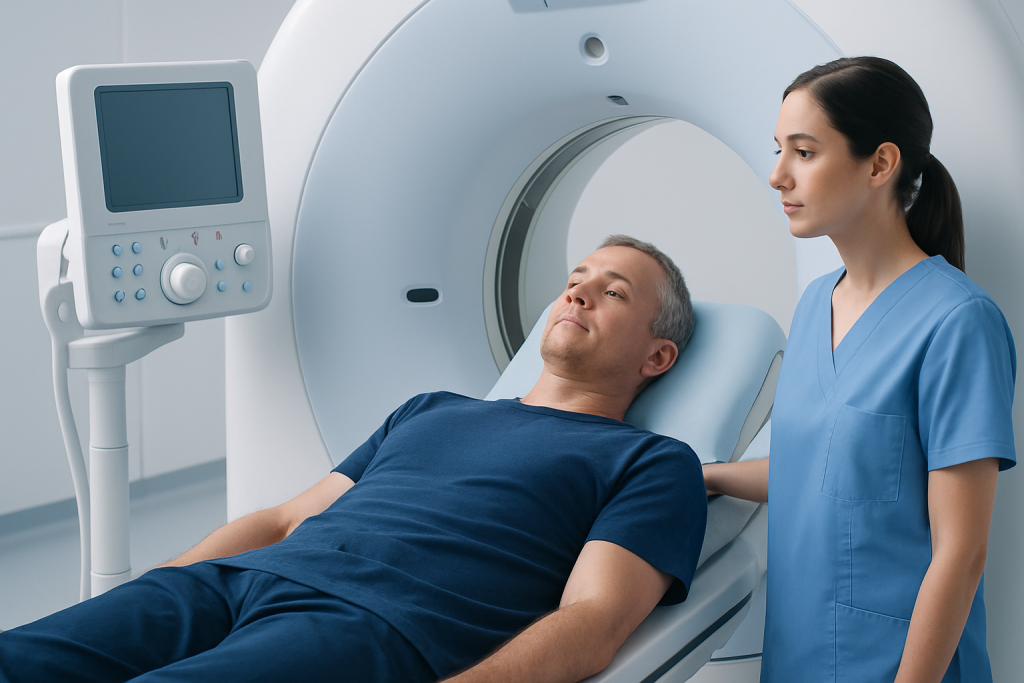
The calcium score test is performed with a CT scanner. The person lies still while the machine takes images of the heart, usually in a matter of minutes. A technician may place electrodes on the chest to coordinate the scan with the heartbeat.
No injection is usually needed, and most people can return to normal activities right away. The report gives a score, commonly expressed as an Agatston score, which reflects both how much calcium is present and how dense it appears on the scan.
In general terms, a score of zero means no detectable coronary calcium, while a higher score suggests more plaque is present. Doctors do not use the number in isolation; they combine it with age, symptoms, cholesterol levels, blood pressure, diabetes status, and family history to guide prevention or further testing.
Treatment Options
The calcium score itself is not treated. Instead, the scan helps shape treatment aimed at lowering cardiovascular risk and protecting the arteries from further damage.
Depending on the result, a doctor may recommend lifestyle changes, cholesterol-lowering medicine, blood pressure treatment, diabetes management, or additional heart testing. If the score is high or symptoms are present, a cardiologist may discuss stress testing, CT coronary angiography, or other evaluations to better understand whether blood flow is affected.
In many cases, the most important outcome is a clearer prevention plan. That may include a more focused discussion about statins, smoking cessation, exercise, weight management, sleep, and long-term follow-up. For international patients, this plan should also include practical timing for medication review and follow-up appointments after returning home.
- Lifestyle changes to reduce future plaque buildup
- Medication review for cholesterol, blood pressure, or diabetes
- Possible follow-up testing if the result or symptoms warrant it
- Cardiology consultation for personalized risk reduction
Prevention & Self-care
The best way to think about prevention is to focus on the arteries, not just the scan result. Healthy eating patterns, regular physical activity, not smoking, and good control of blood pressure, blood sugar, and cholesterol all help slow progression of coronary disease.
After the test, patients often benefit from asking for a written summary of the result and the recommended next steps. This is especially useful for people traveling internationally, because it makes it easier to continue care with their local doctor and avoid gaps in treatment.
Self-care also means keeping expectations realistic. A low calcium score does not grant lifetime immunity, and a high score does not mean that heart disease is inevitable. It is a guide for better decisions, not a verdict.
- Follow a heart-healthy eating plan
- Stay physically active in a way approved by a doctor
- Quit smoking and avoid secondhand smoke
- Take prescribed medicines consistently
- Bring prior test results when seeking care abroad
When to See a Doctor
A doctor should be consulted if a person has questions about whether the test is appropriate, especially when symptoms, family history, or risk factors are adding uncertainty. The scan is most useful when a clinician can interpret it in the context of the whole medical picture.
After the test, medical review is important if the score is elevated, if symptoms continue, or if there is confusion about what the result means. A cardiologist can explain whether prevention alone is reasonable or whether more testing is needed.
Anyone with chest pain, severe shortness of breath, sudden weakness, or other possible emergency symptoms should seek urgent care immediately rather than waiting for an outpatient scan appointment.
At Acibadem Health Point, multidisciplinary specialists and JCI-accredited hospitals diagnose and treat coronary artery disease for international patients with coordinated, patient-friendly care.
Living With the Result
Many people find the calcium score helpful because it turns an abstract risk into a concrete conversation. Whether the score is low, moderate, or high, the next step is usually a practical plan that fits the person’s age, other conditions, and preferences.
For patients who travel for care, the most helpful outcome is often a clear handoff: a scan report, a medication list, and a follow-up plan that can be shared with their home physician. That kind of continuity matters as much as the test itself.
When used well, the calcium score test supports earlier prevention, better decisions, and a calmer understanding of heart risk. It is one piece of information, but for many people it is an especially useful one.
Frequently asked questions
What does a calcium score test measure?
It measures calcium in the coronary arteries, which often reflects the presence of atherosclerotic plaque. The result helps estimate future heart disease risk rather than diagnose an active blockage by itself.
Is the calcium score test painful?
No, it is usually not painful. Most people only need to lie still for a short time while the CT scanner takes pictures of the heart.
Do I need contrast dye for this scan?
Usually not. A calcium score test is commonly done without contrast, which is one reason it is a convenient screening tool for many patients.
Can a zero score still mean heart problems?
Yes, in some situations. A zero score is reassuring, but it does not rule out all forms of heart disease or guarantee that plaque will not develop later.
What happens if my score is high?
A higher score means more calcium has been detected, which may lead a doctor to recommend stronger prevention measures or more heart testing. The result is interpreted together with symptoms and other risk factors.
Who should consider having this test?
It is often considered for adults whose future coronary risk is unclear after standard evaluation. A doctor can help decide whether it will genuinely add useful information in a specific case.
References
- American Heart Association
- American College of Cardiology
- Society of Cardiovascular Computed Tomography
- Mayo Clinic
- National Heart, Lung, and Blood Institute
This article is for general information only and is not a substitute for professional medical advice. Please consult a qualified doctor about your individual situation.