

Dead Bugs

Key Takeaways
- Dead bugs train deep core muscles while the spine stays mostly stable.
- The exercise can support posture, balance, and everyday movement control.
- Good form matters more than speed or the number of repetitions.
- People with pain, injury, or recent surgery should ask a clinician before starting.
- The movement can be modified to match different strength and recovery levels.
Dead bugs are a controlled core exercise used to train abdominal muscles, pelvic stability, and coordinated movement without putting much strain on the spine. They are often included in rehabilitation and fitness programs for people who want a safer way to build core strength.
Overview
Dead bugs are a simple-looking floor exercise, but their purpose is quite specific: they help the body learn how to keep the trunk steady while the arms and legs move. That combination makes them useful in rehabilitation settings, sports conditioning, and home exercise plans for people who want better core control rather than high-intensity abdominal work.
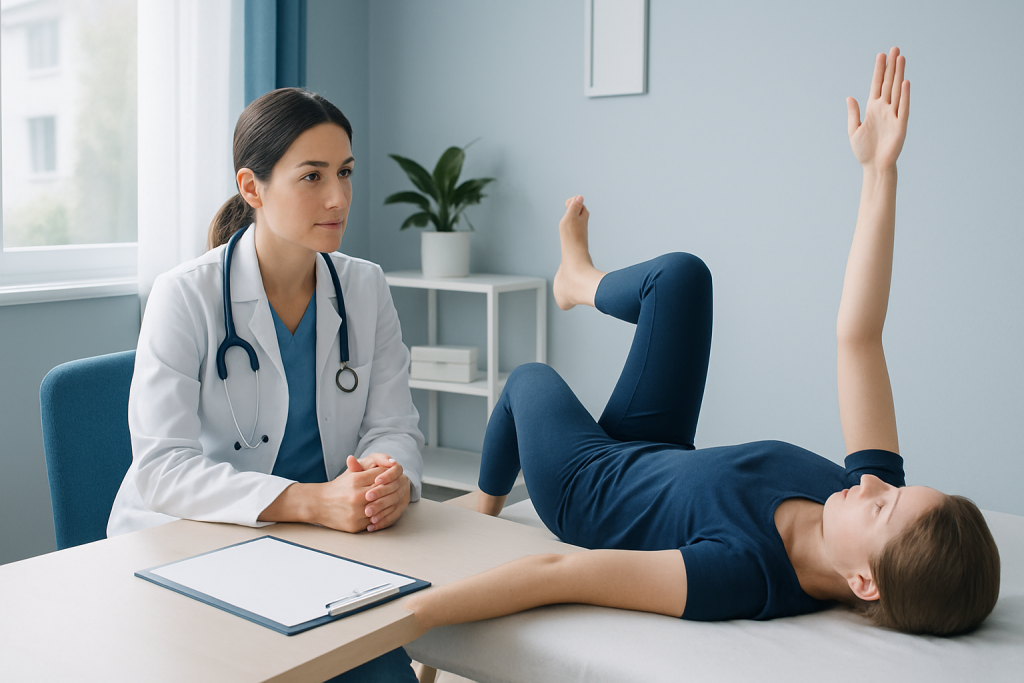
The name may sound unusual, yet the movement itself is straightforward. A person lies on the back with the arms pointed upward and the hips and knees bent. From there, one arm and the opposite leg move away from the center of the body while the lower back stays supported. The exercise is often chosen because it encourages coordination without large, repeated spinal flexion.
For many people, dead bugs are appealing because they can be adapted. The exercise may be made easier by shortening the movement range or keeping both feet on the floor between repetitions. It may also be progressed by adding holds, slower tempos, or light resistance when a clinician or trainer considers it appropriate.
Symptoms and What the Exercise Is Meant to Address

Dead bugs are not used to treat a symptom in the same way a medication would. Instead, they are commonly prescribed to address movement-related problems such as weak trunk control, difficulty maintaining a neutral spine, or poor coordination between the limbs and the core. In rehabilitation, they may be used after back discomfort, during postural retraining, or as part of a gradual return to activity.
People who benefit from core training sometimes describe feeling unstable during daily tasks such as lifting, reaching, standing up from the floor, or carrying groceries. Others notice that their abdomen feels weak or that they struggle to keep the pelvis steady during exercise. Dead bugs can help build awareness of how the deep abdominal muscles, diaphragm, and pelvic muscles work together.
- Reduced control of the midsection during movement
- Difficulty keeping the lower back from arching
- Core weakness after inactivity or injury
- Need for a low-impact exercise option
The exercise is generally not intended to create a burn in the way some gym movements do. Instead, the goal is a controlled, precise effort that teaches the body to resist unwanted movement.
Causes and Risk Factors for Poor Core Control
Weak or poorly coordinated core muscles can develop for many reasons. A sedentary lifestyle, prolonged sitting, pregnancy and postpartum recovery, previous back pain, or deconditioning after illness or surgery can all affect how well the trunk stabilizes the body. In some cases, people simply have not yet learned how to engage their abdominal muscles efficiently.
Dead bugs are often included in programs for people who are trying to rebuild strength in a careful way. They are also helpful for those who want to move beyond exercises that rely heavily on sit-ups or twisting motions. Because the exercise is low-impact, it may be a good starting point for people who need to avoid aggressive spinal loading.
Risk factors for needing this type of retraining can include long periods of desk work, limited physical activity, prior injury, reduced flexibility, or weakness in the hips and glutes. These factors do not mean a person has a serious problem, but they can influence how comfortably and effectively the trunk moves.
Diagnosis and When Dead Bugs Are Recommended
Dead bugs are not diagnosed in the medical sense, but the movement is often selected after a clinician, physiotherapist, or trainer assesses how a person moves. That assessment may include posture, pelvic control, breathing pattern, range of motion, and how the back responds when the arms and legs move separately.
In rehabilitation, the exercise may be part of a broader plan for low back pain, core retraining, or post-operative conditioning. A clinician may watch for signs that the person is compensating by arching the back, holding the breath, or letting the hips tilt excessively. These signs help determine whether the exercise should be modified.
For international patients, assessment may happen before travel, during an in-person consultation, or as part of a follow-up plan after returning home. A clear home program can make the exercise easier to continue safely across different settings, whether in a hotel room, apartment, or local clinic.
Treatment Options and How the Exercise Is Performed
Dead bugs are usually part of a treatment or conditioning plan rather than a stand-alone solution. A physiotherapist or clinician may use them alongside breathing drills, hip strengthening, mobility work, or back-friendly stabilization exercises. The best plan depends on the person’s goals, pain level, and medical history.
A basic version starts with lying on the back, knees bent, and arms up. The person gently braces the abdomen, keeps the lower back from excessive arching, and slowly extends one leg while lowering the opposite arm. The body then returns to the starting position and the movement is repeated on the other side. The motion should feel controlled and steady, not rushed.
Useful form cues often include:
- Keep the ribcage relaxed rather than flared upward
- Breathe steadily instead of holding the breath
- Move only as far as the trunk can remain stable
- Stop if the lower back starts to arch or discomfort increases
The exercise can be simplified by moving only the legs, only the arms, or tapping one heel lightly to the floor. It can be made more challenging by slowing the movement, extending the limbs farther, or adding a pause at the end of each reach. Progression should be based on control, not just endurance.
Prevention and Self-care
Good self-care around dead bugs starts with respect for the movement. The exercise works best when it is done with attention, comfortable breathing, and a level of difficulty that matches current strength. Pushing too hard can lead to compensation patterns that reduce the exercise’s value.
People who plan to use dead bugs as part of a recovery or fitness routine may find it helpful to combine them with other healthy habits. Frequent breaks from sitting, gentle walking, adequate hydration, and regular mobility work can all support the core and spine. For those recovering from injury, following the clinician’s progression is often more important than doing extra repetitions.
Self-care tips may include:
- Use a firm but comfortable surface
- Practice in a quiet space where movement can stay controlled
- Begin with a short set and build gradually
- Track symptoms after exercise rather than during the movement alone
When traveling for care, it can help to ask for a written exercise plan before leaving the clinic. That way, the person can continue the program confidently once back home and can share the same instructions with any local provider if follow-up is needed.
When to See a Doctor
Most people can try dead bugs safely when the exercise has been recommended by a qualified professional and the movement is comfortable. However, medical advice is important if back pain worsens, pain spreads, numbness appears, or movement suddenly feels unstable. These signs suggest that the exercise may need to be changed or paused.
A doctor or physiotherapist should also be involved if there has been a recent injury, surgery, pregnancy-related concern, or a known spinal condition. The same applies if the person is unsure whether abdominal exercises are appropriate for their recovery stage. A tailored assessment can help separate ordinary muscle effort from a problem that needs attention.
For patients seeking care abroad, it is reasonable to ask about exercise instruction, follow-up support, and how progress will be monitored after returning home. Acibadem Health Point’s multidisciplinary specialists and JCI-accredited hospitals diagnose and treat this condition for international patients, with coordinated guidance that can support both in-clinic care and recovery planning.
Living with the Exercise as Part of Recovery
Dead bugs often fit best into a longer picture of recovery rather than as a one-off drill. People usually do better when they treat the exercise as a skill to learn, not a test to pass. Over time, the body may become better at maintaining control during reaching, lifting, walking, and other everyday tasks.
It can be helpful to notice the difference between effort and strain. A well-performed repetition may feel focused and demanding in the abdomen, but it should not create sharp pain or a sense that the spine is being forced. That distinction is especially useful for people rebuilding confidence after discomfort or inactivity.
With steady practice and the right guidance, dead bugs can become a practical tool for improving trunk control. They are modest in appearance, but their value lies in teaching the body how to stay organized while moving.
Frequently asked questions
What are dead bugs good for?
Dead bugs are commonly used to improve core stability, trunk coordination, and control of the pelvis and lower back. They are especially useful in rehabilitation because they train the body to stay steady while the arms and legs move.
Are dead bugs safe for people with back pain?
They can be safe for some people with back pain, especially when recommended by a physiotherapist or doctor. The exercise should be stopped or modified if it causes pain, increases symptoms, or makes the lower back arch excessively.
How many dead bugs should a person do?
The ideal amount depends on the person’s strength, goals, and recovery stage. A clinician or trainer can suggest a starting point and adjust the exercise based on form and tolerance rather than giving a one-size-fits-all target.
What is the most common mistake with dead bugs?
One common mistake is letting the lower back arch off the floor as the arms or legs move. Holding the breath or moving too quickly can also reduce the exercise’s benefit and make it harder to control.
Can dead bugs be modified for beginners?
Yes. Beginners may keep the movement smaller, tap one heel to the floor, or move only one limb at a time. The main goal is to maintain control and comfort before adding more range or speed.
Should dead bugs be done every day?
Not necessarily. Frequency depends on the overall exercise plan, recovery needs, and how the body responds after practice. A clinician can help decide how often the exercise should be included.
References
- National Institute of Neurological Disorders and Stroke
- American Physical Therapy Association
- Mayo Clinic
- Cleveland Clinic
This article is for general information only and is not a substitute for professional medical advice. Please consult a qualified doctor about your individual situation.
More from the Health Library



Related Specialists

Dr. Safiye Sayilir
Physical Medicine & Rehabilitation
Dr. Özgün Barış Çolak
Physical Medicine & Rehabilitation
Prof. Dr. Meltem Vural
Physical Medicine & Rehabilitation
Prof. Dr. Meral Bayramoğlu
Physical Medicine & Rehabilitation