

Couch Stretch

Key Takeaways
- The couch stretch mainly targets the hip flexors and quadriceps on the back leg.
- It can support mobility, posture, and comfort after long periods of sitting or cycling.
- Correct alignment matters more than how far the body can force the stretch.
- People with knee, hip, back, or balance problems should modify the stretch and seek guidance.
- A stretch should feel like a firm pull, not sharp pain, numbness, or joint strain.
The couch stretch is a simple mobility exercise that targets the hip flexors and quadriceps, two muscle groups that often tighten during long sitting or repetitive activity. With proper technique and gradual progression, it can be a useful part of rehabilitation, warm-ups, and everyday self-care.
Overview
The couch stretch is a kneeling mobility exercise designed to lengthen the front of the thigh and the front of the hip. Despite its name, it is not limited to use on a couch; any stable surface that allows the back foot or shin to be elevated can work. In rehabilitation settings, it is often used to help address the stiffness that develops when the hip flexors stay shortened for long periods.
For many people, the stretch becomes relevant after a routine that leaves the hips in a closed position for much of the day. Long hours at a desk, frequent driving, repeated squatting, running, and cycling can all contribute to tightness in the tissues the stretch targets. The goal is not flexibility for its own sake, but smoother movement and better tolerance for daily activity.
International patients often ask whether they need a formal diagnosis before trying a stretch like this. Not always. In many cases, a physical therapist or rehabilitation physician may introduce the couch stretch as part of a broader plan for hip mobility, low-back comfort, or sports recovery. The important point is that it should fit the person’s condition, rather than be copied from a generic routine without adjustment.
Symptoms and When the Stretch May Help

The couch stretch may be useful when the front of the hip feels tight, the thigh resists straightening, or standing upright seems easier after moving around. Some people notice a pulling sensation in the front of the hip when taking a long stride, getting up from a chair, or extending the leg behind the body. Others simply feel as though they “live in a seated position” and want to undo that stiffness safely.
It may also be considered in rehabilitation for movement patterns linked to shortened hip flexors, especially when a clinician sees reduced hip extension during walking or exercise. Because the stretch can influence pelvic position and trunk alignment, it is sometimes used alongside core strengthening, gluteal exercises, and movement retraining rather than alone.
- Reduced comfort when standing upright after sitting
- Stiffness at the front of the hip or thigh
- Limited hip extension during walking, running, or cycling
- A feeling of pulling in the quadriceps with kneeling or lunging
The stretch should not be used to chase pain relief from every symptom. If discomfort is sharp, radiates, or changes how the leg feels or functions, that may suggest a problem that needs assessment rather than self-stretching.
Causes & Risk Factors
Hip flexor tightness is often related to how a person spends time, not just how much they exercise. Sitting keeps the hips flexed, and over time the muscles at the front of the hip may adapt to that position. The rectus femoris, one of the quadriceps muscles, crosses both the hip and knee, so it can also feel shortened when the knee is frequently bent or when training load is high.
Several patterns may increase the likelihood that the couch stretch feels relevant: desk work, long commutes, repetitive kicking or sprinting, cycling, weak gluteal muscles, poor trunk control, and limited ankle or hip mobility elsewhere in the chain. Sometimes the sensation is not true muscle shortening alone, but a mix of stiffness, protective tension, and reduced movement confidence.
It is also worth noting that not every tight-feeling front hip responds well to stretching. An irritated hip joint, an inflamed tendon, a recent surgery, a back condition, or nerve sensitivity can all change what stretching feels like. That is why a qualified clinician may first decide whether the issue is muscle tightness, joint restriction, or something else entirely.
Diagnosis
There is no special test that diagnoses a person as needing a couch stretch. Instead, clinicians look at movement, posture, symptom history, and the way the hip and knee behave during examination. A physical therapist, sports medicine physician, or rehabilitation specialist may ask when the tightness started, what activities worsen it, and whether symptoms improve with movement.
Assessment may include observing walking, lunging, squatting, and hip extension. The clinician may compare side-to-side mobility, check the lower back and pelvis, and evaluate whether the quadriceps, hip flexors, or nearby joints are contributing. This broader view matters because a stretch is most helpful when it addresses the right limitation.
For international patients planning care abroad, this type of assessment is often paired with a practical home program. That can be especially useful when follow-up will happen after returning home, because the next steps may need to be simple, safe, and clearly explained in writing or through tele-rehabilitation.
Treatment Options
The couch stretch is usually one part of a larger rehabilitation plan rather than a stand-alone solution. When a clinician recommends it, they may pair it with strengthening for the glutes, trunk, and lower limb, since improved mobility is easier to keep when the supporting muscles are also working well. Breathing and pelvic control cues are often used to prevent the stretch from becoming a lower-back arching exercise.
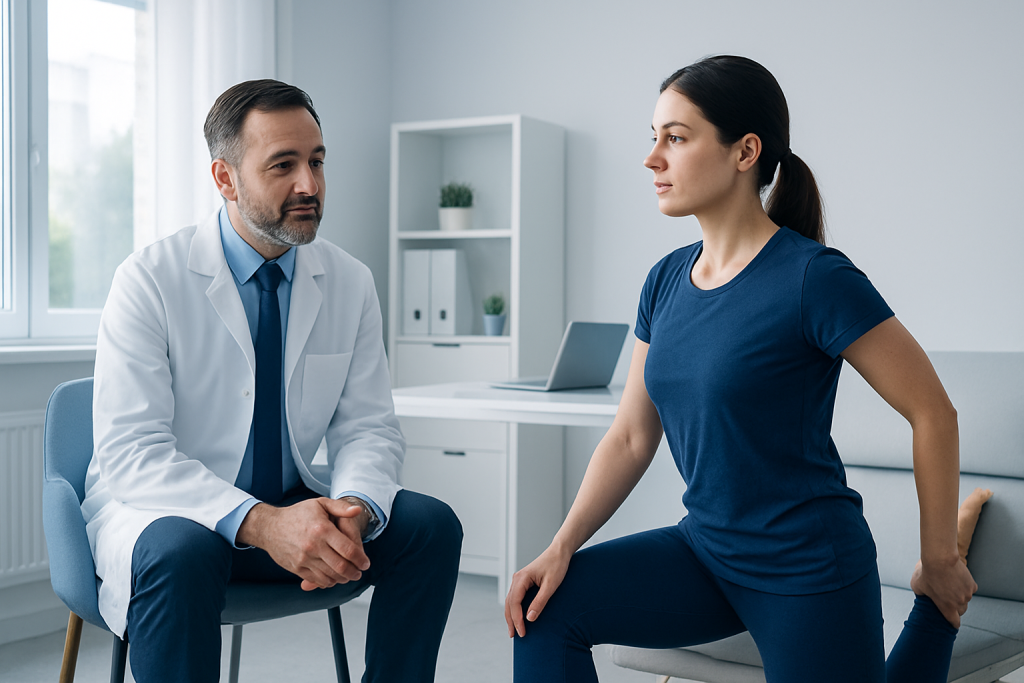
Technique matters. The person typically places one shin or the top of one foot against a stable elevated surface and positions the other leg in front with the foot flat on the floor. The torso stays tall, the ribs remain controlled, and the stretch is felt along the front of the thigh and hip of the back leg. The intensity should be moderate and sustainable, not forceful.
Depending on comfort and mobility, clinicians may adjust the setup by lowering the back foot position, using padding under the knee, reducing time held, or choosing a gentler half-kneeling hip flexor stretch first. In some rehabilitation plans, manual therapy, posture training, or exercise progression may be used alongside stretching if there are multiple contributors to stiffness.
- Gentle, progressive holds rather than aggressive forcing
- Support under the knee if kneeling is uncomfortable
- Shorter holds at first, then gradual progression as tolerated
- Strength work for glutes and core to maintain gains
People recovering from surgery, managing arthritis, or dealing with back or knee pain should not copy a stretch from a video without guidance. A targeted plan is more effective and more comfortable than a one-size-fits-all routine.
Prevention & Self-care
The most practical way to reduce recurring tightness is to interrupt long periods of sitting and vary positions during the day. Brief standing breaks, walking intervals, and regular movement between meetings can help the hips avoid staying in one shortened posture for too long. For active people, balancing training with recovery is equally important.
Warm muscles tend to respond better than cold ones, so the couch stretch is usually best after light activity or at the end of a workout. A person should breathe steadily during the stretch and avoid tensing the neck, gripping the floor, or arching the lower back in an attempt to go deeper. Those habits often reduce the quality of the stretch and increase strain elsewhere.
Self-care also means respecting the signals the body gives. A mild pulling sensation is expected, but joint pain, numbness, pinching in the front of the hip, or lingering soreness afterward suggests the stretch may be too intense or poorly matched to the problem. In those cases, reducing intensity or seeking a professional assessment is the safer option.
When to See a Doctor
A clinician should evaluate the problem if tightness is accompanied by pain, swelling, weakness, limping, numbness, or a recent injury. The same applies when the hip, knee, or back pain is limiting daily activities or does not improve with simple movement changes. Stretching should support recovery, not replace an examination when symptoms are persistent or unusual.
Medical review is also sensible if the stretch causes sharp pain in the groin, front of the hip, or knee, or if there is a sense of catching, locking, or instability. These symptoms may point to joint or tendon issues that need a different approach. For people with prior surgery or complex musculoskeletal conditions, clearance from a treating clinician is especially important.
Acibadem Health Point’s multidisciplinary specialists and JCI-accredited hospitals diagnose and treat musculoskeletal conditions for international patients, with rehabilitation plans that can be coordinated before travel and continued afterward. That continuity can make it easier to stay safe and consistent when care spans more than one country.
Frequently asked questions
What does the couch stretch mainly stretch?
It mainly targets the hip flexors and the quadriceps on the back leg. Depending on posture, it may also create a stretch through the front of the hip and lower thigh. If the sensation is mostly in the knee or low back, the position may need adjusting.
How long should the couch stretch be held?
That depends on the person’s mobility, comfort, and rehabilitation plan. Many clinicians start with short, controlled holds and gradually increase them as tolerated. The stretch should remain manageable and never feel forced.
Is the couch stretch safe for knee pain?
Not always. Because it places the knee in a loaded bent position, it may irritate some knee problems. Padding, a modified setup, or a different stretch may be more appropriate after assessment.
Should the back be arched during the stretch?
No. A large arch in the lower back usually means the body is compensating instead of lengthening the hip flexor in a controlled way. Keeping the ribs stacked and the pelvis steady generally makes the stretch safer and more effective.
Can the couch stretch help with running or cycling?
It can be useful for athletes whose hip flexors or quadriceps feel tight after repetitive training. It is usually best used alongside strengthening, warm-up work, and recovery habits rather than as the only intervention. A sports clinician can help decide whether it fits the training plan.
When should someone stop the stretch and get checked?
They should stop if there is sharp pain, numbness, tingling, joint catching, or pain that lasts after the stretch ends. Ongoing stiffness with weakness or reduced walking ability also deserves medical review. A qualified clinician can identify the cause and suggest a safer alternative if needed.
References
- American Academy of Orthopaedic Surgeons
- National Institute of Arthritis and Musculoskeletal and Skin Diseases
- Mayo Clinic
- World Health Organization
- American Physical Therapy Association
This article is for general information only and is not a substitute for professional medical advice. Please consult a qualified doctor about your individual situation.
More from the Health Library



Related Specialists

Dr. Safiye Sayilir
Physical Medicine & Rehabilitation
Dr. Özgün Barış Çolak
Physical Medicine & Rehabilitation
Prof. Dr. Meltem Vural
Physical Medicine & Rehabilitation
Prof. Dr. Meral Bayramoğlu
Physical Medicine & Rehabilitation