Corneal Abrasion: Symptoms, Causes and Treatment

Key Takeaways
- A corneal abrasion is a scratch on the cornea, often causing pain, tearing, light sensitivity, and a gritty feeling.
- Common causes include fingernails, contact lenses, dust, makeup particles, and small foreign objects.
- An eye examination is important because similar symptoms can also come from more serious eye conditions.
- Treatment focuses on protecting the eye, easing discomfort, and preventing infection or further injury.
- Contact lens wearers, people with severe pain, or anyone with vision changes should seek prompt medical attention.
Medically reviewed by the Acıbadem clinical team — August 19, 2026
A corneal abrasion is a scratch on the clear front surface of the eye. It can feel very painful, but with timely care most cases heal well and without lasting problems.
Overview
The cornea is the eye’s clear outer window, and a corneal abrasion is a break or scratch on that surface. Even a small scratch can feel surprisingly intense because the cornea has many nerve endings and plays a major role in clear vision.
For many people, the first clue is not a visible injury but the sensation that something is stuck in the eye. The eye may water, blink uncontrollably, or become difficult to keep open, especially in bright light. Because the symptoms can overlap with infection or a retained foreign body, an eye evaluation is often the safest next step.
When a person is traveling for care, the experience can feel especially inconvenient, but corneal abrasions are usually straightforward to assess and manage. A clear diagnosis helps patients know whether they can recover with simple treatment or need closer follow-up.
Symptoms
Symptoms often begin quickly after the injury, although some people do not connect the discomfort to a specific event. Pain is usually the dominant symptom, and it may be sharp, burning, or accompanied by a strong sensation of something rubbing on the eye.
Other common signs include excessive tearing, redness, light sensitivity, blurred vision, and frequent blinking. The eye may feel worse when the person looks at bright screens or goes outdoors in sunlight.
- Eye pain or a scratchy, foreign-body sensation
- Watery eyes or tearing
- Redness
- Sensitivity to light
- Blurred or fluctuating vision
- Difficulty keeping the eye open
If symptoms are severe, if the eye is very sensitive to light, or if vision seems reduced, a prompt eye examination is important. These signs do not always mean something dangerous, but they deserve attention rather than waiting for the discomfort to settle on its own.
Causes & Risk Factors

Corneal abrasions usually happen when the surface of the eye is touched, scraped, or irritated by something small and unexpected. A fingernail, paper edge, makeup brush, tree branch, dust particle, or wind-blown debris can be enough to create a scratch.
Contact lens use is a major risk factor because lenses can dry out the eye, trap debris, or be inserted and removed in a way that irritates the cornea. People who work in construction, gardening, sports, or dusty environments are also more likely to experience eye injuries.
Dry eyes, rubbing the eyes, and sleeping in contact lenses can increase vulnerability as well. In some cases, the abrasion happens after a foreign body has already been removed, leaving behind a tender, healing surface that still feels as though something is there.
Diagnosis
Diagnosis begins with a careful history of what happened, when the symptoms started, and whether contact lenses are used. An eye specialist or emergency clinician may ask about the exact sensation, any known trauma, and whether the person has had similar episodes before.
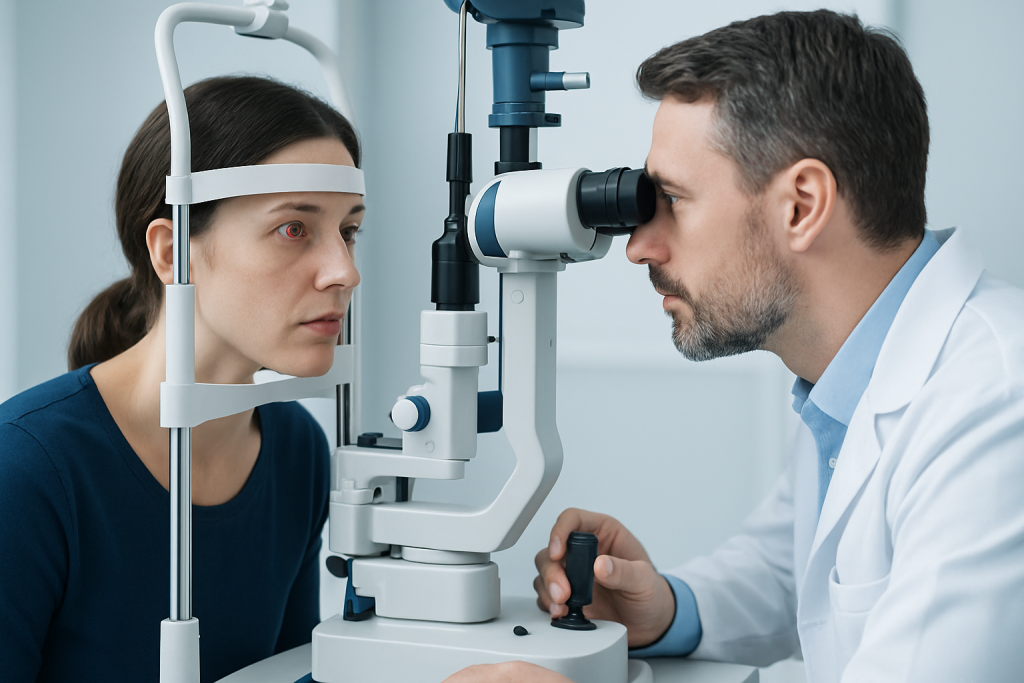
The eye is then examined closely, often with a bright light and magnification. A special dye called fluorescein may be placed in the eye; it highlights the damaged area so the scratch can be seen more clearly. This exam also helps the clinician check for a foreign body, infection, or a deeper injury.
Sometimes the key issue is not just confirming a scratch but making sure nothing more serious is going on underneath it. That distinction matters because treatment choices and follow-up timing can change depending on the size, depth, and cause of the injury.
Treatment Options
Most corneal abrasions heal with supportive care and short-term protection. The main goals are to ease pain, reduce the chance of infection, and let the cornea recover without repeated rubbing or irritation.
Doctors may recommend lubricating drops or ointment, and in some cases antibiotic drops or ointment to lower infection risk, especially when contact lenses are involved. Pain control is individualized and may include general measures recommended by the clinician; the most suitable approach depends on the severity of symptoms and the person’s overall health.
Contact lens wear is usually paused until the eye has fully healed and a clinician says it is safe to resume. If a foreign body is present, it may need to be removed first. More complicated abrasions, such as those that are large, recurrent, or not improving as expected, may need closer follow-up.
Patients should avoid using leftover eye drops, particularly any that contain steroids or numbing medicine unless specifically prescribed for a short, supervised course. Those products can mask worsening problems or interfere with healing if used incorrectly.
Prevention & Self-care
Simple habits make a meaningful difference. Eye protection is one of the most effective ways to prevent scratches during sports, home repairs, cleaning, gardening, and other activities where dust or debris can fly into the eye.
Contact lens hygiene deserves special attention. Lenses should be handled with clean hands, worn only as directed, and removed promptly if the eye feels irritated. People who experience frequent dryness may also benefit from discussing lubrication strategies with a clinician.
- Wear protective eyewear in risky environments
- Avoid rubbing the eyes after irritation or injury
- Follow contact lens cleaning and replacement instructions carefully
- Seek care if a foreign body feels stuck or symptoms persist
At home, resting the eyes, limiting screen strain if it worsens discomfort, and avoiding makeup around the injured eye can support recovery. It is best not to patch the eye unless a clinician specifically recommends it, since patching is not routinely helpful for every case.
When to See a Doctor
Medical evaluation is advisable if pain is significant, vision is blurred, light sensitivity is strong, or the eye does not begin to feel better within a reasonable time. Any history of a high-speed injury, chemical exposure, or a hit to the eye should be treated as urgent.
Contact lens wearers should seek prompt care because they are at higher risk of corneal infection, which can resemble a simple abrasion at first. The same is true if there is discharge, increasing redness, or worsening discomfort instead of gradual improvement.
If a person is receiving care while abroad, a clear eye diagnosis can help reduce uncertainty and avoid unnecessary delays. Acibadem Health Point’s multidisciplinary specialists and JCI-accredited hospitals diagnose and treat corneal abrasion for international patients, with follow-up arranged around the healing process and the patient’s travel plans.
Even when the injury seems minor, it is sensible to have it checked if the symptoms are persistent or unusual. A brief examination can provide reassurance, protect vision, and rule out conditions that need a different treatment plan.
Recovery and Follow-up
Healing is often quick, but the exact timeline depends on the size of the abrasion and whether the eye is repeatedly irritated. Many people feel markedly better once the surface starts to close, though some tenderness or sensitivity can remain for a short period.
Follow-up may be recommended if symptoms are not improving, if the abrasion is large, or if the person uses contact lenses. This is especially helpful for patients returning home after treatment, because the eye team can confirm healing and advise on when normal activities can resume.
Anyone who develops new pain, increasing redness, discharge, or declining vision after the initial visit should be reassessed. Those changes can suggest that the issue is not behaving like an uncomplicated scratch and should not be ignored.
Frequently asked questions
What does a corneal abrasion feel like?
Many people describe it as a sharp, scratchy, or gritty feeling, as if something is trapped in the eye. The eye may water a lot, feel very sensitive to light, and be hard to keep open. Because the cornea is so sensitive, even a small scratch can feel dramatic.
Can a corneal abrasion heal on its own?
Small abrasions often heal well, but it is still wise to have the eye checked so that infection or a retained foreign body is not missed. Proper care can also reduce discomfort and help the cornea heal smoothly. Contact lens wearers should not assume the problem is minor without an exam.
Should the eye be patched after a corneal abrasion?
Eye patching is not routinely recommended for every abrasion. In many cases, clinicians prefer lubrication and close observation instead. The best approach depends on the injury and should be guided by a professional eye exam.
When is a corneal abrasion an emergency?
It is urgent if there is vision loss, severe pain, a chemical exposure, a penetrating injury, or a high-speed object involved. Contact lens users with worsening redness or pain also need prompt assessment. These situations may involve more than a simple scratch.
Can someone wear contact lenses after a corneal abrasion?
Contact lenses should usually be stopped until the eye has fully healed and a doctor confirms it is safe to restart them. Wearing lenses too soon can slow recovery or raise the risk of infection. A clinician can advise when and how to resume lens use safely.
How can corneal abrasions be prevented?
Protective eyewear, careful contact lens hygiene, and avoiding eye rubbing are the main preventive steps. People working around dust, tools, or sports equipment benefit from keeping protective glasses close at hand. Small habits often prevent a painful injury.
References
- American Academy of Ophthalmology
- National Eye Institute
- Mayo Clinic
- Merck Manual Professional Edition
This article is for general information only and is not a substitute for professional medical advice. Please consult a qualified doctor about your individual situation.
Explore treatments in Turkey — costs, top hospitals & a free quote
JCI-accredited · board-certified surgeons · reply within 24h
Add us as a Preferred Source to see more of our trusted health content across Google Search, AI Overviews and Discover.