Clubfoot Treatment Paths: Casting, Bracing, or Surgery?

Key Takeaways
- Clubfoot is usually noticed at birth and is treatable, especially when care starts early.
- The Ponseti method uses serial casting, often followed by a brace to help maintain correction.
- Bracing is a long-term part of treatment and helps reduce the chance of recurrence.
- Surgery is not the first treatment for most babies, but it may be recommended in more complex or resistant cases.
- Families traveling for care can benefit from a coordinated plan for casting, follow-up, and brace adjustments.
Medically reviewed by the Acıbadem clinical team — June 13, 2026
Clubfoot is a common birth condition that affects the way one or both feet are positioned. Early treatment usually begins with gentle casting and bracing, while surgery is reserved for selected cases when needed.
Overview
Clubfoot is a condition in which a baby’s foot turns inward and downward instead of resting in a typical position. It may affect one foot or both, and the shape can look more severe than it feels. For many families, the first question is not whether treatment exists, but which path is most appropriate: casting, bracing, or surgery.
The encouraging news is that clubfoot is highly treatable in most children. The treatment plan usually depends on the severity of the foot position, the baby’s age, how the foot responds over time, and whether the clubfoot is isolated or part of another medical condition. In modern pediatric orthopedics, the goal is to gently guide the foot into a functional position while preserving movement and long-term comfort.
For parents making decisions from another city or country, the treatment journey often needs careful planning. Clubfoot care is not a single appointment; it is a sequence of visits, adjustments, and follow-up checks that work best when the family understands what each stage is meant to achieve. A clear plan can make the process feel more manageable and less overwhelming.
Symptoms
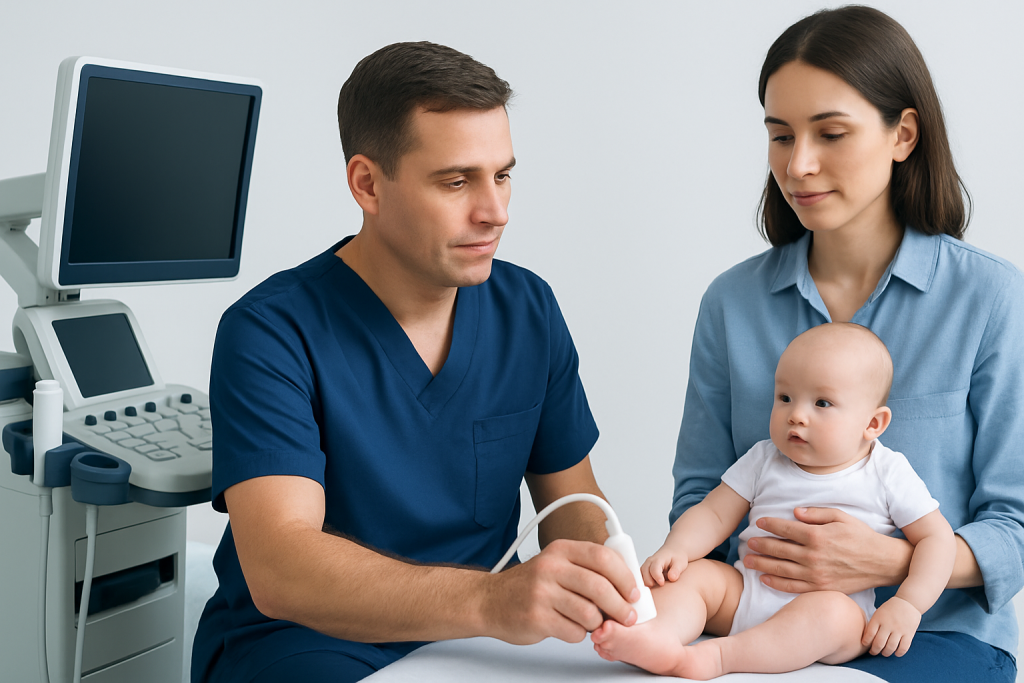
Clubfoot is usually seen soon after birth. The foot may point inward, the heel may appear raised, and the arch may look unusually high. In some babies, the affected foot is smaller or the calf on that side may be thinner than expected.
The foot position is the main sign, but parents may also notice that the baby cannot easily place the sole flat on a surface. The range of motion can seem limited, and the foot may resist gentle straightening. Clubfoot does not typically cause pain in a newborn, but without treatment it can interfere with standing, walking, and shoe wear later in childhood.
Symptoms may vary in degree. Some feet are more flexible and respond quickly to gentle correction, while others are stiffer and require longer treatment. That difference is one reason why a pediatric orthopedic evaluation is important rather than relying on appearance alone.
Causes & Risk Factors
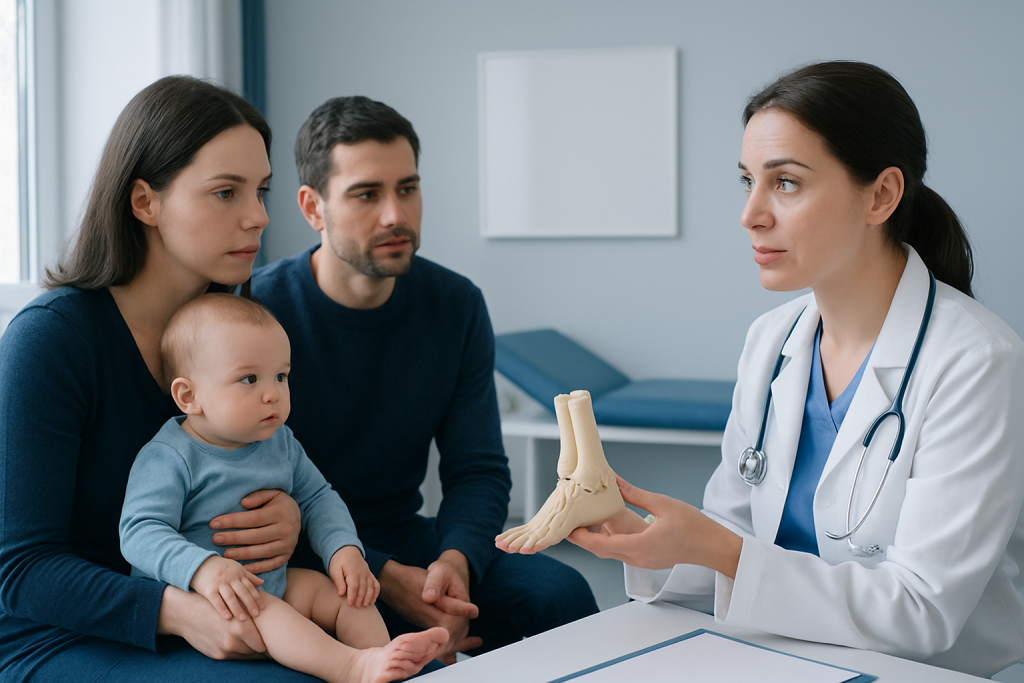
Clubfoot develops during pregnancy, when the tissues, tendons, and bones in the foot form in a way that leads to the inward twist. In many cases, the exact cause is not known. Parents should know that clubfoot is generally not caused by anything they did or did not do during pregnancy.
It may occur as an isolated condition, or it may be associated with genetic factors, neuromuscular conditions, or other developmental differences. Some babies have a family history of clubfoot, which can slightly increase the likelihood of occurrence. Boys are affected more often than girls, though clubfoot can appear in any child.
Risk factors may include family history and certain underlying syndromes or conditions that affect muscle balance and foot development. Even so, many children with clubfoot have no clear risk factor at all. A careful evaluation helps determine whether the clubfoot is flexible, rigid, isolated, or part of a broader medical picture.
Diagnosis
Diagnosis often begins at birth during the newborn examination. In some cases, clubfoot is also identified on prenatal ultrasound. Once the baby is examined, the clinician assesses the foot position, flexibility, and whether the Achilles tendon and other structures seem tight.
Most of the diagnosis is made by physical examination. Imaging is not always needed right away, especially in a newborn, because the foot structures are still developing and the visible pattern is usually enough to guide treatment. If the care team suspects a related condition, further testing may be recommended to better understand the overall picture.
For families arranging treatment internationally, the diagnosis phase is also the point where questions should be answered clearly: How flexible is the foot? Is the clubfoot isolated? How often will visits be needed? Will the baby likely need a brace after casting? These details shape the entire treatment roadmap.
Treatment Options
Most babies with clubfoot are treated first with serial casting, commonly through the Ponseti method. This approach uses a series of gentle casts that gradually move the foot toward a corrected position. The casts are changed regularly as the foot becomes more flexible and aligned.
After the main correction is achieved, many children need a brace to help keep the foot in position while the tissues grow. Bracing is not a sign that the treatment failed; it is an important part of maintaining the correction. Some children need bracing for an extended period, especially during the early years when recurrence is most likely.
Surgery is considered when casting and bracing do not fully correct the foot or when the clubfoot is very rigid. Surgical options can vary from a minor procedure to more extensive correction, depending on the child’s age and foot structure. The aim is always to create a plantigrade, functional foot that can support walking and daily activity.
- Serial casting: Gradual, step-by-step correction in infancy.
- Bracing: Maintains correction and helps prevent relapse.
- Surgical treatment: Reserved for resistant, recurrent, or more complex cases.
In some children, a small tendon procedure may be used as part of the overall treatment plan. The exact approach is individualized, because no two clubfeet behave exactly the same way. A child’s age, flexibility, and response to earlier treatment all matter when choosing the next step.
Prevention & Self-care
Clubfoot itself cannot usually be prevented, but relapse can often be reduced with consistent follow-up and careful home support. The most important self-care task for parents is to follow the brace schedule exactly as instructed. Missing brace time can allow the foot to drift back toward the original position.
Families should also watch the skin under casts and braces for redness, swelling, odor, or signs that the device is rubbing in one spot. A brace should fit securely without causing distress, and any concerns should be reported promptly rather than adjusted at home without guidance. Keeping all scheduled visits matters because clubfoot care often depends on small, timely corrections.
For parents traveling from abroad, self-care also includes organizing the practical side of treatment: carrying written instructions, planning for follow-up visits, and knowing whom to contact if a cast becomes loose or if the baby seems uncomfortable. A smooth recovery is often built on preparation as much as on the treatment itself.
When to See a Doctor
A pediatrician or pediatric orthopedic specialist should evaluate a baby soon after clubfoot is noticed. Early assessment is especially important because treatment is often more effective when started in the first weeks of life. Families should not wait to see whether the foot will “straighten itself.”
Medical review is also important if the cast appears too tight, the toes become swollen or discolored, the baby seems unusually uncomfortable, or the brace causes repeated skin irritation. After surgery, any sign of fever, increasing pain, drainage, or wound changes should be reviewed promptly.
If a child who was already treated begins to walk with a new limp, shows reduced foot flexibility, or the foot looks like it is turning inward again, follow-up is needed. Recurrence can happen, and it is usually easier to address when noticed early. For international patients, a coordinated plan with clear follow-up timing can make it much easier to stay on track once the family returns home; Acibadem Health Point’s multidisciplinary specialists and JCI-accredited hospitals diagnose and treat clubfoot for international patients.
Frequently asked questions
Is casting enough to treat clubfoot in most babies?
Casting is often the first and most important step, especially when treatment begins early. In many babies, casting is followed by bracing to keep the correction in place while the foot grows.
Why is bracing needed after casting?
Bracing helps hold the corrected foot position and lowers the chance that clubfoot will return. It is a normal part of treatment, not an extra or optional step in most cases.
Does clubfoot mean my child will have pain later in life?
With timely treatment, many children go on to walk, run, and play with good function. The long-term outcome is often very good when the treatment plan is followed consistently.
When is surgery considered for clubfoot?
Surgery may be recommended if the foot is very rigid, does not respond well to casting, or comes back after earlier treatment. The choice depends on the child’s age and how the foot responds over time.
Can clubfoot come back after treatment?
Yes, recurrence can happen, which is why follow-up and brace use are so important. If the foot starts to turn inward again, the care team can often address it early.
Can a baby with clubfoot travel for treatment?
Yes, many families do travel, but the timing and follow-up schedule need to be planned carefully. Because casting and bracing require regular visits, it helps to arrange care with a team that can coordinate the full pathway.
References
- American Academy of Orthopaedic Surgeons
- American Academy of Pediatrics
- Mayo Clinic
- National Institute of Arthritis and Musculoskeletal and Skin Diseases
- World Health Organization
This article is for general information only and is not a substitute for professional medical advice. Please consult a qualified doctor about your individual situation.