Chigger Bites: Symptoms, Causes and Treatment

Key Takeaways
- Chigger bites often cause clusters of very itchy red bumps, usually after outdoor exposure.
- The itch is a skin reaction to the bite, not the chigger living under the skin.
- Cleaning the skin, avoiding scratching, and using soothing measures can help symptoms settle.
- Medical care is helpful if the rash becomes infected, spreads, or does not improve as expected.
- Prevention focuses on protective clothing, insect repellent, and prompt showering after outdoor activity.
Medically reviewed by the Acıbadem clinical team — August 19, 2026
Chigger bites are tiny, itchy skin reactions caused by mite larvae that often appear after time spent in grass, brush, or wooded areas. They are usually self-limited, but proper skin care can ease discomfort and help prevent infection from scratching.
Overview
Chigger bites are a common nuisance after gardening, hiking, camping, or simply sitting in grassy or brushy areas. The tiny larvae of certain mites attach briefly to the skin and trigger an inflammatory reaction that can leave behind intensely itchy bumps, often in clusters.
Although the discomfort can be striking, chigger bites are usually not dangerous. They do not burrow into the skin in the way many people imagine, and the irritation usually improves with time and simple skin care. For travelers, outdoor enthusiasts, or families planning time in rural areas, knowing what chigger bites look and feel like can make them easier to manage calmly and promptly.
Because the rash can resemble other insect bites or skin conditions, a clear understanding of the pattern matters. In practice, the key questions are often: where the exposure happened, how the rash developed, and whether the skin is becoming irritated from scratching or complicated by infection.
Symptoms
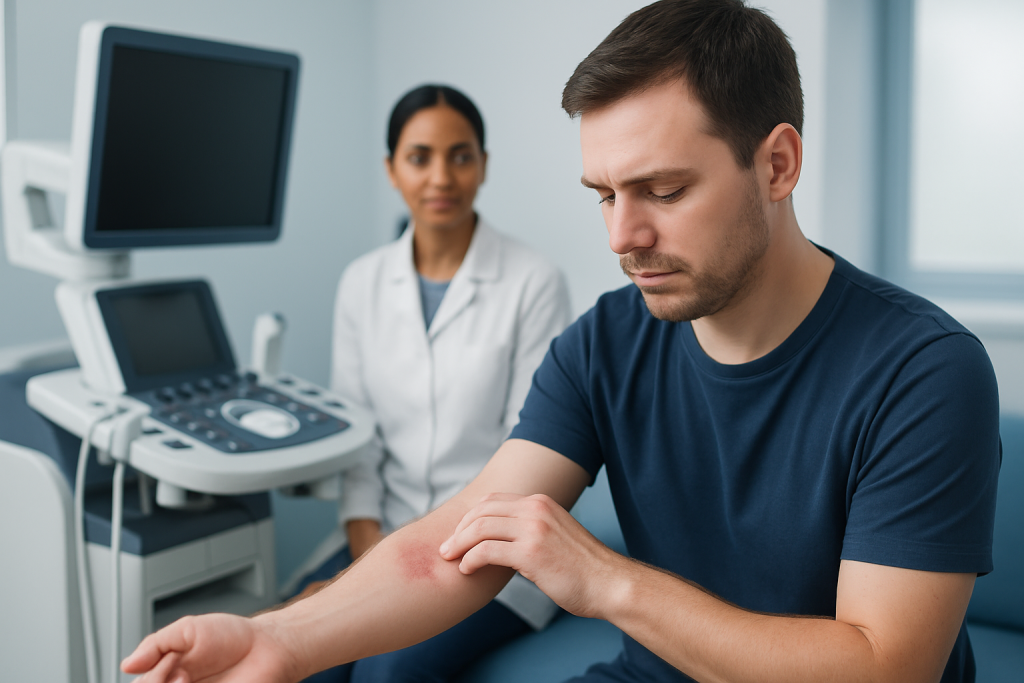
Chigger bites usually begin as small red bumps that appear on skin exposed to vegetation or tight clothing lines, such as around the ankles, waistline, behind the knees, or along sock and waistband areas. The itching may be intense and often becomes more noticeable several hours after exposure, which can make the source of the problem less obvious.
Some people notice grouped bumps, welts, or a line of irritated spots rather than a single isolated bite. The skin may feel warm, sensitive, or swollen from scratching. In children, the itch may be difficult to ignore, which can lead to more rubbing and a higher chance of skin breakdown.
Common features may include:
- Very itchy red papules or bumps
- Clusters near tight clothing or skin folds
- Itching that worsens after outdoor exposure
- Scratched areas that become raw or crusted
If the area develops pus, increasing pain, expanding redness, or fever, the problem may no longer be limited to a simple bite reaction and should be assessed by a clinician.
Causes & Risk Factors

Chigger bites are caused by the larval stage of mites that live outdoors in grassy, leafy, or wooded environments. The larvae attach to the skin and feed briefly, but the itch comes from the body’s reaction to the mite’s saliva and the local skin irritation it produces.
People are more likely to get chigger bites when they spend time close to the ground in areas with dense vegetation. Warm weather, long periods outdoors, and clothing that traps the larvae against the skin can increase the chance of bites. The risk is especially practical for hikers, campers, farm workers, gardeners, and children playing in natural spaces.
Risk also rises when skin is left unprotected. Bare legs, open shoes, shorts, and sleeveless clothing can make it easier for the larvae to reach the skin. In some cases, the bites may be noticed after returning home, when the person first has time to feel how intensely the area itches.
Diagnosis
Diagnosis is usually based on the story and the look of the rash rather than on special testing. A clinician will ask about recent time outdoors, where the skin was exposed, when the itch began, and whether other people in the same environment developed similar symptoms.
Because several skin problems can look similar, the doctor may also consider mosquito bites, flea bites, contact dermatitis, scabies, eczema, or an allergic skin reaction. The pattern of the rash, the location on the body, and the timing after outdoor exposure are often the strongest clues.
Testing is not usually needed for straightforward chigger bites. When the rash is unusual, severe, or persistent, an examination may help rule out infection or another condition that needs different treatment.
Treatment Options
Most chigger bites improve with supportive care. The first step is to wash the skin with soap and water as soon as possible after suspected exposure, which may remove any remaining mites and reduce irritation. Cool compresses can also help calm the itch.
Over-the-counter options may be useful for symptom relief, such as anti-itch lotions or oral antihistamines, but the best choice depends on the person’s age, health history, and current symptoms. A clinician may suggest a mild topical steroid for a short period if the inflammation is bothersome. The main goal is to reduce itching enough to prevent scratching-related damage.
It is important not to use harsh chemicals, hot water, or vigorous scrubbing on the skin, because these can make the irritation worse. If scratching has led to broken skin, the area should be kept clean and protected while it heals. Any sign of bacterial infection may require medical treatment.
Prevention & Self-care
Prevention starts before stepping into grass, brush, or wooded areas. Long sleeves, long pants, and closed shoes create a physical barrier, and tucking pants into socks can help reduce skin exposure. Light-colored clothing may also make it easier to notice tiny insects or mites after outdoor activity.
Repellents can be helpful when used according to the product label, especially on exposed skin and clothing where appropriate. After returning indoors, showering promptly and changing clothes may lower the chance of prolonged skin contact with mites. Laundering outdoor clothing after use is a sensible habit, particularly after time spent in tall grass or dense vegetation.
For self-care once a bite has occurred, the focus is gentle skin management. Avoid scratching, keep nails short, and use cool compresses or soothing topical products if needed. If itching is severe enough to disturb sleep, or if there is a history of sensitive skin, a doctor can advise on safe options.
When to See a Doctor
Medical advice is appropriate when the rash is not clearly improving after several days, when the itch is severe, or when the skin shows signs of infection. A doctor should also be consulted if there is widespread swelling, fever, or pain that seems out of proportion to a simple bite reaction.
People with eczema, diabetes, weakened immunity, or a history of significant allergic skin reactions may benefit from earlier evaluation, since scratching and skin injury can lead to more complicated healing. Children who are unable to stop scratching may also need guidance to prevent secondary infection.
For international patients who are unsure whether a rash is truly from chiggers or something else, a careful dermatology or general medicine review can be reassuring. Acibadem Health Point’s multidisciplinary specialists and JCI-accredited hospitals diagnose and treat this condition for international patients, with care plans tailored to the person’s symptoms and travel needs.
Frequently asked questions
Do chigger bites mean the mites are still in the skin?
No. Chiggers do not stay buried in the skin. The itch comes from the skin’s reaction after the larvae have fed and detached.
How long do chigger bites usually itch?
The itch often lasts several days, but the exact duration varies from person to person. Scratching can make it last longer by irritating the skin further.
Can chigger bites spread from person to person?
Chigger bites themselves do not spread from one person to another. However, if the skin becomes infected from scratching, that infection may need treatment.
What is the best first step after possible chigger exposure?
Wash the skin with soap and water as soon as possible and change into clean clothing. This may help remove any remaining mites and reduce ongoing irritation.
Are chigger bites dangerous?
They are usually not dangerous, but they can be very uncomfortable. The main concern is breaking the skin through scratching or missing another condition that looks similar.
When should a rash be checked by a doctor?
A rash should be checked if it becomes painful, swollen, warm, or oozing, or if it does not improve as expected. Medical review is also sensible when the cause of the rash is uncertain.
References
- Centers for Disease Control and Prevention
- American Academy of Dermatology
- Mayo Clinic
- Merck Manual Consumer Version
This article is for general information only and is not a substitute for professional medical advice. Please consult a qualified doctor about your individual situation.
Joint and spine care in Turkey — expert assessment & treatment
JCI-accredited · board-certified surgeons · reply within 24h
Add us as a Preferred Source to see more of our trusted health content across Google Search, AI Overviews and Discover.