Shoulder Press: Benefits and How To Do It

Key Takeaways
- The shoulder press trains the deltoids, triceps, upper chest, and stabilizing muscles around the shoulder blade.
- Proper technique matters because poor form can contribute to impingement, strain, or irritation of the rotator cuff.
- Pain is not a normal part of the exercise; sharp pain, weakness, or loss of motion should be assessed.
- People with prior shoulder injury, arthritis, or neck problems may need exercise modifications.
- Warm-up, gradual progression, and recovery days help reduce overload and support safer training.
Medically reviewed by the Acıbadem clinical team — August 19, 2026
The shoulder press is a familiar strength-training movement, but it asks a lot from the shoulder joint, upper back, and core. Understanding how it works, what can go wrong, and how to progress safely can help support long-term shoulder health.
Overview
The shoulder press is one of the most recognizable upper-body strength exercises. Whether performed with dumbbells, a barbell, kettlebells, or resistance bands, it involves pressing weight overhead from shoulder level to an extended arm position.
From a movement perspective, the exercise is simple. From a joint-health perspective, it is more nuanced. The shoulder is built for mobility, not just force, and overhead pressing depends on coordinated work between the rotator cuff, shoulder blade muscles, upper back, trunk, and arms. When those parts are not working together, the movement can become uncomfortable or inefficient.
For many people, the shoulder press is a useful part of fitness, rehabilitation, or sports conditioning. For others, especially those with shoulder pain or a history of injury, it may need to be adjusted. The goal is not to avoid overhead movement entirely, but to understand when the body is ready for it and how to respect its limits.
How the Shoulder Press Works
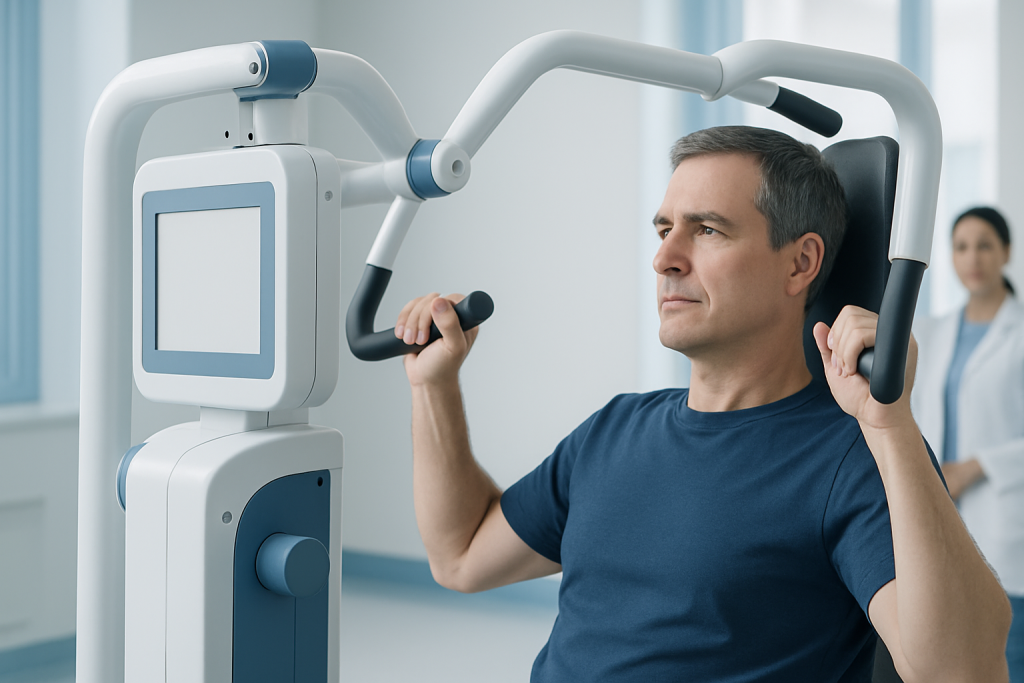
During a shoulder press, the arms move upward while the shoulder blades rotate and stabilize on the rib cage. The deltoid muscles do much of the lifting, but they do not work alone. The triceps help extend the elbows, the upper chest contributes early in the lift, and the core keeps the torso from leaning or over-arching.
This coordination is why the exercise can feel easy on one day and awkward on another. Fatigue, stiffness, limited thoracic spine motion, or poor scapular control can change how the load is shared across the joint. Even a small breakdown in mechanics may shift stress to the front of the shoulder or the neck.
There are several common variations. A seated press reduces the need for balance, while a standing press demands more trunk stability. Dumbbells allow each arm to move more naturally, which may be helpful if one side is weaker or if the shoulder feels crowded in a fixed bar path. A neutral grip, where the palms face each other, can also feel more comfortable for some people.
Symptoms and Signs to Pay Attention To

The shoulder press itself should create muscular effort, not pain. A working sensation in the shoulders, upper arms, and upper back is expected. By contrast, pain that is sharp, pinching, catching, or worsening with each repetition deserves attention.
People sometimes notice a few specific warning signs during or after overhead pressing:
- Pain in the front or top of the shoulder
- Clicking or grinding with discomfort
- Weakness that is new or out of proportion to usual fatigue
- Pain that spreads into the neck or down the arm
- Loss of range of motion after exercise
- Night pain that interrupts sleep
Some soreness after training can be normal, especially if the exercise was new or more intense than usual. However, soreness should gradually improve over a couple of days. If discomfort lingers, worsens, or changes how the shoulder moves, it is wiser to step back and have the pattern evaluated.
Causes & Risk Factors for Shoulder Pain with Pressing
Shoulder pain during a press can come from several overlapping causes. Rotator cuff irritation, tendinopathy, impingement-like symptoms, biceps tendon irritation, and joint inflammation are all possibilities. In some people, the issue is not a single diagnosis but a combination of poor load tolerance, tight surrounding tissues, and repeated overhead stress.
Risk is higher when training increases too quickly or when the exercise is performed through a range the body is not ready to control. Previous shoulder dislocation, rotator cuff injury, arthritis, postural stiffness, and poor scapular control may all make overhead lifting more challenging. Neck pain and upper-back stiffness can also influence shoulder mechanics.
Technique and training habits matter as much as anatomy. Common contributors include excessive arching of the back, flaring the elbows too far out, pressing too heavy too soon, locking out aggressively, or skipping warm-up work. In international patients who travel for care, it is often helpful to bring a clear history of when the pain began, what movements trigger it, and which modifications have already been tried. That information can make an orthopedic assessment more efficient and precise.
Diagnosis
A clinician usually begins by listening carefully to the story of the pain. When did it start? Was there a specific lift, fall, or awkward movement? Does the pain happen only during pressing, or also with reaching, dressing, sleeping, or daily overhead tasks? These details often point the evaluation in the right direction.
Physical examination typically includes range-of-motion testing, strength testing, and special maneuvers that look for irritation in the rotator cuff, biceps tendon, or shoulder joint. The doctor may also assess the neck and upper back, since pain that feels like it is in the shoulder can sometimes originate elsewhere.
Imaging is not always required, but it may be useful when symptoms persist, there is weakness, or an injury is suspected. X-rays can look for bone changes or arthritis, while ultrasound or MRI may help evaluate soft tissues such as tendons and bursae. The choice depends on the symptoms, examination findings, and whether surgery is being considered.
Treatment Options
Treatment depends on the cause and the severity of symptoms. In many cases, the first step is temporary modification rather than complete rest. That may mean reducing load, shortening the range of motion, switching to a neutral grip, or replacing overhead pressing with a less provocative exercise for a period of time.
Rehabilitation often focuses on restoring shoulder blade control, rotator cuff strength, and mobility in the chest and upper back. A physical therapist may also work on movement patterns so the shoulder does not take on more load than necessary. For some people, this stage is the difference between recurring irritation and a stable return to training.
Other treatments may be considered when pain is more persistent. These can include anti-inflammatory approaches recommended by a physician, activity guidance, or further specialist review if a structural problem is suspected. If there is a full-thickness tendon tear, recurrent instability, or advanced arthritis, surgical options may be discussed. The right choice depends on the diagnosis, goals, age, activity demands, and response to non-surgical care.
Prevention & Self-care
Prevention starts with respecting the shoulder’s range and capacity. A brief warm-up that includes arm circles, band pull-aparts, scapular activation, and light pressing sets can prepare the muscles and joints for work. Gradual progression is safer than jumping quickly to heavier loads or high-volume overhead training.
A few practical habits often help:
- Keep the rib cage stacked over the pelvis rather than leaning back excessively
- Press in a controlled path without rushing the lowering phase
- Choose a pain-free range of motion instead of forcing depth or lockout
- Balance pressing with pulling exercises for the upper back
- Allow recovery time between harder sessions
Self-care after training may include relative rest, gentle mobility work, and attention to sleep and overall workload. If the shoulder feels irritated, avoid testing it repeatedly with the same movement on the same day. A short break, a lighter variation, or professional guidance can prevent a minor strain from becoming a longer problem.
When to See a Doctor
Medical review is appropriate if shoulder press pain is sharp, persistent, or associated with weakness. It is also wise to seek evaluation if the shoulder feels unstable, if the arm cannot lift normally, or if pain continues during everyday activities long after exercise ends.
Prompt assessment is especially important after a fall, a sudden popping sensation, visible swelling, deformity, numbness, or pain that radiates down the arm. These symptoms do not always mean something serious, but they deserve a proper examination rather than self-treatment alone.
For people traveling from another country, it can be helpful to choose a center that can coordinate imaging, specialist review, and follow-up in one pathway. Acibadem Health Point works with multidisciplinary specialists in JCI-accredited hospitals to diagnose and treat shoulder conditions for international patients, with care plans that can be adapted to recovery needs after travel.
Frequently asked questions
Is the shoulder press safe for everyone?
Not necessarily. Many people can perform overhead pressing safely, but those with shoulder pain, recent injury, arthritis, or instability may need modifications or a different exercise choice. A clinician or physical therapist can help determine what is appropriate.
What is the best shoulder press variation for sore shoulders?
There is no single best option for everyone. Some people tolerate dumbbells or a neutral grip better than a barbell, while others need a reduced range of motion or a temporary alternative. The most suitable variation is the one that stays comfortable and controlled.
How can someone tell normal soreness from a problem?
Normal exercise soreness is usually dull, more generalized, and improves over a few days. Pain that is sharp, localized in the shoulder joint, worsening, or associated with weakness is more concerning. If symptoms keep returning with each workout, evaluation is sensible.
Should the lower back arch during a shoulder press?
A small natural curve is normal, but excessive arching is usually a sign that the weight is too heavy or the trunk is not stable enough. Overarching can shift stress away from the shoulders and strain the back. A stacked rib cage and pelvis generally provide better control.
Can shoulder press exercises help rehabilitation?
In some cases, yes, but only when they are introduced at the right time and dose. Pressing may be part of a graded strengthening plan after pain settles and mobility improves. It should be guided by a professional if there is a prior injury or ongoing symptoms.
When is imaging needed for shoulder pain during lifting?
Imaging may be considered if pain persists, strength is reduced, motion is limited, or a tear or other structural problem is suspected. An exam usually comes first, and the clinician decides whether X-ray, ultrasound, or MRI would be most useful. Imaging is not always necessary for short-lived discomfort.
References
- American Academy of Orthopaedic Surgeons
- Mayo Clinic
- National Institute of Arthritis and Musculoskeletal and Skin Diseases
- American College of Sports Medicine
- World Health Organization
This article is for general information only and is not a substitute for professional medical advice. Please consult a qualified doctor about your individual situation.
Joint and spine care in Turkey — expert assessment & treatment
JCI-accredited · board-certified surgeons · reply within 24h
Add us as a Preferred Source to see more of our trusted health content across Google Search, AI Overviews and Discover.