Chemosis: Symptoms, Causes and Treatment

Key Takeaways
- Chemosis is a sign, not a diagnosis, and it often points to irritation, allergy, infection, or fluid buildup around the eye.
- Common symptoms include puffiness of the conjunctiva, redness, tearing, foreign-body sensation, and sometimes blurred vision.
- Diagnosis focuses on the underlying cause, so the evaluation may include an eye exam and questions about recent allergies, infection, injury, or surgery.
- Treatment depends on the trigger and may include lubricating drops, allergy care, infection treatment, or management of another medical condition.
- Urgent medical review is important if chemosis appears with eye pain, vision changes, fever, trauma, trouble moving the eye, or breathing symptoms.
- Simple self-care such as avoiding rubbing the eye, using cool compresses, and following prescribed treatment can support recovery.
Medically reviewed by the Acıbadem clinical team — August 19, 2026
Chemosis is swelling of the thin membrane covering the white of the eye and the inside of the eyelids. It can happen with allergies, irritation, infection, trauma, or other eye and body conditions, and it is usually treatable once the cause is identified.
Overview
Chemosis describes a swollen, sometimes jelly-like appearance of the conjunctiva, the clear tissue that covers the white of the eye and lines the inside of the eyelids. The swelling can make the eye look puffy, watery, or unusually prominent, especially when someone blinks or looks sideways.
Rather than being a disease on its own, chemosis is a visible reaction of the eye to something else. In some people it appears after an allergy flare or eye rubbing; in others it follows infection, irritation from contact lenses, trauma, or surgery. Because the eye surface is delicate and exposed, it can respond quickly to changes in the environment or the body.
For international patients, chemosis is often one of the symptoms that brings them to an eye specialist while traveling or during recovery after treatment. The key practical question is not only how to reduce the swelling, but why it developed in the first place. That answer guides the safest and most effective treatment plan.
Symptoms
Chemosis usually starts with visible swelling of the conjunctiva. The tissue may look raised, balloon-like, or translucent over the white of the eye. Some people notice that the eyelid feels heavy or that the eye seems difficult to close fully because of the swelling.
The symptom pattern depends on the cause. Allergy-related chemosis commonly comes with itching, tearing, and both eyes being affected. Irritation or dry eye may cause burning, a gritty sensation, redness, and discomfort. If infection is involved, discharge, crusting, or eyelid swelling may also appear.
Other symptoms can include:
- Redness of the eye
- Excess tearing
- Blurred vision from the swollen surface or tearing
- Foreign-body sensation
- Light sensitivity in some cases
Chemosis alone does not always mean a severe problem, but it deserves attention when it is new, worsening, or paired with pain, vision change, or a recent injury.
Causes & Risk Factors

The conjunctiva swells when small blood vessels leak fluid into the tissue. This can happen for many reasons, which is why chemosis is best understood as a response pattern rather than a single condition.
Common causes include allergic conjunctivitis, eye infections such as viral or bacterial conjunctivitis, irritation from smoke or chemicals, dry eye, and contact lens wear. Eye rubbing can worsen the swelling, especially in people with allergies or chronic eye irritation. Chemosis may also appear after eye surgery, because the surface tissues are temporarily inflamed while healing.
Less common but important causes include trauma, orbital inflammation, thyroid eye disease, and conditions that affect fluid balance or blood circulation. In some situations, chemosis may accompany more urgent problems around the eye socket or nearby tissues, which is why associated symptoms matter so much.
Risk is higher in people who:
- Have seasonal or chronic allergies
- Wear contact lenses
- Have had recent eye surgery or an eye injury
- Work in dusty, smoky, or chemical environments
- Have a history of dry eye or recurrent conjunctivitis
Diagnosis
Diagnosis begins with a careful eye examination and a conversation about what happened before the swelling started. Doctors typically ask whether the symptom appeared suddenly or gradually, whether one or both eyes are involved, and whether there was recent exposure to allergens, infection, contact lenses, trauma, or a new medication.
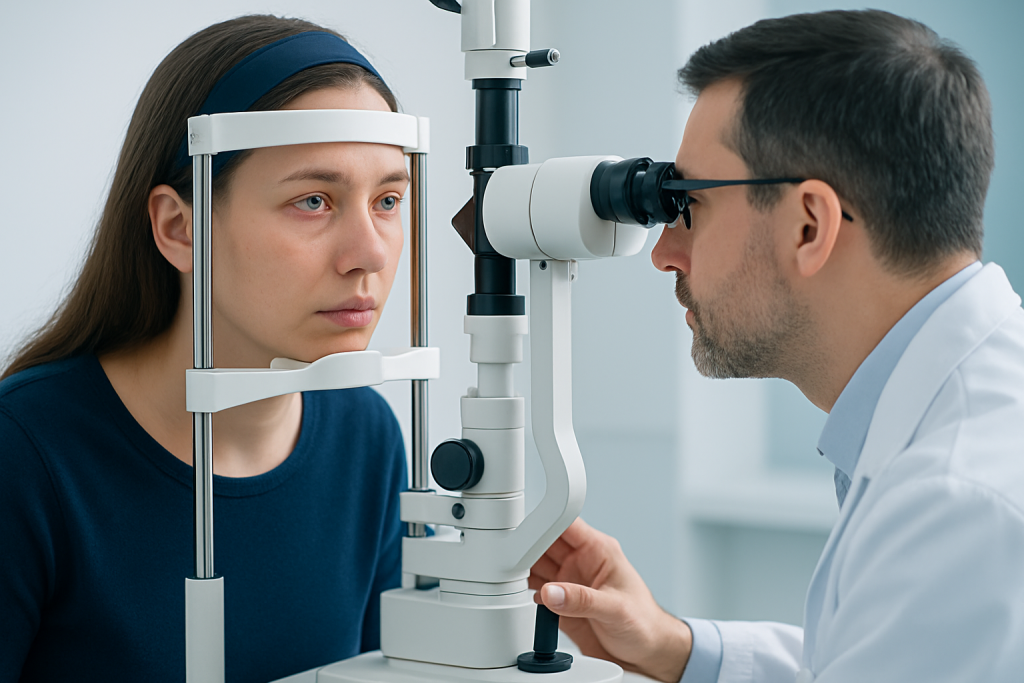
The eye exam may include checking vision, looking at the conjunctiva and eyelids under magnification, and examining the cornea to make sure the clearer front surface of the eye is not affected. If discharge is present, the pattern can help suggest viral, bacterial, or allergic inflammation. In some cases, the eye specialist may also check eye pressure or look for signs that swelling extends beyond the conjunctiva.
Tests are not always needed, but they may be used if the cause is unclear or if a more complex condition is suspected. Depending on the situation, this could include allergy assessment, culture of discharge, imaging, or a broader medical evaluation if the eye findings seem related to another illness.
Treatment Options
Treatment for chemosis is directed at the trigger. When allergies are the main cause, avoiding the allergen, using cool compresses, and following a doctor’s advice on antihistamine or anti-inflammatory eye drops can help settle the swelling. If dryness or irritation is contributing, lubricating drops may ease symptoms and protect the eye surface.
If infection is suspected, treatment depends on whether the cause is viral, bacterial, or another type of inflammation. A doctor may recommend targeted eye drops or other medicine after examining the eye. It is important not to use leftover antibiotics or steroid eye drops without medical guidance, because the wrong treatment can delay recovery or mask a more serious problem.
When chemosis occurs after surgery, it is often part of the expected healing process, but follow-up with the surgical team remains important. If the swelling is linked to trauma, thyroid eye disease, or another systemic condition, treatment may need to address that underlying issue as well. In rare situations, more urgent treatment is needed if the swelling is caused by pressure, bleeding, or a deeper orbital problem.
Helpful measures may include:
- Not rubbing the eyes
- Using cool compresses for comfort
- Wearing contact lenses only when cleared by a clinician
- Taking prescribed medicines exactly as directed
- Returning for follow-up if symptoms do not improve
Prevention & Self-care
Not every case of chemosis can be prevented, but many flare-ups can be reduced by protecting the eye surface. People with known allergies often do better when they limit exposure to triggers, shower after outdoor exposure, and avoid touching or rubbing the eyes during peak allergy periods. In dry or dusty environments, protective eyewear may also be useful.
Contact lens users should follow hygiene instructions closely, replace lenses and cases on schedule, and stop wearing lenses if irritation begins until a clinician says it is safe to resume. Good hand hygiene matters as well, especially when eye discharge or infection is present, because the eye can be easily irritated or reinfected by contaminated hands or products.
For someone recovering abroad or after surgery, self-care also means staying in contact with the treating team. Clear discharge instructions, medication timing, and follow-up plans are especially important when travel is involved. If swelling changes suddenly while the person is away from home, it is better to have a prompt review than to guess at the cause.
When to See a Doctor
Chemosis should be assessed promptly if it is new and unexplained, lasts more than a short period, or keeps returning. Even when the swelling seems mild, an eye examination is the safest way to confirm that the cornea, eyelids, and deeper eye structures are not involved.
Medical review is especially important if chemosis occurs with eye pain, reduced vision, marked redness, fever, pus-like discharge, recent injury, difficulty moving the eye, or swelling around the face. These features may indicate a problem that needs faster treatment. If the eye swelling appears alongside shortness of breath, lip swelling, or hives, urgent evaluation is also needed because a stronger allergic reaction may be present.
Patients traveling internationally should seek care early rather than waiting for a flight home if the swelling is worsening. A local ophthalmology assessment can help stabilize symptoms, and coordinated follow-up can continue after travel if needed. Acibadem Health Point’s multidisciplinary specialists and JCI-accredited hospitals diagnose and treat eye conditions such as chemosis for international patients, with attention to both the immediate eye problem and the recovery plan that follows.
Living With Chemosis
Most people recover well once the underlying cause is found and managed. The swelling may improve within days in straightforward allergic or irritative cases, although the timeline varies depending on the trigger and how much the eye surface has been inflamed. Patience is important, because the conjunctiva can remain puffy for a short time even after the main cause has started to settle.
It can help to keep track of what was happening before the symptoms started: a new cosmetic product, a change in environment, recent surgery, contact lens use, an upper respiratory infection, or a known allergy flare. These details often make the diagnosis clearer at the follow-up visit and help prevent the same pattern from returning.
For people receiving care away from home, written instructions are valuable. A concise plan for medicines, warning signs, and follow-up timing makes it easier to recover safely while traveling or after returning home.
Frequently asked questions
Is chemosis the same as conjunctivitis?
No. Conjunctivitis means inflammation of the conjunctiva, while chemosis means swelling of that tissue. The two often occur together, especially with allergies or infection, but chemosis is a sign rather than a full diagnosis.
Can chemosis go away on its own?
Sometimes it does, especially when it is caused by a mild irritant or a short-lived allergy flare. Even so, persistent or recurrent swelling should be checked so the underlying cause is not missed.
Does chemosis always mean an infection?
No. Allergies, dryness, rubbing, contact lenses, surgery, and trauma can all cause it. Infection is only one of several possible reasons, which is why an eye exam is useful.
Should contact lenses be stopped during chemosis?
Yes, contact lenses should usually be stopped until a doctor says it is safe to wear them again. Lenses can irritate the eye further and make infection harder to rule out.
Can cool compresses help?
They often provide comfort and may reduce swelling, especially when allergies or irritation are involved. They should be used gently and never as a substitute for medical evaluation if the eye is painful or vision changes.
When is chemosis urgent?
It is urgent if it comes with pain, vision loss, trouble moving the eye, fever, significant trauma, or facial swelling. It also needs prompt attention if breathing symptoms or widespread hives suggest a stronger allergic reaction.
References
- American Academy of Ophthalmology
- Merck Manual Professional Edition
- Mayo Clinic
- National Eye Institute
- NHS
This article is for general information only and is not a substitute for professional medical advice. Please consult a qualified doctor about your individual situation.
Explore treatments in Turkey — costs, top hospitals & a free quote
JCI-accredited · board-certified surgeons · reply within 24h
Add us as a Preferred Source to see more of our trusted health content across Google Search, AI Overviews and Discover.