Blue Light Glasses: Benefits and Limitations

Key Takeaways
- Blue light glasses are designed to filter part of the blue-violet light from screens and artificial lighting.
- They may feel helpful for some people, but they do not replace an eye exam or solve all causes of digital eye strain.
- Dry eyes, uncorrected vision problems, poor screen habits, and lighting often play a bigger role than blue light itself.
- Sleep-related concerns are more about evening screen habits and light exposure than glasses alone.
- Persistent headaches, blurry vision, or eye discomfort deserve a proper eye-care evaluation.
Medically reviewed by the Acıbadem clinical team — August 19, 2026
Blue light glasses are often marketed as a simple solution for screen-related discomfort, but their real benefits are more specific than many people expect. This article explains what they may help with, what the evidence does not show, and how to choose safer, more effective eye-care habits.
Overview
Blue light glasses have become a familiar answer to a very modern problem: long hours in front of phones, laptops, tablets, and monitors. They are usually advertised as lenses that block or filter part of the blue light emitted by digital screens and indoor lighting. For people who spend much of the day online, the idea sounds practical and reassuring.
The reality is a little more nuanced. Blue light is not inherently harmful in the small amounts that come from typical screens, and the discomfort people feel after heavy device use often has several causes. Eye care specialists usually look beyond the lens color itself and consider screen distance, blinking rate, dry eye, glare, and whether someone needs vision correction.
For international patients planning care from another country, this topic can be especially relevant because eye strain often develops gradually during work travel, remote meetings, and extended use of digital devices across time zones. Understanding what blue light glasses can and cannot do helps people decide whether they need a simple habit change, a new prescription, or a full ophthalmic assessment.
What blue light is and why it gets attention
Blue light is part of the visible light spectrum. It is present in sunlight, LED lighting, and digital screens. Because it has a shorter wavelength and higher energy than some other visible colors, it has attracted concern over whether it might affect the eyes, sleep, or long-term visual health.
Most of the concern comes from two separate questions. The first is whether screen light can cause eye damage. The second is whether screen use late in the day can interfere with sleep by affecting the body’s internal clock. These are related, but they are not the same issue, and blue light glasses do not address both in the same way.
Researchers and eye specialists generally agree that the typical blue light exposure from screens is far lower than sunlight exposure. For that reason, blue light glasses are not considered a protective necessity for everyone. Their value is usually more practical and symptom-based than medical in the strict sense.
Symptoms people often hope blue light glasses will ease

Many people buy blue light glasses because they notice discomfort after long device use. The symptoms are often grouped under digital eye strain, which may include tired eyes, dryness, blurred vision, or a feeling that the eyes need constant refocusing. Headaches can also appear, especially after extended screen time without breaks.
It is important to know that these symptoms do not point to one single cause. A person may be struggling with dry eye, uncorrected farsightedness or astigmatism, glare from a bright window, or simply too few pauses during the workday. Blue light glasses may feel soothing for some users, but they do not correct the underlying issue when the cause is something else.
- Eye fatigue after reading or screen use
- Dryness or a burning sensation
- Intermittent blurred vision
- Light sensitivity in bright rooms
- Headache linked to prolonged near work
Because these symptoms overlap with common vision and surface-eye problems, an eye exam is often the most useful next step if they persist.
What the evidence says about benefits and limits
Blue light glasses are often promoted as a broad solution, but current evidence is more modest. Some people report that they feel less glare or more comfortable wearing them, especially if the lenses have an anti-reflective coating or a tint that changes how the screen looks. Personal comfort can matter, particularly during long work sessions.
At the same time, major eye-care organizations have not shown that blue light from screens is a major cause of eye disease in healthy people. In other words, the glasses may help with comfort for some users, but they are not a proven treatment for digital eye strain on their own, and they are not a substitute for proper vision care.
It also helps to separate marketing claims from practical use. A pair of glasses that reduces glare, improves contrast, or reminds a person to take breaks may feel useful even if the blue light filter itself is not the main reason. That is why the real-world experience can differ from the scientific explanation.
Causes and risk factors behind screen discomfort
When someone feels worse after screen use, the cause is often a combination of habits and eye conditions rather than blue light alone. Prolonged focusing at close distance can fatigue the focusing system of the eyes. Reduced blinking during screen work can lead to dry eye symptoms. Poor lighting can make the eyes work harder, and an outdated prescription can magnify the strain.
Certain daily routines can make symptoms more likely. People who move between laptops, phones, and tablets without breaks; work in air-conditioned or very dry environments; or spend many hours in front of screens in the evening may notice more discomfort. Contact lens wearers and people with existing dry eye are also more likely to feel irritated during intense screen use.
Blue light glasses are sometimes considered by people who are particularly sensitive to bright light, but the more important question is whether the discomfort comes from the lenses, the environment, or the eyes themselves. A personalized assessment usually gives a clearer answer than trial and error alone.
Diagnosis: when the eyes need a proper assessment
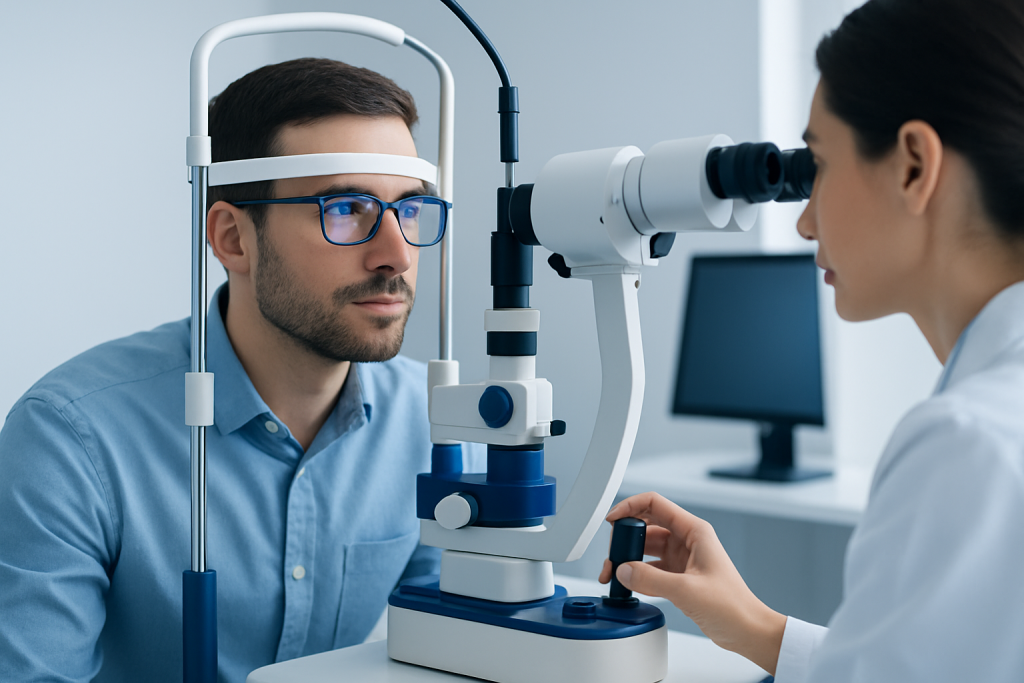
A straightforward eye examination can reveal whether the issue is really digital eye strain, a refractive error, dry eye, or something else. The visit usually includes a review of symptoms, a check of visual acuity, and sometimes a refraction test to see whether glasses or a prescription change would help. The eye doctor may also evaluate the tear film and eye surface if dryness is part of the picture.
For people who travel internationally for care, this kind of evaluation can be valuable because it brings together several concerns at once: the current prescription, symptoms linked to long-haul work or travel schedules, and whether the patient needs a practical plan for follow-up at home. A thoughtful exam can prevent unnecessary purchases and point to the most effective next step.
If the symptoms are severe, new, or one-sided, the doctor may look for other causes beyond routine screen fatigue. That is especially important if there is eye pain, sudden vision change, flashes, floaters, or redness that does not settle.
Treatment options and practical alternatives
When eye strain is related to screen use, treatment is usually broader than choosing one pair of glasses. A doctor may recommend a prescription update, artificial tears for dryness, or better screen ergonomics. Anti-reflective coating can help reduce glare for some people, and in some cases a mild tint may improve comfort even if the blue-light filter itself is not the main benefit.
Helpful changes often include adjusting screen height, increasing text size, reducing glare from windows or lamps, and using the 20-20-20 rule: every 20 minutes, look at something about 20 feet away for 20 seconds. Regular blinking and short screen breaks matter more than many people expect because they help protect the tear film.
For sleep-related concerns, the most effective approach is usually reducing bright screen exposure in the evening, dimming devices, and keeping a consistent bedtime routine. Blue light glasses may be part of that plan for some people, but they work best as a small support rather than the main strategy.
- Keep the screen slightly below eye level
- Use adequate room lighting to reduce contrast
- Increase font size rather than leaning forward
- Take brief, regular breaks from near work
- Ask about dry eye treatment if symptoms persist
Prevention and self-care for everyday screen users
Most people can reduce digital eye discomfort with simple changes that are easy to maintain. The goal is not to avoid screens entirely, but to make screen use less demanding on the eyes. Small adjustments often provide more benefit than switching to fashionable lenses alone.
Hydration, regular blinking, and a reasonable screen schedule all help. People who already know they have dry eye may need a more deliberate routine, especially in dry cabin air, heated offices, or air-conditioned rooms. Travelers may notice more symptoms after flights or long conference days, when both fatigue and dehydration can add to the strain.
Blue light glasses can still be tried if a person finds them comfortable, especially if the lenses also reduce glare. The safest approach is to view them as one option among several, not as a cure-all. If symptoms improve only partly or not at all, it is worth revisiting the eye exam rather than simply trying a different pair.
When to see a doctor
Eye strain that comes and goes with screen use is common, but persistent or worsening symptoms should not be ignored. A doctor or eye-care professional should evaluate ongoing blurry vision, frequent headaches, dry eye that does not improve with basic care, or discomfort that interferes with work and daily tasks.
Prompt attention is especially important if there is sudden vision loss, eye pain, new flashes of light, a shower of floaters, or redness with sensitivity to light. These are not typical blue light glasses issues and deserve medical assessment.
For patients considering care abroad, it is reasonable to seek an eye clinic that can review symptoms, imaging if needed, and prescription needs in one place so follow-up plans are clear before returning home. Acibadem Health Point’s multidisciplinary specialists and JCI-accredited hospitals diagnose and treat eye conditions for international patients with that continuity in mind.
A balanced way to think about blue light glasses
Blue light glasses are neither miracle products nor useless fashion accessories. For some people, they may provide a small but real improvement in comfort, especially when paired with anti-reflective coatings and better screen habits. For others, they make little difference because the true problem is dry eye, an outdated prescription, glare, or simply too much uninterrupted near work.
The most useful perspective is a practical one: if the glasses feel comfortable, they can be part of a broader eye-care routine. If the symptoms continue, the eyes may be asking for a proper examination rather than another accessory. That approach usually leads to better, longer-lasting relief.
In the end, screen-related eye care is less about chasing one perfect product and more about understanding what the eyes need day by day. That may be a new prescription, improved lighting, dry eye treatment, or simply more frequent breaks.
Frequently asked questions
Do blue light glasses really work?
They may help some people feel more comfortable during long screen sessions, especially if glare is part of the problem. However, they are not a guaranteed fix for digital eye strain, and they do not replace an eye exam or proper screen habits.
Can blue light glasses prevent eye damage?
There is no strong evidence that typical screen-related blue light exposure causes eye damage in healthy people. For most users, the bigger concern is comfort, dryness, and vision fatigue rather than injury from blue light itself.
Will blue light glasses help with sleep?
They may help a little in some situations, but sleep is influenced by many factors, including how late a person uses screens and how bright the devices are. Reducing evening screen time and keeping a regular sleep routine are usually more effective than glasses alone.
Are blue light glasses the same as prescription glasses?
No. Blue light glasses may be non-prescription or prescription, depending on the lenses. If a person has blurred vision or headaches, a proper prescription check is important because the problem may be uncorrected vision, not blue light.
What is the best way to reduce screen eye strain?
The best approach usually combines regular breaks, better lighting, blinking more often, and the right prescription if needed. Dry eye treatment and screen positioning also make a noticeable difference for many people.
When should someone stop relying on blue light glasses and see an eye doctor?
If symptoms keep returning, are getting worse, or come with pain or sudden vision changes, an eye doctor should evaluate the eyes. Blue light glasses are only a comfort tool, and ongoing symptoms often point to a treatable eye condition.
References
- American Academy of Ophthalmology
- National Eye Institute
- Mayo Clinic
- Cochrane Library
This article is for general information only and is not a substitute for professional medical advice. Please consult a qualified doctor about your individual situation.
Explore treatments in Turkey — costs, top hospitals & a free quote
JCI-accredited · board-certified surgeons · reply within 24h
Add us as a Preferred Source to see more of our trusted health content across Google Search, AI Overviews and Discover.