Belly Buttons Innies And Outies

Key Takeaways
- An innie or outie usually reflects how the umbilical area healed after birth, not personal hygiene or health status.
- A new bulge, pain, redness, discharge, or swelling around the belly button can sometimes signal a hernia or infection.
- Most belly button differences do not need treatment unless they cause symptoms or are linked to another condition.
- Good hygiene, gentle cleaning, and awareness of changes are usually enough for day-to-day care.
- A clinician should evaluate persistent symptoms, especially in infants, pregnant people, or anyone with a tender lump.
Belly buttons come in different shapes, and most innies and outies are normal variations rather than a sign of illness. Understanding how they form, what changes are expected, and which warning signs matter can help patients feel more confident about abdominal health.
Overview
The belly button is one of the body’s smallest features, but it often draws more curiosity than medical concern. An innie is a belly button that sits inward, while an outie protrudes outward. Both are common, and either shape can be completely normal.
What people often call an “outie” may simply be the way the skin and underlying tissue healed after the umbilical cord separated after birth. In other cases, a protruding belly button can reflect an umbilical hernia or another change in the abdominal wall. For most people, the distinction matters mainly when the area becomes painful, enlarged, red, or difficult to push back in.
For families deciding whether to seek care, it helps to think less about appearance and more about function. A belly button that has always looked a certain way and causes no discomfort is usually just a normal body variation. A belly button that changes shape later in life deserves a closer look, especially if the person is planning travel, pregnancy care, or surgery and wants clear guidance before leaving home.
Symptoms
Innies and outies are primarily visual differences, but symptoms can suggest that the belly button area needs attention. Many people with a naturally prominent navel have no symptoms at all. Others may notice mild tenderness only when the area is pressed or rubbed by clothing.
Symptoms that are more meaningful include pain, a soft lump that becomes more noticeable with coughing or straining, skin redness, warmth, drainage, or swelling. In infants, a bulge around the navel may become more obvious when crying or straining and may shrink when the baby is relaxed. In older children or adults, a new or enlarging outie-like bulge can sometimes be linked to an umbilical hernia.
- Visible bulge at or near the navel
- Discomfort when bending, coughing, or lifting
- Redness, irritation, or foul-smelling discharge
- Skin that feels warm or increasingly tender
- Nausea, vomiting, or abdominal pain in more concerning cases
People should not assume every protruding belly button is harmless, but they also do not need to panic. The pattern of symptoms, how long they have been present, and whether the shape has changed over time help clinicians decide what is normal and what needs treatment.
Causes & Risk Factors

Most innie-versus-outie differences begin with healing after the umbilical cord falls off after birth. The exact shape depends on how the skin, scar tissue, and deeper tissues close in that area. There is no proven connection between belly button shape and cleanliness, nutrition, or overall personal health.
Some outies are simple cosmetic variants. Others are related to an umbilical hernia, which occurs when tissue pushes through a weak spot in the abdominal wall near the navel. Hernias are more likely in infants, but they can also appear in adults, especially after weight changes, repeated heavy lifting, pregnancy, or conditions that increase pressure inside the abdomen.
Risk factors for a protruding navel that needs evaluation can include:
- Premature birth or low birth weight in infants
- Family tendency toward hernias or abdominal wall weakness
- Pregnancy, especially with repeated stretching of the abdominal wall
- Obesity or significant weight gain
- Frequent straining, chronic cough, or heavy lifting
Infection, piercing-related irritation, and skin conditions can also affect the appearance of the belly button. In these cases, the issue is usually the surrounding tissue rather than the navel shape itself.
Diagnosis
Doctors usually begin with a physical examination. They look at the shape of the navel, check whether a bulge changes with standing or coughing, and gently assess whether the area is tender or reducible, meaning it can be moved back in. In many cases, this exam is enough to tell whether the belly button is a normal variant or something more than a cosmetic difference.
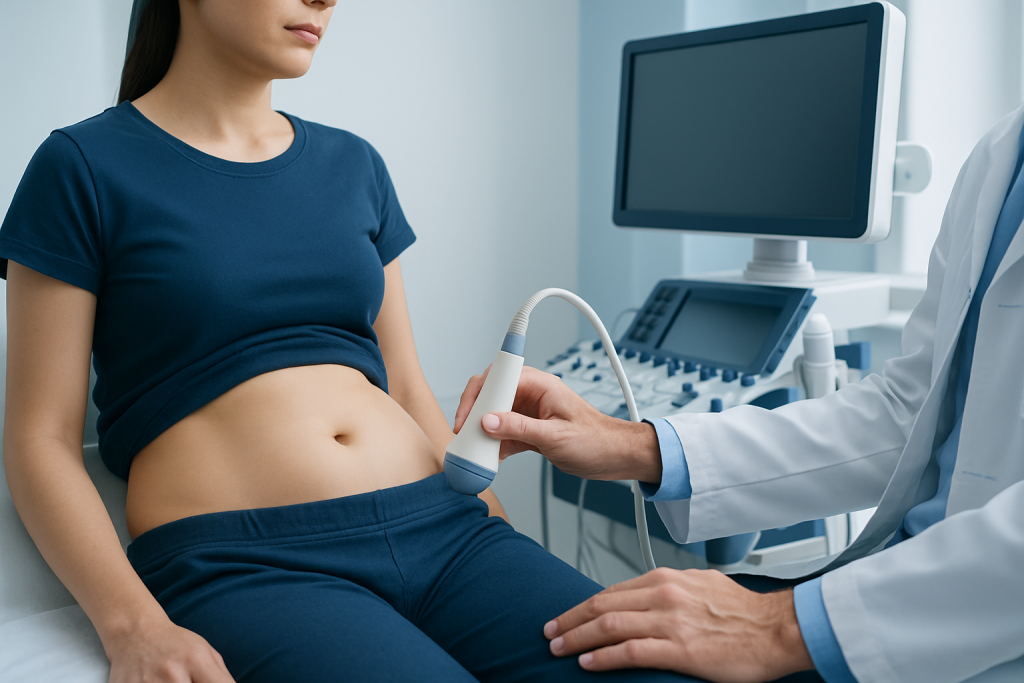
If an umbilical hernia, infection, or another abdominal issue is suspected, imaging may be recommended. An ultrasound is commonly used because it is noninvasive and can help show tissue movement through the abdominal wall. More advanced imaging is rarely needed unless the findings are unclear or the person has broader abdominal symptoms.
For international patients, a clear diagnosis can be especially helpful before travel or planned procedures. Knowing whether the navel is simply an outie or a hernia reduces uncertainty and helps people plan follow-up care at home, including when an in-person reassessment is worthwhile after returning from travel.
Treatment Options
Most innies and many outies do not require treatment. If the belly button is healthy, painless, and stable in shape, reassurance may be all that is needed. Treatment becomes relevant when there is a hernia, ongoing irritation, infection, or a cosmetic concern that the patient wants to discuss with a specialist.
For an umbilical hernia, the approach depends on age, symptoms, and whether the hernia is changing. In infants, many small hernias close on their own as the abdominal wall strengthens. In adults, hernias are less likely to resolve spontaneously, and surgery may be considered if there is pain, enlargement, or a risk of complications.
When infection or irritation is present, care may include gentle cleansing, avoiding triggers such as tight clothing or jewelry, and targeted medical treatment if a clinician confirms an infection. Cosmetic procedures to reshape the navel are also possible in selected cases, usually after a discussion of benefits, scarring, and recovery time. Any procedure should be planned with a qualified clinician who can explain what is realistic and what is purely aesthetic.
Prevention & Self-care
People cannot usually choose whether they have an innie or outie, but they can protect the belly button area from irritation and unnecessary strain. Daily care is simple: clean gently with soap and water, rinse well, and dry the area afterward. Overcleaning, harsh products, or picking at the navel can irritate the skin and create problems that were not there before.
If a person has a known hernia or feels a bulge near the navel, it helps to avoid heavy straining when possible and to follow a clinician’s advice about exercise, lifting, and core activity. During pregnancy or after abdominal surgery, following recovery instructions closely can reduce discomfort and support healing.
- Keep the area clean and dry
- Avoid scratching, squeezing, or inserting sharp objects
- Choose clothing that does not rub the navel repeatedly
- Seek guidance before starting intense core workouts if a hernia is known or suspected
- Monitor for any change in size, color, or pain
For people traveling for care, it is sensible to bring a summary of symptoms, prior imaging, and any previous surgical history. That information makes it easier for a treating team to judge whether the navel shape is a benign variation or part of a larger abdominal wall issue.
When to See a Doctor
A clinician should evaluate a belly button that is newly protruding, painful, red, draining, or getting larger over time. This is especially important if the area feels firm, cannot be gently reduced, or becomes painful with nausea, vomiting, or bloating. Those features can indicate a hernia that needs prompt attention.
In infants, a swollen navel should be checked if it seems very tender, discolored, or unusually large, or if the baby is feeding poorly or appears unwell. In adults, symptoms after pregnancy, weight change, or prior surgery are worth discussing, because abdominal wall weakness can develop for several reasons.
Anyone planning Varicose Vein Treatment Abroad: When Stockings Are Enough and When Procedures Help More" class="ahp-ilk">treatment abroad should choose a team that can coordinate diagnosis, imaging, and follow-up in a structured way. At Acibadem Health Point, multidisciplinary specialists and JCI-accredited hospitals diagnose and treat this condition for international patients, with care plans designed to support recovery before and after travel.
Even when the answer turns out to be reassuring, an evaluation can bring clarity. Patients leave with a better sense of what is normal for them, what changes to watch for, and when a routine check is enough versus when a faster review is needed.
Frequently asked questions
Is an outie belly button unhealthy?
Not usually. Many outies are simply normal variations in the way the navel healed after birth. It becomes a medical concern mainly if it is new, painful, red, or associated with a lump that changes with coughing or straining.
Can someone change an innie into an outie, or vice versa?
Natural belly button shape usually cannot be changed without a procedure. Cosmetic surgery can reshape the navel in selected cases, but it is not medically necessary for most people. A clinician should first rule out a hernia or other cause of a protruding belly button.
What is the difference between an outie and an umbilical hernia?
An outie is a general description of a belly button that sticks out. An umbilical hernia is a specific medical condition in which tissue pushes through a weak spot in the abdominal wall near the navel. A hernia may look like an outie, but not every outie is a hernia.
Do belly buttons get infected easily?
They can become irritated or infected, especially if moisture, friction, or piercing-related issues are present. Signs include redness, swelling, bad-smelling discharge, or persistent tenderness. Gentle cleaning and dry skin care help lower the risk.
Can a belly button shape change over time?
Yes, it can. Pregnancy, weight change, surgery, or a hernia may alter the look of the navel. A change that happens later in life is more important to assess than a shape someone has had since infancy.
When is a belly button bulge an emergency?
A bulge needs urgent medical attention if it becomes very painful, hard, discolored, or cannot be gently reduced, especially if it comes with vomiting or severe abdominal pain. Those symptoms can signal a trapped hernia or another urgent problem. Prompt evaluation is the safest choice.
References
- World Health Organization
- American Academy of Pediatrics
- Mayo Clinic
- Cleveland Clinic
- American College of Surgeons
This article is for general information only and is not a substitute for professional medical advice. Please consult a qualified doctor about your individual situation.