Beard Transplant Planning: Density, Shape, and Healing Questions to Ask First

Key Takeaways
- Beard transplant planning starts with the donor area, facial balance, and long-term goals.
- Density and shape should match facial features rather than follow trends alone.
- Healing includes redness, tiny scabs, and shedding before new growth begins.
- A qualified surgeon will review hair texture, skin type, and any scarring or skin conditions.
- Good preparation includes discussing aftercare, travel timing, and follow-up if care is received abroad.
Medically reviewed by the Acıbadem clinical team — June 13, 2026
A beard transplant can help restore missing or uneven facial hair, but the best results usually come from thoughtful planning before the procedure. Understanding density, shape, healing, and donor hair use helps patients make informed choices and set realistic expectations.
Overview
A beard transplant is a form of hair restoration in which hair follicles are usually taken from the back or sides of the scalp and placed into areas of the face that are patchy, thin, or absent. For many people, the goal is not simply to add more hair, but to create facial hair that looks natural in motion, in different lighting, and as the beard gradually matures.
Planning matters because the face is highly visible and personal. Small decisions about angle, density, and outline can change the final appearance more than patients expect. Before a procedure, a surgeon should review the patient’s facial structure, hair characteristics, skin health, and the amount of donor hair available, then discuss what can realistically be achieved.
For international patients, planning also includes logistics: how long the stay should be, when a follow-up visit may be needed, and how healing will be managed once the patient returns home. A clear plan reduces uncertainty and helps the patient move into treatment with steadier expectations.
What Beard Transplant Planning Tries to Solve
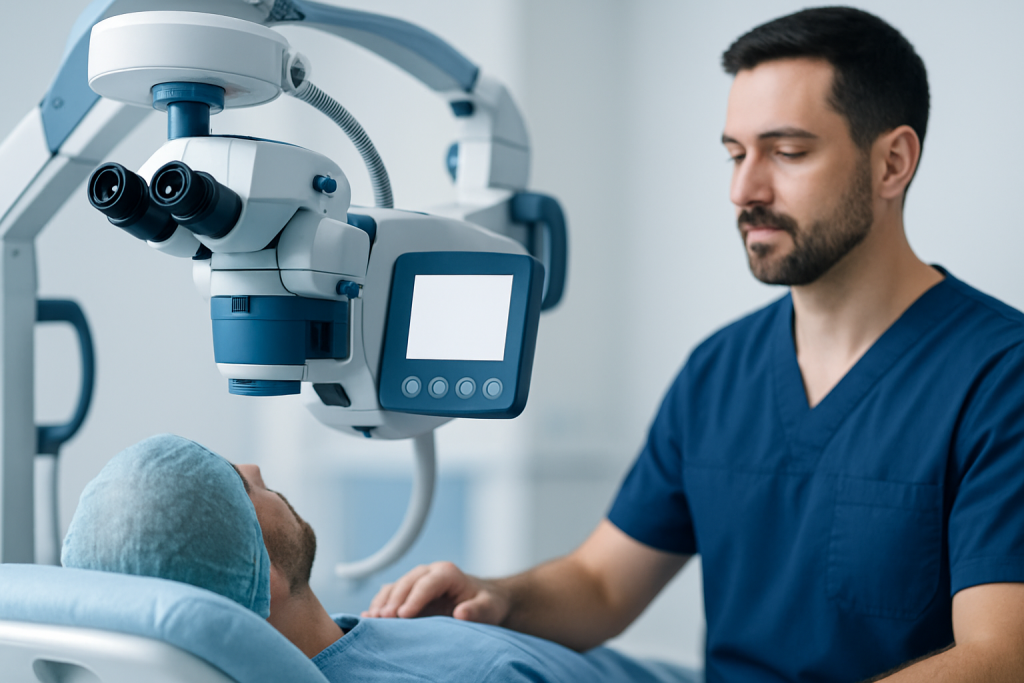
People seek beard restoration for different reasons. Some have naturally sparse growth, while others have patchiness from genetics, scars, burns, acne, trauma, or previous procedures. In some cases, the beard has never grown evenly, and in others, growth has changed after illness or skin injury.
Planning begins by identifying the reason for the missing hair and whether the skin is healthy enough for transplantation. The surgeon also looks at whether the patient wants a full beard, a stronger goatee, a sharper cheek line, a connected mustache and beard, or simply better definition in isolated areas.
These goals matter because the face is not a blank canvas. The beard must fit the person’s age, ethnicity, hair caliber, facial symmetry, and style preferences. The best plan is usually one that supports a natural-looking result rather than a dramatic one that may not age well.
Density: How Full Should the Beard Look?
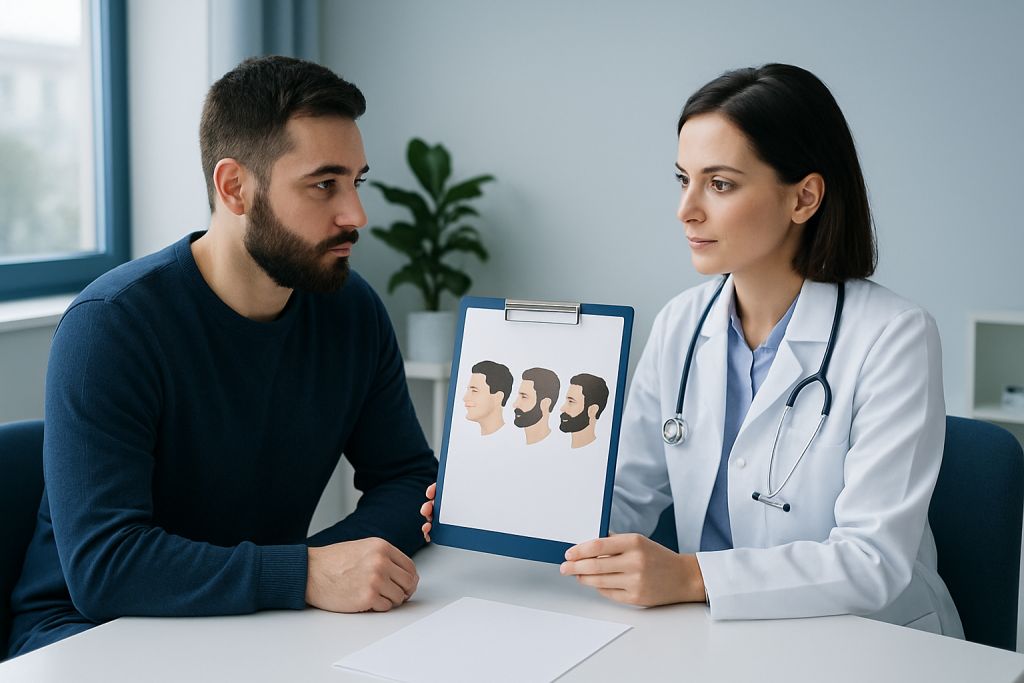
Density refers to how closely the transplanted hairs are placed and how thick the beard appears once growth begins. A common mistake is assuming that the densest possible approach is always best. In facial hair restoration, density has to be balanced with blood supply, healing, and the natural look of hair growth.
A surgeon may discuss whether the goal is a light shadow, moderate coverage, or a fuller beard. Some patients want strong definition at the jawline, while others need fill-in work only at the cheeks or chin. Hair characteristics also influence density planning: coarse, dark hair may appear fuller with fewer grafts than finer, lighter hair.
Patients should ask how many grafts are likely needed, whether the planned density can be achieved in one session, and how the surgeon avoids an overly uniform appearance. Real beards are rarely perfectly even, so subtle variation often creates the most believable result.
Shape, Hair Direction, and Facial Balance
Beard shape is as important as beard volume. Hair should be placed at the right angle and direction so it grows downward and follows the natural contours of the face. Poorly planned direction can make the beard look stiff or unnatural, even if the density is good.
Before treatment, the surgeon typically maps the cheek line, sideburn transition, mustache area, jawline, and chin. This design should work with the patient’s face rather than copy a style seen on someone else. A strong beard line may suit one face and overwhelm another.
Patients may find it helpful to bring reference photos, but the discussion should focus on adaptation rather than imitation. The aim is to translate a preferred style into something that matches the patient’s anatomy, hair type, and long-term grooming habits.
- Cheek line: should look intentional, not overly sharp or too low.
- Jawline: should match the natural contour of the face.
- Chin area: may need special planning for fullness and symmetry.
- Mustache connection: should be checked for balance on both sides.
Donor Hair, Scarring, and Candidacy
Most beard transplants use hair from the scalp because it is usually the best match in strength and reliability. The surgeon will evaluate the donor area to make sure enough suitable hair exists without creating an obvious thinning pattern where the hair is taken from.
Hair texture, curl pattern, and color all influence the final appearance. A patient with thick wavy donor hair may see a different aesthetic outcome than someone with finer straight hair, even when the graft count is similar. The surgeon should explain these differences clearly before the procedure.
Scarring in the beard area can sometimes be improved with transplantation, but scar tissue may heal differently than normal skin. That means the plan may need adjustment, including a more conservative density or staged treatment. Patients with active skin disease, uncontrolled acne, or certain inflammatory conditions may need to address those issues first.
What Happens During the Procedure and Healing
Beard transplantation is usually performed with local anesthesia, and follicles are placed one by one into tiny recipient sites. The procedure may take several hours depending on the number of grafts and the complexity of the design. Precision is especially important in the face because the planting angle and spacing affect both appearance and healing.
After treatment, temporary redness, mild swelling, small scabs, and tenderness are common. In many cases, the transplanted hairs shed first before new growth begins. That shedding can surprise patients, but it is usually part of the normal hair cycle after transplantation.
Healing plans should be discussed before travel, not after. Patients need to know how to wash the face, what activities to avoid, how to sleep, when to shave again, and what type of follow-up is expected if they are returning to another country. For some international patients, coordination with the surgical team by message or telemedicine can make this period much smoother.
Prevention, Preparation, and Self-care Before Surgery
Good results often begin before the procedure day. Patients are usually advised to arrive in good general health, stop smoking if they can, and mention all medications, supplements, and skin products they use. The surgeon may ask about past keloids, slow healing, or skin sensitivity because those details can affect planning.
It can help to prepare practical questions in advance. Patients often want to know how the beard will look during the shedding phase, whether they can wear masks or helmets, how soon they can travel, and when they can return to exercise or work. Writing these questions down can prevent important details from being forgotten during the consultation.
- Clarify the target style: full beard, goatee, cheek fill, or scar coverage.
- Ask whether one session is enough or whether a second session may help.
- Confirm how long the early healing phase usually takes.
- Discuss the donor area and how it will be protected.
- Understand who to contact if healing questions arise after flying home.
When to See a Doctor
A beard transplant consultation is useful when a person wants facial hair restoration and is ready to understand the limits as well as the possibilities. It is especially important when the beard is missing because of scarring, burns, prior surgery, or a skin condition that may need treatment first.
Medical advice should be sought if facial hair loss is sudden, patchy in a new way, or accompanied by itching, scaling, pain, or changes in skin color. These signs may point to an underlying condition that should be evaluated before cosmetic planning begins.
Patients traveling for care may benefit from choosing a center that can coordinate diagnosis, procedure planning, and aftercare in one pathway. At Acibadem Health Point, multidisciplinary specialists and JCI-accredited hospitals diagnose and treat this condition for international patients, while also helping coordinate follow-up needs after treatment.
If the patient is unsure whether beard restoration is appropriate, a qualified dermatologist or hair restoration surgeon can explain whether the issue is best treated with transplantation, medical management, or a combination of approaches.
Questions to Ask at the Consultation
A good consultation should feel like a planning session, not a sales pitch. The patient should leave with a clear sense of what can be achieved, how the face will be designed, and what the healing timeline may look like. Asking direct questions is often the best way to uncover whether the approach fits the patient’s goals.
It is reasonable to ask how the surgeon designs the beard line, how they estimate graft numbers, how they handle patchy zones, and what happens if the patient wants a denser result later. Patients should also ask who performs each part of the procedure and what support exists if they are traveling from another country.
- What density is realistic for my skin and donor hair?
- How will the beard shape be chosen for my face?
- What should I expect during the shedding and regrowth phases?
- How do you manage follow-up after I return home?
- What signs would mean I should contact the clinic after surgery?
Frequently asked questions
Who is a good candidate for a beard transplant?
A good candidate usually has stable hair loss or sparse beard areas, healthy skin, and enough donor hair on the scalp. A consultation is needed to confirm whether the cause is suitable for transplantation and whether any skin condition should be treated first.
How is beard density decided before surgery?
Density is planned according to the patient’s facial shape, donor hair quality, skin characteristics, and desired style. The goal is usually a natural-looking result that fits the face rather than the highest possible hair count.
Will transplanted beard hair look natural?
It can look natural when the hair is placed at the correct angle, direction, and spacing. Natural appearance depends on careful design, realistic density, and a surgeon who understands facial balance.
What should patients expect during healing?
Early healing commonly includes redness, swelling, small scabs, and some shedding of the transplanted hairs. New growth usually develops later, so patience is important during the first weeks and months.
Can beard transplants help with scars?
Yes, in some cases beard transplantation can help cover stable scars or areas of hair loss from injury. The surgeon will first assess whether the scar tissue is healthy enough to support grafts and whether the result is likely to be even.
How soon can someone travel after a beard transplant?
Travel timing depends on the procedure, the patient’s healing, and the surgeon’s advice. International patients should confirm the recommended stay length, early aftercare needs, and how follow-up will be handled after returning home.
References
- American Academy of Dermatology
- International Society of Hair Restoration Surgery
- British Association of Dermatologists
- Mayo Clinic
This article is for general information only and is not a substitute for professional medical advice. Please consult a qualified doctor about your individual situation.