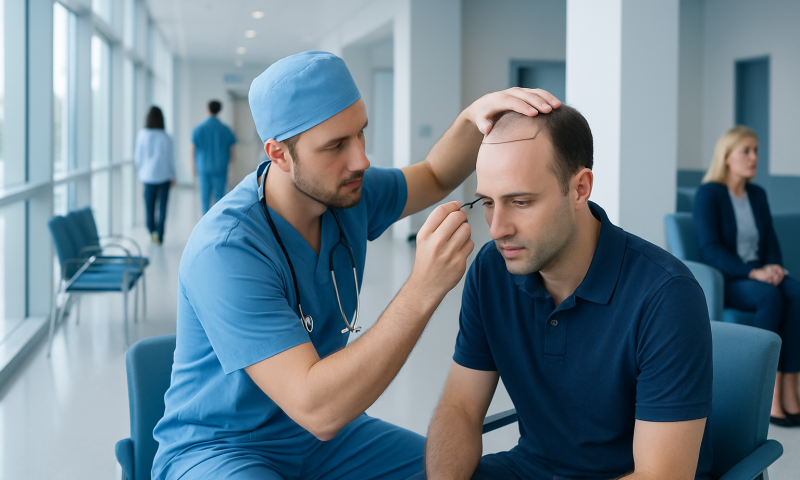
Hair Transplant Abroad: FUE or DHI, and Which One Fits Your Hairline Goals?

Key Takeaways
- FUE and DHI are both follicular unit–based hair transplant methods, but they differ in implantation technique and workflow.
- Hairline design, donor area quality, hair characteristics, and the extent of thinning all influence which option may be more suitable.
- A natural result depends as much on surgical planning and artistic placement as on the technique name itself.
- Traveling abroad for a hair transplant adds important planning steps, including consultation timing, follow-up logistics, and recovery arrangements.
- Most patients need a realistic understanding of healing, shedding, regrowth timelines, and the possibility of staged treatment.
Medically reviewed by the Acıbadem clinical team — June 13, 2026
Choosing a hair transplant abroad is often less about finding a single “best” method and more about matching the technique to hairline goals, donor hair quality, and recovery preferences. FUE and DHI both aim for natural-looking restoration, but they differ in how grafts are collected, prepared, and placed.
Overview
For many people considering a hair transplant abroad, the first big question is not simply whether to have surgery, but which technique best matches the look they want. Two of the most discussed options are FUE, short for follicular unit extraction, and DHI, which refers to direct hair implantation. Both are designed to move healthy follicles from a donor area, usually the back or sides of the scalp, to areas where hair has thinned.
The difference lies in how the follicles are handled and placed. In FUE, grafts are harvested individually and then implanted into prepared sites. In DHI, the grafts are also collected individually, but a pen-like tool is used to place them more directly. That distinction can matter when the aim is to shape a hairline with fine control, preserve existing hair, or manage a limited donor supply.
When treatment is planned across borders, practical issues matter too. A patient may have a brief in-person consultation window, then need to return home with a clear recovery plan. For that reason, the best choice is usually the one that fits the scalp, the hair pattern, the expected downtime, and the follow-up setup—not just the technique that sounds newest or most advanced.
Symptoms and Hair Loss Patterns That Lead People to Surgery
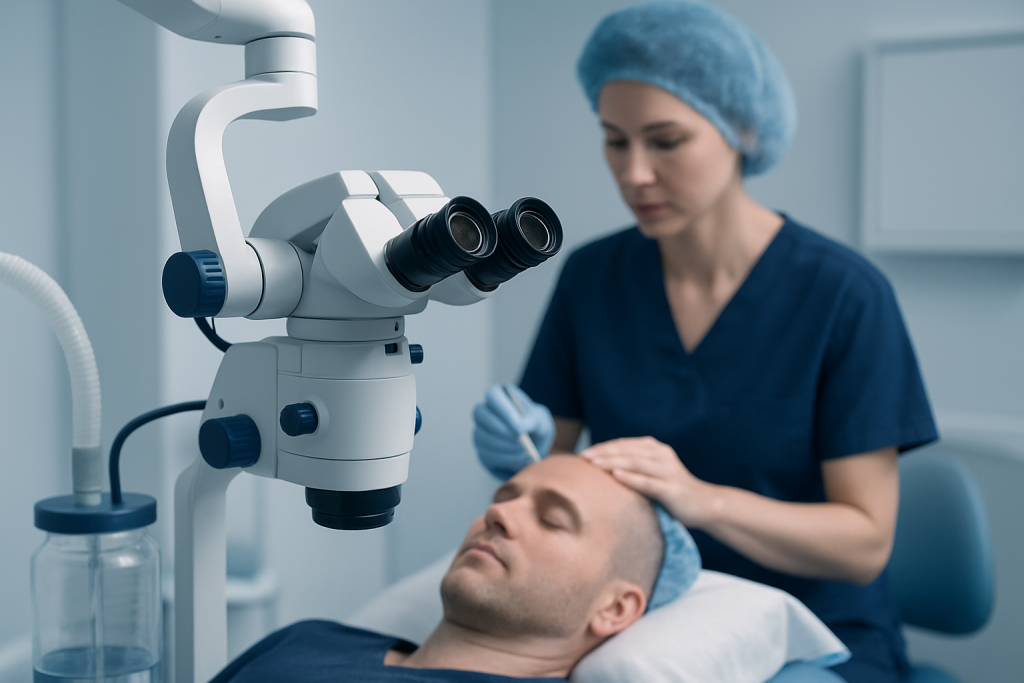
Hair transplant candidates usually notice a pattern rather than a single sudden event. Common concerns include a receding frontal hairline, thinning at the temples, widening of the part, or reduced density on the crown. Some people have stable male-pattern or female-pattern hair loss, while others have hairline loss after scarring, traction, injury, or previous procedures.
The way hair loss presents can influence the surgical plan. A person seeking a sharper hairline may need a different design approach than someone focused on restoring general density. Likewise, patients with diffuse thinning need careful evaluation, because transplanting into an area with fragile existing hair requires a conservative strategy to avoid unnecessary shock loss.
It is also important to understand that transplant surgery restores hair in a specific zone; it does not stop future thinning everywhere else on the scalp. That is why many surgeons evaluate both the visible hair loss and the likely future pattern before recommending FUE, DHI, or a combination approach.
Causes and Risk Factors

Most hair transplants are performed for androgenetic alopecia, the common inherited pattern of hair loss seen in men and women. Hormonal sensitivity, family history, and age all contribute to the gradual miniaturization of hair follicles. Once follicles become too weak to produce lasting hair, transplanting healthier follicles from the donor area may help restore coverage.
Other reasons for hair restoration include scarring from burns or accidents, traction-related loss from chronic pulling styles, and reduced density after certain medical treatments or previous surgical work. In these cases, the scalp condition and skin quality can affect how many grafts are needed and how densely they can be placed.
Several factors influence candidacy and outcomes:
- Stability of the hair loss pattern
- Quality and density of the donor area
- Hair texture, curl, and color contrast
- Scalp laxity and skin health
- General medical fitness for surgery and healing
Because donor hair is finite, experienced teams plan conservatively. The goal is not to use as many grafts as possible in one visit, but to place them where they will create the most natural and durable improvement.
Diagnosis and Consultation Before Surgery
A good hair transplant plan begins with diagnosis, even when the condition seems obvious. A specialist typically reviews the pattern and history of hair loss, checks the scalp, examines the donor area, and asks about medications, prior procedures, and family history. In many cases, the conversation also includes expectations: how low the hairline should sit, how dense it should look, and whether the priority is a subtle refinement or a fuller change.
For international patients, this assessment may start online and then continue in person once they arrive. Clear photographs, scalp measurements, and a realistic discussion of donor limits help align the plan before travel. Some patients arrive expecting a dramatic hairline lowering, only to learn that a more conservative line will preserve long-term balance and prevent the result from looking unnatural as they age.
Clinicians may also look for causes of active shedding that should be addressed before surgery. If hair loss is still rapidly progressing, if there is inflammation, or if another scalp disorder is present, the team may recommend medical treatment or delay surgery until the scalp is better prepared.
Treatment Options: FUE vs DHI
FUE and DHI are closely related, and many clinics use the same donor-harvesting method for both. The main distinction is placement. In FUE, follicles are extracted one by one and then inserted into channels created in the recipient area. This gives the surgeon broad control over angle, direction, and overall design, especially when restoring larger areas.
DHI uses a specialized implanter that can help place grafts directly into the scalp after extraction. This can be useful when the team wants very precise control in a defined hairline zone or when trying to limit the time grafts spend outside the body. It may be favored for certain density patterns or for patients who want meticulous work along the front edge.
Neither method is automatically superior. The better question is which technique matches the treatment plan. FUE may be a practical choice for larger sessions and broader coverage. DHI may suit patients who want detailed refinement, especially in the front hairline or in areas where careful placement around existing hairs matters. In many real-world cases, surgeons use a hybrid strategy based on the zone being treated rather than a single label for the entire operation.
A useful way to think about it is this:
- FUE emphasizes individual follicle harvesting and separate site creation for implantation
- DHI emphasizes direct placement with an implanter tool
- Hairline goals influence how much emphasis is placed on precision, density, and angle control
- Donor supply may limit how aggressive the design can be
Choosing the Right Option for Hairline Goals
Hairline design is where the difference between “good enough” and truly natural often becomes visible. A well-designed hairline is usually not perfectly straight or unnaturally low. It often includes subtle irregularities, softer graft placement at the very front, and a gradual increase in density behind the leading edge. The surgeon’s eye matters as much as the device used.
Patients who want a soft, age-appropriate frame for the face may benefit from a conservative, carefully layered approach. Patients hoping to restore a stronger front line for styling flexibility may need a denser plan, but only if the donor area can support it. People with curly, coarse, or very fine hair may also be steered toward different placement strategies because hair texture changes the appearance of fullness.
Another factor is future planning. Someone in their 20s or 30s may need a design that still looks balanced decades later. In that setting, an overly aggressive hairline can become a problem if surrounding native hair continues to thin. A skilled team will consider where the hair should sit now and how it is likely to look in the years ahead.
Prevention and Self-care After the Procedure
A transplant does not end when the patient leaves the clinic. The early healing period is part of the procedure’s success, especially for international travelers who may continue recovery in another country. Patients are usually given instructions on how to sleep, wash the scalp, protect the grafts, and avoid friction or pressure during the first days.
Self-care after surgery is generally straightforward, but consistency matters. The scalp should be treated gently, sun exposure should be limited early on, and strenuous exercise may need to be paused for a period recommended by the surgical team. Patients should also understand that shedding of transplanted hairs can be normal before new growth begins, which is why patience is important during the first months.
Helpful recovery habits often include:
- Following the clinic’s washing and aftercare instructions exactly
- Avoiding smoking if possible, since it can affect healing
- Sleeping in the recommended position to protect grafts
- Keeping follow-up photos to track progress over time
- Staying in contact with the surgical team after returning home
Longer-term self-care may include managing ongoing hair loss with medical therapies when appropriate, because preserving non-transplanted hair can help maintain the overall result.
When to See a Doctor
A hair transplant consultation is worthwhile when thinning is becoming noticeable, the hairline is changing, or styling no longer creates the appearance a person wants. Earlier evaluation can be helpful because it gives the specialist more time to map the hair loss pattern and discuss whether surgery, medication, or both would be the most appropriate approach.
After surgery, a doctor should be contacted if there is increasing redness, significant swelling, worsening pain, drainage, fever, or any concern that healing is not progressing normally. These problems are not expected for most patients, but they should be assessed promptly if they occur.
People who are traveling for surgery should make sure they know who will answer questions once they are back home. In the right setting, including internationally coordinated care, that follow-up can be managed smoothly; Acibadem Health Point notes that its multidisciplinary specialists and JCI-accredited hospitals diagnose and treat hair restoration conditions for international patients. Still, patients should always seek individualized advice from a qualified clinician about whether surgery is suitable for them and which technique best fits their goals.
Frequently asked questions
Is FUE or DHI better for a natural-looking hairline?
Either technique can create a natural hairline when the plan, graft placement, and surgeon’s design are carefully done. The result depends more on artistic hairline planning and donor hair quality than on the technique name alone. Patients should focus on whether the approach suits their facial proportions and long-term hair loss pattern.
Is DHI less invasive than FUE?
Both FUE and DHI are considered minimally invasive hair transplant methods. The main difference is how grafts are implanted, not whether surgery is “major” or “minor.” Recovery still requires proper aftercare and time for healing in both cases.
How long does it take to see new growth after a hair transplant?
Transplanted hairs often shed first, which can be unsettling if a patient is not expecting it. New growth usually begins gradually over the following months, and the result develops over time rather than immediately. The timeline varies from person to person, so follow-up with the surgical team is helpful.
Can a hair transplant stop future hair loss?
A transplant restores hair in selected areas, but it does not cure the underlying tendency for pattern hair loss. Many patients need a broader plan to preserve existing hair and protect the overall appearance over time. A doctor can advise whether medical therapy or monitoring is appropriate.
How do international patients prepare for a hair transplant abroad?
They should share medical history, clear photos, and previous treatment details before traveling, then confirm recovery instructions and follow-up contact plans. It also helps to arrange enough time on site for consultation, the procedure, and early postoperative review. Good preparation makes the experience smoother and reduces avoidable stress.
Will the donor area look empty after FUE or DHI?
When planned well, the donor area is usually managed so that thinning is not obvious. The surgeon must balance the number of grafts taken with the need to preserve the appearance of the back and sides of the scalp. A careful consultation is essential because donor supply is limited.
References
- International Society of Hair Restoration Surgery
- American Academy of Dermatology
- NHS
- Mayo Clinic
- MedlinePlus
This article is for general information only and is not a substitute for professional medical advice. Please consult a qualified doctor about your individual situation.