Widows Peak

Key Takeaways
- A widows peak is usually a normal variation in hairline shape, not a disease.
- It can be inherited, and its appearance may change with age, styling, or hair loss.
- A changing hairline should be assessed if it comes with shedding, patchy loss, or scalp symptoms.
- Management ranges from reassurance and styling advice to dermatologic treatment or hair restoration in selected cases.
- International patients can often discuss diagnosis and treatment planning with specialists before traveling, then continue follow-up after returning home.
A widows peak is a natural hairline shape that forms a subtle V at the center of the forehead. In many people, it is simply a normal inherited feature, while in others it may become more noticeable with age or hair thinning.
Overview
A widows peak is a hairline that dips to a point in the center of the forehead before rising again on both sides. For many people, it is simply one of several normal ways a hairline can be shaped. It does not, by itself, mean that hair is unhealthy or that hair loss is happening.
The term has been used for generations, but the look is better understood today as part of human variation. Some people are born with a clear peak, others develop a more visible one over time, and some notice that it stands out only because surrounding hair has thinned or been styled differently. In a health-library setting, the key question is not whether the shape is unusual, but whether it is stable and consistent with the person’s usual pattern.
Because hairline concerns can affect confidence, many patients look for practical guidance rather than dramatic answers. That is especially true for international patients who may be considering a consultation abroad and want to know whether a hairline change needs medical attention, cosmetic advice, or both.
Symptoms
A widows peak is identified by appearance rather than by discomfort. The central point of hair at the forehead creates a V-like shape, often with a gentle or pronounced dip. In many cases, it has been present since childhood and remains fairly unchanged.
By itself, a widows peak does not usually cause pain, itching, flaking, or shedding. When those features are present, they suggest something else may be happening alongside the hairline shape, such as scalp irritation, traction from hairstyles, or a form of hair loss.
- A stable central point in the hairline
- No scalp symptoms
- Hairline shape present for years or since early life
- Sometimes more noticeable when hair is pulled back
It is helpful to pay attention to change over time. A previously even hairline that slowly recedes at the temples can make a widows peak appear more prominent. Likewise, abrupt thinning, shedding, or patchy loss is not typical of a simple hairline variation and deserves medical review.
Causes & Risk Factors

The most common reason for a widows peak is genetics. Hairline shape is inherited in a complex way, which means family members may share a similar look even if the exact pattern is not identical. Some people are born with a peak, while others notice it becoming more defined as the face and hairline mature.
Age can also influence how the hairline looks. As hair density changes, the surrounding areas may thin slightly, making the center point stand out more. Hairstyles that repeatedly pull the hair back tightly can also alter the way the front hairline appears over time, even if the underlying pattern remains the same.
In some people, what looks like a widows peak is actually a sign of hair loss rather than a distinct natural shape. This is more likely when there is gradual recession at the temples, widening part lines, patchy loss, or a family history of patterned hair loss. Scalp inflammation, hormone-related hair changes, certain medical conditions, and stress-related shedding can all affect the front hairline.
Risk factors for a more prominent or changing hairline include:
- Family history of a similar hairline or patterned hair loss
- Repeated traction from braids, tight ponytails, or extensions
- Age-related thinning
- Underlying dermatologic or hormonal conditions
- Recent illness, major stress, or nutritional issues that trigger shedding
Diagnosis
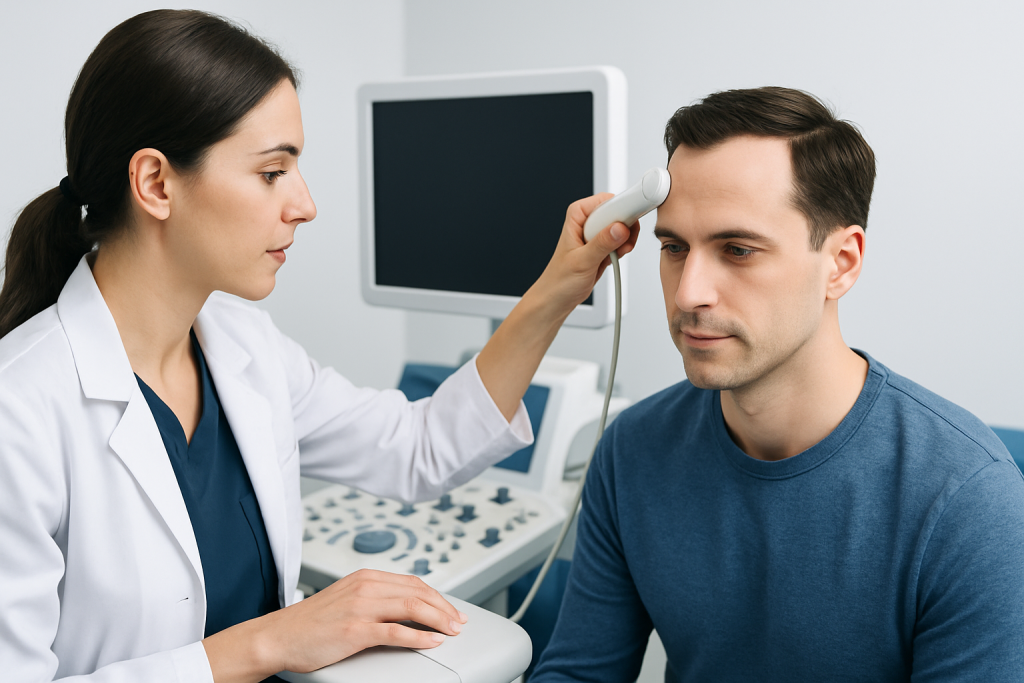
Most widows peaks do not require extensive testing. A clinician usually begins with a careful history and a visual exam of the scalp and hairline. The main goal is to tell the difference between a stable inherited hairline and a change caused by hair loss or scalp disease.
During the visit, the clinician may ask when the hairline was first noticed, whether it has changed, whether shedding is occurring, and whether there is itching, redness, flaking, or scalp tenderness. Family history can be useful, and photographs from earlier years often help show whether the pattern has remained stable.
If the presentation is unclear, a dermatologist may use dermoscopy, a close-up examination of the scalp and hair shafts. In selected cases, blood tests or other investigations may be considered to look for contributors to hair shedding, such as thyroid imbalance, iron deficiency, or hormonal factors. Rarely, if there is concern about scarring or inflammatory hair loss, a biopsy may be recommended.
Treatment Options
Many widows peaks do not need treatment at all. If the hairline is a normal inherited feature and the person is comfortable with it, reassurance is often the most appropriate answer. For some, simple styling guidance is enough to make the hairline feel less prominent or more balanced.
When the concern is cosmetic rather than medical, options may include changes in haircut, parting, fringe styling, or hairline makeup. These approaches can be especially useful when a patient wants a non-procedural solution while deciding whether to pursue a longer-term treatment plan.
If the hairline appearance is linked to hair loss, treatment focuses on the underlying cause. A dermatologist may recommend therapies suited to the type of hair loss, scalp inflammation management, or steps to reduce traction. In some selected cases, hair restoration procedures may be discussed, particularly when a stable pattern has been established and the patient has realistic expectations.
- Observation and reassurance for a natural hairline shape
- Hairstyling or cosmetic camouflage
- Treatment of underlying hair loss or scalp conditions
- Hair restoration procedures in carefully selected patients
International patients often appreciate having a plan that separates what can be done safely before travel, what needs an in-person assessment, and what should be monitored after they return home. That kind of stepwise approach helps keep care clear and practical.
Prevention & Self-care
A natural widows peak cannot be prevented, and there is no need to try to “correct” a hairline that has always been part of someone’s appearance. Self-care is more about protecting the scalp and preserving overall hair health than changing the basic shape of the hairline.
Gentle hair practices matter. Avoid repeated tight pulling at the front hairline, since long-term traction can weaken hair and change the contour of the hairline. It also helps to use mild hair care products, minimize excessive heat or chemical processing, and maintain a balanced diet that supports hair growth.
For people who notice change, a simple home record can be useful: take a few photos in similar lighting every couple of months and note any shedding, itching, or new breakage. This can make a specialist consultation more informative, especially if care is being arranged across borders and follow-up will happen remotely.
- Use hairstyles that do not pull continuously at the front hairline
- Protect the scalp from irritation and sun exposure when needed
- Support general health with adequate nutrition, sleep, and stress management
- Seek advice early if the hairline is changing quickly
When to See a Doctor
A widows peak alone is usually not a reason for concern. Medical review is worthwhile when the hairline is changing, symptoms are present, or the appearance is causing significant distress and a person wants to understand their options.
A dermatologist or hair specialist should be seen if hairline changes are accompanied by diffuse shedding, patchy loss, broken hairs, scalp redness, scaling, pain, or itching. It is also sensible to seek evaluation if there is sudden recession, eyebrow loss, or other skin or hormone-related symptoms.
For patients planning treatment in another country, an early consultation can help clarify whether the concern is purely cosmetic or whether diagnostic workup is needed first. Acibadem Health Point can support international patients through multidisciplinary specialists and JCI-accredited hospitals for diagnosis and treatment planning, with follow-up arranged in a practical, coordinated way.
Frequently asked questions
Is a widows peak a sign of hair loss?
Not usually. A widows peak is often just a natural hairline shape. It may look more noticeable if the surrounding hair thins, so a change over time is what matters most.
Can a widows peak be inherited?
Yes, hairline shape often runs in families. Genetics can influence whether the forehead hairline has a central point, although each person’s pattern is unique.
Does a widows peak need treatment?
Most of the time, no treatment is needed. If it is simply a stable hairline shape, reassurance or styling adjustments may be all that is required.
How can a doctor tell the difference between a widows peak and hair loss?
A doctor looks at the pattern, whether the hairline has changed, and whether there are signs such as shedding or scalp irritation. In some cases, close examination or tests help rule out underlying hair loss conditions.
Can hairstyles make a widows peak look more obvious?
Yes, pulled-back styles often make the central point stand out more. Gentle styling that reduces tension at the front hairline can help if the look is a concern.
When should someone seek medical advice for a changing hairline?
It is a good idea to seek advice if the hairline is receding, shedding is increasing, or the scalp is itchy, red, or painful. A specialist can help determine whether the change is cosmetic, temporary, or related to a treatable condition.
References
- American Academy of Dermatology
- Mayo Clinic
- British Association of Dermatologists
- National Institute of Arthritis and Musculoskeletal and Skin Diseases
This article is for general information only and is not a substitute for professional medical advice. Please consult a qualified doctor about your individual situation.